




Five different types of bell pepper
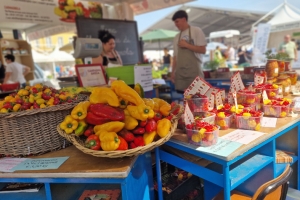
Every year the Peperone Fair transforms this small Piedmontese town into a centre of agri-food excellence, thanks to the bell pepper that has made it famous throughout Italy, and into a hub of cultural activity dedicated to discovery and fun. The Carmagnola bell pepper comes in five varieties: the "quadrato," the "trottola," with a (heart-shaped with a slightly flared or truncated tip), the "lungo" or "corno di bue" (with a very elongated cone shape), the "tumaticot2 (roundish and flattened at both ends, similar to a tomato) and the "quadrato allungato.2 The harvesting of the peppers is carried out by hand from the end of July.
Italy's largest agricultural product trade fair
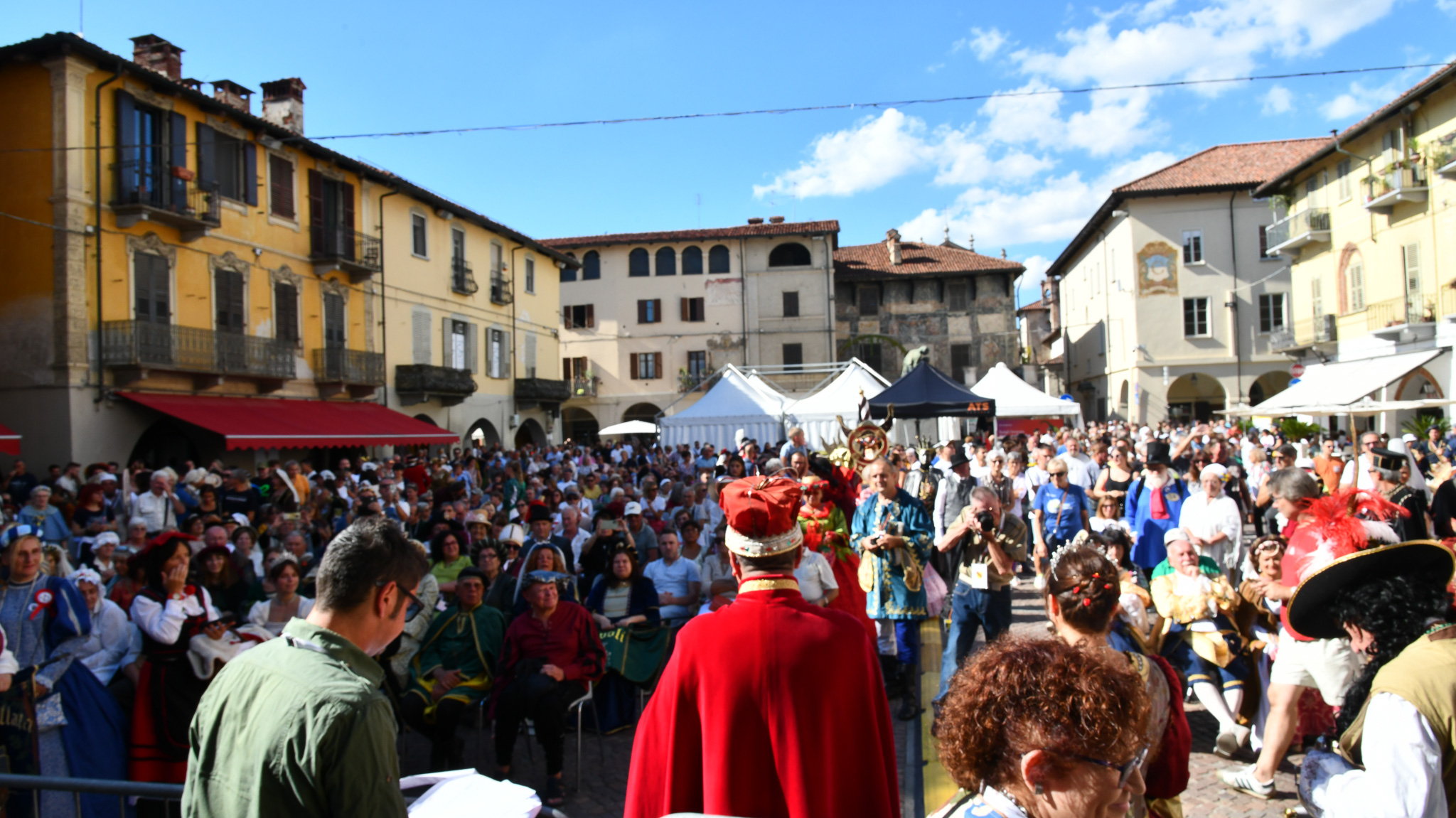
With the inauguration of the 77th edition of the festival scheduled for Friday 28 August at 8.00 pm and the subsequent opening ceremony featuring Carmagnola’s dance schools, Italy’s largest trade fair dedicated to an agricultural product will get underway. It will continue until 6 September with a varied programme of events: in the evenings, from Monday to Friday, from 6.00 pm to midnight, and from 10.00 am to midnight on Saturdays and Sundays. Visitors will be entertained by numerous musical, food and wine, recreational and cultural events designed to encourage the discovery of the local area and its traditions, both at the Fair and at the accompanying Foro Festival.
"Prestige without compromising on artistic quality"
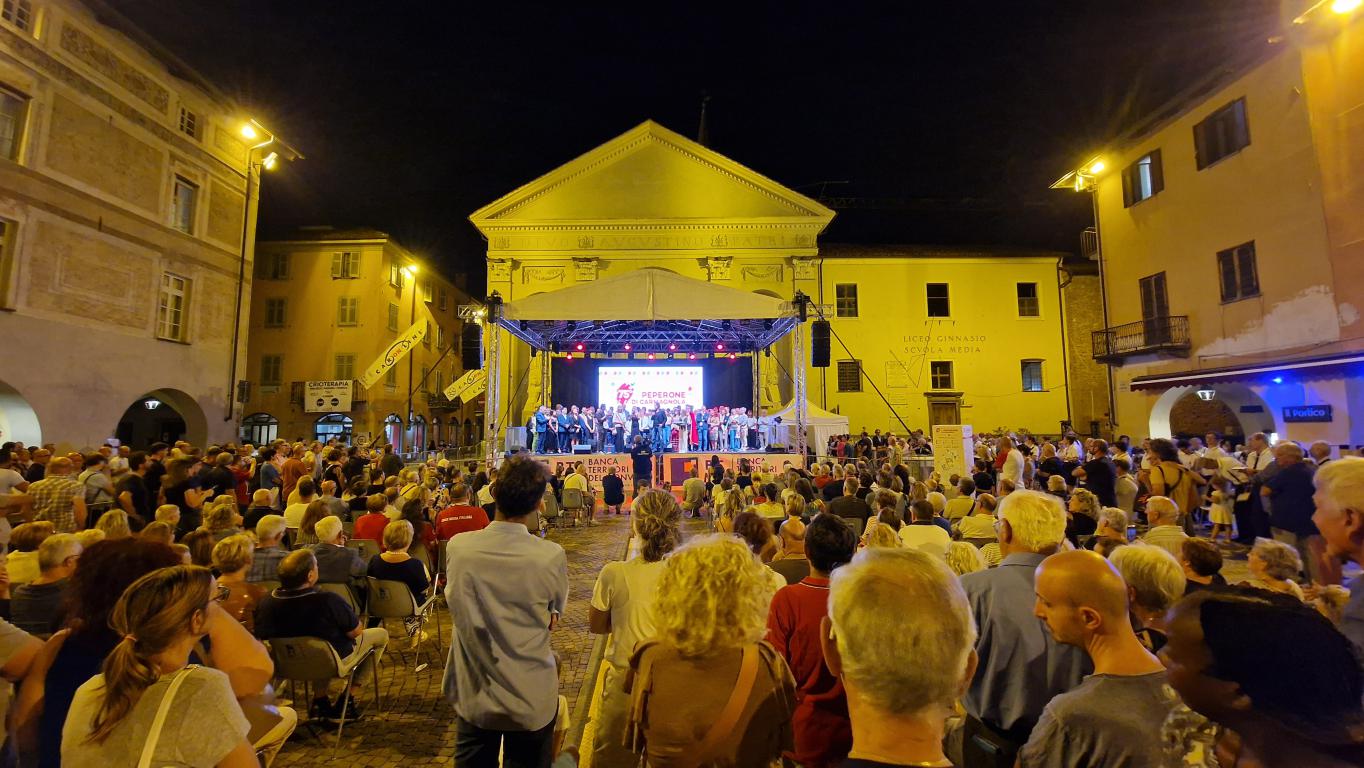
"Once again we have put together a programme that combines accessibility and prestige without compromising on artistic quality,- says Paolo Di Nita, artistic director of the Foro Festival. -The choices made this year confirm and reinforce the identity of the Foro Festival, with a diverse programme that brings together different genres, styles and sensibilities, whilst consistently maintaining a high standard of quality.” Various DJ sets will liven up the dance floor, the food and wine events will range from cookery demonstrations and culinary challenges to tastings of peppers and the finest produce from the Piedmont region, as well as celebrations of culinary fusions from around the world. Rounding off the packed programme of events will be engaging games, shows and parades, sporting events, comedy shows, as well as in-depth talks and interesting readings. For information: https://fieradelpeperone.it/programma/
The 77th edition of the Carmagnola Peperone Fair will take place from 28 August to 6 September 2026 in Carmagnola, in the province of Turin, Piedmont.
The festival is held in Carmagnola, a town in the Piedmont region of north-west Italy, renowned for producing its famous bell peppers.
The Carmagnola Peperone Fair is Italy's largest trade fair dedicated to a single agricultural product. It celebrates the local bell pepper with food and wine experiences, live entertainment, cultural events and activities for visitors of all ages.
Visitors can enjoy cooking demonstrations, pepper tastings, regional food and wine experiences, live music, DJ sets, comedy shows, sporting events, parades, cultural talks and the accompanying Foro Festival.
The Carmagnola bell pepper is grown in five traditional varieties and harvested by hand from the end of July, making it one of Piedmont's best-known agricultural products.
Yes. The festival offers a varied programme of entertainment, cultural activities, food experiences, live performances and shows designed for visitors of all ages.
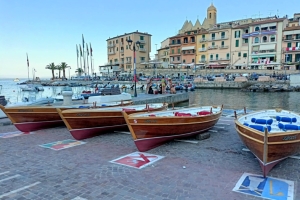
This historic Tuscan regatta, which brings the stretch of water in front of the town to life, sees the town’s four districts, Croce, Fortezza, Pilarella and Valle, compete against one another in a contest that combines sport, history and tradition. The earliest documented evidence of rowing races dates back to the 18th century, but the event’s origins are deeply rooted in the local seafaring culture and are linked to a legend recounting the escape of a "tartarone" which is the typical Porto Santo Stefano fishing boat that was pursued by pirates who once plied the Tyrrhenian coast.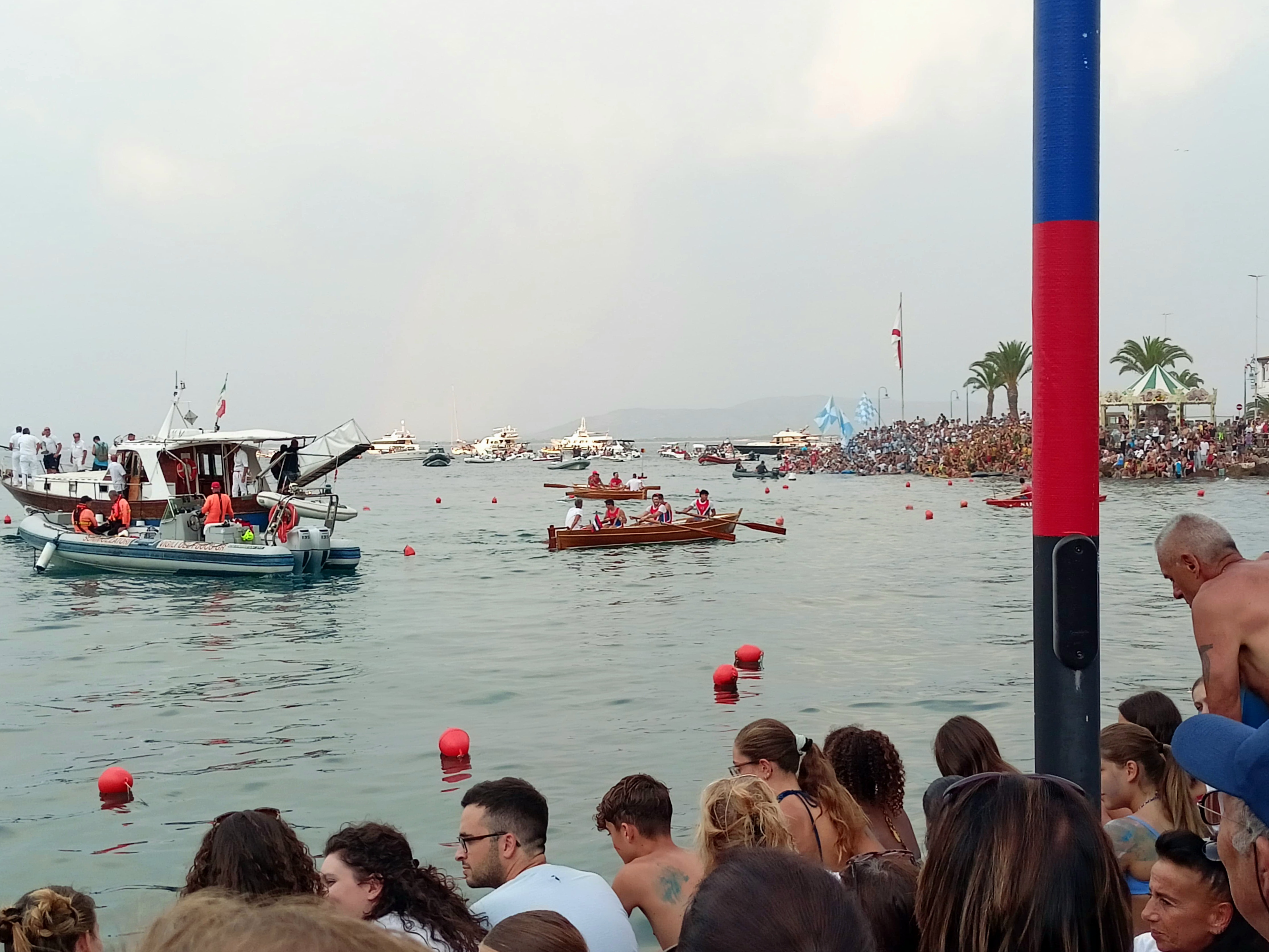 ph credits Livia Gerecitano
The rowing regatta takes place over a total distance of 4,000 metres. Each crew consists of four rowers and a coxswain, who must complete ten laps of the 400-metre stretch between two buoys), making five turns out to sea and four towards the shore. The boats used are traditional and are known as "guzzi" with each named after a wind: Maestrale, Grecale, Libeccio and Scirocco. The Palio is the highlight of a programme of events involving the whole town. The celebrations begin as early as the previous week with neighbourhood dinners and the historical procession. On 13 August, the oars are measured and the boats are handed, over while on the eve of the event the crews and the procession are blessed.
The Argentario can be described as "an island that is not an island." The diamond shaped mountain rises from the waters of the Mediterranean Sea while remaining connected to the coast by two narrow strips of sand, which enclose a lagoon. The area has two main towns: Porto Santo Stefano to the north and Porto Ercole to the south. As part of the Tuscan Maremma, the Argentario also boasts Orbetello, Talamone, Capalbio and Magliano among its main towns, along with the two islands of Giglio and Giannutri. The area is in a strategic location: in the centre of Italy and close to Rome, Florence and Pisa.
The festival will be on 11 and 12 July
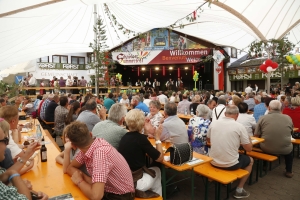
The Schnolser Summerfest is one of the most iconic events of the South Tyrolean summer. On 11 and 12 July, Madonna di Senales will host the 13th edition of the festival that promotes the valley’s authentic identity with a programme of live music, local traditions, gastronomy and social gatherings. For two days the little town will be the focal point for residents and tourists alike, offering an immersive experience of Alpine culture and the destination’s unique character through a programme that combines nature, culture, entertainment and authenticity.
A performance at 3,212 metres asl
Saturday 11 July will kick off with traditional dances, folk music groups, singers and hunting horn ensembles from Val Venosta. The following day will feature performances of folk music and Alpine folk tunes, culminating in the final performance by the Original Tiroler Kaiserjägermusik in front of the Hotel Grawand, at an altitude of 3,212 metres asl on the Val Senales glacier - one of the event’s main highlights.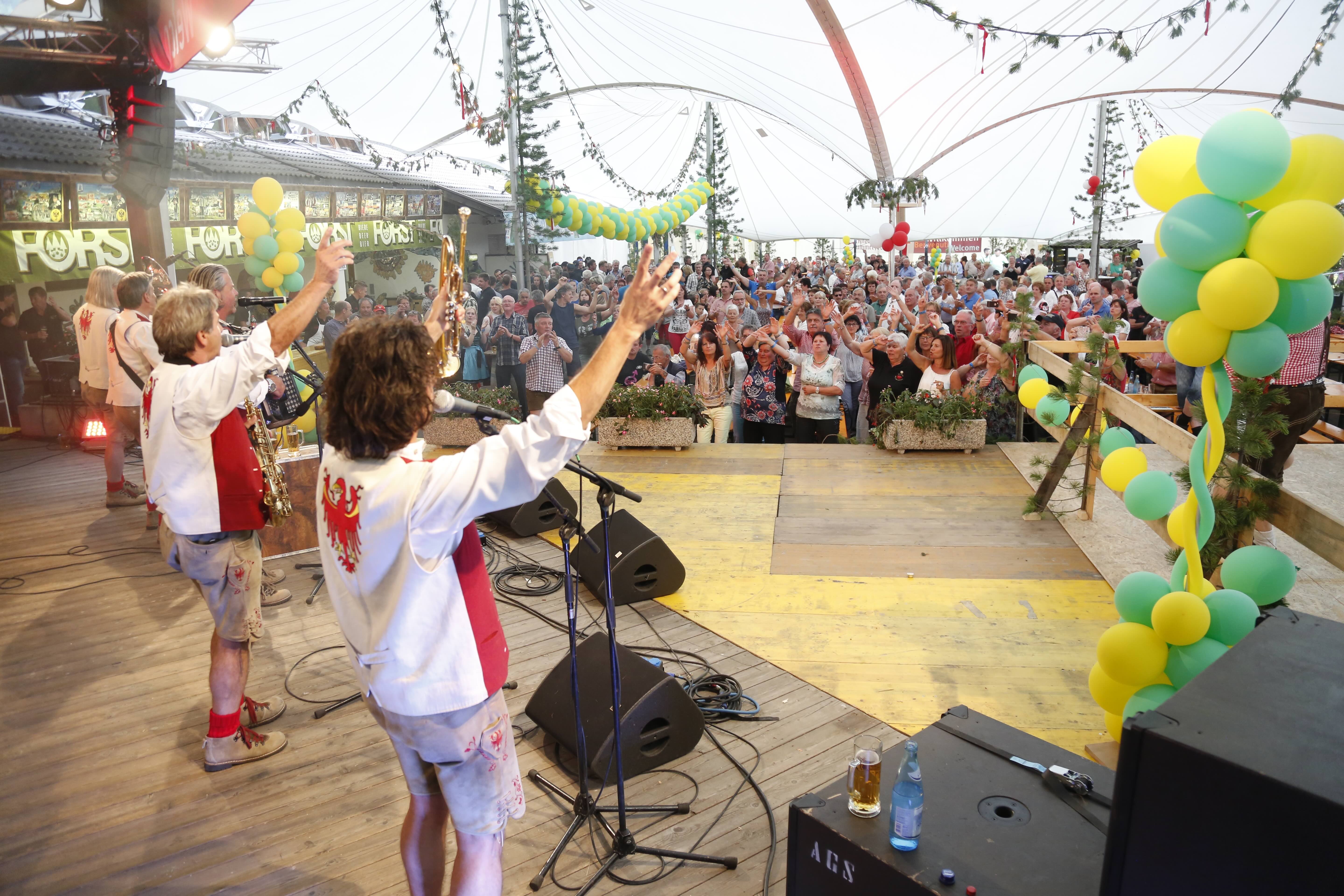 Grafik Gruner Schnalstal
A special offer for return-ticket purchases
This event combines the spectacular mountain landscape with Alpine musical tradition, undrescoring the valley’s position as a destination offering distinctive cultural experiences, promoting the local area and encouraging visitors to explore it. To mark the event the Alpin Arena Senales will be offering a special deal for visitors: anyone who purchases a return ticket for the Grawand cable car by midday on Sunday 12 July will gain free entry to the Schnolser Summerfest.
Exploring history, archaeology and rural traditions
On Sunday there will be guided tours of the archeoParc and the Campus Transhumanza museum, allowing participants to explore the history, archaeology and rural traditions of Val Senales in greater depth. Admission costs €18.00 on Saturday and €20.00 on Sunday. A two-day pass costs €30.00. For the full programme, visit the website www.schnolser-summerfest.com
Truly switching off in an age of constant connectivity is the luxury of reclaiming one’s own space and time. Unexpected Italy focuses on taking things slowly to promote mental and physical wellbeing and to highlight ethical destinations that reject the compromises of overtourism. The start-up uses its app to map authentic places that resist standardization and allow travellers to connect with local artisans, hosts, producers and small-scale hoteliers. The app is geolocated and targeted, and can suggest tailor-made itineraries, with the aim of making travellers feel part of the local community, whilst promoting responsible and inclusive tourism.
 Elisabetta Faggiana e Savio Losito Unexpected Italy
"True luxury today does not lie in adding services, but in having the courage to strip away the superfluous,- explains Elisabetta Faggiana, founder of the award-winning tech company. -With Unexpected Italy we also select places we call “inconvenient” because they refuse the compromises of standardization to protect something immensely rarer: silence, time and presence. These are not merely accommodation facilities, but bastions of cultural resistance that choose not to please everyone, preferring consistency over algorithms. In a world saturated with digital stimuli, slowing down is not a sacrifice, but an act of freedom.”
Unexpected Italy operates on the premise that, to be sustainable, tourism must return to being about connection and transformation. Their "relational algorithm" is not based on trends, but on passions and affinities, facilitating each person’s encounter with the places that best resonate with them. Some examples are Piedmont, and the Parco del Grep agritourism retreat, near Turin, is an old farmhouse offering treehouses without Wi-Fi, where food is served in gourmet picnic baskets. In Liguria, La Sosta di Ottone III, in the province of La Spezia, requires guests to leave their cars just below the village and cover the final stretch on foot or by a small electric monorail. With six rooms, each one different, and à la carte breakfasts that showcase small-scale producers, this seaside hamlet offers experiences to discover the Cinque Terre from above, surrounded by nature, whilst avoiding the crowds along the seafront.
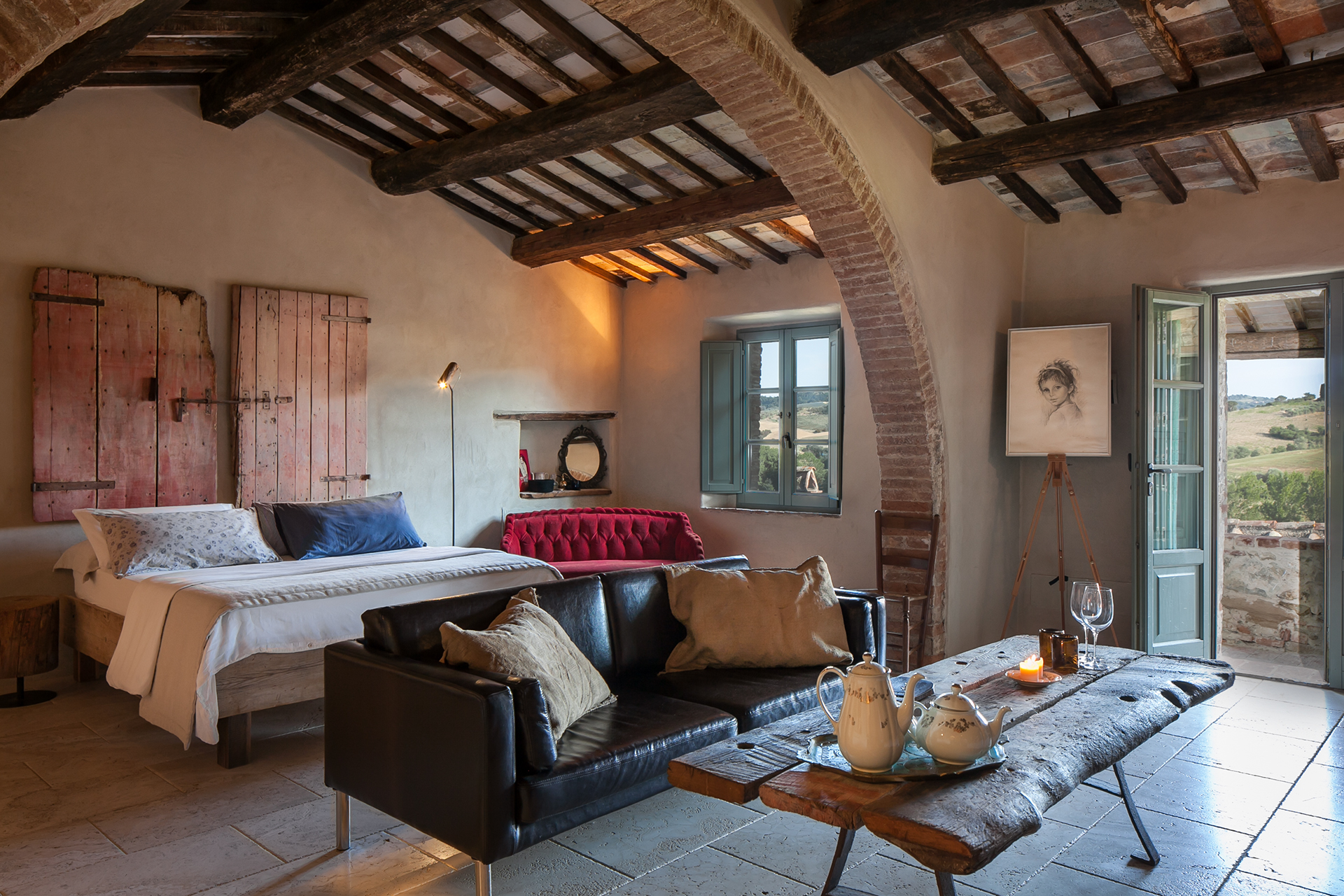
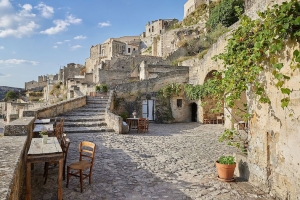
In Siena, Tuscany, Follonico is a stone farmhouse in the Val d’Orcia with four suites and two rooms featuring exposed beams, restored furniture, handcrafted ceramics and natural fabrics. Sextantio, in Abruzzo, is a scattered hotel with a carefully curated medieval aesthetic and period furnishings, where the atmosphere of days gone by can be savoured also at the breakfast featuring local produce and traditional recipes. Sextantio is a cultural conservation project created to safeguard the heritage linked to smaller villages, supporting the local area and its inhabitants. In Veneto there are two notable establishments. Cargador de Ron in Valdobbiadene is a mountain hut in the woods: once a refuge for shepherds and their animals, today it offers four spacious, light-filled rooms furnished in a rustic style. The Scuola Guesthouse on the Asiago Plateau, in the province of Vicenza, is a former school dating from the 1920s that has retained its original character, with rooms named after school subjects and an artisan ice-cream workshop, and is an invitation to rediscover the joys of childhood.
An alternative to using private vehicles
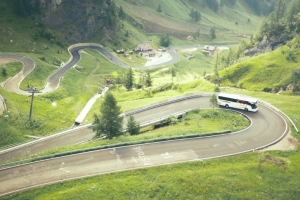
Throughout the summer, until 9 September, special Dolomiti Bus services to the Dolomite mountain passes and the region’s main natural attractions will resume. A brand-new addition is the Cortina–Passo Giau–Pescul route and the new Cortina Scuole terminus that ensure mobility for residents and offer tourists a convenient, low-environmental-impact alternative to using private vehicles.
Consult the Dolomiti Bus app
They also aim to ease traffic congestion on the mountain passes, boost the local economy and alleviate the problem of parking availability at the summit areas of the passes, which is critical during peak periods. Tickets are available at the company’s ticket offices, authorized retailers across the region and via the official Dolomiti Bus app, where detailed timetables can be consulted.
"The most comfortable way to enjoy the mountains”
“The expansion of summer services is a key element in our strategy to promote and protect the Alpine region. Travelling by bus between the mountain passes and the major attractions of the Marmolada area is not only a choice that demonstrates a deep sense of environmental responsibility, but also the most accessible and comfortable way to enjoy the mountains,” says Dolomiti Bus Chairwoman Martina Moritsch.
Services also to the Adriatic Coast
The Linea Mare service is also resuming; this summer service, operated by Dolomiti Bus, connects Belluno with Jesolo and the Adriatic coast. The service will run until 9 September, with daily departures seven days a week; bookings are compulsory. Tickets can be purchased from authorised outlets and, from this year, online via the official Cortina Express website.
Dining in vineyards and mountain chalets
Bressanone stands out as one of the most interesting destinations in the Alps in which to discover the region’s food and wines which are increasingly becoming a means of discovering the destination. The city offers numerous options for getting to know the area through its cuisine: from breakfast in the vineyards to lunch in a mountain refuge with views of the Dolomites, and from visits to wineries to Michelin-starred dinners at the Apostelstube in the Hotel Elephant, or at the Kircherhof in Albes, which has been awarded a Michelin Green Star.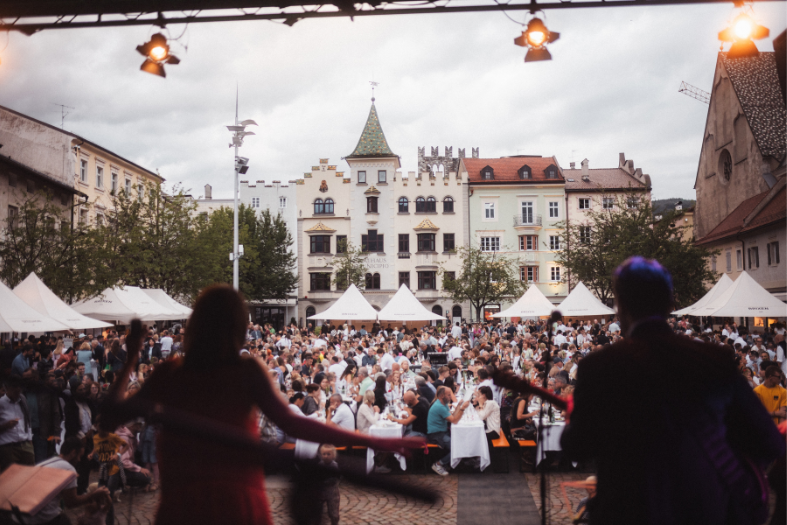 ph credits: Brixen Tourismus Fabian Leitner
Summer Emotions evenings in July and August
Food and wine as a means of experiencing the local area and as a key factor in choosing a travel destination is a trend also highlighted by the recent Report on Italian Food and Wine Tourism 2025, which underscores how food and wine, authenticity, local produce and encounters with local producers have become increasingly decisive in choosing a destination. In line with this trend, Bressanone hosts numerous events during the summer months to celebrate the area’s food, wine and agricultural traditions. In July and August, the Summer Emotions evenings return, bringing the city centre to life with music, alfresco dining and culinary specialties as well as a celebration of the traditional handmade" krapfen "in both sweet and savoury varieties.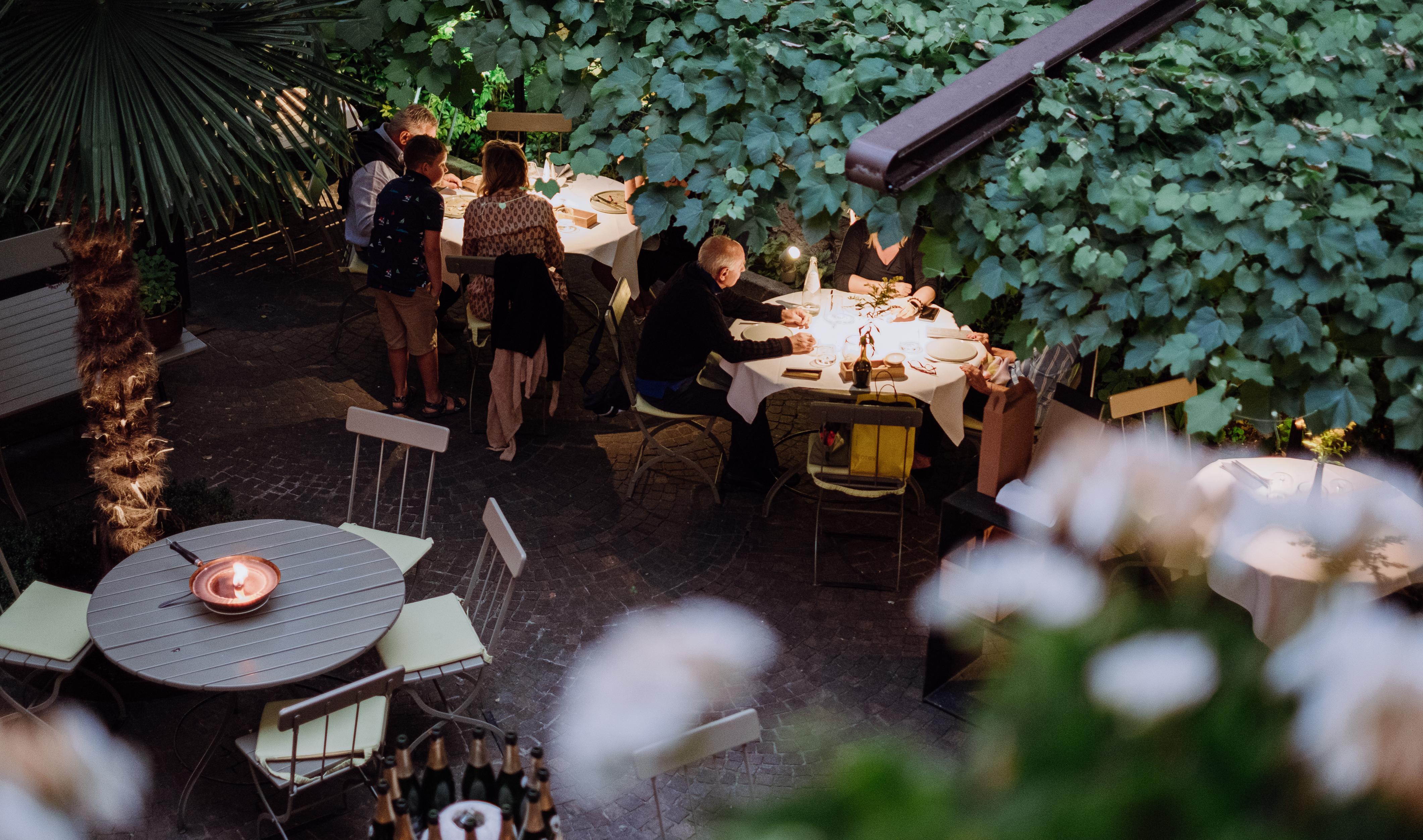
Dinner under the stars on 5 August
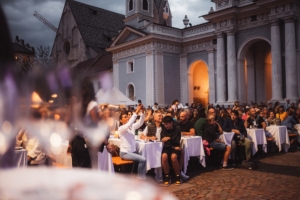
From 3 to 5 July the Brixen Food Festival takes over the town’s squares, courtyards and arcades for three days, turning them into a stage for food and wine tastings, show cooking and meetings with producers. Then on 5 August the Piazza Duomo square hosts "Dine, Wine & Music," a long dinner under the stars that brings together restaurateurs, winegrowers and musicians for an evening of convivial discovery.
Local winegrowers present their wines
Bressanone is surrounded by vineyards that produce some of the most characteristic white wines of South Tyrol and the entire Alpine region, including Sylvaner, Kerner, Grüner Veltliner and Gewürztraminer. The area’s numerous wineries open their doors to visitors with tastings and guided tours, and on 31 July "Incontro con il Vino" is one of the most eagerly awaited events with 22 winegrowers from the Isarco Valley presenting their wines and offering guests the opportunity to taste them.
Lake Tovel is in the Adamello Brenta Nature Park
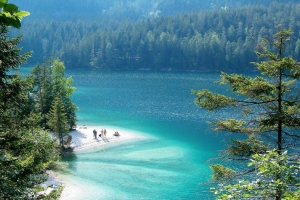
The lake is situated in Trentino, in the Adamello Brenta Nature Park at an altitude of 1,178 metres, and is one of the iconic landmarks of the Val di Non and the entire region. Formerly known as the Red Lake due to the summer phenomenon that coloured part of glaciers, today the lake is a peaceful spot that invites visitors to relax, and is ideal for anyone seeking gentle walks and time to contemplate on the trails leading to higher altitudes.
A trail suitable for families
The area surrounding Lake Tovel offers numerous hiking options, suitable both for those looking for a relaxing stroll and for those seeking a more challenging hike and wishing to venture to higher altitudes. The 3-kilometre path running alongside the lake is the best-known route: a simple, almost entirely flat circular walk, suitable even for families, which takes about an hour and a half and allows you to admire the lake from various angles. Those who prefer a more challenging hike will find Trail 309, an uphill route through the woods leading to Malga Tuena.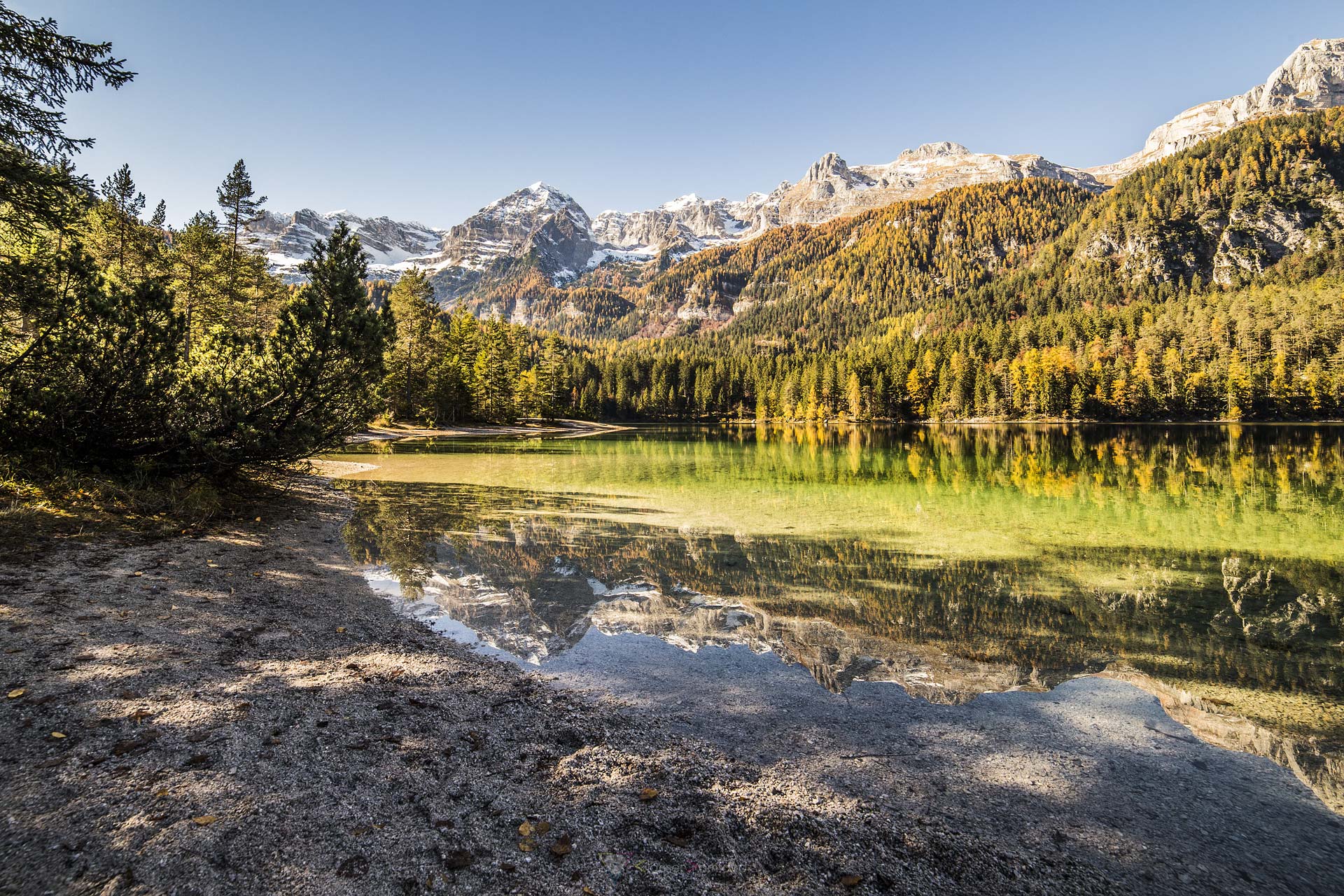 ph credits: Apt Val di Non
Parking and a shuttle service
Access to the lake is restricted, and you must book parking and shuttle buses online at This email address is being protected from spambots. You need JavaScript enabled to view it., and bookings must be completed by 6.00 am on the day of your visit. Parking is free on weekdays until 30 June and subject to a charge from 1 July onwards. Once the valley’s car parks have reached maximum capacity, traffic is diverted to the former Cofco site in Tuenno, from where the shuttle service to the lake departs (on days when the shuttle service is operating, the final stretch of road between Lavacel and Lake Tovel is closed to private traffic from 11.00 to 14.30). Parking remains free for fully electric vehicles, holders of a disabled parking permit, ParcoKey holders and the authorised categories specified in the regulations. The lake can also be reached on foot or by bicycle.
Dozens of new palm trees
Following the recent acquisition of 162,000 sqm of land, the makeover, says owner Johnny Pozzi, "has given us the stability to be bold. After the Spray Park, this year we wanted to focus on the quality of the environment and visual appeal, So dozens of new Caribbean palm trees not only provide natural, cool shade on the hottest days, but also transport visitors to a completely different ecosystem.”
The Jungle Beach Spray Park has white sand
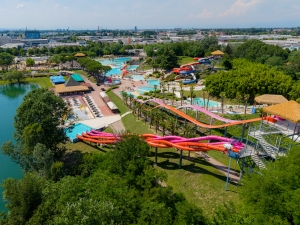
The exotic makeover gives the park the feel of a Caribbean island, framing the state-of-the-art Jungle Beach Spray Park, which was successfully opened last year. The attraction, situated on a large oasis of white sand, is the main recreational highlight of Padovaland and is entirely dedicated to families and young children thanks to its water games, fountains, tipping buckets and scenery reminiscent of the African savannah.
Safety lockers on the parasols
Services ensuring safety and technological innovation have also been enhanced, alongside water sustainability and environmental friendliness. Parasols can now be booked on the App, through which visitors can also specify their arrival times. From this season onwards, parasols are fitted with built-in safety lockers to ensure visitors do not have to leave their valuables unattended, and there is a dog area for four-legged friends.
Padua is called the Painted City
Padua’s historic centre is packed with historic cafés, markets and green areas. The Urbs Picta, or Painted City, is the name by which Padua is known for its extraordinary 14th-century frescos which were recognized by UNESCO in 2021, while the Botanical Garden is also a UNESCO World Heritage Site.
As the southern gateway to the Po Delta Park, Cervia is a nature reserve teeming with birdlife and can boast a Salt Pan and a Butterfly House.
Cervia is famous for its salt production
Situated on the Romagna coast, next to Milano Marittima, just 22 kilometres from Ravenna and 35 kilometres from Rimini, Cervia is a town famous for its salt production, and is an ecosystem of great natural and historical value. Covering 827 hectares, the Cervia salt pan is the smallest in northern Italy and welcomed 32,708 visitors in 2025. Access to the salt pan is permitted exclusively via guided tours, for which advance booking is recommended via the website www.amaparco.it/salinadicervia
Visits by electric boat, canoe, bicycle or a small train
At the Cervia Salt Pan Visitor Centre, there are numerous activities available throughout the year, varying by season, offering ways to discover the salt pan and the surrounding area. Guided tours, available on foot, by electric boat, canoe, bicycle or on board a small train, offer different perspectives on the salt pan; some are also enhanced by food and wine experiences linked to the local area From February to November, the salt pan can be visited by boat; spring, in particular, is the ideal season for birdwatching, as the area is a stopover for migratory birds. During the summer and autumn months, you can learn more about the production techniques of Cervia’s prized sweet salt and watch it being harvested by hand. In particular, during the “Special Salt Harvest” event, you can see the wagons loaded with salt speeding along the tracks, the salt workers at work and the vivid pink pans. And with a bit of luck, you can spot numerous flamingos in every season.
The Butterfly House is a museum of insects
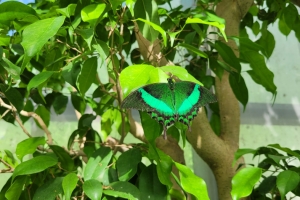
Just a few minutes’ drive from the salt pans, the Butterfly House is a theme park and museum that introduces visitors to the world of insects, their ecosystems, and the protection of habitats and biodiversity. The large tropical greenhouse, on over 500 square metres, is home to butterflies from Asia, Africa and America that fly freely amongst the plants, whilst local butterflies flutter in a smaller greenhouse. The Insect House is the pavilion where you can observe beetles, leaf insects, mantises and other insects from all over the world up close. The Butterfly House attracts some 40,000 visitors a year and, as well as being a theme park, is recognized as a centre for scientific outreach of national importance. To book experiences in the parks of Romagna: Buy your ticket - AmaParco
The Tre Cime Dolomiti Tourist Consortium, a UNESCO site is is preparing to host numerous sporting events this summer.
International sporting events
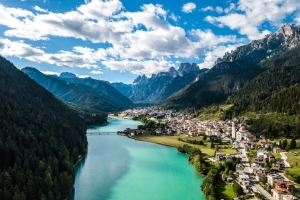
The area offers visitors the chance to enjoy days of well-being within a UNESCO World Heritage Site www.auronzomisurina.it. The Tre Cime area, and in particular thw town of Auronzo di Cadore, will be showcased through international sporting events ranging from gravel and trail running to canoeing and triathlon. But that’s not all: there are numerous and varied nature experiences on offer, even for the little ones.
A world circuit open to both professionals and amateurs
The first event will be on Saturday 20 June with the UCI Gravel World Series. Riders will cycle on gravel bikes through the majestic Tre Cime di Lavaredo, along a route of exceptional beauty, starting and finishing in Auronzo from 8.30 am, with the prize-giving ceremony at 4.30 pm. The set-up, including the opening of the stands, begins on Thursday 18 June and runs until Sunday 21 June. The world circuit is organized by the International Cycling Union and is open to both professionals and amateurs who can take part in the Randonnée, the non-competitive event at a leisurely pace open to everyone, even without a gravel bike but using a classic mountain bike.
Races of varying duration and elevation
The Lavaredo 80K trail running race will take place in Auronzo on Saturday 27 June. With a maximum duration of 22 hours, a distance of 80 km and 4,600 metres of elevation gain, the race starts in Val Marzon and finishes in the centre of Cortina. The event forms part of La Sportiva Lavaredo Ultra Trail by UTMB® in the Dolomites, which begins on 24 June in Cortina d’Ampezzo with races of various distances: from 10 km, 20 km and 50 km, up to the Lavaredo 120K with 5,800 metres of elevation gain and a maximum duration of 30 hours. There is also a kids’ version for the little ones.
A gravel triathlon event
The Gravel Cross Triathlon in Auronzo will take place on 11 and 12 July. One of the first gravel triathlon events in Italy, the Gravel Cross Triathlon is a variation of the off-road triathlon, which replaces the mountain bike with a gravel bike on dirt, gravel and forest trails. Participants will swim 1 kilometre in the alpine Lake Santa Caterina, before hopping onto their gravel bikes for a 26 km off-road ride with nearly 1,000 metres of elevation gain. The final 7.5 km will be trail running: a 600-metre climb from Lake Misurina leads to the Auronzo Mountain Hut, at an altitude of 2,333 metres. The race is also open to mountain bikes.
International Canoe Sprint and Paracanoe Championships
From 3 to 5 July, Lake Santa Caterina in Auronzo will also be the venue for one of the most eagerly awaited events of the summer: the International Canoe Sprint and Paracanoe Championships. The programme includes three days of heats and finals over 1,000, 500 and 200 metres, with hundreds of athletes competing in the Under-16, Junior, Senior and Masters categories.
A 34-kilometre walk
The 53rd Camignada poi Siè Refuge returns to Misurina on 2 August, organized by CAI Auronzo and now attracting over a thousand participants from all over the world. This is a non-competitive walk of approximately 34 km with 1,500 m of elevation gain, starting from Misurina and finishing in Auronzo, following trail 101. The route passes through six mountain huts: Rifugio Auronzo, Rifugio Lavaredo, Rifugio Locatelli, Rifugio Piani di Cengia, Rifugio Comici and Rifugio Carducci.
Lake Auronzo has a sandy beach for swimming
Between races, there’s plenty of opportunity to have fun and relax. Lake Auronzo has a small sandy beach with parasols, deckchairs, a swimming pool for diving in complete safety, and green areas for picnics. The Auronzo Fun Bob allows descents along a 3 kilometre route with a 500-metre elevation drop, reaching speeds of up to 45 km/h. The starting point for the bobsleigh is the top station of the Taiarezze-Malon chairlift, at 1,361 metres.
A play course for younger children
The Tre Cime Adventure Park features four aerial courses at varying heights and suited to different age groups, including Tibetan bridges, pirate ladders, walkways, vines and zip lines, all operated with the utmost safety in mind. Younger children, aged 3 to 5, can try their hand at a dedicated play course, whilst older children and adults can choose from three different courses, up to the one at a height of 14 metres. To top it all off, there is a zip line for children and adults that crosses the river.



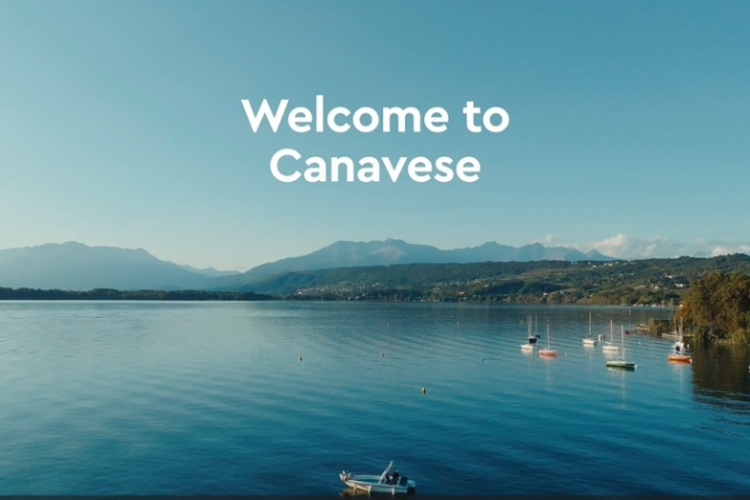
Welcome to Canavese, an unexpected corner of Piedmont where …
844Welcome to Canavese, an unexpected corner of Piedmont where …
844
