









“The route would not be sustainable”
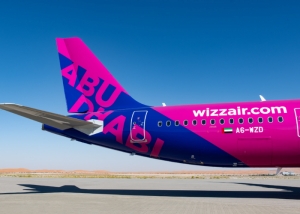
In a brief statement, the Hungarian low-cost airline recently announced that “Due to unexpected changes in market conditions and operational considerations, we have taken the difficult decision to suspend the launch of our new Abu-Dhabi-Milan Malpensa route.” The launch was announced last September in Milan by Wizz Air CEO Jozsef Varadi, who now states: “Although we were excited to offer this service to our customers, careful analysis has determined that, at this time, it would not be sustainable. We remain committed to exploring future opportunities in line with customer demand and our strategic objectives.”
Competition from Etihad Airways
The blame therefore lies with the low number of tickets sold on the route and the fact that not many passengers seem to be willing to spend almost six hours sitting in the cramped seats of an ultra-low-cost airline. It also probably lies with the fierce competition that the announcement had triggered with the only other direct connection between Abu Dhabi and Milan Malpensa which is operated by the Gulf carrier Etihad Airways.
The ball is now in Wizz Air’s court
Etihad was not caught unprepared, choosing to modify (in other words, lower) its fares, at least for the time being, in order to discourage Wizz Air's ambitions on the route. This strategy seems to have proved the Emirati airline right. Wizz Air now needs to decide whether the idea of using an A321Xlr aircraft for long-haul flights is the right type of plane to put on routes of this type given that the Hungarian low-cost airline was also planning to open a route from Europe to India with the same aircraft.
 Mariella Cattaneo
Journalist
Over 18.3 million passengers in 2024
These three jewels are not only popular tourist destinations but also as part of the unique Nort- East Airport Hub. After 2024, which closed with over 18.3 million passengers handled, +3.1% on the previous year, 2025 began with a positive trend. The first quarter recorded a +6% increase in traffic compared to the first three months of 2024, with almost 3.6 million passengers. The 2025 summer season, with 15 million seats expected from April to October, will exceed the excellent volumes already achieved in the previous year by the three airports.
Stepping-up flights from North America
Venice closes the first quarter with an increase of +3.5% and 1.2 million passengers and is ready for a summer season full of new developments, including the new daily United Airlines’ flights from Washington (from 23 May) and American Airlines’ from Dallas-Fort Wort (from 5 June). North America is once again confirmed as the leading intercontinental market for Venice, with passenger numbers expected to exceed 1.2 million in 2025, thanks to direct connections to eight destinations, operated by five heritage airlines. And Venice will once again be connected to Saudi Arabia by Saudi Arabian Airlines, which will operate scheduled flights to Jeddah and Riyadh during the summer season.
Traffic grows on Treviso and Verona airports
In the first quarter of 2025, Treviso airport recorded 700 thousand passengers, an increase of 5.4%. With 44 destinations in 21 countries connected for the 2025 summer season, the operations of Ryanair and Wizz Air guarantee the availability of a widespread network In Verona, travel is at record levels: after 3.7 million passengers in 2024 (+8%), the first three months of 2025 saw around 700,000 passengers, an increase of +17.3%.
Mariella Cattaneo
Journalist
“Italy’s positioning is almost podium level”
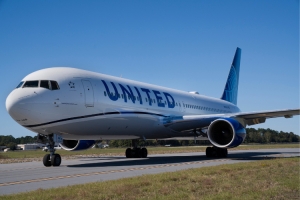
“This is currently just a personal feeling,- says Walter Cianciusi, Italy sales manager, - but I would certainly still bet on Italy, whose positioning - and this is certain - is almost podium-level. In recent years it has risen a lot in the ranking of the most important markets for United Airlines, with Fiumicino increasingly taking on the role of a hub for Southern Europe.”
The challenge in 2025 comes with several new developments…
“Yes, it does, like the launch of the New York-Palermo route, with three weekly flights from 21 May, then it will be Washington to Venice, and the new route from Denver to Rome, a seasonal flight that joins the other six already operating on Fiumicino. This is the fourth airport in Europe connected to Denver, after London, Frankfurt and Munich: a choice that once again underscores the value of the Italian market for United.”
What will be the increase in capacity in 2025?
“Italy, as I said, is a very important market and Rome in particular. In summer 2025 we will be operating out of five different airports - unique for United - with up to 14 non-stop flights a day between the United State and Italy. This means the annual capacity will increase by more than 13% compared to 2024. Rome will see an increase of 9%, which at the peak of the summer, will rise to 18%; from Naples we will increase by 10% and from Venice by 77%, while the capacity from Milan Malpensa will remain unchanged. In addition, the airline's vast network will be available to Italian passengers once they reach the USA. For example, we will be offering passengers from Palermo over 61 connecting destinations from Newark, with 86 for those arriving on flights from Naples, for a total of 208 connecting flights from Rome.”
2025 is also the year of the Jubilee: will this affect United?
“In general, the US component dominates on our flights and this figure is likely to increase this year.”
Premium demand is constantly increasing, is this also the case for you?
“Definitely. While pure corporate travel is still a little slow to recover compared to pre-Covid levels, leisure passengers travelling in business are filling this small gap. They are demanding clients, who sometimes use their miles to travel in our Polaris. An incentive to purchase this class also comes from the sales strategy that allows upgrades up to two hours before the flight.” The big news for United will be the arrival of the A321 XLRs, which will change the face of the fleet starting in 2026 as they progressively replace the older B757s as well as some 767s. “Another service innovation is the agreement with Starlink for fast Internet connection on board our aircraft. After a test stage this spring on the Embraer 175, it will be available on the main fleet by the end of the year and on the entire fleet by 2026.”
Naples Airport has a network of 120 destinations
A more intercontinental character thanks to the growth of flights from North America, and a low-cost presence that includes bases for all four of the main European carriers. This is the picture of summer 2025 at Naples airport, which since last July has been joined by Salerno Aiport, both of which have GESAC management. This year that promises further growth compared to 2024, which closed with a clearly positive balance said Roberto Barbieri, CEO of GESAC. “The 2025 network is vast with 120 destinations and more intercontinental flights, thanks to an impressive development of the offer to and from North America.” Naples will have 43 weekly flights from six airports – Atlanta, Chicago, Montreal, New York Newark, New York JFK and Philadelphia – served by the main US airlines: American Airlines, Delta Air Lines, United Airlines and Air Canada. 
“Intercontinental flights attract high-spending tourists” Roberto Barbieri, CEO of GESAC
“In just two years, the number of seats offered to and from North America will have more than quadrupled, from 100,000 in 2023 to 440,000 in 2025.” This schedule promises to have a positive impact on the region: “Intercontinental flights attract a high percentage of high-spending tourists who stay longer with a positive impact on the entire economic chain. A recent study conducted by Nomisma calculated that Naples Airport contributes 4.2% of the regional GDP, generating a total of about 112 thousand jobs. It is estimated that the new intercontinental flights will guarantee as many as 10 thousand more jobs and a further increase of 0.5% for the regional GDP.” Expectations are for “high load factors” for both inbound and outbound flights.
The low-cost airlines have a 76% share at Naples Airport
Beijing and Tokyo are being touted as potential new entries: ‘This is an ambitious and very interesting goal for us but will need an upgrade in infrastructure. We are working with ENAC (the Italian Civil Aviation Authority) and the Municipality of Naples to draw up a development plan that is both environmentally sustainable and industrially sound.” Low-cost airlines remain strategic partners, with a market share of 76%. “Ryanair is currently the leading airline operating at Naples Airport and all four of the main European low-cost airlines – Ryanair, easyJet, Volotea and Wizz Air – have an operational base here, guaranteeing greater operational stability and also contributing to employment and more efficient and reliable operations.”
“Italy is our second European market”
“This is our largest operation ever between the United States and Italy”, explains José Freig, VP international operations American Airlines. It is thanks to “new flights that will increase the network to Rome, Milan, Naples and Venice. Italy is our second European market in terms of the number of flights in the peak summer season, behind London Heathrow, with over 20 daily flights.” American Airlines current booking trend confirms the soundness of the investment: “The trend is very positive. There is certainly a ‘Jubilee effect’ that is helping to further strengthen the demand of our passengers for Rome, which has been one of the most popular destinations in our global network for several years.”
Flights to Naples are doubling this year
Together with the increase in the number of flights and a longer season, the newly announced Miami-Rome Fiumicino, Philadelphia-Malpensa and Chicago-Naples routes stand out and are “all seasonal routes, served by daily connections.” After its debut in last year's American network with the flight from Philadelphia, Naples is doubling up this year “thanks to its strategic position that allows US travellers to reach highly sought-after destinations, from Capri to the Amalfi Coast, and to be a gateway to Southern Italy. On the other hand, both Philadelphia and Chicago are two of our main strategic hubs in the USA for flights to and from Europe: from there we operate numerous connecting flights to and from the United States, Canada, Latin America and the Caribbean, guaranteeing passengers extremely convenient and widespread connectivity.
This summer American will operate up to 480 daily flights from Chicago
The schedule calls for the Philadelphia-Naples service to begin on 5 May, “a month earlier than last year, with daily flights throughout the summer season. We will continue to monitor demand to ensure that our services meet the needs of our passengers. We expect the new Chicago-Naples service to become a popular service.” This summer American will operate up to 480 daily flights from Chicago, offering 25% more seats and 22% more departures than last year. The airline will also introduce new connections from Chicago to Madrid and Halifax. Although it has to deal with the continuing “delays in the delivery of Boeing 787s, due to which the company has modified the service on some routes this summer to ensure that it can accommodate passengers from the flights concerned,” the global network continues to expand: “We have new routes to Athens, Madrid and Edinburgh, and for the second season we are reconfirming flights to Brisbane as well as seasonal flights to Copenhagen and Nice.”
A major player from Milan Malpensa to the Big Apple
 Neos NY aldo sarnataroNot only has Neos, the Alpitour group airline, become one of the major players operating from Milan Malpensa to the Big Apple, but the outlines of the inbound project are also more defined, with the next departure from Bari, following the launch of Palermo last year. The 2025 season aims “to confirm what was done in 2024, which was very good, - says Neos’ commercial director Aldo Sarnataro. -We are emerging from a pandemic and fortunately business is growing, now we need to reorganize and standardize what has been introduced, both in terms of volumes and diversification.”
“Demand on the USA-Italy route is very high”
“New York was a super challenging project, which might have seemed out of our league, but it produced the desired results. The product is there, demand on the USA-Italy route is very high and we can have our say. It also allows us to work on the trade by offering an important product, increasing volumes and targets towards travel agencies that can do other things with us.”
Up to 7 weekly Italy-New York flights
“The current trend in bookings is very positive, and we are relaunching because there is a lot of demand from different Italian airports: Bari started like that, and it adds another piece to our incoming puzzle. Even if, at the moment, compared to Palermo, there is a lot of outbound - we are at 70% to 30% - but the booking window from the USA is just starting, so we expect this to change.” Neos' 2025 offer between New York and Italy will include as many as 7 flights a week: four to Milan Malpensa, two to Palermo and one to Bari.
For the first time since 2019, traffic composition has returned to pre-COVID levels, with domestic travelers making up one-third and international travelers accounting for two-thirds—totaling 146 million passengers in the international segment.
Airports are a strategic sector, accounting for 3.8% of Italy’s GDP and generating 1.3 million jobs. “For every additional million passengers, 552 jobs are generated in the airport sector and 6,105 at a national level,” says Pierluigi Di Palma, president of ENAC (the Italian Civil Aviation Authority), emphasizing how “airports are a driving force for development.”  Bergamo Airport
In other words, for every euro invested in the Italian airport system, €3.2 are generated in the national economy. Airports, at last also in Italy, are no longer mere transit points but hubs of development that can generate value for the economic and social fabric of the country. With ever-evolving infrastructure driven by dynamic innovation and transformation, alongside a growing commitment to sustainability.
The warning to policymakers, urging them to give greater consideration to the entire airport sector, comes from Carlo Borgomeo, president of Assaeroporti.
Mariella Cattaneo
Journalist








Welcome to Canavese, an unexpected corner of Piedmont where …
844Welcome to Canavese, an unexpected corner of Piedmont where …
844
