





“A 50% reduction in airport capacity”
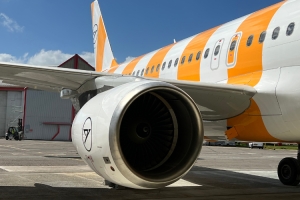
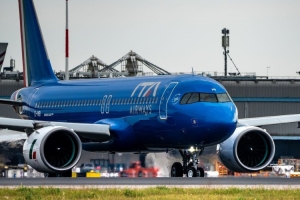
This will result in a “50% reduction in airport capacity- the German airline explains. -Despite efforts to ensure flight continuity, operations will be affected between 16 March and 23 March 2026.” Condor will operate the Milan-Frankfurt route with two daily flights instead of three, as flights DE4355 and DE4354 between Milan Malpensa and Frankfurt will be cancelled.
Two daily flights in place of three
On 17 March and 24 March 2026, Condor will operate two daily flights between Milan and Frankfurt instead of three, as flights DE4355 and DE4358 between Malpensa and Frankfurt will be cancelled. And, finally, from 29 March to 9 May 2026, Condor will not operate any flights between the two cities.
A dual certification as a tour leader and estate agent
Opera Home Tour’s owner Ivana Cravero is the only operator in Italy with a dual certification as a tour leader and estate agent. Specialized in tailor-made property tours for high-spending international clients interested in purchasing property in Piedmont, the project, developed by Opera Immobiliare is in collaboration with the tour operator Somewhere. It is aimed exclusively at foreign buyers through tailor-made packages that combine property viewings with tourist experiences in the Piedmont region. “Many houses in certain areas were only being approached by foreign clients, so I came up with the idea of creating this project to combine tourism with property viewings and the purchase of a property in the area,” says Ivana Cravero.
Targetting foreign markets
Opera Home Tour is aimed at an international clientele mainly from Germany, Belgium, the Netherlands, the United States and Northern European countries, with growing interest also from the Australian market. The preferred destinations are the Langhe, Roero and Monferrato areas, as well as Lake Maggiore. “Tours last 4-5 days and are designed exclusively for couples or groups of 4-5 people. They are customized and include property visits combined with food and wine experiences, cooking classes and tastings at local wineries,” explains Cravero.
Integrated after-sales services
Opera Immobiliare, which has offices in Turin and Alba, aims to accompany the client on a journey that continues even after a sale with a post-purchase assistance service. This covers legal aspects, bureaucratic procedure like utility transfers, opening bank accounts and citizenship applications and, for those buying for investment purposes, short-term rental management. Opera Home Tour communicates through Facebook and Instagram in English and on www.operaimmobiliare.eu with the aim of gradually expanding the project from the Piedmont area to the whole of Italy.
A UNESCO World Heritage Site since 2000
The town, together with almost all of its territory, was added to the World Heritage List in 2000. In its statement UNESCO emphasized that Assisi is a unique example of the historical continuity of a town with its cultural landscape and the whole of its territorial system.
The Basilica of St Francis dates back to 1228
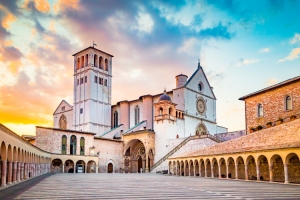
The Basilica of St Francis is the main religious complex in Assisi. Its construction began in 1228, just two years after the saint's death, with the aim of honouring and preserving his relics. The building consists of two superimposed and independent churches: the lower basilica has low cross vaults set on massive pillars, while the upper one is tall, airy and bright, with slender cross vaults set on the elegant columns of the pillars. Both were frescoed by artists such as Cimabue and Giotto, and the lower basilica also boasts works by the Sienese masters Simone Martini and Pietro Lorenzetti.
St. Francis lived in a cave
Among the city's many religious buildings, the church of Santa Chiara stands out. With a square bell tower and a Latin cross plan, it is embellished with interior walls covered with frescoes illustrating the legend of the saint. Closely linked to the life and work of St Francis of Assisi are: Santa Maria degli Angeli, a Renaissance church designed by Galeazzo Alessi in the 16th century; the Porziuncola, where St Francis died; the monastery of San Damiano, the convent where Francis had his awakening and where St Clare died; the sanctuary of the Carceri, a series of caves inhabited by Francis and his companions; and finally, the sanctuary of Rivotorto, which is part of the Franciscan pilgrimage sites.
Italy’s second most important Christian pilgrimage site
The sanctuary city of Assisi, which is an unparalleled example of continuity from its Umbrian-Roman origins to the present day, has become the second most important Christian pilgrimage site in Italy after Rome.
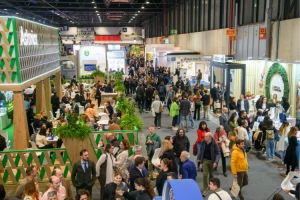
The International Tourism Trade Fair, organised by IFEMA MADRID, has closed its doors with a positive outcome, reaffirming its strong convening power by slightly surpassing 255,000 visitors over its five days. During the professional days, attendance figures from the previous edition were consolidated at 155,000 visitors, with a 12% increase in international attendance, in line with the 11% growth in international exhibitors. Likewise, the general public attendance over the weekend was consolidated at 100,000 travellers.
These results consolidate FITUR’s outstanding participation figures, with more than 10,000 companies from 161 countries, including 111 countries with official representation, and 967 main exhibitors. The economic impact of FITUR 2026 on Madrid reached €505 million, while supporting the maintenance of 3,753 jobs, confirming the fair’s position as one of the region’s most significant international events of the year and a key contributor to economic and tourism activity.
FITUR thus opens 2026 by confirming the strong momentum of the global tourism sector. This favourable context is reflected in 2025 figures, a year in which, according to UN Tourism, international tourist arrivals worldwide exceeded 1.5 billion, while Spain welcomed 97 million international tourists, according to data from the Ministry of Industry and Tourism.
The 46th edition opened on Wednesday 21 January with a minute of silence, reflecting the tourism sector’s solidarity with the victims of recent railway accidents. The gesture was echoed during the official opening on Thursday 22 January, when Their Majesties the King and Queen of Spain signed the book of condolences at the Andalucía stand.
Institutional backing and sector confidence
FITUR 2026’s institutional relevance was underscored by the official inauguration presided over by Their Majesties the King and Queen of Spain, as well as more than 70 institutional visits by regional presidents, ministers and deputy ministers of tourism from around the world, alongside senior tourism authorities. These visits highlighted FITUR’s strategic role as a global forum for dialogue, cooperation and international projection for the tourism sector.
FITUR: a commitment to knowledge and a more future-focused offer
The strong attendance translated into intense activity across the nine exhibition halls, where destinations, companies and institutions from around the world showcased new products, strategies and projects. During the professional days, the Knowledge Hub emerged as one of the fair’s central pillars, featuring eight auditoriums, ten conference programs, more than 200 sessions and over 250 speakers.
In parallel, FITUR’s specialized sections enriched and diversified the fair’s overall offering. FITUR 4all advanced the agenda for accessible and inclusive tourism; FITUR Cruises strengthened the profile of sustainable blue tourism; and the launch of FITUR Experience, together with FITUR Lingua and FITUR LGTB+, energized segments with strong growth potential. Meanwhile, FITUR Screen, Sports, Talent and TechY promoted the intersection of tourism with culture, sport, talent and technology; FITUR Woman highlighted female leadership in tourism; and FITUR Know-How & Export showcased the international expertise of Spanish companies.
With this outcome, and a strong and wide-ranging showcase by Mexico as Partner Country, FITUR 2026 has reaffirmed its global leadership in terms of participation and visitor numbers, its relevance for professionals in generating business opportunities and partnerships, and its contribution to strengthening tourism as an economic and social driver, as well as to the development of a more diverse, competitive and future-focused tourism offer.
IFEMA MADRID is already working on FITUR 2027 with Puerto Rico as Partner Country.
Today’s travellers are no longer satisfied with simply visiting Italy. Authenticity, personalisation and emotional connection have become the real currency of travel. BIT 2026 positions itself precisely at this intersection, offering buyers a platform where Italy’s brand can be explored, and recomposed into market-ready proposals.
Presented by Fiera Milano at the Milan-Rho fairgrounds from Tuesday 10 to Thursday 12 February, BIT 2026 is conceived as a platform to actively support buyers in building offers that reflect the expectations of today’s travellers.
Travel Makers Fest: Where Italy’s Narrative Takes Shape
At the heart of BIT 2026 lies the Travel Makers Fest, the content-driven core of the event, where Italy’s brand is examined as a dynamic and evolving system rather than a fixed image. The Fest unfolds across four thematic Plazas and two Main Plazas with five key fil rouge: Discovery, focused on new trends; Backstage, revealing the processes behind travel design; (Im)possible, dedicated to extraordinary journeys; This Must Be the Place, exploring new ways of experiencing destinations; and BIT & Friends, featuring expert-led conversations.
The starting point is the international reputation of Italy itself. In “Italia Mammamia: How the World Sees Italy”, Simon Anholt, creator of the Anholt Nation Brands Index, brings to the stage an exclusive data-driven reading of Italy’s global image, that sees Italy hold the first position worldwide in the tourism category.
Cinema and media-driven storytelling emerge as another key pillar of destination branding. In “Celebrity Marketing: The Power of Stories and Famous Faces in Building a Destination’s Image”, the discussion focuses on how films, TV series and cultural icons shape travel desire. Complementing this perspective, “Italy, an Open-Air Museum: Art as a Daily Experience” explores the idea of culture as a lived, immersive dimension.
Beyond Icons: Borghi, Diffused Culture and Narrative Itineraries
A defining strength of Italy’s tourism offer lies in its diffused identity. In “Making Small Territories Great: How Storytelling Regenerates Places and Communities”, the focus shifts to inner to show how storytelling can transform local identity into high-value travel experiences.
This approach is further developed in “Telling the Journey, Enhancing Destinations and Products: The Role of Content Creators in Today’s Tourism”, which examines contemporary through shared codes and emotions. The emotional dimension of travel is then explored in “No Place Is Far Away”, with explorer and communicator Alex Bellini, where distance is reframed as a relational and emotional concept.
From Content to Market: The Exhibition Layout and Buyer Opportunities
What makes BIT 2026 particularly relevant for international buyers is the way content, exhibition and business tools are fully integrated into a single layout structured into six districts: Italy, World, Travel Expert, Hospitality, Innovation and Transportation.
The Italy district brings together almost all Italian regions, alongside ENIT, offering buyers a comprehensive overview of the country’s territorial diversity, from well-established destinations like Puglia, Sicily, Tuscany and Lombardy to emerging regions such as Basilicata, Molise and Friuli Venezia Giulia. Alongside destination, key industry players are present: from Tour operators such as I Grandi Viaggi, to carriers including ITA Airways and Singapore Airlines. This dimension is further strengthened by the BIT Mobility Forum, developed in collaboration with NME – Next Mobility Exhibition, with contributions from partners such as Lombardy’s train operator Trenord. Partnerships play a central role in shaping the experience, with a selection of Unique Partners and Premium Partners.
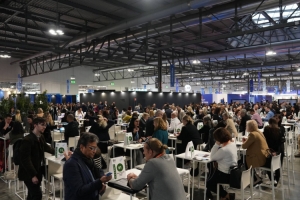
Within this ecosystem, the Speedy Meetings programme represents one of the most concrete tools for buyers. Designed for registered professional operators and exhibitors, Speedy Meetings offer three days of targeted, themed encounters, held in a space reserved exclusively for qualified participants.
Italy’s Brand as a Competitive Advantage
According to the Booking.com Travel Forecast 2026, 74% of travellers choosing Italy expect itineraries that reflect their personal identity, confirming a shift towards self-expressive travel where destinations become a mirror of individual values and lifestyles.
This evolution is reshaping how Italy is experienced and sold. Travellers are no longer drawn exclusively to headline attractions, but increasingly to narrative-driven destinations that offer depth, meaning and a sense of discovery. Cultural storytelling, cinema-inspired travel and everyday heritage play a growing role in this process. The rise of set-jetting, for example, continues to drive interest towards Italian regions featured in films and series, while narrative tourism linked to literature, art and craftsmanship encourages visitors to explore lesser-known territories.
Digital storytelling amplifies this shift. The HBX Group Travel Report 2026 highlights that around 50% of final travel decisions are now influenced by content consumed on social platforms, where visual narratives and personal stories shape desire more effectively than traditional promotion. For buyers, this means working with destinations and operators capable of delivering not only quality services, but also strong, coherent narratives that can travel across channels and markets.
For international buyers, BIT 2026 offers a unique opportunity to engage with Italy not as a finished product, but as a living system of stories, places and experiences ready to be interpreted and transformed. It is here that Italy’s narratives evolve into structured propositions, and where the Italy of tomorrow takes shape — curated, authentic and deeply connected to the travellers who choose it.
BIT 2026 takes place at Fiera Milano from 10 to 12 February.
ITA Airways has its own stand at FITUR
Eighty flights a week between Spain and Italy, with direct connections from Madrid and Barcelona to Rome Fiumicino: this is ITA Airways' commitment to the Spanish market, which the airline is presenting at the 2026 edition of FITUR from 21 to 25 January at the IFEMA Exhibition Centre in the Spanish capital. The airline is there with its own stand (4E18) in Hall 4, within ENIT’s space dedicated to Italy.
Connections to South and North America
From Rome Fiumicino, passengers can take advantage of convenient connections to the ITA Airways’ international and intercontinental destinations, including South America (São Paulo, Buenos Aires and Rio de Janeiro) and North America, which will see the inauguration of a new route to Houston, Texas, in summer 2026.
Malaga and Valencia to Rome Fiumicino
ITA Airways recently announced the strengthening of its operations to Spain for summer 2026, with new daily seasonal flights added to the existing connections from Madrid and Barcelona to Rome Fiumicino. From 1 June to 30 September, the Malaga- Rome Fiumicino and Valencia-Rome Fiumicino routes will operate and they are already available in the carrier's sales systems, designed to meet the strong leisure demand for two of the main destinations in the Mediterranean.
London Heathrow-Rome Fiumicino flights resume
These new routes complement the resumption of flights between London Heathrow and Rome Fiumicino with two daily flights starting on 29 March, further consolidating connectivity between the UK's main international hub and Italy. In addition there will be a new seasonal flight from Marseille to Rome Fiumicino, operating daily from 1 June to 30 September 2026.
New Houston-Rome flights this summer
As for long-haul flights summer 2026 will mark the debut of the new Houston-Rome Fiumicino flight from 1 May, with three weekly flights, increasing to five between June and October. This is the first direct connection between the two hubs and ITA Airways' ninth destination in North America.
More about the airline
Madrid once again becomes the focal point of global tourism as it hosts the International Tourism Fair (FITUR), organised by IFEMA MADRID from 21–25 January 2026. In its 46th edition, FITUR strengthens its position as the sector’s leading platform, highlighting both its international reach and its commitment to knowledge as a driver of industry transformation
The figures unveiled at the press conference underscore FITUR’s leadership: nine halls, more than 10,000 companies from 161 countries, 111 of them counting on official representation, (10% up on the 2025 edition) and 967 main exhibitors. Overall, FITUR has recorded an 11% rise in international participation.
FITUR also welcomes 18 new nations, largely from Africa and the Asia–Pacific, where participation has risen by 34% and 22% respectively. Standing out newcomers include Abu Dhabi, Dubai and Zanzibar, alongside regions from Germany and the United Kingdom.
FITUR 2026’s figures reflect the strong global momentum across the tourism industry. According to UN Tourism, between January and September 2025 the sector welcomed more than 1.1 billion international travellers, surpassing pre‑pandemic records set in 2019.
The Knowledge Hub and Fitur’s latest projects
In this context, FITUR 2026 strengthens its role as a key forum for industry debate with several major additions. The most relevant is the new Knowledge Hub, located in Hall 12 and open throughout the fair. Conceived as the strategic hub for tourism insight, it features eight auditoriums, ten conference programmes, more than 200 sessions and over 250 high‑level speakers.
The Knowledge Hub will also host further highlights, including FITUR Experience, focused on experiential tourism as one of the sector’s most dynamic drivers of change, and the first International Summit on Communication and Tourism, which analyses the challenges facing tourism communication alongside experts and representatives from both the public and private sectors. In addition, the Travel Technology Area has doubled in size and will bring together more than 190 leading innovation companies.
Economic impact and visitor outlook
Strong participation points to a significant turnout, with forecasts exceeding 150,000 professionals and close to 100,000 public visitors over the weekend. FITUR remains a major economic engine for Madrid, generating €487 million in its previous edition.
Mexico, FITUR 2026 Partner Country
Mexico will be the Partner Country of FITUR 2026, with a prominent presence at the Fair at a time when its tourism sector grew by 13.9% between January and September 2025, according to SECTUR, and with the aim of securing its position as the world’s fifth most visited destination.
Sustainability, accessibility and an open weekend
FITUR will introduce a fast‑track entrance at the South‑East access to facilitate professional entry and is encouraging the use of public transport, supported by increased services on Metro Line 8.
Over the weekend, FITUR will open its doors to travellers with a full programme of activities, workshops and experiences, reinforcing its status as the sector’s major public celebration.
“Instruments entirely carved in ice”
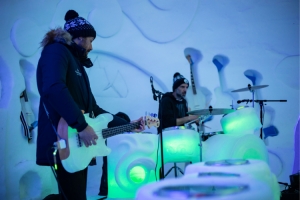
This event, that transforms the high mountains into a meeting place for art, nature and listening, will consist of 30 appointments twice weekly on Thursdays and Saturdays in the Paradice Dome. Its uniqueness lies in the sounds of the musical instruments that are entirely carved in ice. Guitars, basses, violin, viola, cello, drums and the didgeridoo are made from a mix of water and natural snow.
The Dome will melt naturally in Spring
The Paradice Dome, built entirely from snow and ice by local sculptor Ivan Mariotti and his team, is an integral part of the experience. Designed to melt naturally with the arrival of spring, leaving no trace, it can facilitate the dispersion of heat from the audience upwards and outwards and, even at full capacity, the temperature inside remains around minus three degrees. 
Concerts also for non-skiers with the Paradise cableway
The 2026 playbill welcomes leading artists such as Federico Poggipollini & The Crumars on 17 January, Max Gazzè on 31 January with a double performance, Saturnino together with Moris Pradella and Leonardo Di Angilla on 21 February, also in a double performance, and Murubutu on 28 March. Alongside the guests, the Paradice Orchestra and the Paradice Band accompany the entire season with a wide and transversal musical proposal, ranging from rock to surf & reggae, from Irish music to the timeless hits of the 80s and 90s. The concerts are also accessible to non-skiers and the Paradice Dome is located near the Paradiso cableway, departing from Passo Tonale
High-altitude fine dining
In the nearby Passo Paradiso refuge, which can be reached in just a few minutes from the Paradice Dome, the festival continues with a series of high-altitude dinners featuring the gastronomic excellence of Trentino and Lombardy. These are scheduled for 24 January, 14 February - for an out-of-the-ordinary Valentine's Day - and 7 on March, plus the star-studded dinner on 21 February with a menu of chef Edoardo Fumagalli. For information: https://www.visitbrescia.it/eventi/paradice-music-ponte-di-legno/
.
In this context, BIT 2026, presented by Fiera Milano at the Rho fairgrounds from Tuesday 10 to Thursday 12 February, positions itself as the professional platform where the relationship between sport and tourism is interpreted, discussed and translated into concrete opportunities for destinations, operators and institutions.
At the heart of this reflection lies the Travel Makers Fest – a three-day programme spread across six dedicated plazas, fully integrated into the BIT exhibition layout and featuring more than 200 debates, seminars and discussions – where sport tourism is explored through a series of focused talks examining its long-term impact on destinations.
Beyond the Olympics: when the event becomes the destination
The Olympic Games represent the highest expression of global sports spectacle, but the real challenge for host cities begins once the spotlight fades. The concept of Olympic legacy opens a crucial question for tourism: what truly remains after the event?
This is the focus of Olympics. And then? The long wave of sporting events in Olympic cities, which places Milan alongside Paris and Barcelona to examine how major events can become catalysts for lasting attractiveness. The discussion looks beyond short-term visitor numbers to explore how redesigned infrastructure, renewed urban narratives and sustained international visibility can continue to generate tourism flows over time.
Tourism is framed as a core component of legacy-building: not only increased arrivals, but a rethinking of travel experiences, urban quality and cultural identity. The key takeaway is clear: major sporting events create long-term value only when embedded in a strategic vision capable of transforming sporting excellence into a permanent reason to return.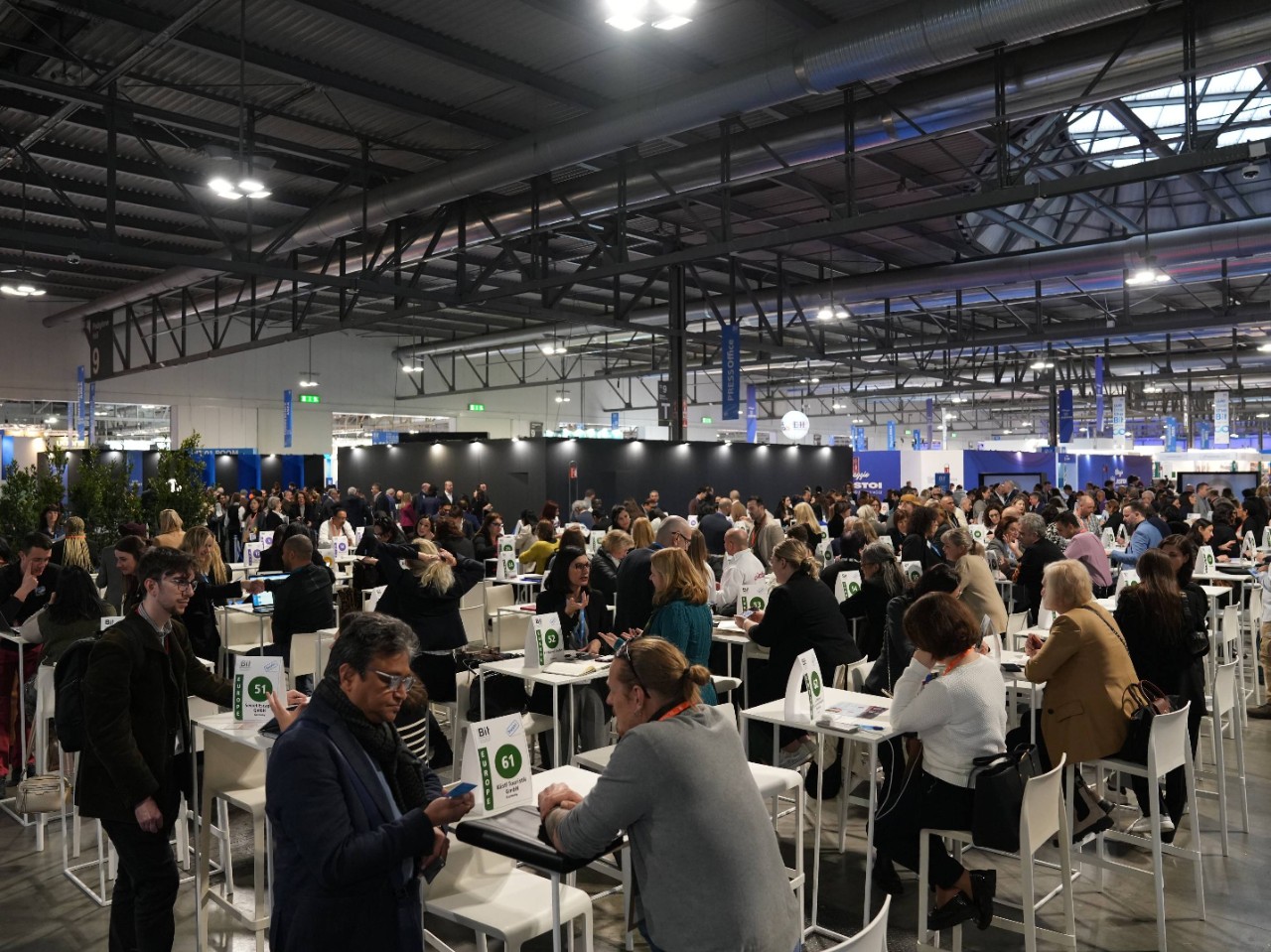 BIT 2025
Sport as storytelling: football and the city brand
The role of sport as a storytelling engine for cities emerges again in Squad Goals: How Football Drives City Branding, with a strong focus on football as a driver of urban tourism.
If the Olympics speak to the world at specific moments, football engages millions of people every day. More than a sport, it is a universal language that shapes collective imagination and influences travel choices. Iconic stadiums, historic clubs and legendary rivalries transform cities into year-round destinations for sport-driven urban tourism.
From Como to Bergamo, from Milan to Naples, football becomes a powerful tool for destination branding. Fans evolve into travellers, attracted not only by matches but by neighbourhood atmospheres, club museums, stadium tours and experiences that blend sport with lifestyle. The result is tourism that animates cities all year round, not just on match days.
Experiencing sport tourism first-hand
This narrative extends beyond content into lived experience. During BIT 2026, some Olympic disciplines will be hosted inside selected pavilions at Fiera Milano, adjacent to those hosting the exhibition itself. A unique spatial closeness that brings the connection between sport and tourism to life, allowing visitors to immerse themselves in the Olympic atmosphere while engaging with the international travel marketplace.
Alongside the Travel Makers Fest, the exhibition layout reinforces this vision by bringing together destinations, operators and specialised know-how. Here, sport tourism is positioned as a strategic tool for destination branding, seasonality management and international positioning, capable of activating mountain regions, cities and landscapes year-round.
As the countdown to Olympics Winter Games accelerates, sport is already reshaping how Italy is discovered and experienced. At BIT 2026, the industry gathers to understand how the momentum generated by sporting events can be transformed into long-term tourism value — turning global attention into lasting impact.
BIT 2026 takes place at Fiera Milano from 10 to 12 February.
Advertorial
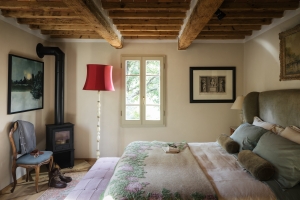

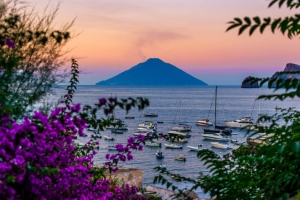

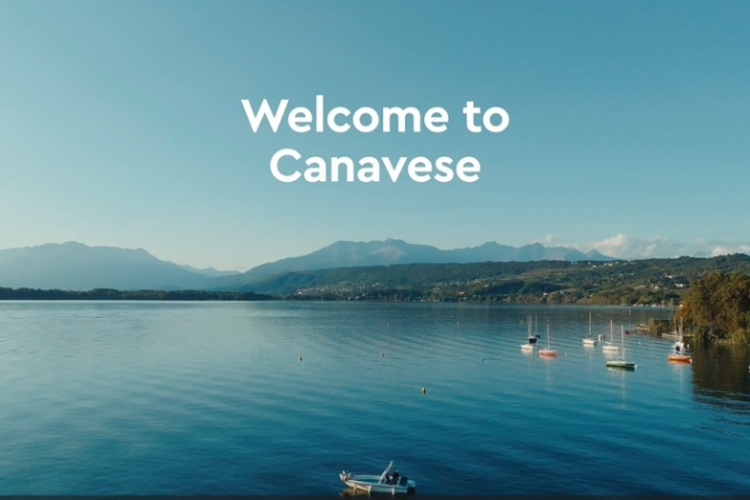
Welcome to Canavese, an unexpected corner of Piedmont where …
256Welcome to Canavese, an unexpected corner of Piedmont where …
256
