


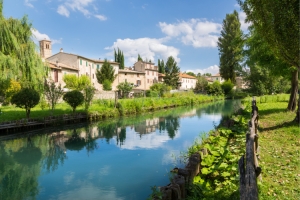


Santa Severa: the charm of the sea and history
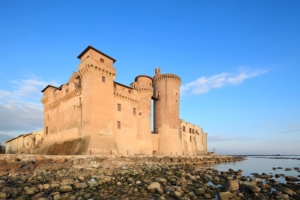
Santa Severa is a hamlet of the municipality of Santa Marinella, best known for its castle by the sea. Built in the Middle Ages on a pre-existing Etruscan and Roman site, the Castle of Santa Severa is in a unique position right on the beach. It can be visited and regularly hosts museums, exhibitions and cultural events year-round. It is also possible to stay in the Medieval village in the fortress, which has 14 rooms, nine of which with sea views.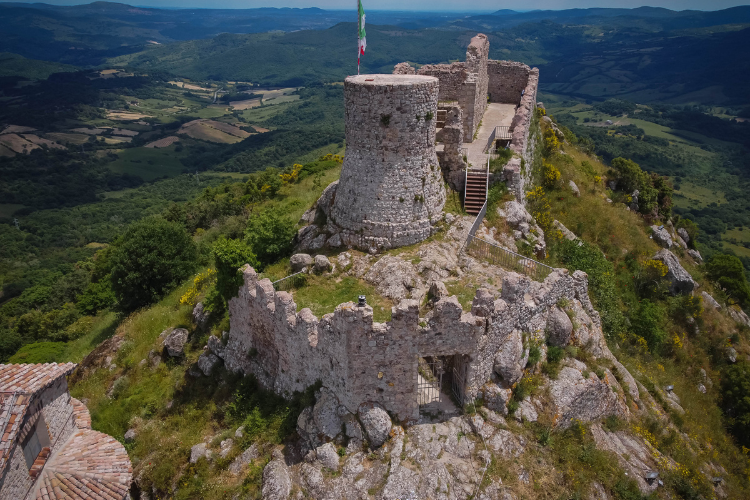
Tolfa. Traditions and nature
Tolfa, a Medieval village rich in history and culture, lies some 25 kilometres inland from Santa Severa on a mountain ridge next to the sea. Known in the past for its alum mining, today it is a virtuous example of how local heritage can be enhanced. The historic centre retains its Medieval layout with narrow alleys, small squares and lovely views. On the highest point of the village, from the ruins of the Castle of the Rocca, there are splendid views and the small Medieval church of the Madonna della Rocca. Tolfa is also home to the famous “Tolfa” leather bag, a handcrafted product that has been handed down through generations.
Santa Severa and Tolfa are two contrasting sides of the same territory, set between the blue Tyrrhenian Sea and the green Lazio hills, and are perfect for a day outing or weekend itinerary.
The two Fusine Lakes
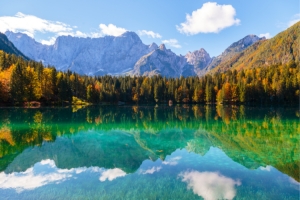
This small corner of Italy, on the eastern border, just a stone's throw from Slovenia and Austria, can boast unforgettable landscapes and evocative experiences. It has the two Fusine lakes of glacial origin, known as Lago Superiore and Lago Inferiore, which are set between the mountains and joined by a pathway through a centuries-old forest. In summer the green of the fir trees is reflected on the surface of the water, in autumn the larch trees turn golden yellow and orange and in winter the lakes freeze over while in spring the ice melts slowly and the waters become crystal-clear.
A Mushing Sleddog School
Thanks to the International Mushing-Sleddog School, located on the Fusine plain, it is possible to try your hand at driving sleds pulled by Siberian huskies, through snow-covered landscapes. The Centre is led by the legendary Ararad Khatchikian, protagonist, among others, of the legendary expedition “In the footsteps of Balto, 1,200 kilometres in Alaska”. The entire area is rich in wildlife, and it is not difficult to encounter roe deer, deer and foxes. The walks along the path between the lakes are suitable for everyone, while the more experienced can proceed to the Zacchi alpine hut, at an altitude of some 1,400 metres. In summer, rowing boats and pedal boats can be hired, and cycling enthusiasts can enjoy the Alpe Adria Radweg cycle route, which connects Salzburg with Grado.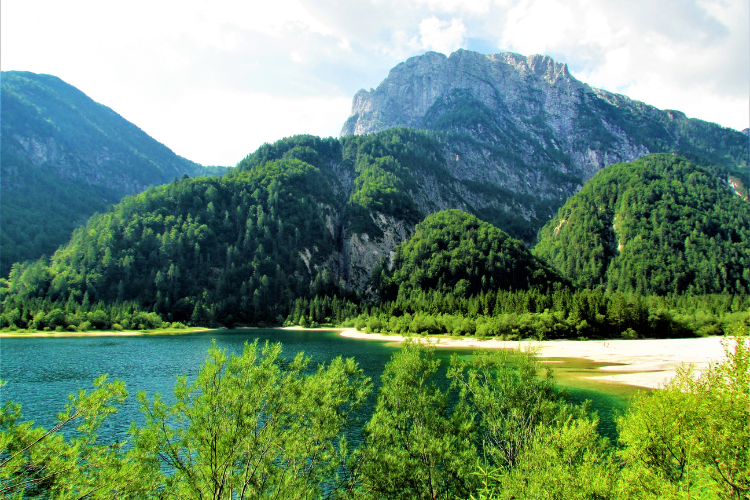
Lake Predil is another Alpine gem
A few kilometres from Fusine, Lake Predil is another Alpine gem. The second largest lake in Friuli Venezia Giulia, it is also the deepest lake in the region. At an altitude of almost one thousand metres, it lies at the foot of the imposing Cima del Lago and Monte Cinque Punte, which reach a height of two thousand metres. The colour of its waters is typical of Alpine lakes, ranging from deep blue to emerald green, and even in summer its waters are cold and clear, with temperatures constantly around 6°. Predil is also relevant from a historical-geological point of view, having been an important mining centre until not so long ago. The road along the lake leads to the picturesque Predil Pass, the border pass with Slovenia.
Tarvisio is close to Austria and Slovenia
Tarvisio, which is a short distance from the two lakes is a small town very close to Austria and Slovenia. It offers a warm welcome to visitors and is famous for its market. A cable car that starts near Tarvisio goes up to Mount Lussari where, in addition to a breathtaking view over three European nations, there is an ancient and evocative Marian sanctuary, and a small village (the highest in the region). In winter, Mount Lussari is the centre of the Tarvisio ski resort, with slopes for all levels.
Authentic simplicity and elegant charm
The little village of Bolgheri has become world-famous for its wine, its timeless beauty and a poem that has made it immortal. With just a handful of stone houses, a Medieval castle and an avenue famous in Italian literature, Bolgheri is a destination that enchants with its authentic simplicity and elegant charm.
The iconic row of cypress trees
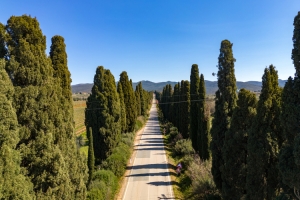
The village can be reached by following the legendary Viale dei Cipressi, a row of cypress trees made immortal by the Italian poet Giosuè Carducci. About five kilometres long, this straight avenue is flanked by over two thousand cypress trees and is one of the most iconic views in Italy, as well as being the symbol of a profoundly identifiable agricultural landscape. Bolgheri, in the Tuscan Maremma region, is what Italians call a borgo, a hamlet or village, and though it is small it is rich in history with the castle of the Della Gherardesca family dominating the entrance. Visitors wander along cobbled lanes with artisan workshops and stop for refreshment at small restaurants serving traditional Maremma dishes. 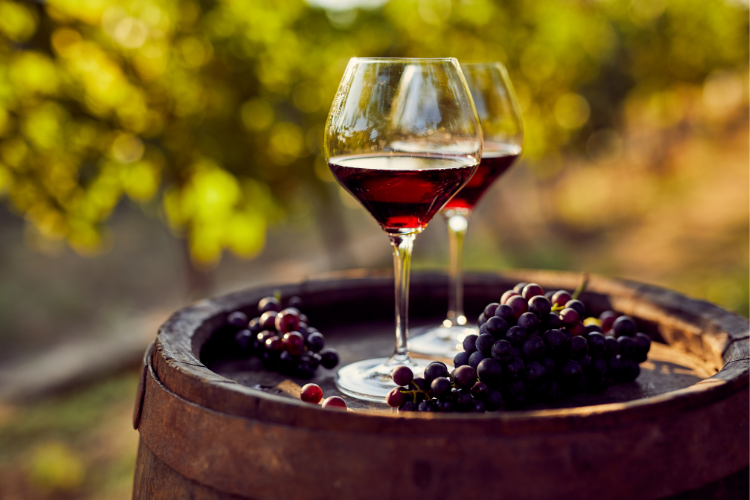
The famous local wine cellars
The area is world-famous for its wine production. Since the 1970s, Bolgheri has become synonymous with excellence thanks to the so-called “Super Tuscans”, red wines of the highest quality such as Sassicaia, Ornellaia, Grattamacco that are true icons of world oenology. The Wine Road of the Etruscan Coast offers numerous opportunities to visit and taste local wine cellars, where the combination of innovation and respect for tradition is tangible in every glass. And not only wine as the area also produces fantastic olive oil, chestnuts, wild boar and mushrooms.
The surroundings of Bolgheri
A few kilometres from Bolgheri the Tyrrhenian coast offers a perfect alternative for those who wish to combine art, culture and good wine with the pleasure of the sea. Marina di Castagneto Carducci is the nearest and easily accessible seaside resort, with long sandy beaches, clean water and shady pine forests. The coastline is largely free, but there are also well-equipped private lidos, restaurants and accommodation facilities suitable for families and travellers seeking tranquil surroundings. The sea here is shallow which is perfect for children, and the Blue Flag awarded each year testifies to the quality of the water and the services.
The Rimigliano Park has sand dunes, woods and beaches
A distinctive feature of the coast is the Mediterranean scrub that reaches down to the beach, with maritime pines, holm oaks and junipers creating a unique and well-preserved ecosystem. A little further south, the Rimigliano Park has sand dunes, woods and beaches and continuing along the coast, a stop at Castiglioncello is a must. This refined seaside resort beloved by artists and intellectuals, is still a popular and elegant beach resort. The Via Aurelia, an ancient Roman consular road, easily connects Bolgheri with the entire coastline, facilitating fast and scenic travel between villages, vineyards and the sea. The road is also a strategic route for those wishing to head fowards Pisa, Livorno and Rome.
Discovering the Stiffe karst caves
One such itinerary runs between L'Aquila and Sulmona, cutting through the Navelli plain in the heart of region where it is possible to discover some unknown treasures that are absolutely worth seeing. On this journey through the mountains of L'Aquila, the first thing to explore are the Stiffe Caves, ideal for those who love nature and the wonders of geology. The visit takes you into a spectacular karst complex, where an underground stream creates waterfalls, tunnels and plays of light and the temperature inside is 10° all year round.. The visits are always guided and last an hou.
The “Sistine Chapel of Abruzzo”
A few kilometres away is Bominaco, a small hamlet with an extraordinary medieval monastic complex. In the municipality of Caporciano it is best known for the Oratory of San Pellegrino, often called the “Sistine Chapel of Abruzzo”. The interior of the building is entirely covered by an exceptionally well-preserved 14th-century fresco cycle. Next to the chapel are the remains of the Abbey of Santa Maria Assunta dating back to the 11th century which preserves precious Romanesque elements. It stands out for its elegant architecture and is set in stunning natural context: a place out of time, completely immersed in silence.
Rural churches off the beaten track
The road to Sulmona continues through small towns, far from the routes of mass tourism. Then suddenly, we come across the church of Santa Maria de' Centurelli, which was strategic at the time of the transhumance of the shepherds who used to bring their cattle from the mountains to the sea. We also find the smaller church of the Madonna del Camp in the middle of the countryside, with a Renaissance-style roof, a single nave and a single altar.
The cultivation of saffron on the Navelli plain
Passing through charming little villages like: Barisciano, Caporciano and San Pio delle Camere - the latter dominated by the remains of a Medieval castle - we come to Navelli, which famous for the cultivation of the prized L'Aquila saffron PDO, defined for centuries as the “red gold” of the Apennines. The town boasts 571 inhabitants and is part of the association “I borghi più belli d'Italia” (Italy's Most Beautiful Villages).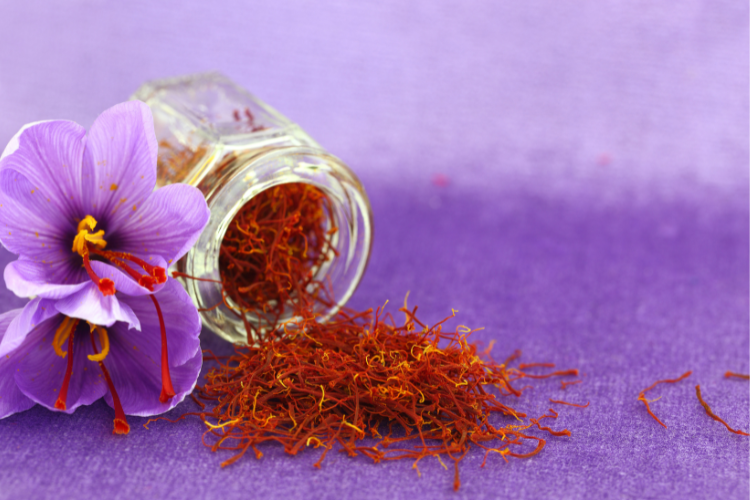
An itinerary to discover one of Italy’s excellences
Around the end of October, during the flowering of the crocus plants, the landscape is tinged with purple and comes alive with ancient agricultural traditions. Saffron is one of the products that encapsulates all the wisdom of a territory and represents Italian excellence around the world. Wandering through the alleys of the highest and oldest part of this little village means stepping back into the past, and discovering a pace and a charm that are hard to find today
An ancient roman settlement
Surrounded by vineyards, olive groves and cultivated fields, Bevagna is famous for its perfectly preserved ancient walls, fortified city gates, and an urban configuration that still retains its Roman layout, as evidenced by the remains of the forum, theatre and baths. Entering the town and walking through the stone alleys, small squares and ancient shops really feels like being back in the Middle Ages, as the village is perfectly preserved and intact.
Historic churches and a Civic Museum
The central Piazza Silvestri square in Bevagna has historic buildings such as the Romanesque churches of San Michele (year 1070) and San Silvestro, and the Palazzo dei Consoli (year 1270), home to the Francesco Torti Theatre. The 18th-century Palazzo Lepri houses the Art Gallery, the Library and the Civic Museum with archaeological finds and paintings from the 16th to the 18th century, and works by artists such as Dono Doni, Andrea Camassei and Ascensidonio Spacca. 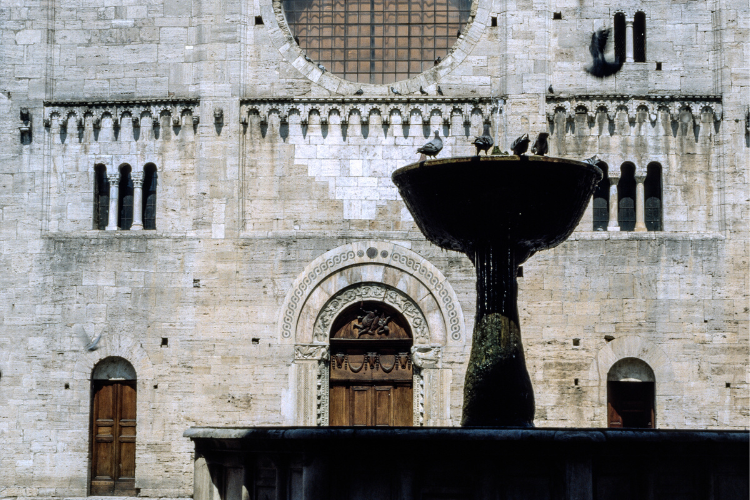
The Mercato delle Gaite festival is held at the end of June
Every year, in the last week of June, the traditional Mercato delle Gaite, one of Italy's most important historical re-enactments, takes place in Bevagna. Each of the four districts - Gaita di San Giorgio, San Giovanni, Santa Maria and San Pietro - opens its craftsmen's workshops, taverns with menus featuring mediaeval dishes and special areas devoted to paper, wax and silk processing. Another highlight is the Procession of the Podestà and the presentation of the Palio and Bevagna also offers a rich programme of happenings at other times of the year. From the “Primavera Medievale” (late April-early May) to the “Sagra della Lumaca” (February and August) and the “Magia della Tradizione” (Christmas and New Year's Eve).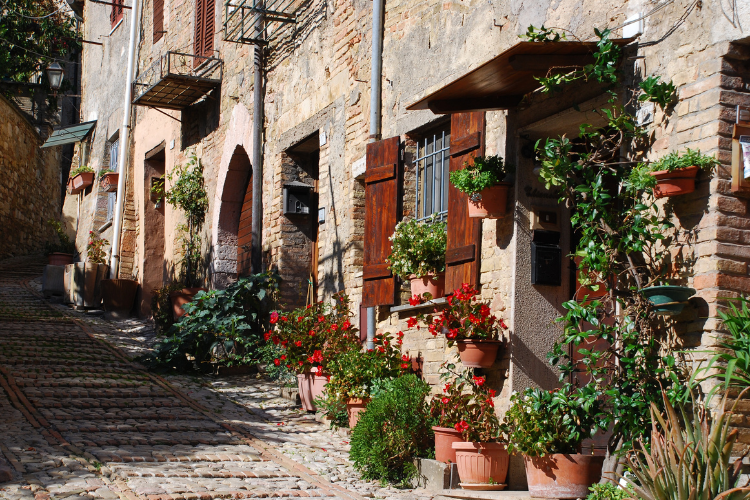
Charming Spello, Trevi and Montefalco are all close by
Events continue in summer with “E-State a Bevagna” featuring theatre festivals and concerts in the Teatro Torti, as well as various village festivals. Around Bevagna it is worth visiting the small town of Montefalco, which is about 10 kilometres away on top of a hill, and known as the “Balcony of Umbria” for its panoramic vistas and for its Sagrantino wine. Then there are Spello, which is less than 20 kilometres away, and can boast the Baglioni Chapel with frescoes by Pinturicchio, and Trevi, some 25 kilometres away which is known as the “Capital of Oil” for its extra virgin DOP oil.
A stunning mountain where peace reigns
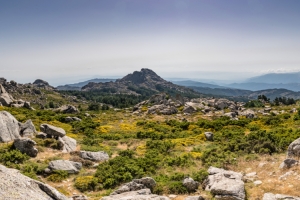
Mount Limbara – it’s peak is called Punta Balistreri - reaches a height of 1,362 metres in the Gallura region and is a spectacle of granite rocks and mountain woods, where peace reigns. On the way up, at about 1,000 metres, along the panoramic road that climbs towards the peaks of the Limbara, there is a delightful little country church, dedicated to the Madonna della Neve.
For hikers, photographers, nature lovers and botanists
The entire area of this mountain massif is a paradise for hikers and trekkers, but also for photographers, nature lovers and botanists. Its forests are home to birds of prey, deer and mouflon, and there are beautiful views of the Gallura coast, the hinterland, and, on some days, even as far as Corsica. This is Sardinia at its most authentic.
Nuragic giants’ tombs
Around Limbara there are some of the island's iconic sites: the Nuraghe Majorinear, the town of Tempio Pausania, several domus de janas and giants’ tombs representing the Nuragic civilisation (one of the oldest in the world) a well as the large Lake Coghinas. And just 20 minutes away the village of Berchidda is worth visiting for the museum of the famous Gallura Vermentino wine, although its is perhaps best known to jazz enthusiasts.
A festival organized by the trumpeter Paolo Fresu
In this remote town, every year since 1988, the well-known trumpeter Paolo Fresu has brought some of the world's greatest jazz musicians to Sardinia for the international “Time in Jaz” Festival (official website timeinjazz.it) Fresu organizes the festival in his hometown, and it has become one of the most important musical events in Europe. In the middle week of August each year the event combines music, art, cinema, literature and the environment.
Time in Jazz is from 8-16 August this year
“Time in Jazz” is a scattered festival, which events that takes place in Berchidda in the evening, as well as morning and sunset concerts in evocative locations such as woodlands, country churches, small villages, and natural sites. Ornette Coleman, Uri Caine, Bill Frisell, Jan Garbarek, Omar Sosa, Pat Metheny, and the Italians, Enrico Rava, Ornella Vanoni, and Stefano Bollani have all played in the various editions. This year the event will take place from 8 to 16 August and will star Richard Galliano, Jan Lundgren, Danilo Rea and other famous artists.
Close to Catania and Taormina
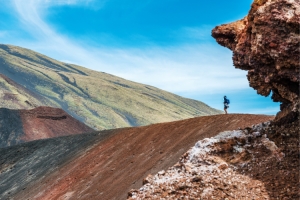
Rising to a height of 3,400 metres, Mount Etna stands thirty-five kilometres from the centre of Catania and fifty-six from the spectacular little town of Taormina. Located in the Etna Park, it is a unique natural environment on 59,000 hectares with an extraordinary landscape. Ascending to the top all kinds of views and vegetation alternate from forests to broom, pine and birch, almost as if you were in northern Europe, until you reach the incomparable scenery around the upper crater.
A UNESCO natural environment
“A muntagna,” as the islanders call it entered the UNESCO World Heritage List in 2013 in the category of natural environments joining the Dolomites, the Aeolian Islands, and Monte San Giorgio. The motivation reads: “Etna is one of the most active iconic volcanoes in the world and an extraordinary example of continuous geological processes and volcanic formations. The stratovolcano is characterized by almost continuous eruptive activity from its summit craters and fairly frequent eruptions and lava flows ...” In winter it snows up there, and the white slopes can even be seen from Catania, Siracusa and Taormina, and often lasting until summer. And of course there is skiing. 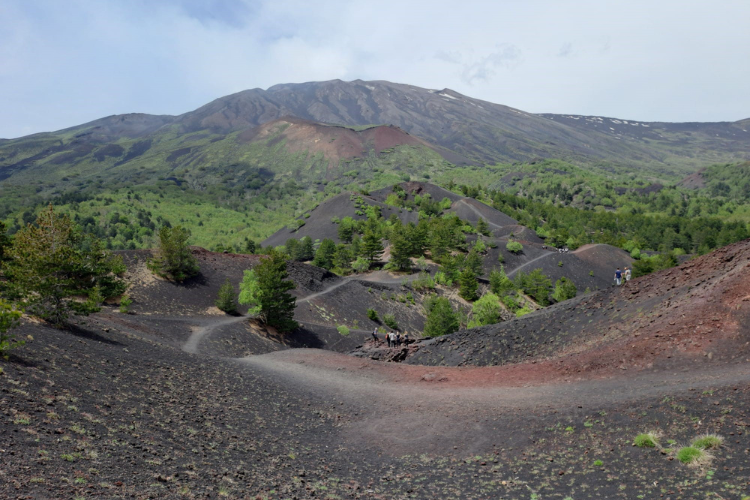
The Mareneve cycle trail and an exceptional wine
For those who want to go all the way up to the top, there is a cable car and a series of trekking routes of all levels on the craters. To be done preferably with the numerous guides and tours that leave from the neighbouring towns. The road up to the summit of the volcano is the famous Mareneve, recognized by National Geographic as one of the 70 most evocative routes to be cycled. On the way up there is the Grotta dei Ladroni, a tunnel of lava flow where, equipped with helmets and torches, it is possible enter and find out about Etna’s history and geological conformation. For the more adventurous there is horseback riding, quad biking and Etna Wine Tours, to sample Sicilian foods and wines. An exceptional wine is in fact produced on its slopes, given the fertility and typicality of its soil resulting in a wine with hints of red fruits, strawberries, raspberries and floral notes, which derive from the particular and unique characteristics of the lava soil.




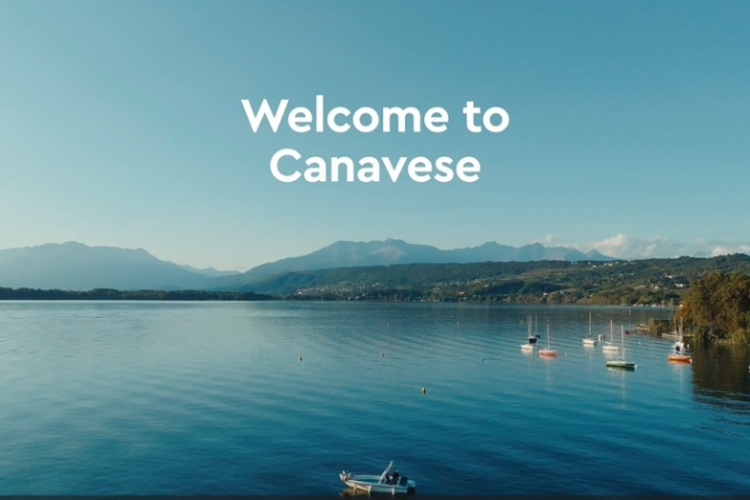
Welcome to Canavese, an unexpected corner of Piedmont where …
843Welcome to Canavese, an unexpected corner of Piedmont where …
843
