



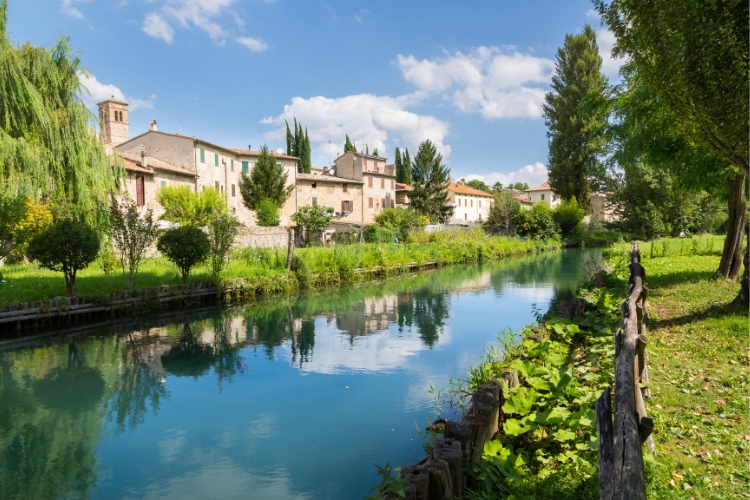






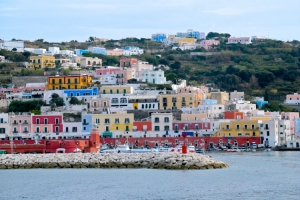



In Umbria’s green heart, not far from much more famous towns such as Assisi and Spoleto, lies the medieval village of Bevagna.
An ancient roman settlement
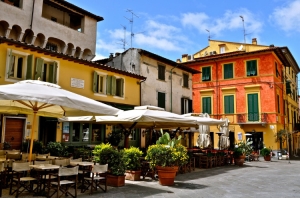
Surrounded by vineyards, olive groves and cultivated fields, Bevagna is famous for its perfectly preserved ancient walls, fortified city gates, and an urban configuration that still retains its Roman layout, as evidenced by the remains of the forum, theatre and baths. Entering the town and walking through the stone alleys, small squares and ancient shops really feels like being back in the Middle Ages, as the village is perfectly preserved and intact.
Historic churches and a Civic Museum
The central Piazza Silvestri square in Bevagna has historic buildings such as the Romanesque churches of San Michele (year 1070) and San Silvestro, and the Palazzo dei Consoli (year 1270), home to the Francesco Torti Theatre. The 18th-century Palazzo Lepri houses the Art Gallery, the Library and the Civic Museum with archaeological finds and paintings from the 16th to the 18th century, and works by artists such as Dono Doni, Andrea Camassei and Ascensidonio Spacca. 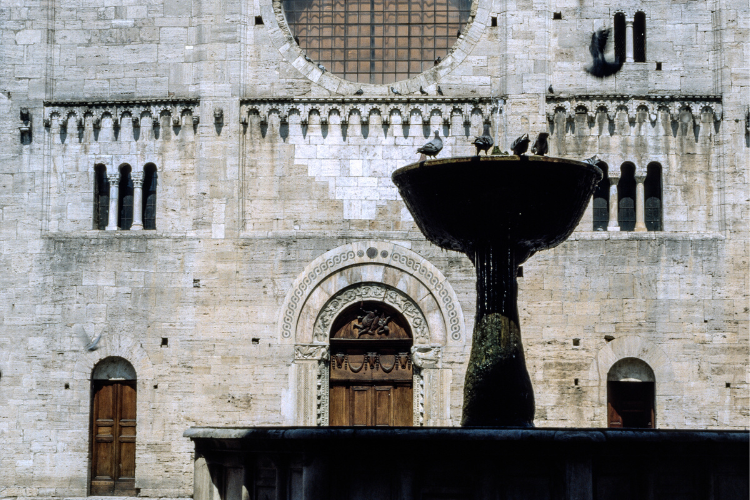
The Mercato delle Gaite festival is held at the end of June
Every year, in the last week of June, the traditional Mercato delle Gaite, one of Italy's most important historical re-enactments, takes place in Bevagna. Each of the four districts - Gaita di San Giorgio, San Giovanni, Santa Maria and San Pietro - opens its craftsmen's workshops, taverns with menus featuring mediaeval dishes and special areas devoted to paper, wax and silk processing. Another highlight is the Procession of the Podestà and the presentation of the Palio and Bevagna also offers a rich programme of happenings at other times of the year. From the “Primavera Medievale” (late April-early May) to the “Sagra della Lumaca” (February and August) and the “Magia della Tradizione” (Christmas and New Year's Eve).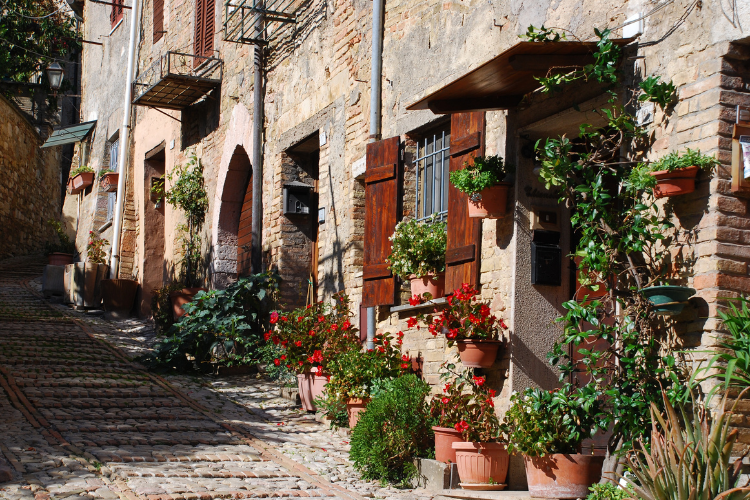
Charming Spello, Trevi and Montefalco are all close by
Events continue in summer with “E-State a Bevagna” featuring theatre festivals and concerts in the Teatro Torti, as well as various village festivals. Around Bevagna it is worth visiting the small town of Montefalco, which is about 10 kilometres away on top of a hill, and known as the “Balcony of Umbria” for its panoramic vistas and for its Sagrantino wine. Then there are Spello, which is less than 20 kilometres away, and can boast the Baglioni Chapel with frescoes by Pinturicchio, and Trevi, some 25 kilometres away which is known as the “Capital of Oil” for its extra virgin DOP oil.


