





The survey is by the Airports Council International and Amadeus
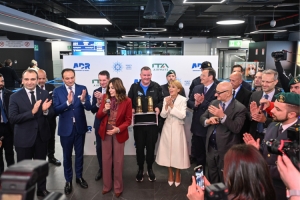
This recognition goes to Rome’s airport in the category of hubs with over 40 million passengers, for the quality of services offered to travellers, according to the Airport Service Quality survey carried out by Airports Council International in collaboration with Amadeus.
Fiumicino first among 119 participating European airports
With a record score of 4.61 (on a scale of 1 to 5), Rome Fiumicino ranked first among all 119 European airports participating in the survey in 2024 and is the only one among the major international hubs, together with Singapore, to win all the award categories. With this result, Leonardo Da Vinci, which in 2024 handled almost 50 million passengers, is also the airport with the highest passenger satisfaction rating among all airports with traffic exceeding 25 million travellers per year in EMEA and the Americas.
Ciampino Airport won in the 2-5 million passenger category
In addition to the Best Airport award, Fiumicino was also recognized this year in the following subcategories: Airport with the Most Dedicated Staff in Europe; Easiest Airport Journey in Europe; Most Enjoyable Airport in Europe; Cleanest Airport in Europe. And once again, Ciampino's Giovan Battista Pastine airport was also recognized, winning the Best Airport in Europe award in the 2 to 5 million passenger category.
“We must urgently develop Fiumicino's infrastructure in a fully sustainable way”
“Once again this year, Fiumicino and Ciampino airports have been recognized internationally for the quality and services offered to passengers: an increasingly important and not to be taken for granted acknowledgement that once again testifies to the dedication, passion and commitment of our people and all the colleagues from companies, organizations and institutions that work synergistically in our airports,- said Marco Troncone, CEO of Aeroporti di Roma. -Looking at the traffic forecasts for this year and the next few years, we are aware that, in order to continue to guarantee this level of quality and increasingly innovative services, we must urgently develop Fiumicino's infrastructure in a fully sustainable way. Only this way will we be able to consolidate the leading role that Italy, a global reference tourist destination and high-potential transit platform, deserves in international air connectivity flows.”
ITA Airways to operate to 59 destinations this summer
At the start of the summer season, during which ITA Airways will be operating to 59 destinations. Of these 16 are domestic, 27 international and 16 intercontinental, to which another 12 seasonal destinations are to be added during the summer peak (3 domestic and 9 international).
“Over 7 million passengers from Rome and Milan to Southern Italy”
“Southern Italy is strategic for us, both for outgoing and incoming traffic,- says Emiliana Limosani, chief commercial cfficer of ITA Airways and CEO of Volare. -The data in our possession confirms that in 2024 we transported over seven million passengers from Rome and Milan to destinations in Southern Italy and this summer season we will offer over 500 weekly flights to Bari, Brindisi, Naples, Reggio Calabria, Lamezia Terme, Cagliari, Alghero, Palermo, Catania, Lampedusa and Pantelleria. Furthermore, Naples will host the first of seven legs (Naples-Palermo-Catania-Rome-Milan-Venice-Bari) of our Italy Sales roadshow, during which we will meet some 800 representatives of local travel agencies, who are essential partners for us.”
Codeshares with the Lufthansa Group airlines
From 30 March ITA passengers will also be able to benefit from additional connections to over one hundred destinations thanks to codeshare flights with the fie Lufthansa Group airlines: Lufthansa, Swiss, Austrian Airlines, Brussels Airlines and Air Dolomiti. New for summer 2025 are also the connections with the city of Olbia to and from Turin from 26 July to 6 September; in addition to the new international Milan Linate-Munich route, operated with two daily flights from Monday to Friday, and one flight on Saturdays and Sundays starting from 30 March. While from 7 November 2025 the company will operate the Rome Fiumicino-Mauritius route for the first time, with two weekly flights.
Expanding the group’s presence on new markets
Collepardi will lead the group's commercial vision with the aim of expanding the brand's presence on new markets, while strengthening the consolidated positioning of Shedir Collection in the United States. She brings with her a wealth of international experience in the luxury hospitality sector. Most recently, she served as vice president sales and marketing at Atmosphere Hotels & Resorts.
The best of Italian hospitality
In her new role at Shedir Collection, Collepardi will be responsible for guiding the group's commercial strategy, boosting revenue growth and optimizing global partnerships. Her leadership will be crucial in ensuring that Shedir Collection continues to win over the most refined travellers with its unmistakable Italian hospitality—where art, history, exclusive locations, gastronomic excellence and attention to detail create an experience so unique and engaging that guests are motivated to return again and again.
“Our commitment is guaranteeing authentic, world-class experiences”
”I am honoured to embark on this exciting journey with Shedir Collection, a brand that embodies the essence of Italian hospitality,- said Silvia Collepardi. -I am proud to be able to count on an excellent team to develop and strengthen our commercial strategy with the support of our representative offices, Wanderluxe Destinations and D Luxury Hospitality. Cristiano Zucchiatti, general manager Shedir Collection, added: “Silvia's extensive international experience and her in-depth knowledge of the luxury hospitality sector make her the ideal person to lead our commercial strategy. Her vision fits perfectly with our commitment to guaranteeing authentic, world-class experiences.”
A prestigious luxury collection
Shedir Collection is a prestigious Italian hotel group committed to excellence. The property portfolio includes Hotel Vilòn, Hotel Maalot, Hotel Umiltà 36, Hotel Palazzo Roma and Palazzo Shedir in Rome and Capri Tiberio Palace.
Airbus A321neo flights
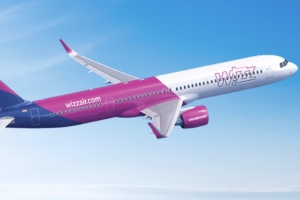
Flights from Bilbao will operate four times a week: on Mondays, Wednesdays, Fridays and Sundays, while Zaragoza will be served three times a week, on Tuesdays, Thursdays and Saturdays. All flights will be operated with Airbus A321neo aircraft.
Zaragoza is a pilgrimage destination
Wizz Air will be the only company to connect Fiumicino with Zaragoza, a city that is a well-known pilgrimage destination, thanks to the Basilica of Nuestra Señora del Pilar. During the Jubilee year, this route offers a unique opportunity for residents of the region to reach Rome and vice versa.
New travel options at affordable prices
“With these two new routes we are further boostingthe connections between Spain and Italy,’ said Tamara Nikiforova, senior communications manager Wizz Air. – We are thrilled to be the first airline to connect Zaragoza and Rome with a total of over 60 routes from Rome. Fiumicino is one of our largest bases in Italy and, with the 2025 Jubilee Year underway, we wanted to offer our passengers new travel options at affordable prices.”
Traffic from Spain in 2024 grew by 20% over 2023
“These flights will further stimulate traffic to and from Spain, already the leading international market for Rome, which in the year just ended set a new record, reaching the threshold of 6 million passengers with a 20% growth compared to 2023,” said Federico Scriboni, aviation business development director Aeroporti di Roma.
New summer routes and flights from Cagliari and Palermo
The summer routes to Rimini are from Budapest, Krakow, Kaunas, Prague, London Stansted and Vienna as well as domestic flights from Cagliari and Palermo. Overall, there will be over 50 weekly flights.
Pushing for the abolition of municipal surtaxes
The low-cost airline, which has been operating to and from Rimini for 27 years, did not fail to bring its requests to the Italian government and regions to the forefront on the occasion of the launch of summer operations. “To stimulate the growth of Italian tourism we ask for the abolition of the municipal surtax at all Italian airports - reads the airline's note -, thus allowing Ryanair and other carriers to promote a rapid growth in tourism and employment throughout the year. Should the Italian government abolish the municipal surtax, Ryanair would respond with an investment of four billion dollars in Italy, adding 40 new aircraft, an increase in traffic of up to 80 million passengers a year, over 250 new routes and 1,500 new Ryanair jobs in the Italian regions».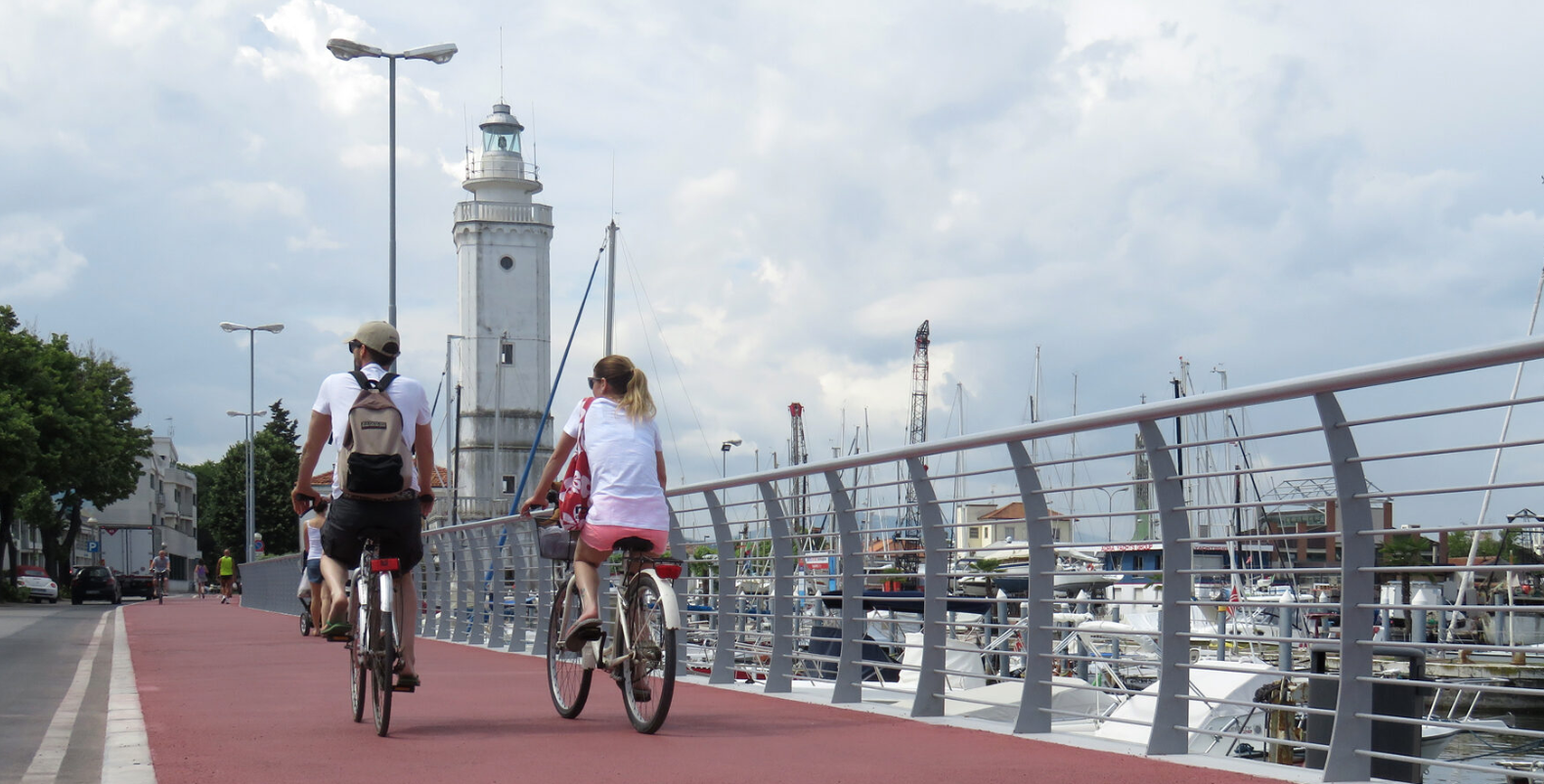
Rimini is a favourite destination with foreign tourists
The appeal of Rimini on the Romagna coast is clear from the final figures for 2024: 6,934,419 overnight stays, an increase of +2.7% compared to 2023, while arrivals exceeded 1,856,501, equal to +1.2%, again compared to last year. This growth was driven in particular by foreign tourists, who recorded a +7% increase in arrivals and a +9.2% increase in overnight stays. The provisional Istat data therefore paints a picture of ‘an excellent year’ thanks to the return of foreign tourists. If these remarkable percentages of foreign tourism are spread over all twelve months of 2024, they settle at a record 30.3% of foreign arrivals out of the total (at a provincial level, the foreign percentage out of the total is 23.6% of arrivals).
Eastern European countries are boosting arrivals
The significant number of foreign visitors recorded in 2024 is largely due to the German and Austrian markets, as well as the explosion of new markets (led by Poland, followed by Romania and Ukraine), which have compensated for the forced collapse of what until 2019 was Rimini's main foreign asset, Russia.
Daily connections to Italy’s main cities
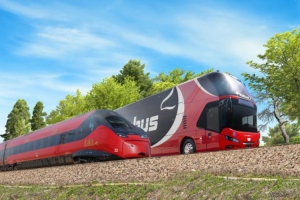
Following the debut last October of services to Ljubljana and Zagreb (6 daily), from 26th March Italbus is adding France. The new services include four daily connections between main Italian cities, such as Naples, Caserta, Rome, Florence, Bologna, Reggio Emilia, Piacenza, Milan and Turin, with the French destinations of Chambèry and Lyon.
Intermodal train+bus services
France will also be accessible thanks to the train+bus intermodal system. With a single ticket it is possible to arrive at Turin Porta Susa with Italo and from there take Itabus. Also on the return journey, leaving by bus from Lyon and changing in Turin to take the train and complete the journey. To date, there are already 30 intermodal train+bus connections offered by the Italo Group, both in Italy and in Europe.
Moving into new European countries
Growth abroad doesn't end with France: “After consolidating our presence in Italy, the next step is abroad,- comments Francesco Fiore, CEO of Itabus. -First we'll be launching in Slovenia and Croatia then, from the end of March, we will start services in France. 2025 will be crucial, we will enter new European countries and strengthen services to large infrastructures such as airports, ports and railway stations.”
“ITA promotes sustainability in all its forms”
The Special Olympics, which will take place in Turin from 8 to 15 March 2025, are dedicated to athletes with and without intellectual disabilities; a global movement that, through unified sports, is creating a new world of inclusion and respect, where every single person is accepted and welcomed, regardless of their ability or disability. “We are very proud to collaborate in the realization of the Special Olympics by carrying the Flame of Hope, a symbol of inclusivity and social sustainability, on board our aircraft, - said Sandro Pappalardo, President of ITA Airways. -Sustainability is a pillar of ITA's industrial plan and we promote it in all its forms, both together with corporate economic responsibility, but also with social responsibility, cultivating an inclusive culture with actions in support of the entire community.”
Investing to guarantee a barrier-free airport
“It is a great pleasure to welcome the Flame of Hope, symbol of the Special Olympics Turin 2025, to Fiumicino Airport, which is confirmed not only as a place of transit, but a real hub for meeting, dialogue and sharing,- said the President of Aeroporti di Roma, Vincenzo Nunziata. -This competition perfectly embodies the values of openness and inclusion that are in our DNA, and reflect our daily commitment to making our airports increasingly accessible in line with international protocols. For many years we have been investing to guarantee a barrier-free airport experience, with increasingly cutting-edge infrastructure and innovative services designed to meet the needs of all travellers.”
The Olympic flame speaks a universal language
“The purpose of this torch is not the arrival, the destination, but the journey and what it will encounters along the way. I look at it and I hear all the languages of the world speaking, I understand them all because this flame, which speaks a universal language, represents a light of hope, for a better future,- added Patrizia Sandretto Re Rebaudengo, President of the local organising committee of the Torino 2025 Winter World Games.
Naar’s third office in Europe
"This is now our third office in Europe, after those opened in France in 2023 and in Benelux last year,- says Frederic Naar, founder and CEO of the Milan-based tour operator. -The project is working so well that over 10% of the trips sold now come from our offices outside Italy.”
10% growth from Italy and 12-15% from Europe
In view of this success, the forecasts for 2025 are also rosy. After having comfortably exceeded €70 million in turnover in the 2024 financial year (data still provisional; in 2023 revenues were 65 million. Ed.), the company expects a further increase of 20%-25%. This is thanks to both a 10% growth in the Italian market and a 12%-15% contribution from the international offices. “What is perhaps more important is that with the consolidation of our activities in our European offices, our growth rates should be maintained in the coming years. This cannot be taken for granted when volumes become more important, as is happening to us.” Frederic Naar, Olivier Dewit, Frank Goetze and Marco Guaramonti
The advantages of being in several markets
But the benefits of internationalization don't just translate into increased revenue: “Being present in several markets also allows us to activate many synergies with suppliers, including hotels and airlines. Our partners are supporting us and we often manage to get special rates, which usually take several years to obtain. Everyone is really happy to see an Italian company going out on a limb.”
A project coordinated by a cardiologist
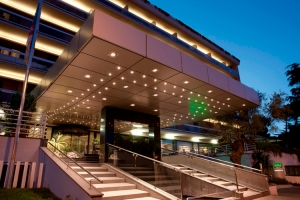
The hotel is purchasing a semi-automatic external defibrillator (AED) and organizing a training course for hotel staff, coordinated by the cardiologist Dr Andrea Ghidini Ottonelli, together with the Onlus Roberto Pardini, a non-profit organization founded in 2010 in memory of a young man who died prematurely of cardiac arrest.
A certification valid throughout Italy
Courtyard by Marriott Rome Central Park employees will have the opportunity to learn the basic rules of cardiopulmonary resuscitation (CPR) and the use of semi-automatic external defibrillators (AED) thus acquiring a certification valid throughout Italy.
“In the case of cardiac arrest, every minute is vital”
“In a hotel that welcomes some 76,000 guests every year, being able to carry out first emergency interventions can really make a difference,” says Antonio De Santis, operations manager of the hotel. “In the case of cardiac arrest, every minute is vital,- explains Dr Ghidini Ottonelli. -Being able to deal with and often resolve risky situations is an important step towards increasing safety for guests and in the workplace.” With this new cardio-protected hotel project, the Courtyard confirms its corporate culture aimed at 360-degree sustainability and well-being.



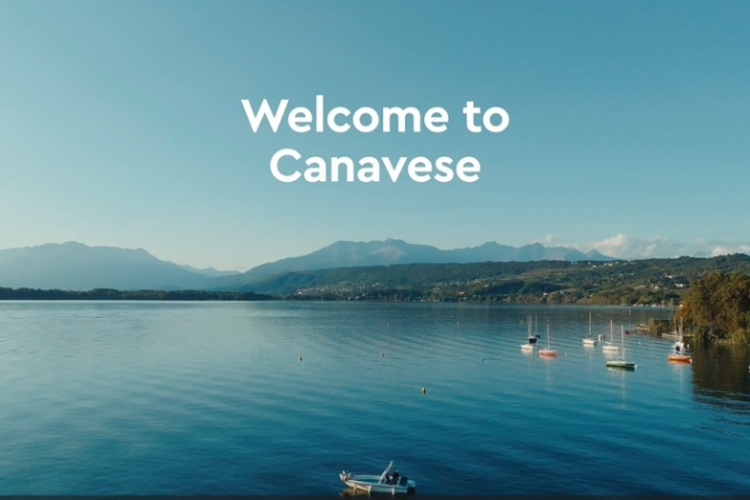
Welcome to Canavese, an unexpected corner of Piedmont where …
259Welcome to Canavese, an unexpected corner of Piedmont where …
259
