





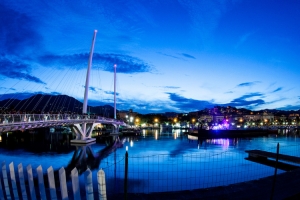




 Grado - Photo Credits: Tommaso Balestra
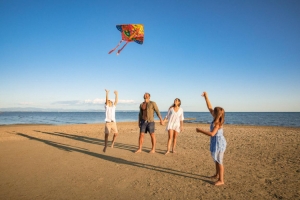
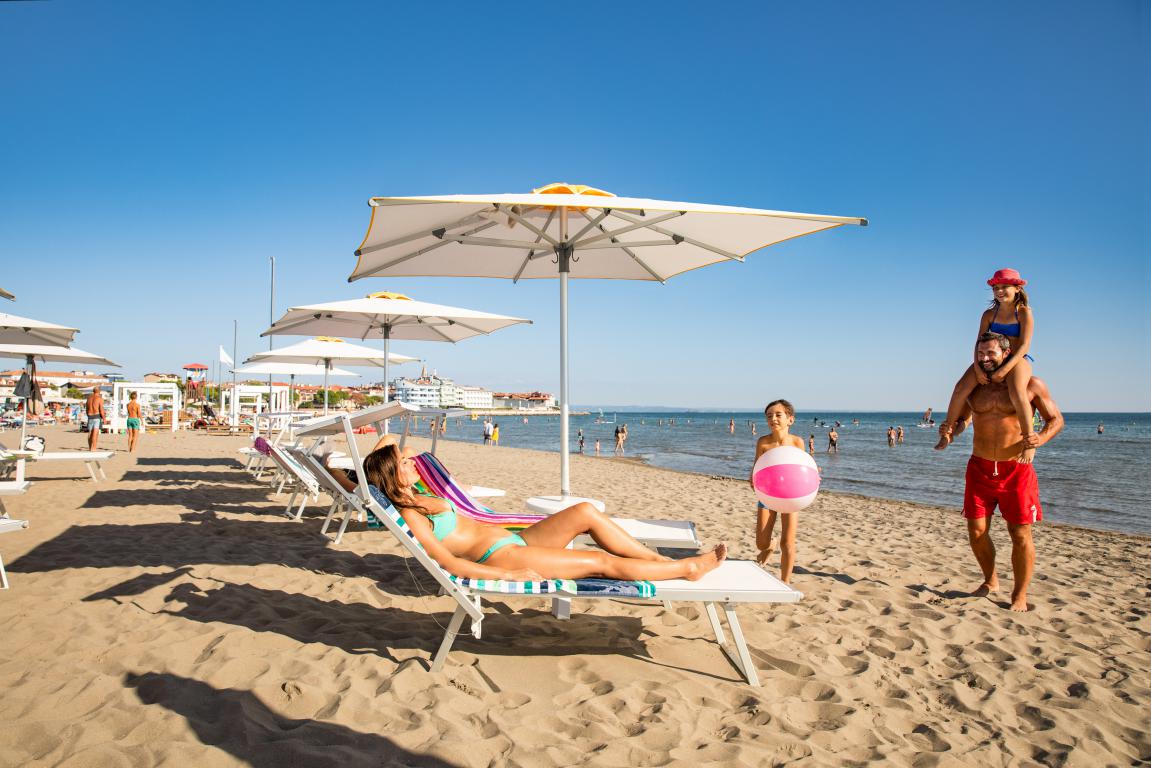
  Lignano Sabbiadoro - Photo Credits: Gianluca Baronchelli
Lignano Sabbiadoro is Italy’s Little Florida
Eight kilometres of sandy beaches on a long golden peninsula that Ernest Hemingway called the Little Florida of Italy. Suitable for families, but also for the younger generation looking for fun, sports enthusiasts and those in search of relaxation, Lignano Sabbiadoro is one of Italy's most popular seaside resorts and has three distinct areas: Lignano Sabbiadoro, which has excellent services as well as a wide range of accommodation and beach activities; Lignano Pineta, with alleyways that meander through one million two hundred thousand maritime pines, and is the most fashionable, and Lignano Riviera which is quieter and for those who want to relax on the wildest part of the coastline. With its abundant nature, calm seas and shallow waters Lignano is a green destination, ideal for those seeking a family holiday, but also for water sports enthusiasts and for more active holidaymakers.

Cycle trails and Europe’s biggest skating park
Discover Lignano by bike. With 75 kilometres of itineraries and 30 kilometres of cycle paths mapped out on Google Maps it also has these parks for children and families like the Aquasplash, Riviera Resort Thermal Park, Punta Verde Zoo in Lignano, I Gommosi, Junior Park and the fun park. There are water sports directly on the beach including kitesurfing, windsurfing, canoeing, SUP, sailing, swimming and diving. And there is the largest skating park in Europe: the HUB Park in Lignano Sabbiadoro. Major events include sports competitions like triathlon, bike marathon, SUP racing and running competitions, but also concerts by great artists and events linked to literary prizes. Grado - Credits: Fabrice Gallina
Grado. Island of the Sun
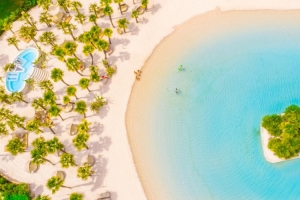
Known as the Island of the Sun for its many kilometres of south-facing sandy beaches, Grado is a record-breaking Blue Flag beach, but also one of the most romantic locations in Friuli Venezia Giulia. Embraced by the magical setting of the lagoon, it has a fascinating history. Founded in Roman times as a trading port with Aquileia, its centre is a labyrinth of calli and campielli little streets and small squares with picturesque fishermen's houses. The destination is perfect for families and anyone looking for a seaside holiday but also for culture and history lovers. It also has wellness facilities (the thermal baths were built in the Austro-Hungarian era) and there is a wide range of bathing establishments where you can practice water sports. Elegant and refined, it is a traditional seaside resort with the best of local food and wines, and many dishes based on fresh fish.
 Kitesurf in Grado - Photo Credits: Gianluca Baronchelli
130 years of wellness holidays
Cyclists should not miss the Alpe Adria Cycle Route, and the lagoon’s many islands can be reached by boat, like the island of Barbana with its Benedictine sanctuary and the island of Mota Safon with the Pasolini House. The historic centre has early Christian basilicas, the Roman forum and craft workshops, and Grado is an important kitespot for wind sports enthusiasts who will find the ideal conditions for riding the waves safely in the Grado 130 resort. On 25 June 1892 Emperor Franz Joseph proclaimed Grado a “resort and health resort” thus launching a success story that has endured up to the present day. To mark the 130th anniversary of that fateful date six months of celebrations are planned with events for all ages: exhibitions, concerts, conferences, guided tours, show cooking and much more both on the beaches and in the heart of the city, running right through to October.
The Gulf of Trieste
Clinging to the rugged cliffs that descend from the Karst the Trieste coastline and Trieste, a city of sun, wind and sea, offer visitors many opportunities for fun and relaxation. From the beach at Marina Julia (Monfalcone) to Muggia, one of the most picturesque seaside towns in the region, the region's easternmost Riviera is a succession of cliffs, rocky inlets, solitary bays and pebble beaches. The Bay of Sistiana, with its white pebbles, offers relaxation, luxury and nightlife, while along the coastline, between the crystal-clear sea and the unspoilt landscape of the Mediterranean undergrowth there is no shortage of beaches to satisfy even the most demanding nature lover. With breathtaking views, small bathing establishments and a coastline that is perfect for walking and hiking along trails that never lose sight of the sea, this is one of Italy’s most beautiful areas.
A beach were men and women are separated
The Lanterna or Pedocin is the only beach in Europe that still maintains a strict separation between men and women by means of a wall. A wall that, in a city that has always welcomed and respected different languages, cultures and religions, is a symbol of freedom and certainly not bigotry. “On the Pedocìn you are freer to do what you want without bumping into anyone,” they say in Trieste. For water and wind sports Marina Julia is a windspot with sailing traditions, and don’t miss the seaside castles of Duino and Miramare, or the villages of Duino and Muggia on the Gulf of Trieste. The area is a paradise for outdoor sports enthusiasts with climbing on the cliffs by the sea, snorkelling in the Miramare Marine Protected Area and diving, electric bike trails and trekking on the Karst, and there are two nature reserves: the Duino Cliffs and the Miramare Protected Marine Area, and one of the deepest caves in Europe known as the Grotta Gigante giant grotto.
The lagoon is a paradise for birdwatchers
The Friuli Venezia Giulia lagoon is an enchanted place between the sea and the mainland. Lose yourself in the silence of islets, sandbanks and fishing valleys and rediscover your osmosis with the natural landscape. To be explored by boat or on board a canoe, Marano and Grado boast a priceless natural heritage with their canals and ancient fishermen's dwellings built with materials from the lagoon and now custodians of this unique fauna. The lagoon’s natural habitat leaves visitors enchanted, and in this verdant setting there are numerous species of birds that make the lagoon an excellent place for birdwatching.

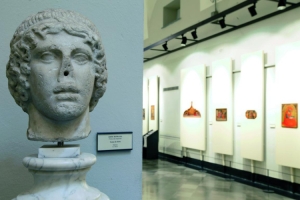
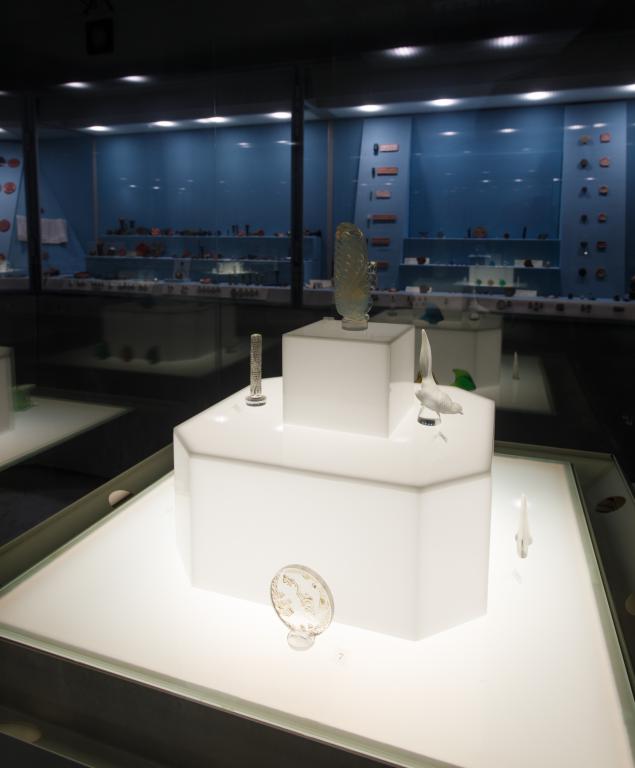 Sigillo Museum inside The Palazzina delle Arti MuseumThe Palazzina delle Arti Museum
The Palazzina delle Arti, designed by Franco Oliva around the 1920s, was built to house a library and has a permanent collection as well as areas for temporary exhibitions and conferences. The seal collection, donated by the Capellini family to the Municipality of La Spezia, probably qualifies as the largest thematic collection of its kind in the world. Seals originated from the need to confirm the ownership of a given document and to generally attest its legal validity, and those in the La Spezia museum are from very different eras and origins: pieces from ancient Egypt to seals produced in China, Tibet and Nepal, and from those made in the western world during the Middle Ages to elegant Art Nouveau seals.
The Amedeo Lia Civic Museum
The Amedeo Lia Civic Museum, next to the Palazzina delle Arti, is in the 17th-century convent complex of San Francesco di Paola. Inaugurated in 1996 following the important donation made by Amedeo Lia and his family to the Municipality of La Spezia. Of the more than one thousand one hundred works collected by Amedeo Lia, and now housed in the museum, many are particularly significant, outlining an itinerary that, although extremely brief, highlights the heterogeneity and high quality of the collection. 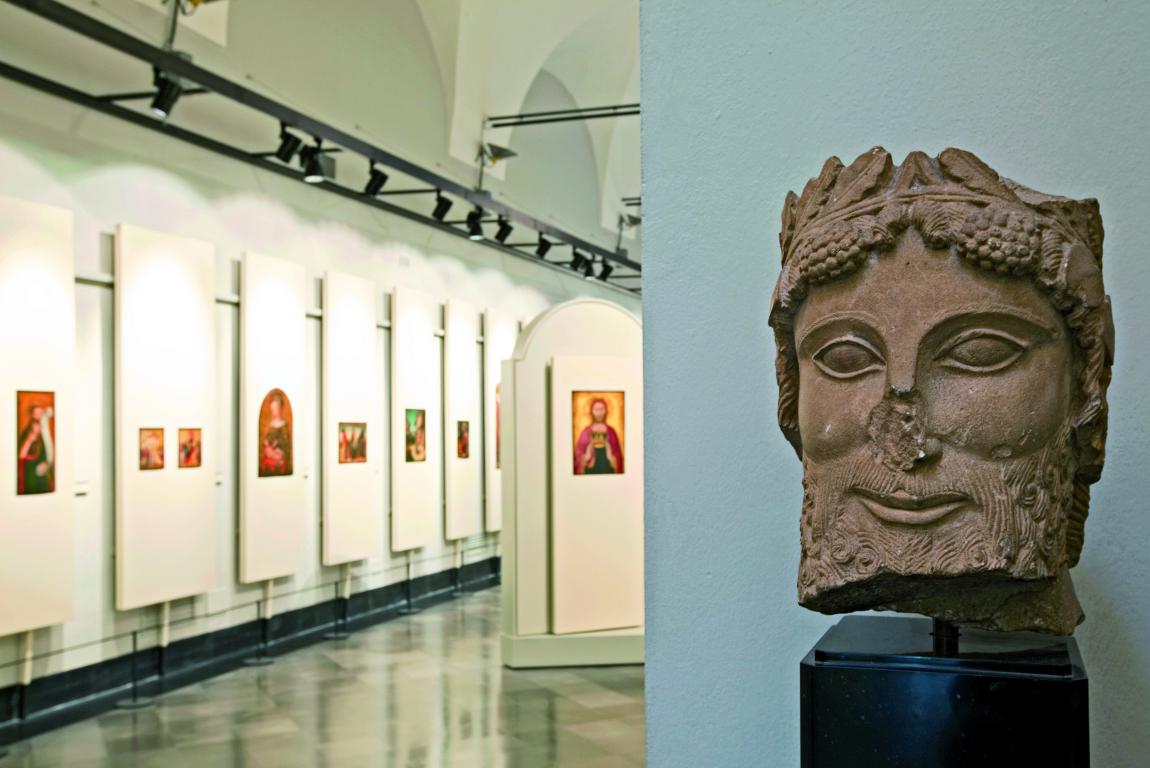 The Amedeo Lia Civic Museum
 The Amedeo Lia Civic MuseumPortraits, religious works and ancient glass
Entering Room I, formerly the church of the monastery complex, we see the Madonna and Child, a polychrome wood piece produced in Umbria around the middle of the 13th century, and next to it, the reliquary box painted by Jacopo da Ferentino, an extraordinary product of Umbrian or Rimini culture from the middle of the 14th century. Halls VI, VII, and VIII house 16th-century paintings, with works by Giampietrino, Mazzolino, Schedoni, a small painting possibly attributable to Raphael, as well as Cariani, Sebastiano del Piombo, Tintoretto, Romanino, Giovanni and Gentile Bellini, Paolo Veronese, Titian, Moroni, and Pontormo's intense Self-portrait, painted directly on terracotta. The tour then moves on to rooms IX and X, which house the 17th and 18th century respectively, with refined sculptures and objects while in Room XII we find archaeological glass pastes dating back to the 6th-5th centuries B.C., and the blown and skilfully elaborate productions from Venice in the 16th, 17th and 18th centuries. Concluding the tour in Room XIII we find still life paintings, mainly dating from 17th-century Flemish and Italian productions. Pontormo
The Diocesan Museum
Continuing along Via Prione we come to the diocesan and ethnographic museums: here the late neoclassical 19th-century façade conceals the deconsecrated Oratory of San Bernardino, known from documents from the end of the 15th century. On the two exhibition floors special mention should be made of the large canvas depicting The Triple Coronation of St Nicholas of Tolentino, formerly destined for the lost church of the Augustinians, painted in 1539 by Antonio da Carpena from La Spezia. Also worthy of note are the small St. Jerome, also by Carpenino, some Gothic sculptures depicting the Virgin and Child from the parish church of Santo Stefano di Marinasco and Sant'Andrea di Fabiano, 15th-century carved and engraved slates, as well as numerous liturgical objects.
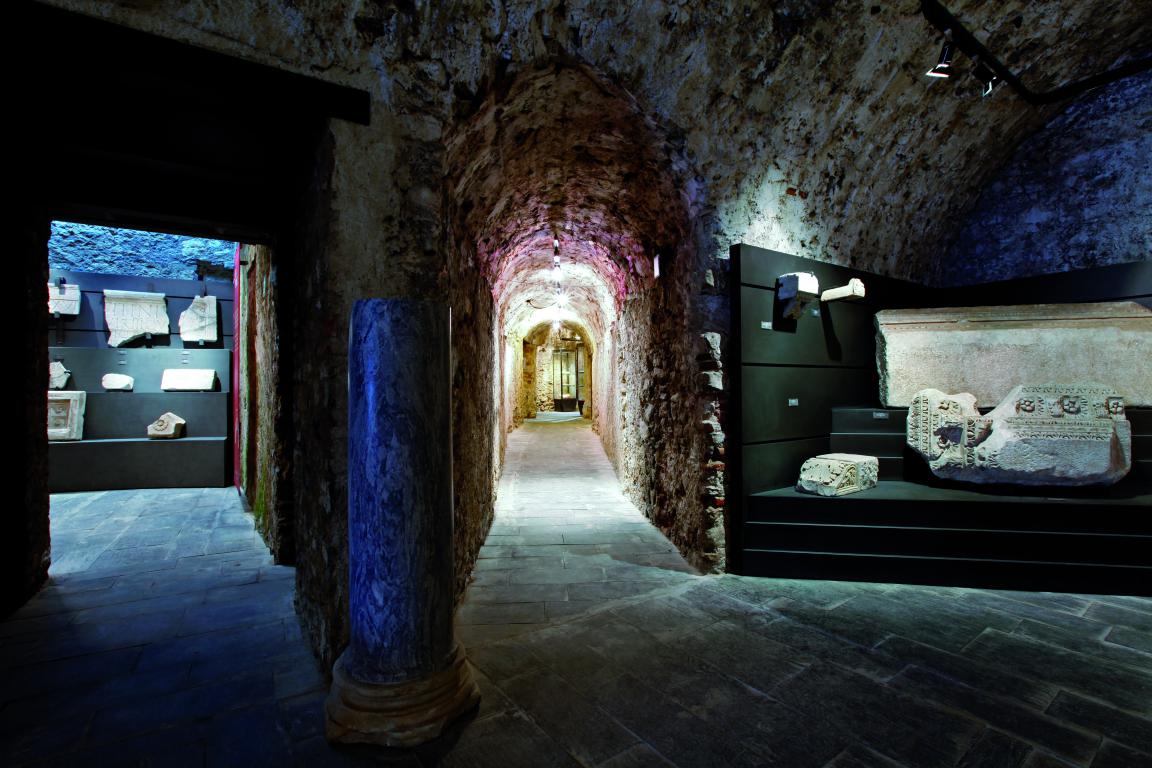
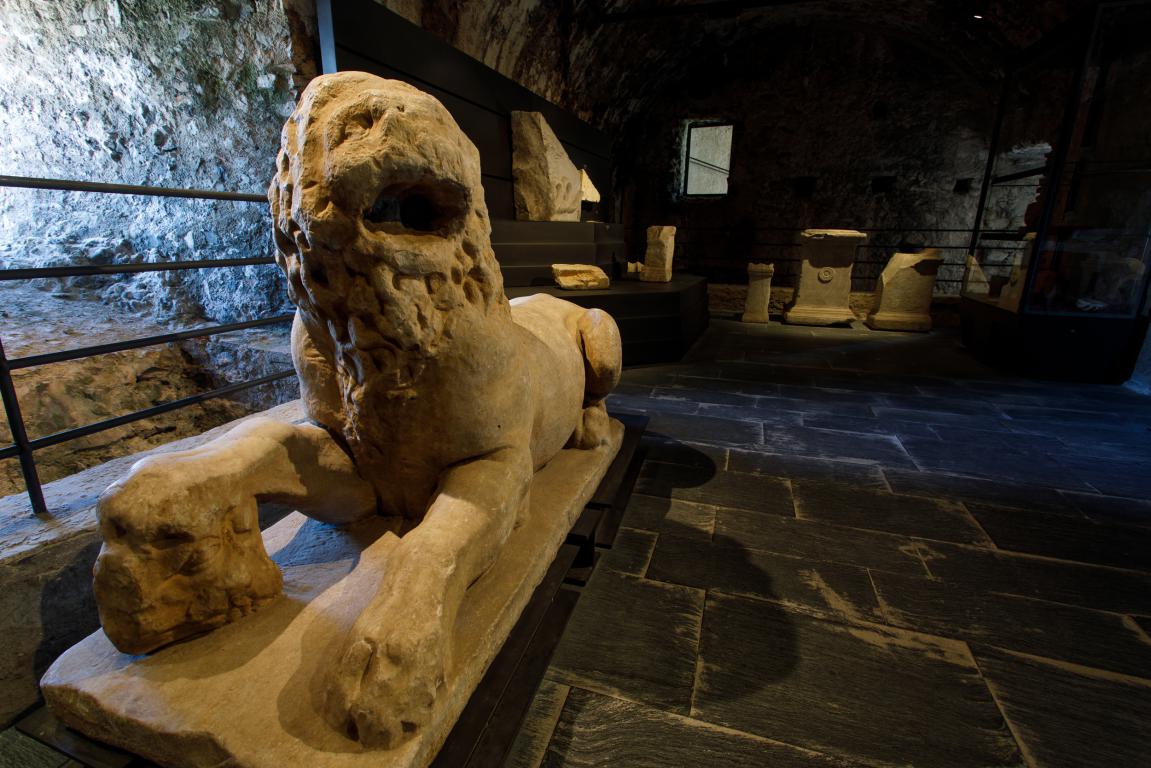



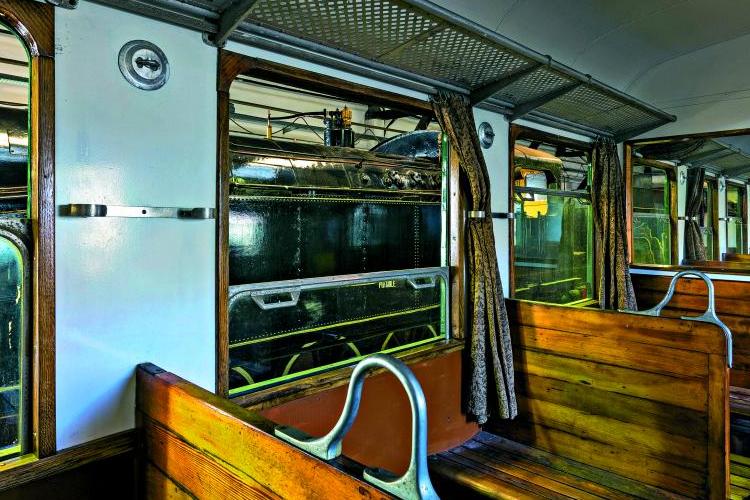
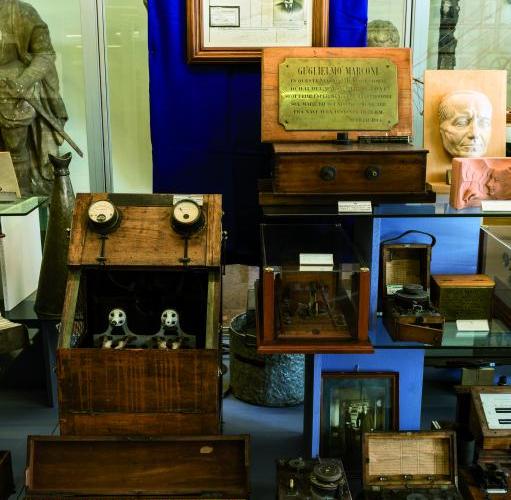

The Civic Ethnographic Museum
The Giovanni Podenzana Civic Museum is in the same building as the Diocesan Museum. Podenzana was a passionate 19th-century collector and collection in the material preserved and exhibited in the museum, dating from the 18th century to the first half of the 20th century, is divided into six sections: devotion and popular cults, superstition and therapeutic practices, jewellery and goldsmithery, domestic furnishings, work and trousseau items, and finally the chapter dedicated to spinning, weaving and clothing. The section on textiles and costumes of the individual communities of historical Lunigiana region with gold filigree jewellery is particularly noteworthy.


The Technical Naval Museum
This museum has a very interesting and abundant selection of material, ordered, despite its vastness and heterogeneity, according to both typological and chronological criteria, starting with model ships from antiquity. One of the most fascinating and particularly valuable sections is certainly that of the figureheads. Among them, also thanks to a form of seductive fascination that has always accompanied it, is the well-known figurehead known as Atalanta, recovered from the gunboat La Veloce in the waters of the Atlantic Ocean. There are also many artefacts and memorabilia that bear testimony to the history of the Navy, and the planned extension and re-fitting work currently underway will give an even more complete picture of the heritage preserved inside these walls. 
The Formentini Civic Museum
Leaving the Naval Museum, in the centre of the square that bears its name, just opposite the main door of the Maritime Military Arsenal, stands the monument to Domenico Chiodo. The Formentini Civic Museum was established in 1873, following the Unification of Italy, when many cities were confirming their historical and cultural image by entrusting it to the sacredness of the museum, a place of memory par excellence. This museum preserves material from historical Lunigiana, a large region with a precise cultural identity, albeit not recognized by modern legal and administrative borders. The opening section contains evidence of human habitation along the coast and in the hinterland as early as the Copper Age, i.e. from the 4th millennium B.C., as can be judged by the remains of the rite of collective burials in natural caves and the simple funeral artefacts found there. The upper portion of the fortress houses a large part of the large Fabbricotti collection of Roman Lunigiana material that once belonged to the Fabbricotti family and was handed over to the La Spezia municipality in 1939. From the terraces of the castle the view encompasses the entire Gulf, its hills and the shades of the marble to be found in the Apuan Alps.
Equestrian jousts, tournaments, minstrels and jugglers
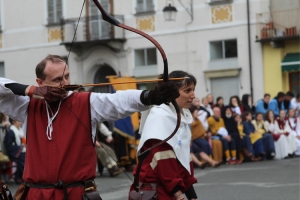
Many towns and villages in the Canavese hold on to these vestiges of the past with festivals and re-enactments where history is reconstructed philologically, traditions reinvented imaginatively and events and characters from long ago are brought to life. The younger generation learns the ancient tradition of fencing using heavy swords with two hands, others favour the bow and crossbow, while others partake in colourful and hard-fought equestrian jousts and tournaments. Torch-lit taverns recreate ancient recipes and minstrels and jugglers entertain the crowds of locals and visitors who flock to see these events. 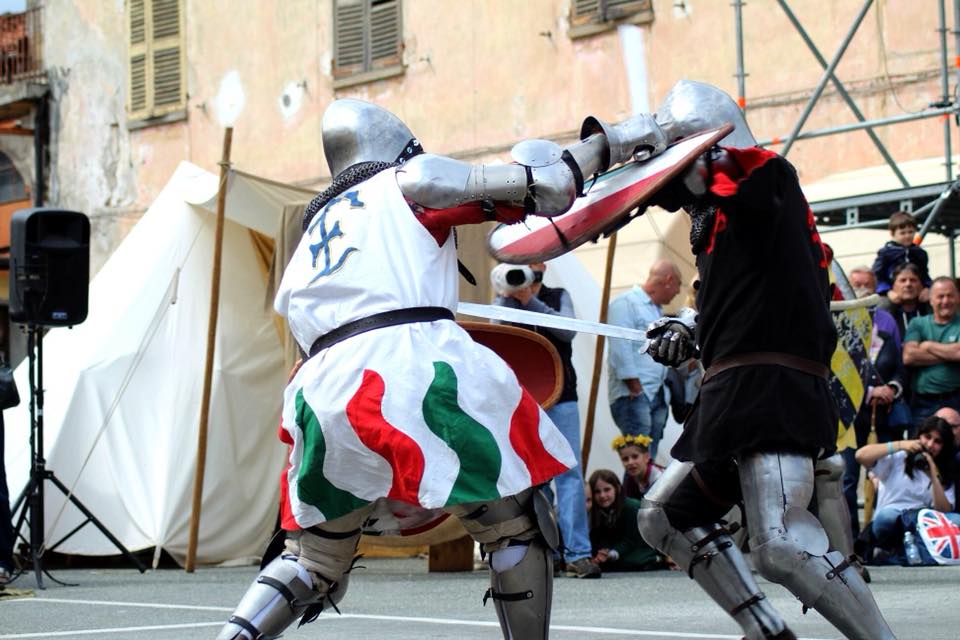
Historical carnivals and ancient traditions
Every May the Canavese celebrates the Ides of Oglianico and the Tournament at King Arduino's Court in Cuorgnè, as well as historical re-enactments in Pavone, Sparone, Rocca and San Benigno Canavese and many carnivals. Like the historic carnival of Ivrea with its battle of the oranges and the re-enactment of the Preda in Dora which consists of throwing a fragment of stone from the walls of the remains of the Marquis of Monferrato's castle into the Dora river as a vow of freedom, and with the presence of the Abbà a reminder of the role played by the abbots of the ancient religious abbeys. The myth of the vexatious miller’s wife who rebels against the tyrant's ius primae noctis and starts the popular uprising is also an imaginative evocation of a popular revolt that took place in the Canavese in the second half of the 14th century. The historic carnival of Castellamonte focuses on another female figures, a popular revolt featuring Countess Isabella di Montebello who, having survived the destruction of the castle, is acclaimed as the Bela Pignatera and carried in triumph by the people in revolt.


The Ides of May in Oglianico
In Oglianico the annual Calendimaggio (May Day) and Ides of May festivities hark back to customs of ancient Celtic culture and later to those of the Roman and medieval days. Joy for the reawakening of nature after the long winter months is expressed in songs, dances and rituals that propitiate fertility, and the abundance of harvests culminates in the raising of the Maggio, a tree planted in the centre of the village by torchlight, amidst the waving of flags, the roll of drums and the blare of trumpets. The rediscovery in the municipal statutes of 1352 of characters and moments of daily life in the 14th century inspired the Oglianico re-enactment that promotes ancient crafts with the reconstruction of traditional equipment. The medieval past of the town is the subject of in-depth studies and documentary research by the Oglianico Historical Group, and the 40th edition of the historical re-enactment got into full swing on Sunday 1 May, when the cry Vivat Savoia et populus! resounded through the streets to announce the start of the May Day celebrations. 
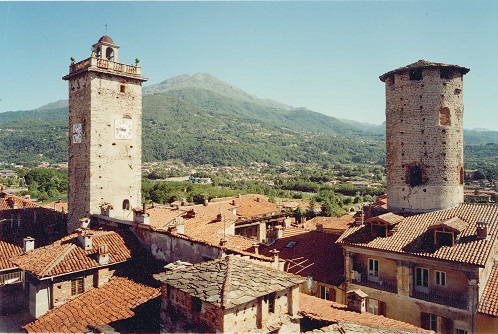 The May Tournament at the Court of King Arduino in Cuorgnè
This re-enactment dates back to May 1987 and is held in the splendid mediaeval historic centre of Cuorgnè, home to the House of Arduino, a handsome richly decorated Gothic palace with terracotta friezes that belonged to an Arduino and not to the Marquis of Ivrea who was King of Italy in 1002. The event is based on the historical siege of Sparone in 1004, imaginatively assuming that on his return Arduino was festively welcomed by the village of Cuorgnè, which organized a tournament in the king’s honour with singing, dancing, entertainment and abundant libations. After two years of stoppage due to the pandemic the Cuorgnè event returns this year. It is very popular, with hundreds of people in costume, and the streets of the historic centre lit by torches and draped in the colours of the boroughs. The event has changed over time but includes a number of constants, such as the Corsa delle Botti race on the Friday, the arrival of the royal procession on the Saturday, and the tournament on the Sunday with the challenge between the boroughs at the Ponte Vecchio bridge.
Locals partake in games of skill dressed in historical costumes
The ancient challenge included a hard-fought equestrian tournament, now replaced by other games of skill such as the drum race, the canapo pull, the gran passo relay and the corsa delle biulantine. Over time, the tournament has featured many different types of theatrical performances even staging Giuseppe Verdi's opera 'Il Trovatore' in 1996. What makes Cuorgnè's festival so special is the enthusiasm and participation of the locals, who put on historical dress and parade to the sound of the TroTa Trombe e Tamburi Reali trumpets and royal drums.
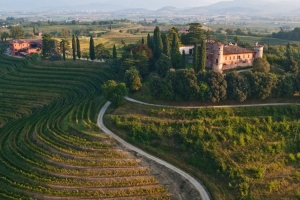
Alongside the region’s cultural attractions and environmental and natural heritage PromoTurismoFVG created this itinerary with visits and stays at vineyards, farms, hotels, restaurants, wine bars as well as companies and organizations that produce typical and quality products and traditional local gastronomic specialties. 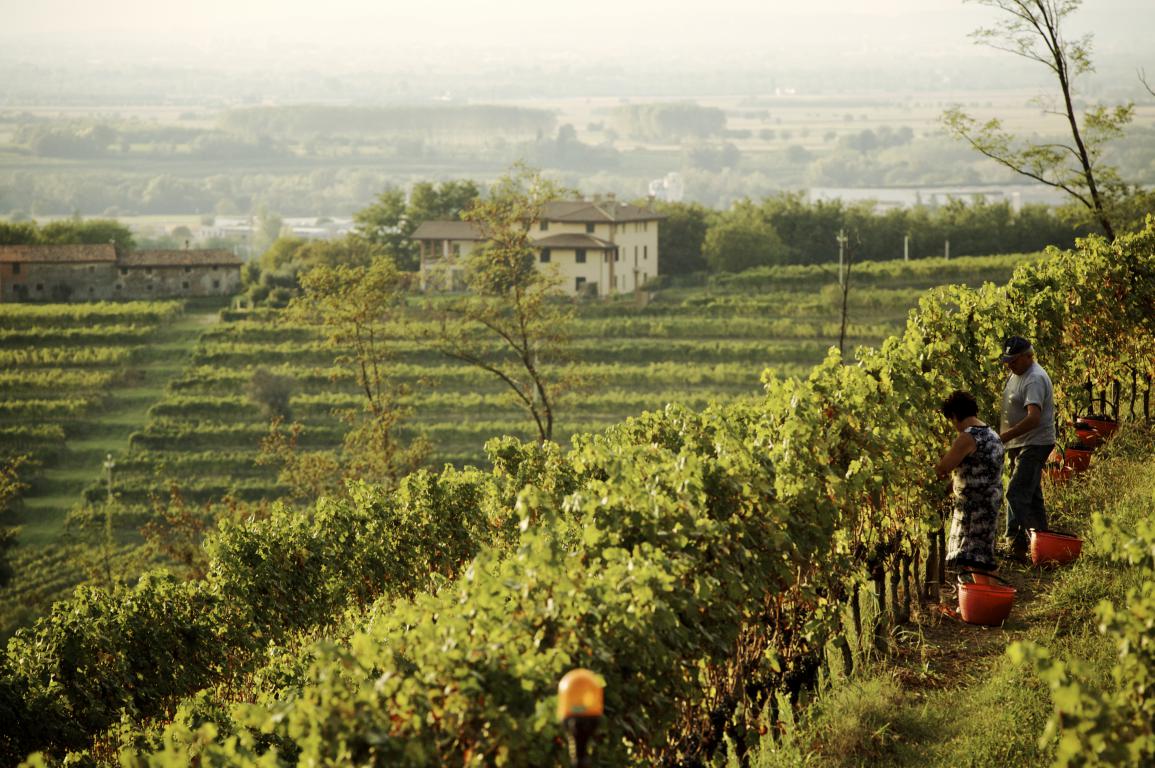 ph credits: Matteo Lavazza Seranto
Six different wine and food experiences
The Wine and Food Trail runs through the whole of Friuli Venezia Giulia with the aim of promoting tourism and regional food and wines and is divided into six different experiences. The six territorial trails to be explored are: With us on the River, With us in the Plain, With us in the Karst, With us on the Riviera, With us in the Mountains and With us in the Hills.  ph credits: Ulderica Da Pozzo
Meaningful holidays and activities galore
The strategic objectives of the Wine and Food Trail project are to attract niche markets and provide solutions for visitors looking for meaningful holiday experiences through Friuli Venezia Giulia's food and wines. What has been created is a series of tailor-made products and services for wine tourists travelling both individually and in organized groups. The project enhances activities related to wine and other local products, endorses promotions in target markets highlighting what the area has to offer and the players involved, and integrates the trail with the promotional and commercial strategy of PromoTurismoFVG and with that of all the stakeholders.
With us in the Mountains
The Tarvisio area has stunning natural attractions with wide valleys, majestic peaks and a thousand-year-old forest that is one of the oldest in Italy. The Carnia area offers visitors an idyllic landscape with seven valleys that run through the Carnic Alps that protect the area’s untarnished nature. In Pordenone’s mountains there are slow itineraries to be discovered in its valleys and on the Dolomite peaks: rural architecture, crystal-clear rivers and lakes, picturesque villages and green forests await the curious traveller. As do the Natisone valleys, a mysterious and wild land where legends, traditional festivals and typical products abound. Discover the genuine flavours of the highlands like cheeses and sausages, including Montasio PDO cheese which has been produced in the region since 1200 and which took its name from the plateau of the same name. Also not to be missed are the Sauris ham and the smoked salami of Pitina, both of which have Protected Geographical Indication certification.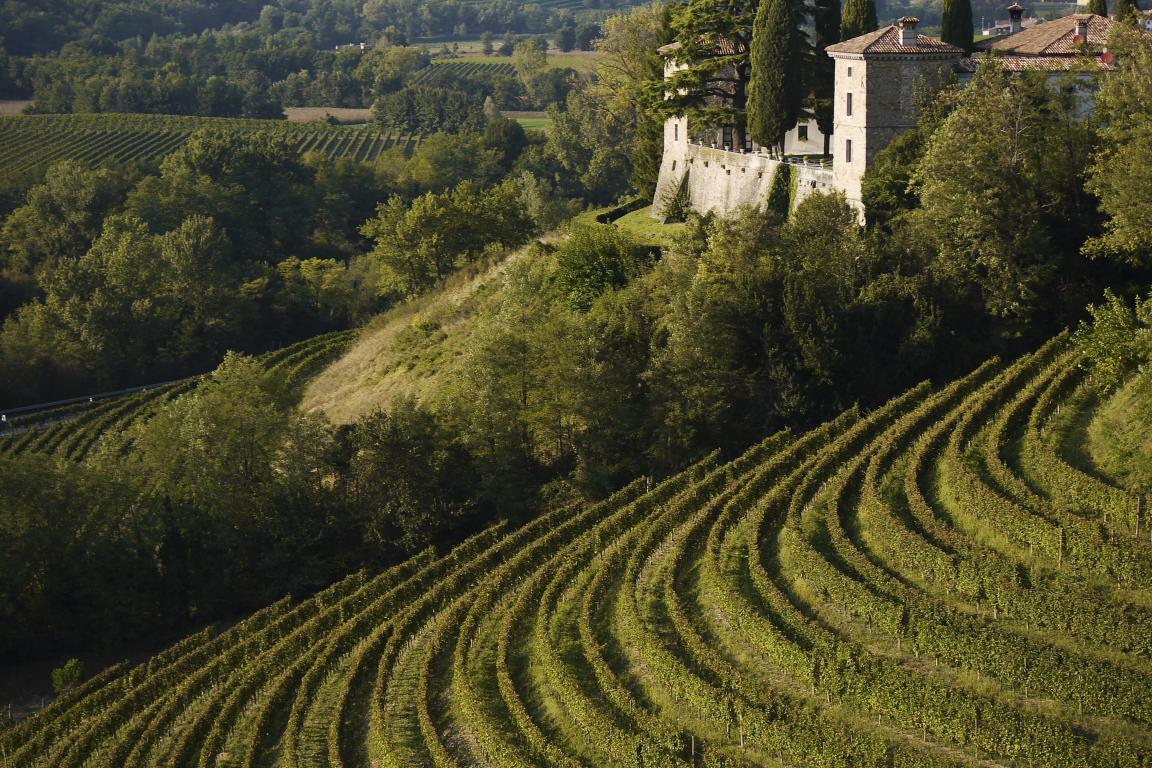 ph credits: Fabrice Gallina
With us in the Hills
From the hills in the province of Gorizia to the Torre valleys, passing through the towns of Cormons, Cividale del Friuli and San Daniele del Friuli, this is a promised land for gourmet tourists. With four DOC zones - Collio, Friuli Isonzo, Friuli Colli Orientali and Friuli Grave – and their DOCG wines, Picolit, Ramandolo and Rosazzo, which are a priceless wine heritage on a par with the area’s quality foodstuffs.  ph credits: Alessandro Castiglioni
With us on the River
The Tagliamento river has marked the history of Friuli Venezia Giulia, as well as its culture, lifestyle and language. The Magredi soil, of alluvial origin, is mainly stony and gravelly and similar to the terrain of the steppes and was formed over the millennia by deposits from the Meduna, Cellina, Livenza and Tagliamento rivers. In this area you will find the world’s largest nursery-growing complex: the Cooperative Nurseries of Rauscedo, which produce over 60 million vine shoots every year.
With us on the Plain
On the region’s plain you will discover many outstanding and typical Friulian cuisine and food and wine traditions including dishes based on pork and sausages, but also the delicious white asparagus of Tavagnacco, which is celebrated in numerous spring events. Visit farms to discover the ancient recipes that each pork butcher carefully preserves to produce Friuli salami, sausage, soppressa salami, bacon, lard, marcundela, which is a mix of minced liver, spleen, kidneys and lungs, and musetto which is a type of pork sausage.




With us in the Karst
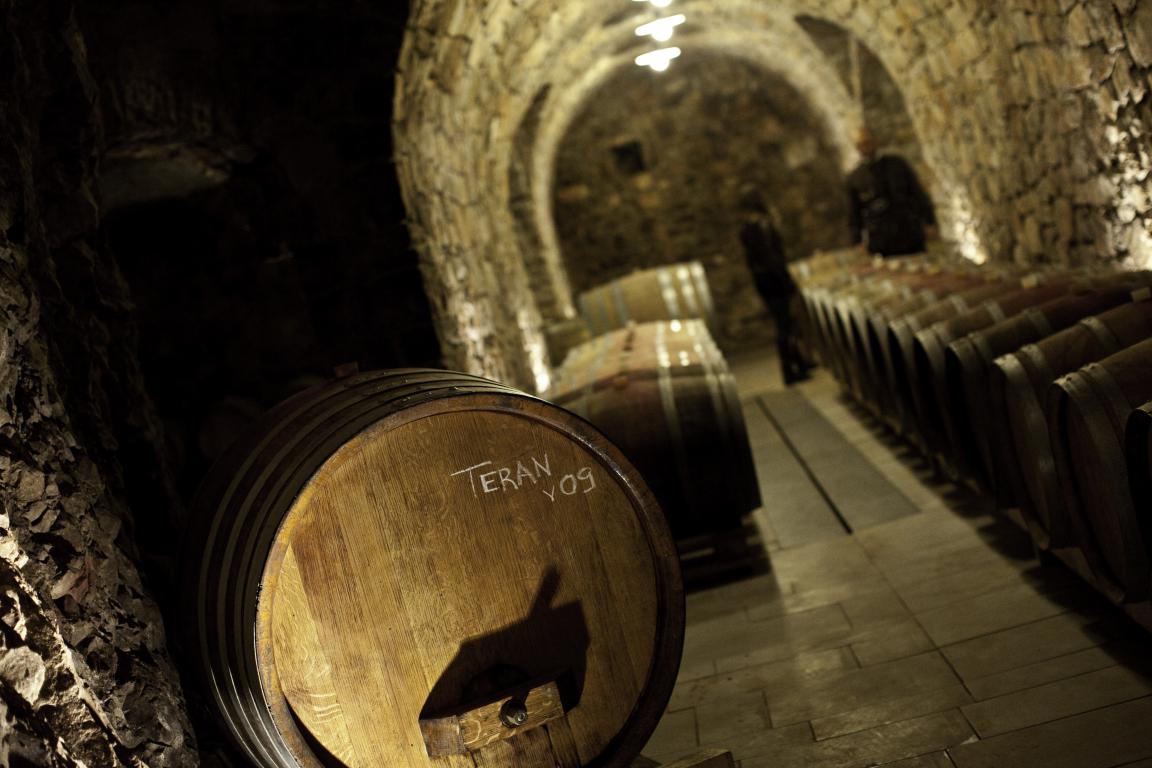
Visitors will be fascinated by the arid Kart landscape that has been made fertile by the commitment and passion of the area's tenacious producers. Visit cellars to appreciate unpasteurized wines and cheeses. In one of the many local restaurants try jota, a traditional soup made with beans and sauerkraut. Taste Jamar cheese which is matured for at least four months at the bottom of a Karst cave, and other Karst products like pickles, prosciutto, typical cheeses, Marasca honey, pork and homemade bread, all accompanied by a glass of Teran or aromatic Vitovska.
With us on the Riviera
From the golden dune beaches of Lignano Sabbiadoro and Grado, with their shallow, sandy sea beds, to the rocky inlets of the Duino nature reserve, where steep cliffs drop down to the sea, to the wonders of the ancient city of Aquileia and its grand Roman heritage. Relaxation, safety, fun, sport, history and culture, and such great food! Must-tries are the valley fish of the Marano lagoon like the fasolari clams, mullet, gilthead bream, sea bass and eels reared at low density. Here on the Riviera the roads along the coast are lined with bars and restaurants offering typical dishes of freshly caught fish and shellfish, such as the Boreto a la Graisana fish stew, cuttlefish with its ink and mullet preserved in salt for two or three months. No visitor to the Riviera should miss this chance to dive into these exceptional and genuine flavours.
FVGLive - Videos
Contact PromoTurismoFVG
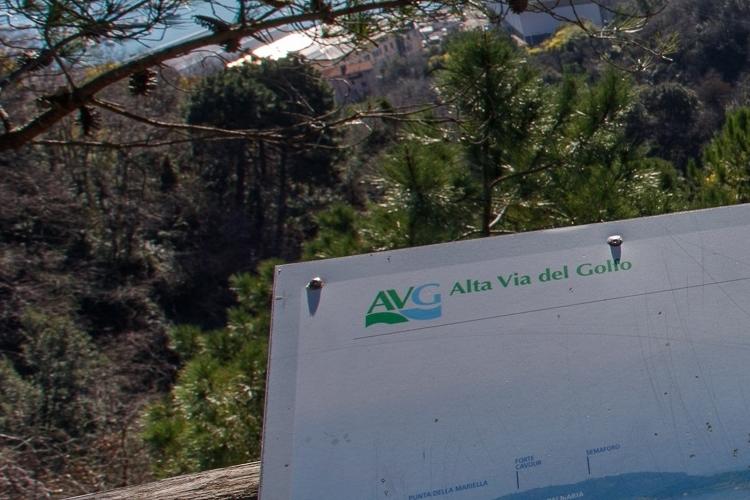
All these routes interconnect and the Alta Via del Golfo, a ridge trail that runs through the hills around the city, makes for easy access to the city of La Spezia. The Alta Via del Golfo and the paths around La Spezia, the so-called arrows, formed the basis for creating these ring routes. This well-developed and much used network of paths around the city, especially on the western side towards Porto Venere and the Cinque Terre, also makes it possible to reach the Cinque Terre, the Lunigiana area and the Val di Vara valley. 
Pathways to be enjoyed on foot or by public transport
Our network of pathways can be reached directly from the city on foot and also by public (boats and buses) or private transport. For example, following the route from Chiappa to Salto del Gatto, you come to the parish Church of Marinasco after crossing a wood of holm oaks and passing the small 16th century Church of Santa Lucia. From the large square in Marinasco you can continue to the Foce Pass, poised between the sea of the gulf and the woods of the Val di Vara valley. From here, taking the road that leads to Parodi, you come to Sant'Anna, skirting the Toracche, an interesting medieval fortified nucleus, and once again Maggiano on the hills leading to La Spezia.


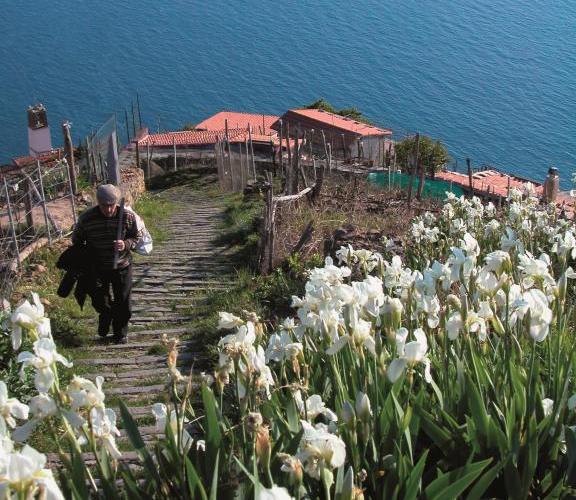


Trails to the Cinque Terre
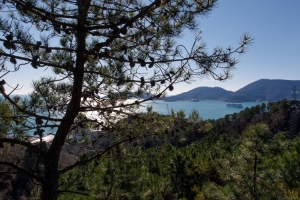
On the eastern side, starting from the Romanesque parish church of San Venerio, you can ascend the Via della Lobbia, bypassing the large Passano Villa, coming first to Carozzo and from there to the village of San Venerio. Among the various possibilities offered by these paths in the hills you can also cross towards the sea of the Cinque Terre (a part of the Cinque Terre National Park is in the area of Tramonti and included in the Municipality of La Spezia) following the route that from the ancient village of Biassa descends to Fossola, where there is a tiny church dedicated to the Guardian Angel. From here, over the seemingly endless sea, keeping at a higher altitude than Monesteroli and then Schiara, it is possible to reach Campiglia and the Church of Santa Caterina.
A country walk around the city
The Parco delle Mura in La Spezia, which is a beautiful city walk in the countryside with panoramic views over the Gulf of Poets, begins in Piazzale Papa Giovanni XXIII behind the cathedral of Cristo Re. The first part is a beautiful flight of steps in the verdant Colle della Ferrara area which once housed the Convent of the Capuchin Friars and the villa of Marquis Oldoini. A large part of the hill was flattened in the 1920s and 1930s to unite the historic centre with the Migliarina plain, thus allowing the expansion of the city and the construction of new buildings along Via Veneto. Climbing up we come to the initial part of the walls, and at the first rest area there is a fountain.
The city had air-raid warning sirens
Leaving the first viewing area and walking along a wide dirt road you meet Path 224, which climbs from Via dei Colli, another access road to the Parco delle Mura. On your way you can see the various parts of the walls with the old caponiere which were lookout points that made it possible to have a flush crossfire and thus control each side of the walls. Unlike the walls in the castles, these had no patrol walkways and a maximum height of six to seven metres. Although we are not far from the city centre this is a lovely green area that leads us to the second stage of the urban Sirens’ Route. During the First World War La Spezia had air-raid warning systems and between 1934 and 1940 they installed 22 sirens connected by a system of cables. They could be heard in every part of the area, and 16 of them were manually operated. This communications network was used to alert the population, the danger signal being six blasts of 15 seconds with pauses of the same duration, thus alerting residents that they should go to the underground shelters.
Tables, benches and games for children
This part of the urban walk along the walls offers a view of the Valdellora district below as well as the harbour area, the Apuan Alps and the Apennines. Halfway along the Parco delle Mura della Spezia, near Porta Isolabella, there is a large rest area with tables, benches and games for children. In this clearing you can see the limestone walls which had embrasures for sighting and defending against an attack by land thanks to the presence of cannons, machine guns and batteries. However, this defensive system soon became obsolete as it was not suitable for countering attacks from the air. From here, continue along the walls until you reach another opening that provides access to private dwellings. Climb up along the mule track, a narrower and steeper section, until you come to Path 225, which comes from the Valdellora district.
Delightful urban walking routes
Here the walk continues along a dirt track cand you come to the vicinity of the village of Sarbia, at an altitude of 168 metres, where the actual area of the Parco delle Mura ends. From the beginning of the urban promenade to here it is approximately 2.3 kilometres, which can be covered in 45 minutes at a leisurely pace. In Sarbia there are several paths that you can use to return to the city, such as Path 226 that leads to the Chiappa district. However, the quickest way is to take the same route back or continue the walk along the ancient walls down the steps and onto the trail to Porta Castellazzo. At this point, the walls were cut in 1906 to make way for the road to Sarbia. Once past the old gate, descend to the right onto Via dei Colli. At the first bend, continue along the steep road that follows the ancient defensive walls and comes to Piazzale Ferro. From Sarbia to here it takes 20 minutes to cover the distance of 1.33 kilometres.
The Frasassi Caves. A kilometre and a half of a crystalline subterranean wonderland with stalagmites and stalactites, and Europe’s largest cavern. In the heart of the Marche region, about a forty-minute drive from Ancona, the famous Grotte di Frasasi caves are equipped with walkways and theatrical lighting. Tours last just over an hour, and there are more challenging speleo-adventure routes.
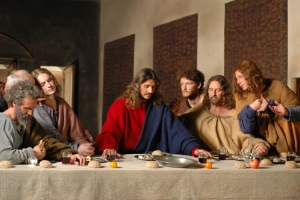
"The Last Supper. The living tableau", a short film by director and creator Armondo Linus Acosta, inspired by Leonardo da Vinci's masterpiece "The Last Supper", will be screened until April 18 in the exceptional setting of the Frasassi Caves
The Arena and numerous churches
The majestic Arena is famous all over the world. This ancient Roman amphitheatre hosts the opera season every year as well as numerous other concerts and shows. It is impossible not to be fascinated by the numerous and wonderful churches in Verona. The most famous include the Duomo, the Basilica of San'Anastasia and the Basilica of San Zeno.
The Fumane Cave is a large prehistoric site
In its northernmost part we come to the Lessinia Regional Nature Park, home to the majestic Ponte di Veja in Sant'Anna d'Alfaedo. This is an arch of limestone rock, some ten meters deep and 52 metres long under which a stream flows. If you are in the area, don’t miss the Molina Waterfalls and the Fumane Cave, one of the largest prehistoric archaeological sites in Europe.
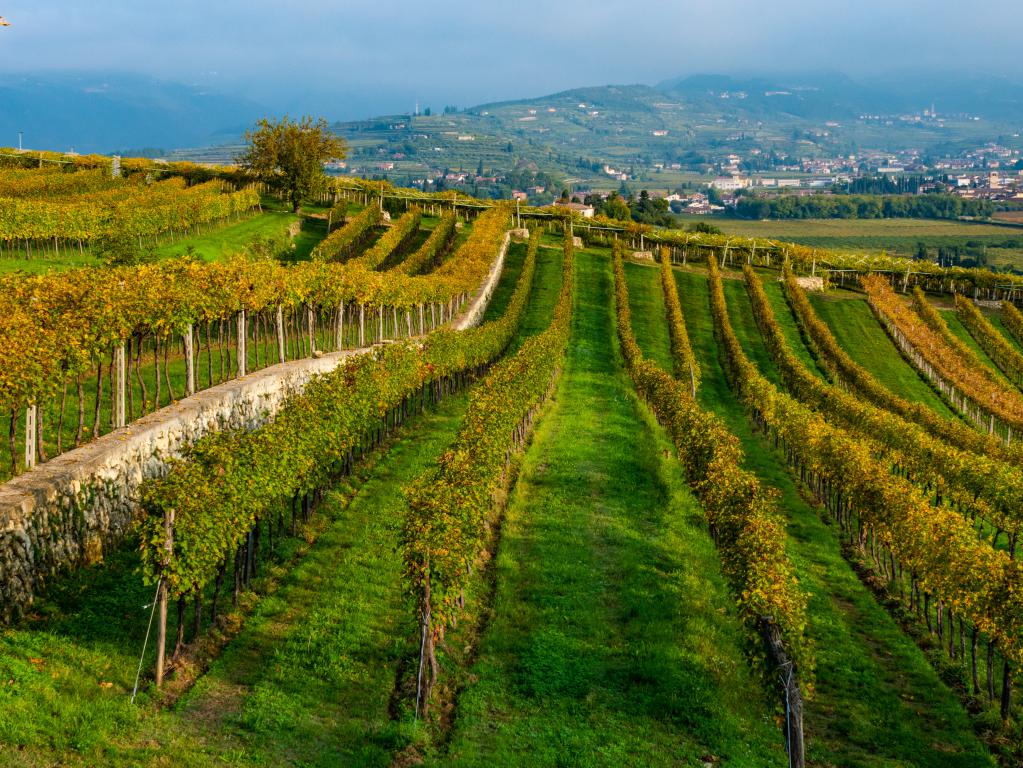

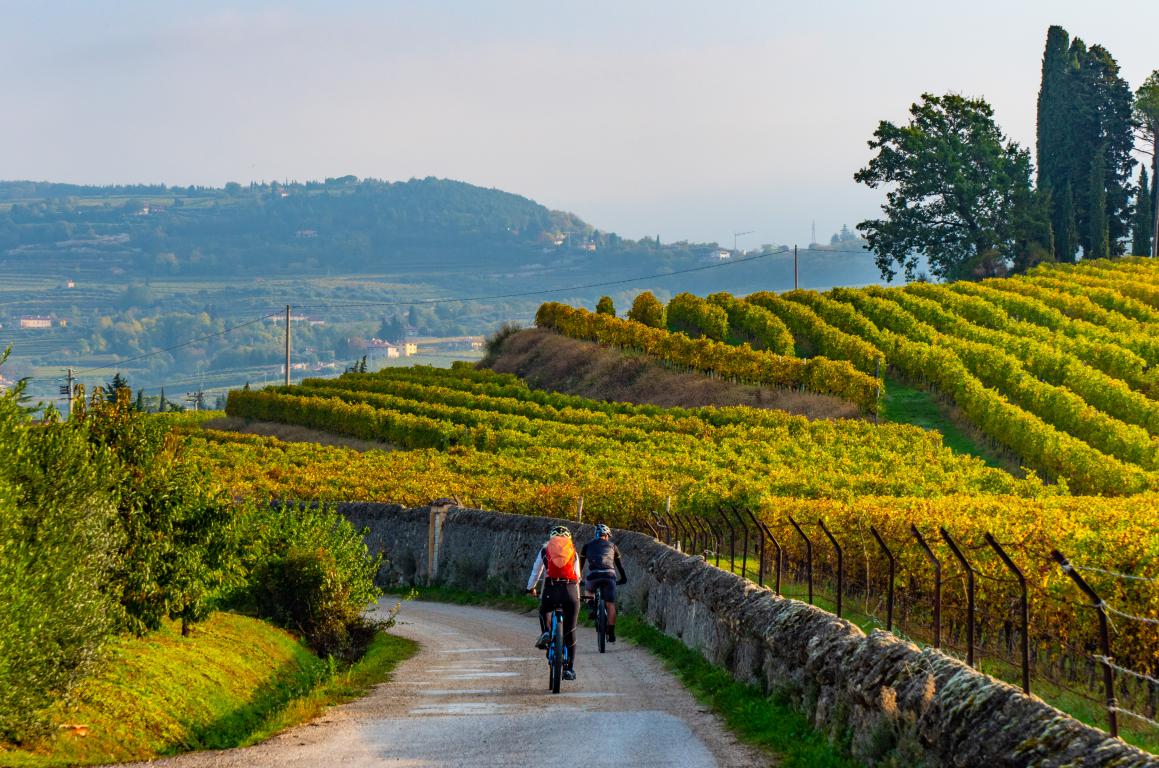
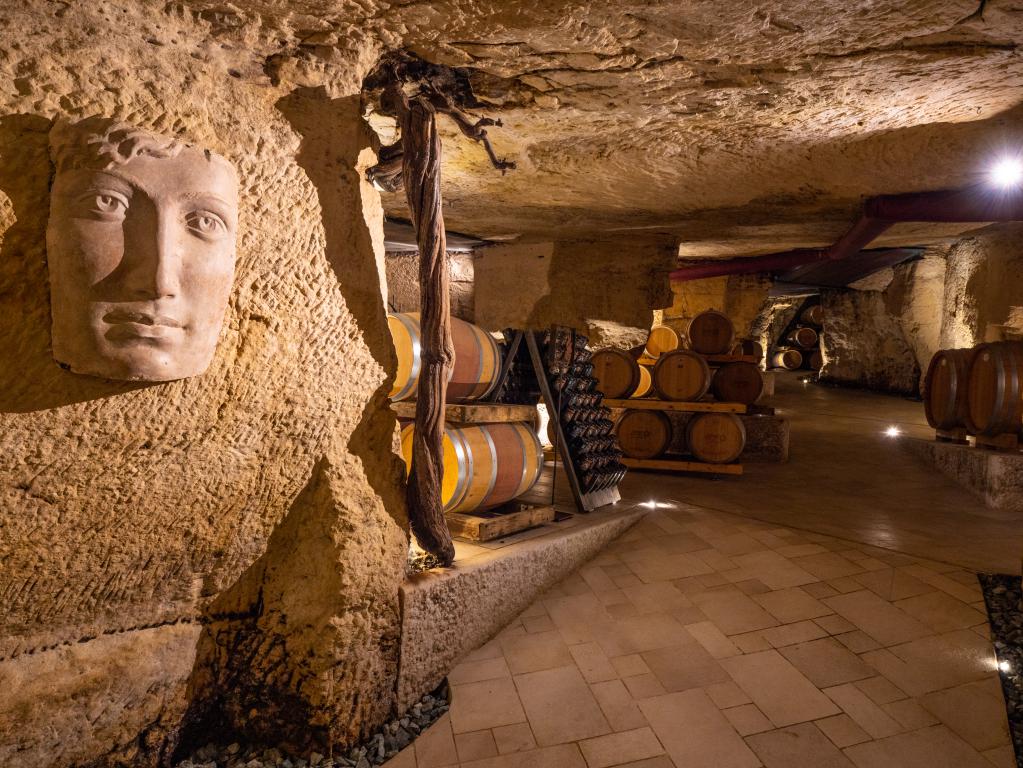


Exploring 14 walled cities
Between the hills and Lake Garda in the province of Verona, there are 14 cities to explore, many of them old walled cities. Like Soave, at the foot of the Lessini Mountains, which is renowned for the fine white wine it produces. The medieval town is concentrated around Piazza dell'Antenna with Palazzo Cavalli, Palazzo della Pretura and the 15th-century Church of S. Maria di Montesanto.
Taste Valpolicella’s wines on the Wine Route
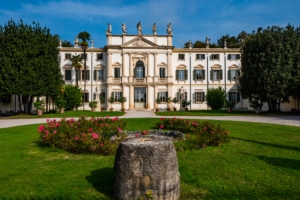
Valpolicella has many ancient and historic residences that were built by the noblemen of past centuries, and it also has numerous Venetian villas but above all, it is famous the world over for its excellent wines: Valpolicella, the rich and sweet Recioto, and the full-bodied Amarone. Taking the Valpolicella Wine Route you can taste some of the fine wines on offer, while discovering the beauty of this fascinating corner of Verona’s foothills.
For more Information:

But actually La Spezia has an ancient history. The area it covers has in fact been inhabited since prehistoric days and its shores were once frequented by the Romans, who left the remains of fabulous villas along the coast, although the city itself, probably evolved in the early decades of the year 1000.
The military arsenal was built in the 19th century
Capital of the ephemeral aristocratic power of Niccolò Fieschi, in the period between 1256 and 1273, in opposition to the pro-imperial politics exercised by Genoa, La Spezia came under the territorial and administrative system of the Serenissima Republic of Genoa, to which it remained closely tied up to the last century. Down the centuries the city expanded and changed, enjoying an extraordinary development in the second half of the 19th century, when the great military arsenal was built, forever changing its form and face. In those years the walls that encircled the city were demolished - although some parts of the 14th, 15th and 17th-century walls can still be seen on the stretch that descends from the San Giorgio Castle to Via XX Settembre - and the city’s military functions led to many urban planning choices.
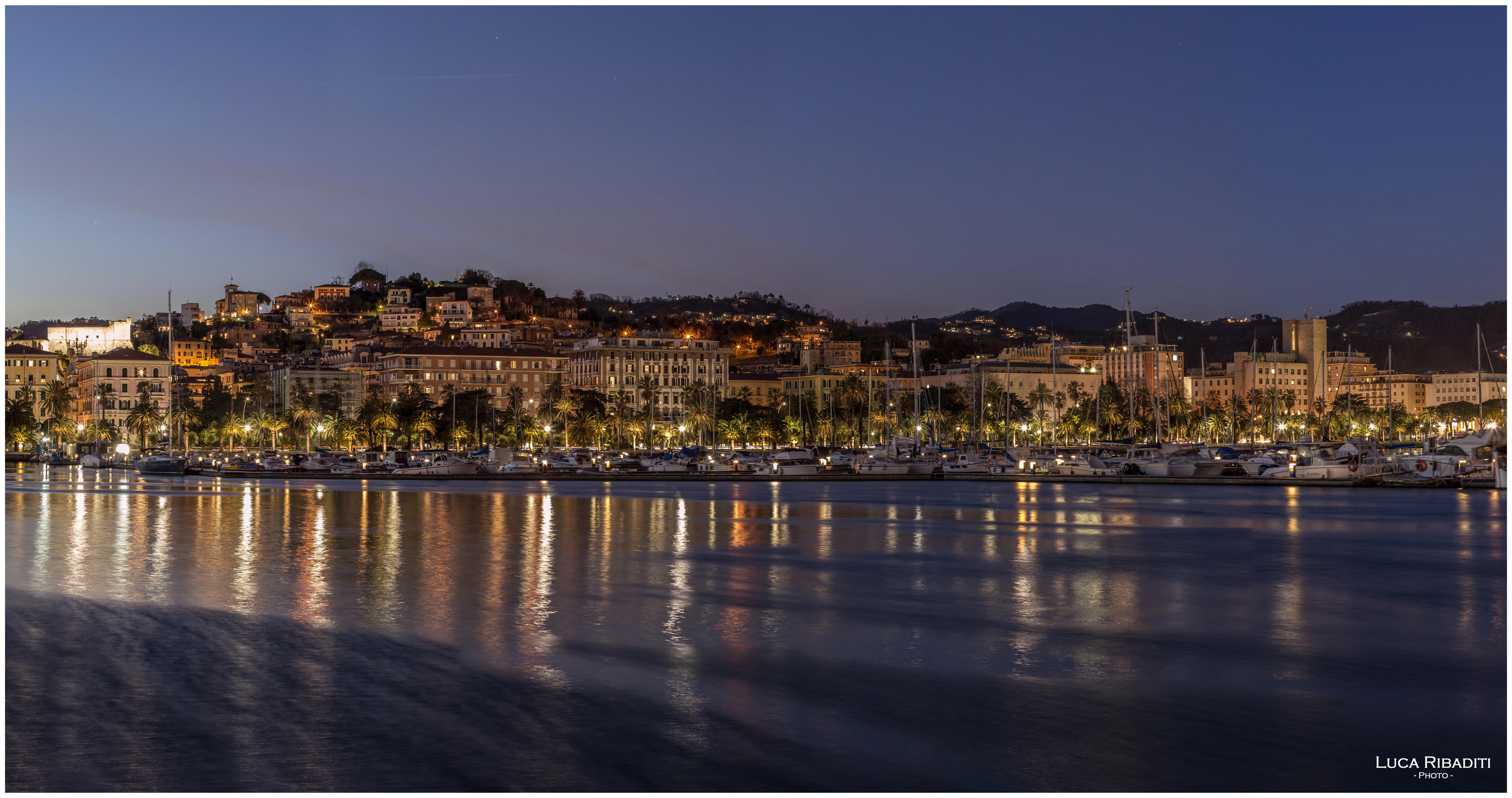
Renaissance, Neoclassical and Art Nouveau buildings
These ancient walls have become part of the redevelopment called the Parco della Mura park, carried out under the Peracchini Administration that include the La Spezia Forte and part of the system of pathways surrounding the city. These are a network of spectacular trails connecting the Via Francigena, the Ligurian Trail, the Alta Via delle Cinque Terre, the Lunigiana and the Val di Vara. In the early 20th century the city expanded as it became the provincial capital and the seat of the diocese. Today the visitor can admire its neoclassical rigor and its Art Nouveau architecture. Looking closer he will also find traces of those earlier times. These may be less conspicuous but are none the less evocative like the San Giorgio Castle dating back to the Middle Ages and home to the Civic Archaeological Museum, the Piazza Sant'Agostino square where the Augustinian Convent once stood and Via Prione with its Renaissance style.


The carrugi narrow streets are typical
The elegant Public Gardens connect the waterfront to the shadowy porticoes of Via Chiodo, which with Corso Cavour is the main axis of the 19th-century city. Here you will find the Giacomo Puccini Conservatory, the Civic Theatre and the Palazzo delle Poste, designed by Angiolo Mazzoni and decorated with futurist mosaics by Fillia and Prampolini. The Ligurian soul of the city is to be found in the carrugi of the historic center. These narrow streets, with houses tightly packed one next to the other and wider parts that are not quite squares, are the backbone of the urban city.

From the station to Piazza Garibaldi
You can cross the center of the city from north to south through its historic core, starting from the 19th-century railway station. In the lobby you can see the ticket offices and the beautiful ceiling by Luigi Agretti with allegorical representations of Industry, Crafts and Trade, representing the sea and the gulf that takes its name from La Spezia. From the square in front of the station, where there is a sculpture of little red men that form a cone called Oplà by Giuliano Tomaino, you then walk along Via Paleocapa with its remarkable Liberty buildings like the beautiful Nespolo-Layolo Palace which has refined ceramic inserts.
At the end of the street, in the middle of the traffic circle, there is the marble obelisk by Francesco Vaccarone, called Ray of the Sun, and then the Piazza Sanit Bon square, where the 20th-century city is once again revealed. In the centre of Garibaldi Square you can see the Fountain of the Diaologo by Viliano Taraballa, then Via Prione that cuts the historical center in half, up to the gardens and the sea. On the right there is Viale Garibaldi which is shaded by plane trees and was once a military road built by the Royal Navy in the 1870s. On 4 June 1882 it was named for the hero of the Two Worlds, and then on 7 April 1899 the square was also dedicated to Garibaldi, becoming an important junction between the historic city and the new military needs. Not far from the square, along the avenue on the right, stands the Church of Nostra Signora della Neve designed in 1901 by Giuseppe Ferrari d'Orsara.
The historical stairways
La Spezia’s historical stairways start in the city centre. The hilly nature of the site on which the city was built has conditioned its form. There were ascending paths to reach the Castle and the religious settlements located between the valley area and the top of the hill. They form a fan-like shape, and are referred to as the fan with the Castle at the top and then the stairways and descending paths branching off to reach the strategic points of the city corresponding to the "slats" of the fan. From this elevated part in the Park of the Walls the pathway starts on the hilly area of the city embracing the history of the 19th-century walls. From the Cathedral of Christ the King, just above Piazza Europa, you can continue along the pedestrian route in the historic center, the starting point of this wonderful panoramic walk around the entire perimeter of the walls built in defense of the city.
La Spezia’s new brand on the Visit La Spezia website
But La Spezia has much more has to offer, and it is about to re-launch its new tourism brand on the Visit La Spezia website featuring the city’s history, anecdotes, stories and inventions. La Spezia is a destination that blends scenic beauty with history, culture, art and poetry. A stone's throw from the Cinque Terre and seaside resorts like Lerici and Portovenere, it has been an inspiration for artists like Botticelli and for great writers and is a city to be enjoyed leisurely in the open air, discovering its sea and its hills on foot or by mountain bike.

Venice is a great art city
Venice, however, is first and foremost an art city. Great art that has been handed down to the present day and tells of the splendours accumulated over the years by the ancient Venetian Republic. Oriental Greek-Byzantine influences blend with the typical Venetian styles, creating a unique artistic miscellany. Some of the city’s most important monuments such as those in St Mark's Square - St Mark's Basilica, the Bell Tower and the Doge's Palace - are examples of this comingling. Art enthusiasts can also admire the masterpieces by Tintoretto in the Scuola di San Rocco, or investigate the modern and contemporary works in the many art galleries or exhibited during the Biennale.
Venice is a city to explore on foot
To enjoy Venice to the fullest, you have to experience it on foot, losing yourself in its maze of streets and bridges and exploring every corner. And the city will reveal its hidden treasures from little craft shops to small restaurants where you can feast on local specialities.
The Lido di Venezia and Pellestrina islands
The islands of Lido di Venezia and Pellestrina are the watershed between the Adriatic Sea and the lagoon, with the open sea on one side, the lagoon on the other and Venice in the background. To explore this side of Venice why not take a bicycle trip starting from the south, with a stop to visit the historic centre of Chioggia with its original herringbone shape? photo credits: Nicolò Miana
Pellestrina has 16th and 17th-century houses
When you get to the island of Pellestrina by boat, get off near the Ca' Roman Nature Reserve and head north to see the built-up area of Pellestrina with its 16th and 17th century houses. Then cycle on to the villages of San Pietro in Volta and Portosecco, where the ladies still do intricate lacework.
There is a Jewish cemetery on Lido di Venezia
On the Lido di Venezia, get off the ferry near the Alberoni Oasis and pedal along the lagoon as far as the historic centre of Malamocco, where the calli and campielli (little streets and small squares) create a typically Venetian atmosphere. Moving towards the sea it is possible to pedal along the track on the Murazzi stone defense as far as the International Exhibition of Cinematographic Art building, the monumental Jewish Cemetery and the Church of San Nicolò.
Burano is the lagoon’s most colourful island
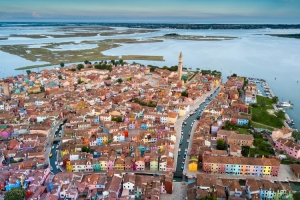
Burano is a picturesque island in the northern Venetian lagoon and its main features are its colourful houses, fishing traditions, the ancient art of lacemaking and its steeply leaning bell tower. The heart of the island is Piazza Baldassare Galuppi with the Church of San Martino - the only church on the island - which has a splendid Crucifixion, an early painting by Gian Baettista Tiepolo.
Old ladies still make lace by hand
Strolling through the little island’s calli and campielli it is still possible to come across old ladies who demonstrate their mastery in lace-making, using a bobbin which is known as a tombolo. A valuable collection of this ancient art is on display at the Museo del Merletto lace museum.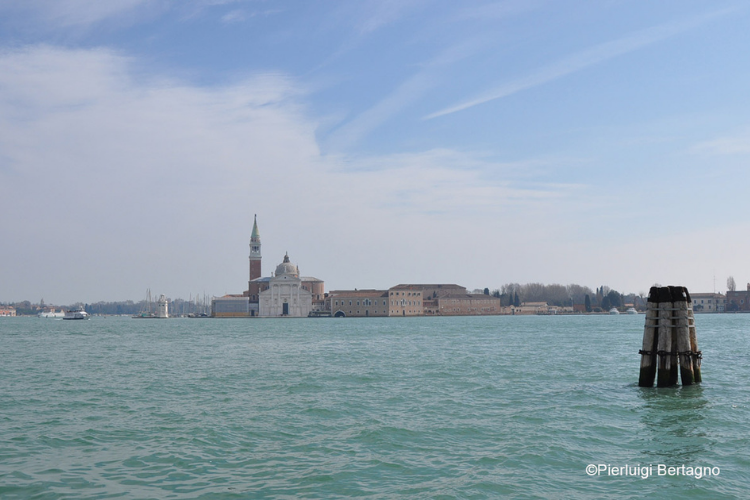
San Giorgio Maggiore is opposite St. Mark’s Square
Just four hundred metres separate St Mark's Square from this other gem of the lagoon: San Giorgio Maggiore. The first building you will see when you arrive on this little island is the imposing church of the same name, designed in 1565 by the architect Andrea Palladio. The island’s history is a very old and troubled one, going from the Benedictine monks to the Napoleonic domination to Austrian rule. What was once a monastery here, then became a prison, a weapons depot, a factory and a military district.
The Giorgio Cini Foundation has restored many buildings
Today on the island you can admire the imposing basilica with priceless works of art including the last works by Tintoretto. The old Benedictine buildings are managed by the Giorgio Cini Foundation, which has restored and upgraded them, and today they host cultural events and conferences. They also have libraries and a photo library which can be visited on a guided tour organised by the Foundation. For unbeatable views of Venice and its lagoon you must climb up the bell tower, and don’t forget to visit the Borges Labyrinth, a large garden where over 3,250 boxwood plants spell out the name of the Argentine poet. Seen from above it looks like an open book.
Murano, the home of glass
Murano is much more than an island, as it is actually an agglomeration of small interconnecting islands and a magical world that tells a very long story of artistic glassmaking. This industry, which has flourished here since the Middle Ages, gave Murano such prestige that it was able to enjoy a certain independence from the other Venetian islands. In fact, with the edict promulgated by Doge Tiepolo in 1291, Murano was declared an industrial area and soon became the world capital of glass production. The secrets of the craft, traditionally handed down from father to son and jealously guarded by the most important families, were protected by harsh penalties. To admire the masterpieces of this art, make sure to visit the Glass Museum, in Palazzo Giustinian.
The Basilica of Santi Maria e Donato has a Byzantine floor
But Murano is also architecture. Among the most important monuments is the Basilica of Santi Maria e Donato, probably founded in the 7th century. The apse is splendid, with a mock portico of niches and twin columns. Inside you can admire an extraordinary and very colourful Byzantine floor and, adorning the choir, a wall mosaic with gold-leaf glass tesserae dating back to the 12th century. Another religious building worth visiting is the Church of San Pietro Martire, founded in 1348 by the Dominican fathers, inside which you can admire works by Giovanni Bellini, Tintoretto, Paolo Veronese and Giuseppe Porta, known as Salviati.
For more information:




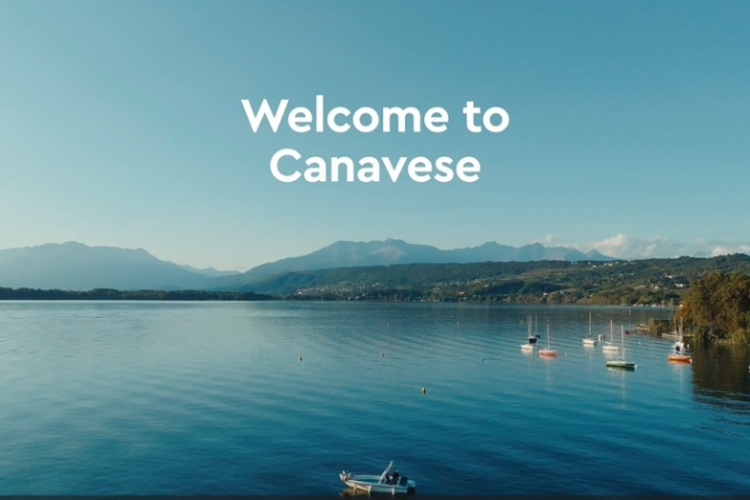
Welcome to Canavese, an unexpected corner of Piedmont where …
844Welcome to Canavese, an unexpected corner of Piedmont where …
844
