


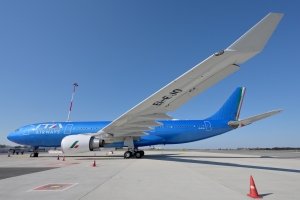





ITA Airways has a new route planned from Caracas as the airline continues to expand its international network and aims to break even in 2026
The aim is to launch Caracas flights in October-November
The confirmation comes from the airline’s CEO and General Manager, Joerg Eberhawho was in Rio de Janeiro for the IATA Annual General Meeting. “"We are finalizing a plan for Caracas. Last week I met with the Venezuelan ambassador in Rome; he is holding talks with all stakeholders regarding the launch of this new route, but I am fairly confident that this can be achieved by October-November.”
Two new A350 aircraft
The expansion plans, the CEO added, are linked to the arrival of new aircraft, in particular the Airbus A350s. “The expansion depends on the additional capacity we have. In 2028, we have identified two long-haul aircraft, the A350s. If this plan goes ahead with these two new aircraft, we can envisage further growth in South America: we have plans for Lima and Santiago de Chile. At the same time, we are looking at Japan and boosting our current routes to Rio and Buenos Aires. And then there is always the United States.”
The aim is that of “coming close to breaking even"
Meanwhile, Eberhart outlines the outlook for the coming months, aiming for an operating break-even by the end of the year: according to Il Corriere.it which reports that the accounts will be supported not only by the advance purchase of 80% of the fuel required for 2026, but also by fare increases averaging 5–10%. This increase “should be enough this year to offset the impact of jet fuel costs. That is why I remain very optimistic that we can meet the budget this year despite this situation." The aim being that of “coming close to breaking even”.
Promoting and showcasing the beauty of the Marche region is the mission of the association Cultura della Bellezza APS, explains Amerigo Varotti
"The Marche is an extraordinary region"
Promoting the Marche region through culture, history, landscape and food and wine. This is the mission of Cultura della Bellezza APS, an association that operates mainly in the north of the Marche region with the support of numerous municipalities in the provinces of Pesaro Urbino and Ancona. Cultura della Bellezza APS focuses on tourism and cultural promotion,- explains Amerigo Varotti. -We want to showcase the beauty of the Marche region which extends beyond cultural, architectural and environmental heritage to include food and wine. The Marche is an extraordinary region and deserves to be better known."
Promoting the area of Montefeltro
Fourteen municipalities have joined the association to carry out a series of joint projects. Among these, one of the most important is Montefeltro, a historic territory linking the Marche and Romagna regions. "We have developed a project that brings together the province of Pesaro Urbino and the province of Rimini. This is the first time we have moved beyond a vision tied exclusively to regional boundaries to promote a historic region that tells the story of the Montefeltro family and, above all, of Federico da Montefeltro, the great military leader who made Urbino and its Duchy famous."
A newly discovered ancient basilica
Archaeology is another important sector with the promotion of the ancient Via Flaminia. “This interregional project starts in Umbria and extends as far as Fano, passing through places of great historical and archaeological interest such as Fossombrone and Cantiano,- explains Varotti, who added that Fano is currently at the centre of a discovery that is attracting the attention of the international scientific community. “The discovery of Vitruvius’s Basilica is of global significance. We knew of this basilica’s existence only through Vitruvius’s writings; today its foundations have been brought to light and further excavations have been funded, which will provide important new information.”
Focusing on hospitality and gastronomy
Cultura della Bellezza APS also focuses on hospitality and tourism promotion by organizing services for visitors. One of the most original projects is Ristoranti della Bellezza. "In each participating municipality we identify one or two restaurants to recommend to visitors, creating a network of excellence that best represents the local culinary traditions. We also collaborate with the Italian Truffle Academy, of which I am an ambassador, to develop international projects and showcase the Marche region through its cultural and gastronomic excellence, including during the Week of Italian Cuisine in the World scheduled for next November."
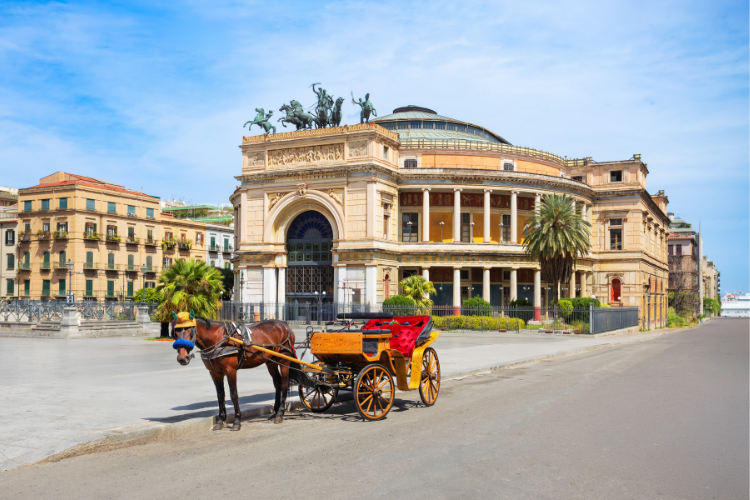
An hour south of Palermo, the ideal for a weekend escape is the little town of Ficuzza.
A royal hunting lodge
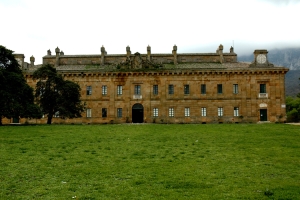
With citrus groves and coastal light that give way to dense woodland, cooler air, and a sense of inland Sicily that feels largely untouched by tourism, Ficuzza, a small town in one of the island’s largest protected forests is anchored by an unexpected royal residence: the Bourbon hunting lodge.
A rare perspective on Sicily’s layered history
The standout experience here is entering the Real Casina di Caccia di Ficuzza royal hunting lodge which was built in the late 18th century by Ferdinand III of Bourbon. Vast, austere, and almost out of scale with its surroundings, the lodge was designed as a seasonal retreat for hunting expeditions. Today its long corridors, sparse rooms, and monumental proportions feel quietly disorienting. It is neither palace nor country house in the conventional sense, and its isolation is part of the experience. Visiting it offers a rare perspective on Sicily’s layered history, far from baroque cities and coastal narratives.


Walking trails in the forest
But Ficuzza’s appeal also lies in its setting in the Bosco della Ficuzza forest. Marked trails lead through oak and holm forests, with routes suitable for slow walks rather than demanding hikes. Wildlife sightings are common, and the silence feels strikingly distant from Palermo’s intensity. The forest encourages unstructured time: walking, pausing, and lingering rather than ticking off sights.
Low-key, often family-run accommodation
Reaching Ficuzza is easy and so makes it ideal for a weekend escape. The drive from Palermo takes around 60–75 minutes, depending on the route, and becomes increasingly scenic as it climbs inland. A car is essential, as public transport is limited, but once there, distances are short and the pace naturally slows. Accommodation is low-key, often family-run, and dining focuses on robust inland Sicilian cooking rather than coastal specialities.
Perfect for a weekend visit
A weekend here works best when kept deliberately simple. Saturday can centre on the drive inland, a visit to the hunting lodge, and a walk in the surrounding forest, followed by a relaxed dinner of local ingredients. Sunday allows time for a longer woodland walk or a slow breakfast before returning to Palermo in the afternoon. What makes Ficuzza unusual is its contrast. So close to the city, yet for its greenery, quiet, and scale it offers a side of Sicily many visitors never see. For those willing to drive inland, it offers a weekend that feels genuinely different - rooted in landscape, history, and a rare sense of space.
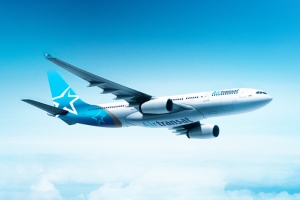
Air Transat has resumed its long-standing direct route from Toronto to Lamezia Terme.
Represented in Italy by Rephouse GSA
The flights will operate until 15 October. The airline, which is represented in Italy by Rephouse GSA, will fly from Canada to Calabria once a week, every Thursday. The Toronto-Lamezia flight has always been the only non-stop service between the two destinations, a real benchmark for passengers on both sides of the Atlantic.
"For over thirty years the only direct Toronto to Calabria flight"
“For over thirty years, the flight from Lamezia Terme has been the only direct connection from Toronto to Calabria, a long-standing and well-established service, and it offers travellers from Southern Italy a competitive, high-quality option for reaching Canada,- says Tiziana Della Serra, Rephouse's managing director and head of sales & marketing. -Air Transat offers a product that stands out for its excellent value for money; it is important to note that hand luggage is always included and so are meals. For the 2026 season Air Transat confirms a weekly non-stop Lamezia-Toronto flight every Thursday, available on all major GDSs.”
Operating with A330-300 or A330-200 aircraft
The carrier operates from Italy with A330-300 or A330-200 aircraft, offering passengers maximum comfort during the transatlantic journey, configured in two classes of service: Economy Class and Club Class. On direct flights from Italy to Canada and on connecting flights from Italy (with a single Air Transat ticket) to other destinations operated by Air Transat, hand luggage is always included. On direct and intercontinental flights from Italy to Canada, meals are always included in Economy Class across all fare levels: Budget, Standard and Flex.
ITA Airways is taking a further step towards integration within the Lufthansa Group, from this autumn, it will join the strategic Lufthansa-ANA Europe-Japan joint venture.
Deeper cooperation across strategic areas
The agreement was signed on 7 June during the IATA Annual General Meeting in Rio de Janeiro and the Italian airline’s entry into the major Europe-Japan joint venture will enable deeper cooperation across numerous strategic areas. It will encompass ITA Airways’ European network, including domestic routes within Italy, the Maghreb region (North Africa) and its long-haul service between Rome-Fiumicino and Tokyo-Haneda. This expands the scope of the joint venture in Italy, which already includes the existing route operated by ANA between Tokyo-Haneda and Milan-Malpensa.
Daily Rome-Tokyo Haneda flights from Rome Fiumicino
At the heart of the agreement is ITA Airways’ hub at Rome Fiumicino Airport, from where the leading Italian carrier operates a daily direct flight to Tokyo Haneda. Both airports have been awarded the highest five-star rating by Skytrax. From autumn onwards, this intercontinental route will also be bookable by customers of ANA, Lufthansa, Austrian Airlines and Swiss, allowing for flexible connections with their own flights. Furthermore, the introduction of a joint offering will be rolled out progressively from autumn 2026. Customers will be informed as soon as it becomes available.
Shorter journey times between Japan and Southern Europe
As the joint venture also includes code-share flights operated by ITA Airways to Rome, passengers travelling to and from Japan will benefit from additional travel options. In particular the Rome hub will ensure shorter journey times for connections between Japan and destinations in Southern Europe, the Mediterranean region and North Africa. At the same time, ANA will offer ITA Airways passengers numerous opportunities to connect from Tokyo Haneda to its domestic network in Japan.
"A greater number of travel options"
All passengers will also have access to the respective airlines’ lounges in Rome and Tokyo and will benefit from the mutual recognition of tickets and loyalty programmes between the two airlines. “This agreement is a milestone in the international development of ITA Airways and further strengthens the airline’s connectivity to the Asia-Pacific region, an area of great strategic importance,- commented Joerg Eberhart, CEO and general manager ITA Airways. -We can now offer our customers a greater number of travel options, more efficient connections and an increasingly integrated experience.”
Don't miss Rubens in the heart of Rome. Just steps from Campo de’ Fiori, one of the city’s greatest Baroque masterpieces, is surrounded by local attractions.
The church is also known as the Chiesa Nuova
For cultural travellers the Rubens altarpiece is also the ideal starting point for an immersive walk through one of Rome’s richest historic quarters. The Rubens is to be found in the Church of Santa Maria in Vallicella, which Romans call the Chiesa Nuova or New Church, in the historic center of Rome, just west of Piazza Navona and along Corso Vittorio Emanuele II. The church is open daily and entry is free.
A medieval icon is hidden under Ruben's altarpiece
Rubens created the remarkable altarpiece for the high altar between 1606 and 1608 as a combination of painting and sacred image. At the center is a miraculous medieval icon of the Virgin Mary and Child, covered by a copper painting. The work is most unusual because one painting hides the other underneath it. The "hidden" work is an ancient miraculous icon of the Virgin Mary and Child and was deeply respected and worshipped by the faithful. Rubens the painted the visible image on copper panels that could be lifted or opened.
A mechanical system reveals the hidden icon
During special ceremonies, the upper painting was raised to reveal the sacred image below, the aim being to inspire devotion and emphasize the glory of the Catholic Church during the Counter-Reformation. Still today the icon is revealed during important religious celebrations and feast days. One of the main occasions is the feast of Saint Philip Neri, the founder of the Oratorian order on May 26. It can also be revealed during special liturgical ceremonies or Marian celebrations.
Caravaggio masterpieces not to miss
In a side altar there is a copy of a Caravaggio painting, The Entombment of Christ (also called The Deposition) the original of which is now in the Vatican Pinacoteca. And for anyone wanting to see some real Caravaggios a short walk away the Church of San Luigi dei Francesi is home to his celebrated cycle of Saint Matthew paintings.
One of Rome’s most lively open-air markets
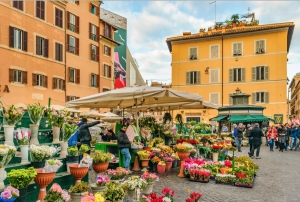
This neighbourhood is ideal for enjoying curated itineraries. Just minutes away from the Rubens, a visit to Campo de’ Fiori, which is vibrant by day and atmospheric by evening, is a seamless way to move from sacred art to Roman daily life. What makes the Campo de’ Fiori area especially appealing for travellers is that in the early morning the square comes alive with one of the city’s most colourful open-air markets, where locals shop for flowers, fruit, spices, and seasonal produce. Around the market stalls café tables fill with espresso drinkers watching how daily life unfolds, and in the surrounding streets small food shops and historic bakeries are ideal stops.
La Carbonara is famous for its pasta
Campo de’ Fiori also has many traditional trattorie such as La Carbonara which serves robust, Roman cuisine that feels untouched by trends and, of course, no meal there is complete without a plate of Rome’s famous Carbonara pasta Then, just around the corner there is Michelangelo’s architectural masterpiece, Palazzo Farnese, a Renaissance palazzo that was once the seat of papal power and artistic patronage and today houses the French Embassy to Italy
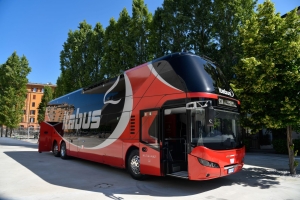
Itabus marks 5 years from its debut in long-distance coach travel with 8 million passengers carried.
4,000 routes serving more than 120 destinations
From 2021 to the present day the company has carried 8 million passengers (each coach has a maximum of 73 seats), travelled over 100 million coach-kilometres, and recorded year-on-year growth in operations of 20%. Itabus offers over 4,000 routes serving more than 120 destinations (almost double the number since the service began), ensuring comprehensive coverage of the country and providing regular services on the main routes. Ia total it operates 52 journeys a day between Rome and Naples, 30 between Rome and Florence, 22 between Puglia and Naples/Rome, and 20 on the Rome–Milan route.
Itabus went international in 2024
The Itabus network stretches from Sicily to Piedmont, serving major cities and smaller towns with high transport demand. And in 2024 it crossed national borders connecting numerous foreign destinations from Italy, including Paris, Lyon, Grenoble, Montpellier, Perpignan, Barcelona, Zurich and Ljubljana. Thanks to its own fleet of 100 Man coaches, all powered by Enilive’s HVOlution diesel, a 100% biofuel made from renewable raw materials, Itabus has built up a range of ancillary services for travellers, culminating in the recent launch of its own loyalty programme.
Adding new tourist destinations
Looking ahead, the aim is to continue to grow, starting as early as next summer with new routes to Italy’s main seaside resorts and the integration of seasonal tourist destinations with high-demand national routes. Sicily, Puglia, Calabria and Campania will benefit from enhanced connections and the introduction of new seasonal stops inTaormina, Cefalù, Gallipoli and many other destinations to facilitate domestic travel for Italians and transport the many foreign tourists on holiday.
Ambitious plans for further growth
“We are only at the beginning of this adventure. After just five yearswe have already achieved satisfactory results. We now operate throughout the day and also at night, and reach key destinations in Italy and abroad, and we have established synergies with trains and ferries. Over the years we have built a network that meets passengers’ travel needs, offering a range of additional services. Our main objectives for the future are to continue expanding the network and frequency within Italy, where we now have excellent coverage, and to increase international routes, serving more and more countries, and growing the number of services, destinations and travellers.”
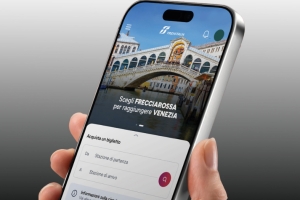
The homepage has been personalized
Designed to support passengers at every stage of their journey, from buying a ticket to managing their trip, the revamp makes navigation more intuitive and highlights useful information and services, making it easier to organize a train journey. According to the company the new app centres on a homepage that has been personalized. In fact users can save their most frequent routes and find them instantly, whilst also highlighting their favourite services.
A streamlined booking process
The booking process has also been streamlined, with quicker options for tickets, season tickets and booklets, and the option to complete payment in a single click. The app also makes it easier to access customer support and allows users to enable notifications providing real-time updates on train movements, schedules and service announcements.
Tracking journeys thanks to timely updates
Among the new features, a digital assistant based on artificial intelligence is also being tested designed to offer support and assist users during the purchasing process. It also offers tools designed to help manage every stage of the journey: with geolocation you quickly find the nearest station, whilst during the journey you can track your journey and receive timely updates. In the event of a change of plans, the “Move journey ±2h” function allows you to change your departure time in a matter of seconds. With this update, Trenitalia confirms the FS Group’s path of digital innovation, focusing on solutions that simplify the experience and make travel increasingly connected.
Beyond temples and frescoes, Rome reveals a second identity shaped by infrastructure, systems, and interesting mechanical and engineering sites.
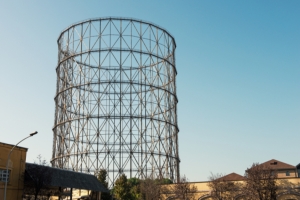
The skeletal Gasometro gas holder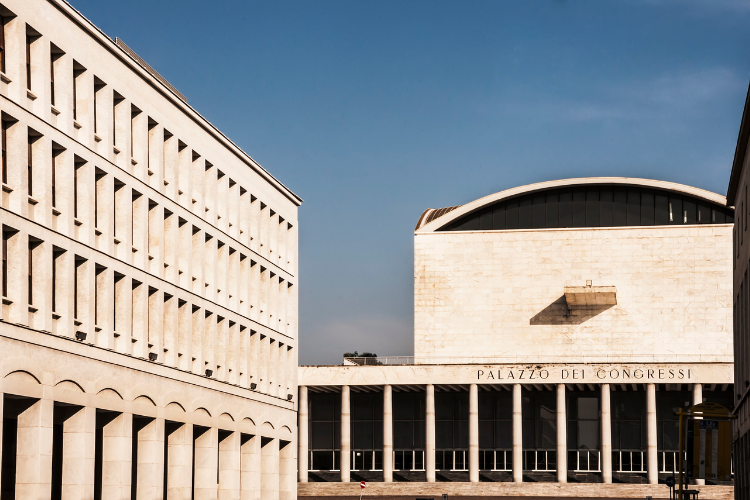
For visitors drawn to how cities work – which is to say how they move water, energy, and people - Rome offers a surprisingly coherent set of mechanical and technical sites that can be explored over a focused day. One example is a natural continuation of the Centrale Montemartini in the Ostiense district - a museum that combines classical archaeology with industrial machinery – the Gasometro which was once part of the city’s gas distribution system, is a vast steel structure that dominates the riverfront with its skeletal geometry. Though no longer operational, it remains one of Rome’s most powerful industrial forms, best appreciated from a distance along the Tiber river or at sunset, when its latticework stands out against the sky.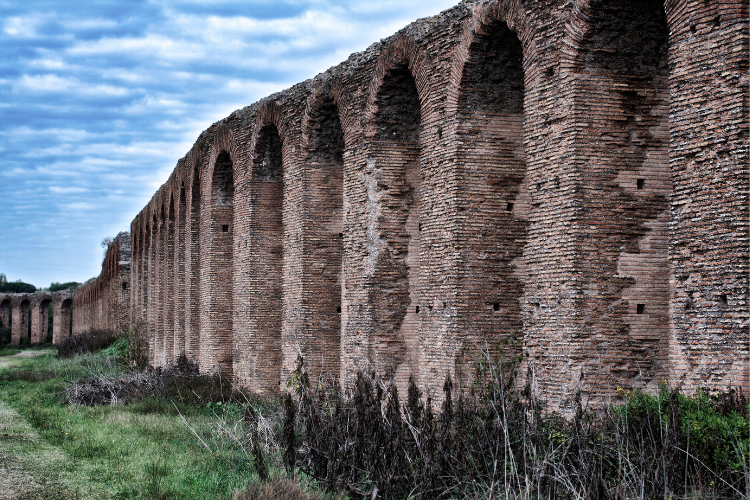
Ancient aqueducts and modern EUR
Equally revealing, though far older, is Rome’s water infrastructure. At the Parco degli Acquedotti, multiple ancient aqueducts intersect across open fields, their arches marching across the landscape. Walking beneath these ancient structures makes Rome’s reputation as a city of builders feel literal rather than symbolic. For a more modern expression of engineered order, the EUR district offers a different perspective. Planned in the 20th century as a rational city, EUR is symmetrical, modular and structurally logic, its wide roads and planned vistas underlinig a vision of the city as a controlled, engineered system.
Rome’s mechanical and engineering sites
These mechanical and engineering sites reveal a Rome built not only on symbolism and beauty, but on function and systems, and for anyone interested in mechanics, engineering, and urban infrastructure, they offer a parallel reading of the city, with Rome is seen as a machine as much as a monument.
A ribbon-cutting ceremony was held to mark the launch Icelandair's new flight from Reykjavik to Venice.
Icelandair's fourth destination in Italy
Operating on Marco Polo Airport three times a week until 18 October, on Tuesdays, Fridays and Sundays and operated by a Boeing 737-Max8 aircraft, Venice thus becomes the Icelandic airline’s fourth destination in Italy, after Verona, Rome and Milan.
"Venice holds great appeal in our key markets"
The launch of the Venice route “is a further step forward in strengthening Icelandair’s network between North America and Europe via our Keflavík hub,- said Icelandair’s COO, Tomas Ingason. -Venice is one of Europe’s most prestigious cultural destinations and holds great appeal in our key markets: Iceland, North America and Italy. - We are also proud that the launch coincides with our support for the Icelandic pavilion at the Venice Biennale, connecting Icelandic travellers to one of the world’s leading cultural events.”
Good for both inbound and outbound traffic
Camillo Bozzolo, Save Group director of aviation development, said that Iceland is a country particularly sought-after by Italians, “and the flight to Reykjavík is a great travel opportunity for our catchment area. Added to this is the network of connecting flights from the Icelandic hub to North America, thus stimulating both the American inbound market to Italy and the Italian outbound market.”



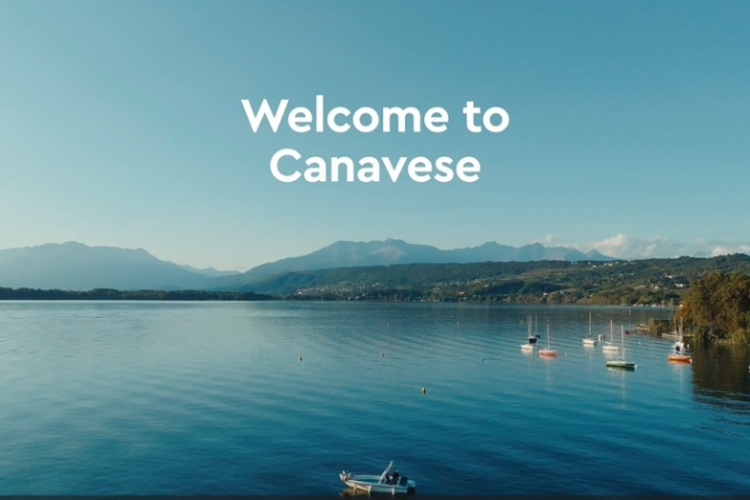
Welcome to Canavese, an unexpected corner of Piedmont where …
255Welcome to Canavese, an unexpected corner of Piedmont where …
255
