





The routs links the protected areas of the Apennines, and the operators involved include accommodation providers, bike point managers, tourist hubs, travel agencies, tour operators and tourist guides active along the 544-kilometre route stretching from Laino Borgo, in the Pollino, to Reggio Calabria.
The association stems from a shared vision of regional development and the need to consolidate the network of services along the cycle route. The result, as confirmed by the latest monitoring carried out by the Ciclovia dei Parchi della Calabria, has seen the emergence along the route of 45 new businesses dedicated to accommodation and services for cycle tourists, as well as around 200 operators who have already signed up to the Service Charter, the framework that underpins the standardization of the project.
Data released by Komoot, a leading digital platform for over 50 million cycle tourists worldwide, shows that in 2025 the number of active users on the cycle route reached nearly 20,000, which was a 31% per cent increase over the previous year when Calabria ranked 13th in Italy for foreign visitors, and in the top 10 cycling destinations during the shoulder seasons (7th in winter, 10th in spring, 9th in autumn).
The Calabria Parks Cycle Route crosses the region’s hinterland, passing through the Pollino and Sila National Parks, the Serre Regional Nature Park and the Aspromonte National Park. The total elevation gain of the route is 10,330 metres, whilst the total elevation loss is 10,590 metres; the highest point is 1,560 metres, in the Sila Park, whilst the lowest point is reached in Reggio Calabria, at sea level. The route is signposted and divided into 12 stages, ranging from 31 to 58 kilometres each, and offering three different levels of difficulty – easy, intermediate and difficult.
White wines from the South Tyrol and Trentino
Starting in the very north of Italy, in the Val d’Isarco in South Tyrol, we find a grape variety that is rare in Italy, the Grüner Veltliner. The Aristos Alto Adige Valle Isarco DOC 2024 from Cantina Valle Isarco is made from hand-harvested and hand-selected grapes, and is aged for seven months. On the palate it is spicy and fresh, with an elegant, long and persistent finish and it pairs perfectly with fish, white meats and soft cheeses. In Trentino, Chardonnay finds its fullest expression in Trentodoc and the boutique winery Maso Martis, however produces the L’Incanto Chardonnay Vigneti delle Dolomiti IGT 2024 in very limited quantities. Aged for 15 months in barriques, it pairs well with smoked and spiced cured meats or mature cheeses, as well as with seafood dishes.
Lake Garda, Romagna, Umbria and Tuscany
In the morainic hills on the southern shore of Lake Garda, the Buglioni winery presents the Gabriella Lugana DOC 2025: a 100 per cent Trebbiano that reveals a pronounced minerality accompanied by fresh notes of citron and green apple and pairing well with light starters and soft cheeses, grilled fish and seafood pasta dishes. In Romagna the Dutia Albana di Romagna DOCG 202 is a wine that Branchini has been producing for almost 170 years and is perfect with ricotta and sage tortelli and the classic Romagna piadina, but also with raw fish, and spicy Middle Eastern cuisine. In Umbria, Arnaldo Caprai presents his Grecante, a Grechetto Colli Martani DOC 2025 which has aromas of yellow peach, almond and a hint of minty herbs, and is ideal with seafood carpaccio and white meats. In Tuscany, Tenuta Campo di Sasso-s Occhione Toscana Bianco IGT 2025 is a single-varietal Vermentino that pairs ideally with roast white meats, game and mature cheeses.
Zibibbo originated in Ptolemaic Egypt
The Grillesino estate's Vermentino Maremma Toscana DOC 2025 is another single-varietal wine, produced in a limited run of just 6,000 bottles, and is crisp and savoury on the palate, pairing beautifully with spaghetti with seafood or clams, fried and grilled seafood, fresh cheeses and summer salads. Zibibbo is one of the oldest white grape varieties in the Mediterranean, with origins dating back to Ptolemaic Egypt. Known internationally as Moscato d’Alessandria, it made its way to Sicily and Calabria, eventually reaching Santa Venere, the winery which, with its Calamacca Calabria Bianco IGT 2023, offers a dry Zibibbo with good acidity, and a fragrant, harmonious finish.
Sicily has award-winning white wines
In Sicily, Azienda Agricola Cortese produces Vanedda Bianco Terre Siciliane IGP 2023, an organic white made from two classic Sicilian grape varieties, Catarratto and Grillo.This wine is particularly enjoyable with pasta with sardines, swordfish alla ghiotta, couscous and the island’s traditional cheeses. In Sicily Ragusa area, Santa Tresa produces the award-winning Rina Ianca Sicilia DOC 2025. This organic wine is Straw-yellow in colour and is perfect with fish and shellfish as well as with cured meats.
The property, developed by the OMNIA Hotels group – which now operates eight properties in the capital – has 280 rooms, dining facilities, and a 1,800 sqm conference centre with multi-purpose spaces and terraces set amongst greenery, and is designed to harmonize with the architectural identity of the Shangri-La Roma and the urban and landscape style of the EUR district. “The expansion of the Shangri-La Roma EUR is a further step in our group’s growth. With this new development, we are increasing the hotel’s accommodation capacity and meeting the needs of an increasingly diverse clientele of business travellers, families and guests who choose Rome for medium- to long-term stays,” says Francesco Lazzarini, CEO of OMNIA Hotels. New suite
The Shangri-La Roma EUR features a new, striking foyer for the conference centre, which is a distinctive element of the entire project. Contemporary in style, it reflects the architectural character of the EUR district, with arched geometries and particular attention paid to lighting, materials and finishes. In addition to the new foyer, there is a new car park with 70 new parking spaces in addition to the existing outdoor spaces. New foyer
The new building echoes the clean, precise lines of the existing complex, its understated, contemporary design creating a seamless connection between the architecture and the natural surroundings. The rooms are welcoming, bright and have distinctive decorative artwork behind the headboards, inspired by the neighbourhood’s monumental architecture with a contemporary twist. In addition to the 60 new rooms, the extension features five suites, designed for those seeking more spacious accommodation, for extended stays and families of up to four people. The Omnia Suite Andromeda covers an area of 70 sqm and has a fully equipped kitchen, two bathrooms, a spacious bedroom and a large living room. The three Omnia Suite Sirio suites on 40 sqm each, have a fully equipped kitchenette, two bathrooms, a bright bedroom and a living area. The Omnia Suite Vega is the most intimate of the accommodation options. On 54 sqm it has a fully equipped kitchenette, a spacious bathroom, a bedroom and a living area. For information: www.omniahotels.com 

The event showcases local artistic crafts and, now in its 65th edition, remains one of Italy’s longest-running and most popular events. "The 65th edition of the Sardinian Artistic Craft Fair is an important milestone not only for Mogoro, but for the whole island,- says the mayor of Mogoro, Luca Orrù. -For over sixty years this event has preserved and promoted Sardinia’s artistic craft heritage, becoming a benchmark for craftspeople, visitors and industry professionals."
With 113 artisans from across Sardinia representing 13 sectors of artistic craftsmanship, “Intrecci” (Intertwining) is the theme chosen for this edition, inspired by Mogoro’s textile tradition and refers to the interweaving of relationships between artisans, works and places. The Fair is an opportunity to transform artistic craftsmanship into a cultural experience, a tourist attraction and a driver of economic development. “The Fair is an interweaving of people, relationships, skills, ideas, colours, displays and professionalism which, year after year, is enriched by new contributions without losing sight of its past. This is the event’s most authentic value: a community that continues to build its future on the basis of a shared history,” says Francesco Serrenti, town councillor for crafts.


The items on display are an expression of local craftsmanship, the result of research, creativity and contemporary design. Ceramics, weaving, goldsmithing, woodwork, glass, metals, leatherwork, cutlery, embroidery, basketry, stonework, textiles and agri-food products come together to create an exhibition itinerary that successfully blends tradition and modernity; on the other hand, they offer a direct way to discover Sardinia’s identity from a fresh perspective. During the fair visitors can meet the artisans, chat with them, learn about their techniques and take part in workshops, and the exhibition programme is enriched by a packed calendar of supporting events, including talks, meetings and in-depth sessions.
For information: www.fierartigianatosardegna.it
Combining different islands into a single itinerary
Ferryscanner, the online ferry booking platform that allows you to quickly compare routes and operators and purchase tickets, invites enthusiasts to embark on trekking routes on the Italian islands, for an active and sustainable holiday centred on island hopping. Thanks to its "Multiple Routes" feature, Ferryscanner allows you to combine different routes into a single itinerary and thus visit several islands during the same holiday.
Walking on an active volcano on Stromboli
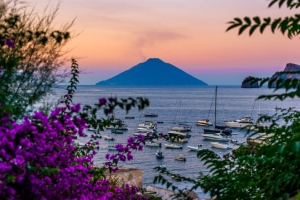
The Italian islands amaze visitors with the sheer number and variety of unexpected trails that wind through active volcanoes, Mediterranean woodlands, cliffs overlooking the sea and ancient mule tracks. In Sicily, in the Aeolian archipelago, Stromboli offers the chance to walk on the slopes of one of the world’s most active volcanoes and, at sunset, admire the fumaroles, lava flows and flashes of light that illuminate the sky. As well as numerous vantage points overlooking the Tyrrhenian Sea, the most iconic trail is the Sentiero del Fuoco, which leads to the Sciara del Fuoco, a vast lava flow stretching from the crater down to the sea.
On clear days you can see the African coastline
In Sicily, Pantelleria is another island of volcanic origin that amazes with its nature trails. Known as the Black Pearl of the Mediterranean, the trails wind their way through lava flows, dammusi (traditional lava-stone dwellings) and vineyards, within the National Park. The treks continue towards Lake Venere and on to the Arco dell’Elefante and the Balata dei Turchi, on the coast. From Montagna Grande, the island’s highest point, on clear days you can even see the African coastline.
Capri also has scenic trails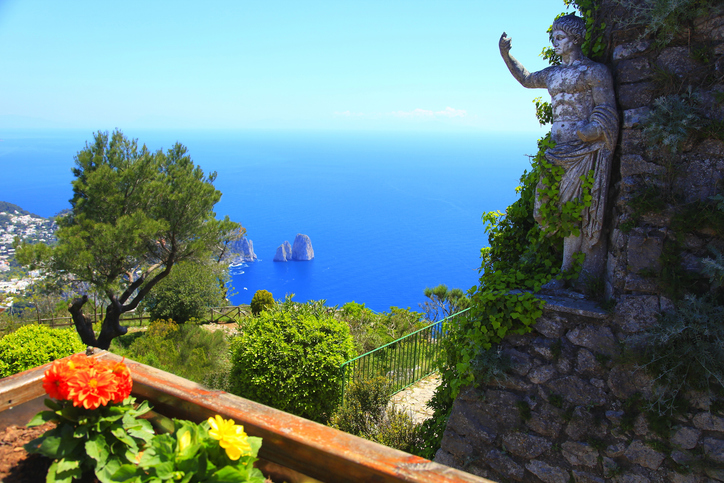 Capri
Capri
Moving to a different archipelago, though still within the same region, the island of Marettimo offers a network of trails that winds its way through ancient mule tracks, sea caves and vantage points overlooking crystal-clear waters. Of all these, the best-known route is the Sentiero del Semaforo, along with the paths leading to the island’s caves. Capri, in Campania, also surprises with its scenic trails. From the Sentiero dei Fortini to Pizzolungo and on to the paths leading up to Monte Solaro, the island offers treks that combine history, nature and spectacular views of the Faraglioni.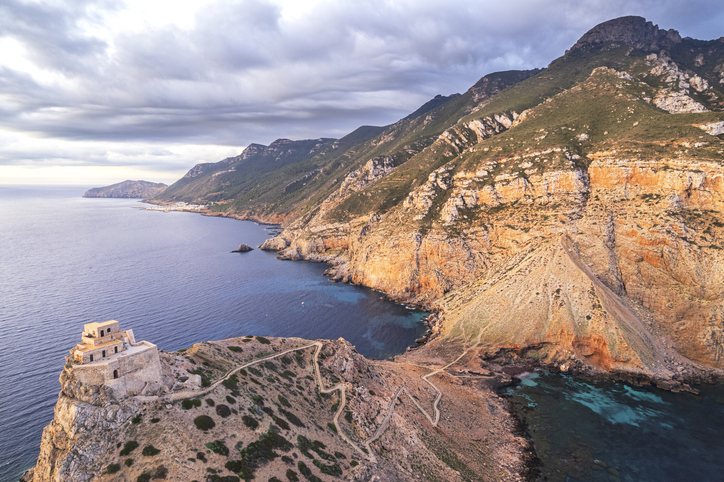 Marettimo
In Tuscany, the island of Elba is particularly renowned for the Grande Traversata Elbana. This is one of Italy’s most fascinating routes, with over 50 kilometres of trails crossing the island from east to west through woods and along panoramic ridges from which to enjoy a stunning view of Corsica. In Sardinia, the La Maddalena Archipelago offers trails that wind their way through turquoise waters and wind-sculpted rocks. Here, the most iconic treks are the Sentieri di Caprera, which criss-cross the island through Mediterranean scrub, hidden coves and panoramic sea views. Added to these is the trail to Cala Coticcio, one of the archipelago’s most picturesque beaches.
The property, acquired by Brescia-based entrepreneur Alessandro Pietta, will be managed by AG Group and affiliated with one of the international brands with which the Italian group has already established partnerships in Italy. “This project is a significant step not only for Ponte di Legno, but also for AG Group’s development in the luxury segment," explains Andrea Girolami, AG Group's chairman and chief executive. The hotel is being developed with the aim of strengthening the destination’s international appeal through an offering that combines quality hospitality, wellness, integrated services and engagement with the local area.
The project, involving an investment of over €100 million, involves the redevelopment of a 5-star hotel, which by 2030 will be a high-end hotel complex, along with three additional residential buildings. Plans include the creation of 70 rooms and 15 suites, including a presidential suite, wellness facilities, three restaurants, a shopping street, integrated outdoor amenities and over 200 parking spaces.
Ponte di Legno, in Lombardy, is a destination that can be enjoyed all year round, strategically situated between the airports of Milan Malpensa, Milan Linate, Bergamo and Verona. Long regarded as one of the historic crossroads of the Alps, here visitors can follow the route of the Charlemagne Trail, which winds its way through the UNESCO sites of the Vavamonica and the Adamello-Brenta Geopark. The area is attracting increasing numbers of tourists from across Italy and markets such as Poland, the United Kingdom, the Czech Republic and Germany. The Italian Observatory on Mountain Tourism also ranks the resort among the top ten national ski destinations, with over 100 kilometres of slopes and 46 ski lifts.
Borgo Santa Sophia is the new relais, bistro & restaurant and events venue in the Campi Flegrei area, near Naples in Campania, a vast area of volcanic origin with over 25 sites spread across the municipalities of Pozzuoli, Bacoli and Monte di Procida. The property occupies a strategic location just a short walk from numerous local attractions and has been created from the restoration of an old farmstead that still bears traces of Greco-Roman history - an intimate retreat with five guestrooms in neutral colours, natural materials and high-quality finishes. 
Each room bears an ancient Greek name and has its own distinct character. Aura (Atmosphere) has clean lines, exquisite marble and a view of the green courtyard. Harmònia (Harmony) has a view of the countryside and is ideal for those seeking to recharge their batteries. Hedonè (Pleasure) offers a view encompassing sky, sea, history and nature. Thalàia (Prosperity) is the suite in warm tones and with a freestanding bath as well as three panoramic windows overlooking the sea. Sophìa (Wisdom) is the family room, comprising two adjoining rooms (Hedonè and Agapè), each with a private bathroom, and overlooking the headland with a view of the ruins of Kýmē.
Just a short walk from Borgo Santa Sophia lies the ancient site of Kýmē, the first Greek colony in the West, dating back to the 8th century BC, now known as the Archaeological Park of Cuma, featuring the Cave of the Sibyl, an artificial tunnel from the Greco-Roman period. Close to the relais, you can visit the Rione Terra district of Pozzuoli and the perfectly preserved Flavian Amphitheatre, the third-largest Roman amphitheatre in Italy.
In Baia, in the hamlet of Bacoli, you’ll find the Archaeological Park of the Baths and the Submerged Archaeological Park of Baia, the world’s largest submerged archaeological site accessible via diving, snorkelling, canoeing and glass-bottomed boat trips. Near the estate there are several lakes, including Lake Fusaro, with the Casina Vanvitelliana situated on a small island in the centre of the lake; Lake Averno, now a nature reserve; and Lake Lucrino, the smallest of the lakes in the Phlegraean area. Bacoli’s Roman Beach is just seven minutes from the village. For information: www.borgosantasophia.it
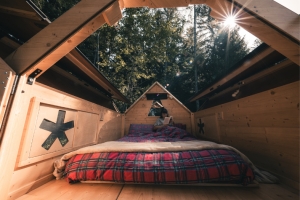
The platform recommends a selection of three Italian accommodation options for the peak of the Perseids in August, allowing you to enjoy stargazing far away from artificial lights. Forest Camp Val di Gresta, situated at an altitude of 1,000 metres in the woods of Trentino, offers a highly evocative accommodation experience in cozy and minimalist wooden micro-lodges. The StarsBOX has a roof that opens fully, allowing guests to admire the spectacle of the Perseids whilst lying comfortably in bed.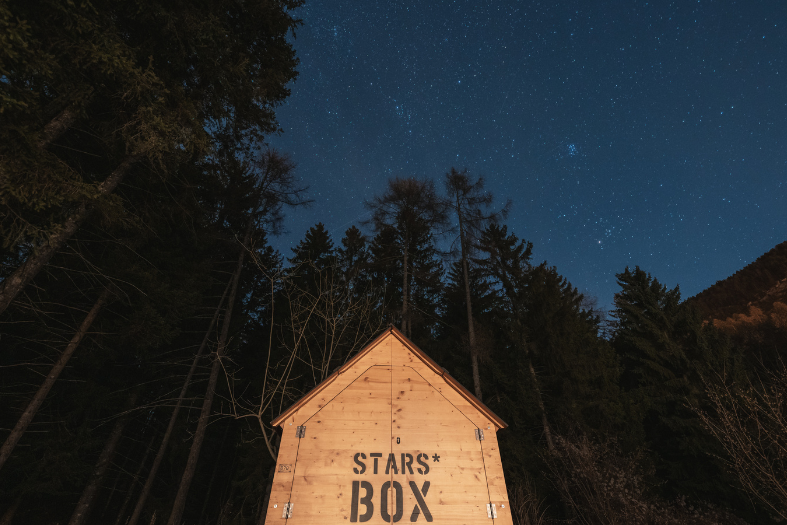 StarsBox
In Val di Gresta, you can go for walks in the woods surrounding Ronzo-Chienis, trek towards Monte Stivo or go on mountain bike rides towards Passo Bordala. A short drive away, Lake Garda offers numerous options for enjoying the outdoors: as well as cooling off with a swim, you can go sailing, hire bikes and dine in lakeside restaurants. And above the lake Malcesine Castle boasts halls with medieval architecture and breathtaking panoramic views.
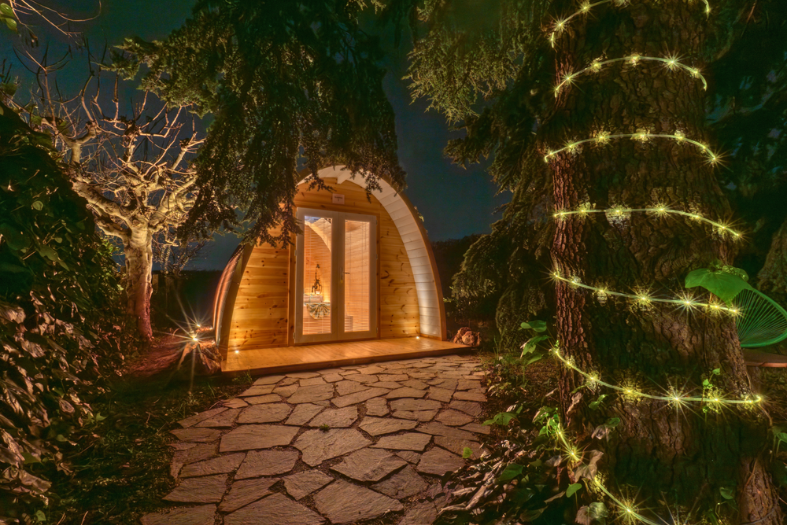 Villa Yucca
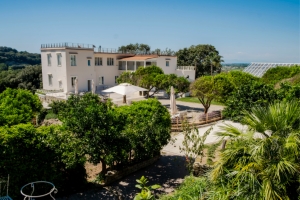
Villa Yucca is just outside the village of Torano Nuovo, in the province of Teramo in Abruzzo. This new glamping site set in vineyards between the peaks of the Apennines and the horizon of the Adriatic Sea has a wooden pod which is an intimate and rejuvenating accommodation option. The resort offers a range of experiences, including winery tours and tastings, horse riding for all levels, e-bike tours, boat trips and the chance to take part in a scenic microlight flight to admire Abruzzo from above.
Civitella del Tronto is a charming medieval village with an imposing fortress, narrow cobbled alleys and stone houses, and is known for its history, traditional crafts and local cuisine. The Scala Santa in Campli is a major religious and cultural attraction. The staircase with 28 steps was built in 1772 and replicates the Scala Santa in Rome, which, according to tradition, was walked by Jesus Christ during his trial. For a relaxing and enjoyable break, still in Abruzzo, Tortoreto Lido is a seaside resort on the Adriatic coast with sandy beaches and crystal-clear waters, summer events and leisure activities.
San Benedetto del Tronto is another lively coastal resort in the Marche region, famous for its beaches, its well-equipped seafront promenade and rich culinary traditions. Nearby Ascoli Piceno is a town in the Marche famous for its cultural heritage and historic architecture, notably Piazza del Popolo which is considered one of the most beautiful squares in Italy.
This move ramps up the Group’s growth trajectory in the premium segment and Mangia’s presence within the leading international hotel networks. In Santa Teresa Gallura Mangia’s has invested in the development of complementary assets, including a 5-star adults-only resort and a beach club. Joining the Autograph Collection Hotels also allows guests to enjoy the benefits of Marriott Bonvoy, Marriott International’s award-winning loyalty programme.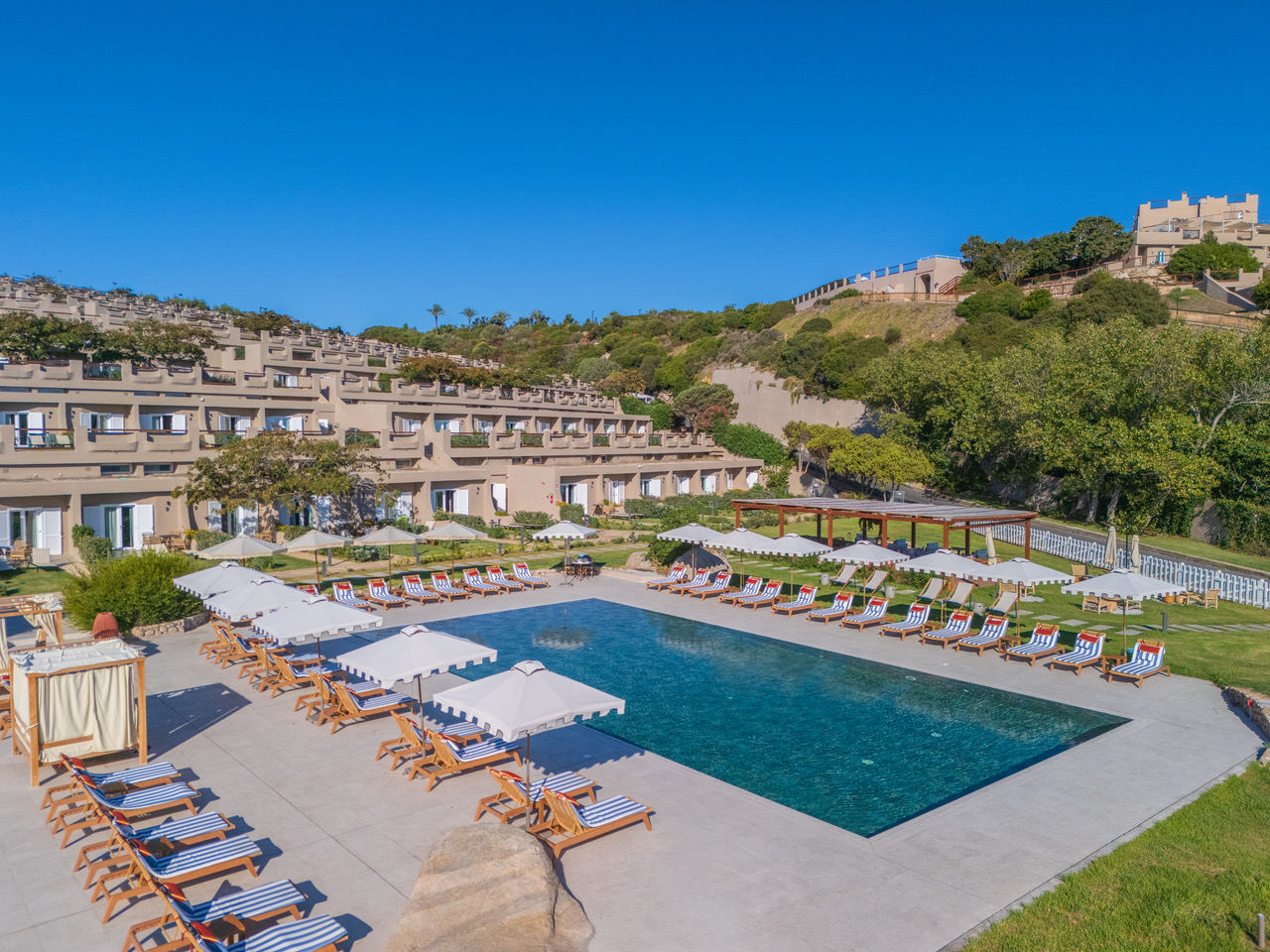
“We see Mangia’s Sardinia Resort’s inclusion in the Autograph Collection by Marriott as much more than a milestone: it is recognition of a vision that places the quality of Italian hospitality and the strength of our destinations at the heart of everything we do,- says Marcello Mangia, Mangia's chairman and CEO. -The Gallura region boasts a unique heritage of landscapes, culture and authenticity, and our aim is to offer international guests an experience that allows them to experience it in an authentic way. Joining the Autograph Collection means bringing this vision to a global stage, demonstrating that the excellence of Italian hospitality stems from a deep connection with the local area.”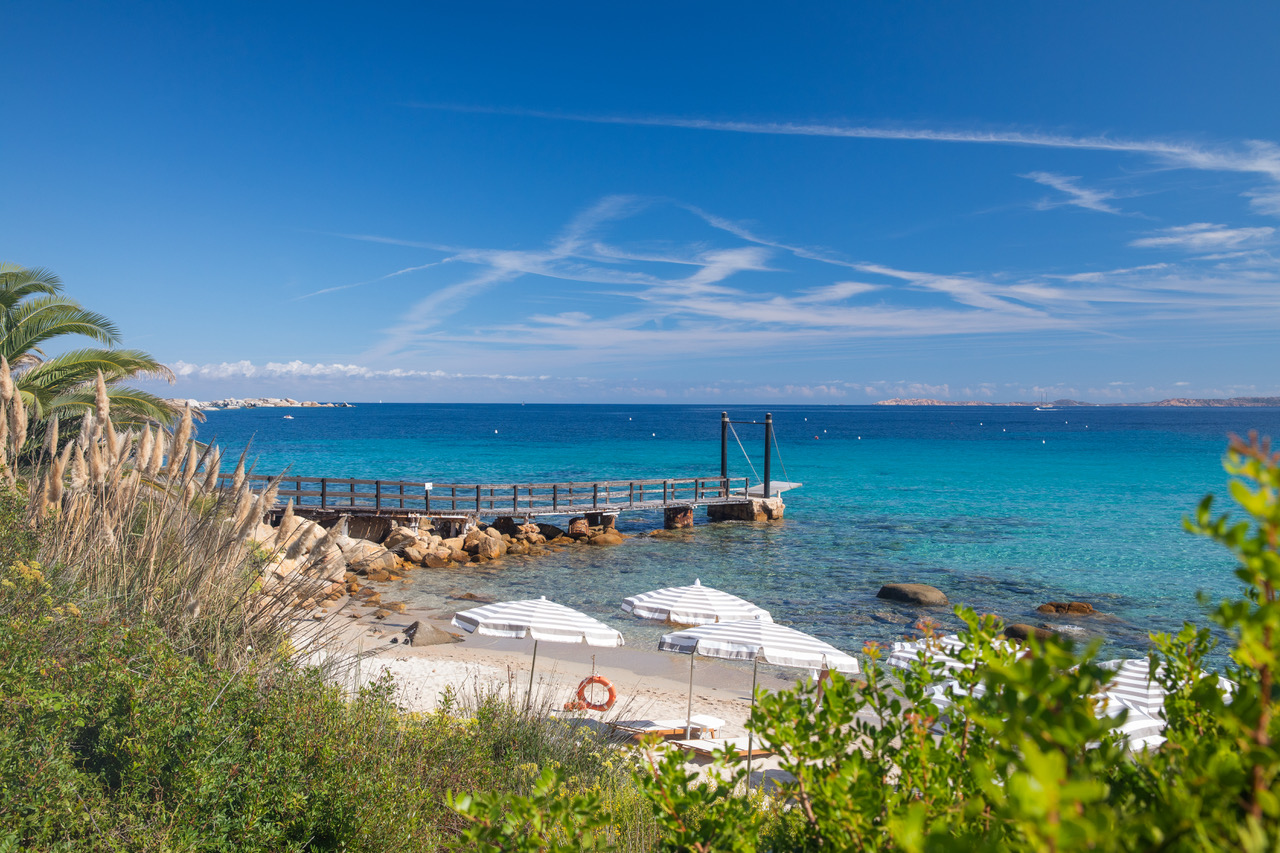
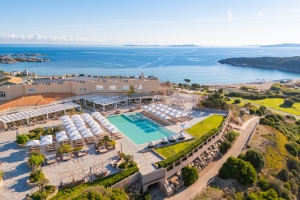
The resort has 589 rooms, almost all of which have a private terrace and sea views, and pays homage to coastal culture and local traditions. It caters to a diverse international clientele ranging from families to couples seeking an active holiday, as well as senior travellers, groups of friends and the MICE sector, thanks to its extensive accommodation capacity and dedicated facilities and spaces. The food and beverage offering centres on ‘All-Inclusive Sublime’, the premium package that accompanies guests – from breakfast to dinner – through buffets and à la carte restaurants, complemented by snacks, signature cocktails and a selection of drinks available at the resort’s various bars.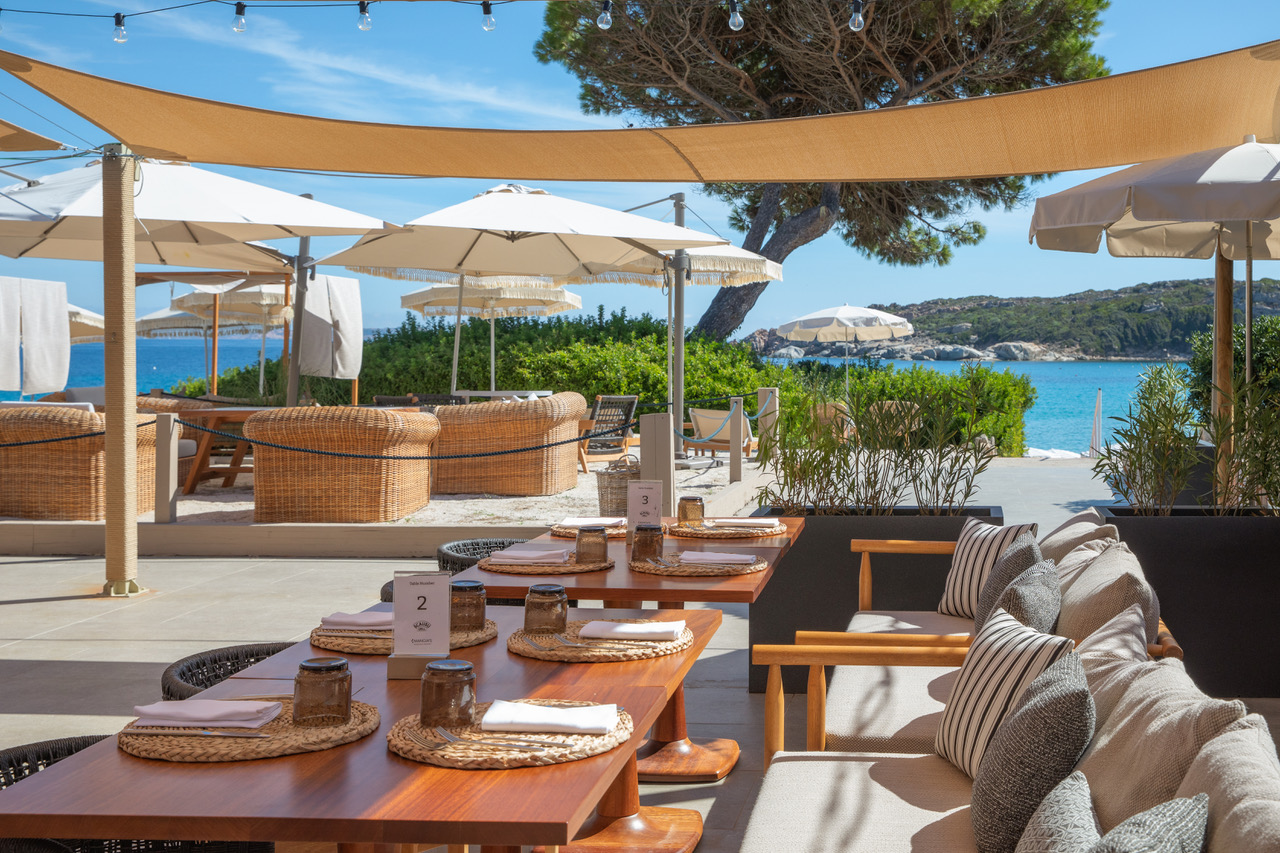
There are two swimming pools, one of which is for families and children, a sports centre, a fitness centre, meeting rooms, a business centre and a Kids’ Club. Among the experiences curated by the Autograph Collection, the resort introduces its Autograph Moment: “Il Primo Sole” with guests invited each morning to celebrate the start of the day paying homage to light, wind and stone before toasting with a signature breakfast cocktail made with citrus fruits, white myrtle, rosemary and local aromatic herbs, accompanied by small samples of the local breakfast. For information: mangias.com
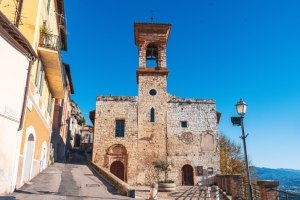
The village is an ideal choice for escaping the scorching heat that sweeps across the peninsula during the summer months. Cesi is, in fact, a village whose history has been linked to the wind for centuries. Perched on the slopes of Mount Eolo, the village is steeped in an ancient legend that has Eolo, the god of the winds, dwelling deep within the mountain itself.
Just a few minutes from the village lies Carsulae, one of the best-preserved Roman towns in Italy. Founded over 2000 years ago, it still preserves its forum, theatre, amphitheatre, monumental arches and ancient Roman roads. Sant’Erasmo, on the other hand, is the best-preserved pre-Roman fortified site in Umbria. Here, the imposing walls enclose a place still shrouded in mystery, its identity uncertain. On the summit of Monte Torre Maggiore, archaeological excavations have unearthed an important Umbrian-Roman sanctuary dating back to the 6th century B.C. 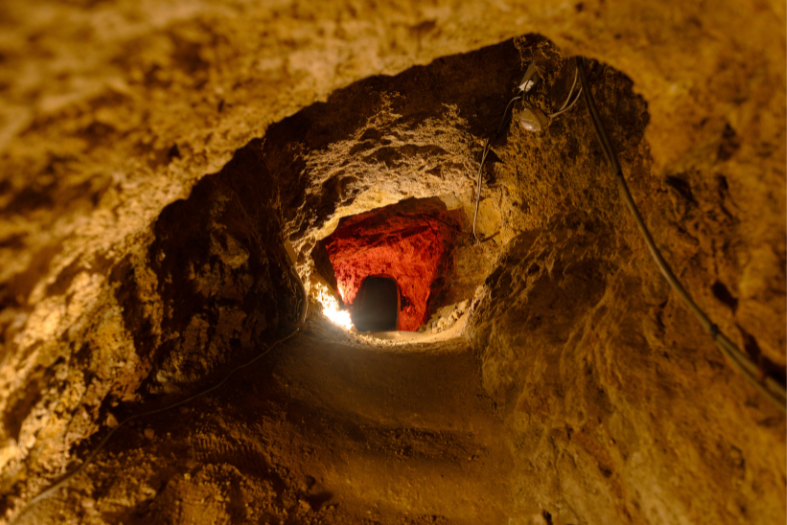 Grotta Eolia Copyright 2023 Andrea & Federica
Cesi was also the capital of the Terre Arnolfe, a strategic territory contested for centuries between the Papacy and the Empire, where medieval walls, watchtowers, noble palaces and the Rocca can still be found today. Palazzo Stocchi guards the entrance to the evocative Grotta Eolia, a natural cave that extends deep into the mountain. The Church of Sant’Andrea bears witness to the link with ancient Carsulae, and the Church of Santa Maria Assunta houses the precious altarpiece by the Master of Cesi, one of the masterpieces of medieval Umbrian painting.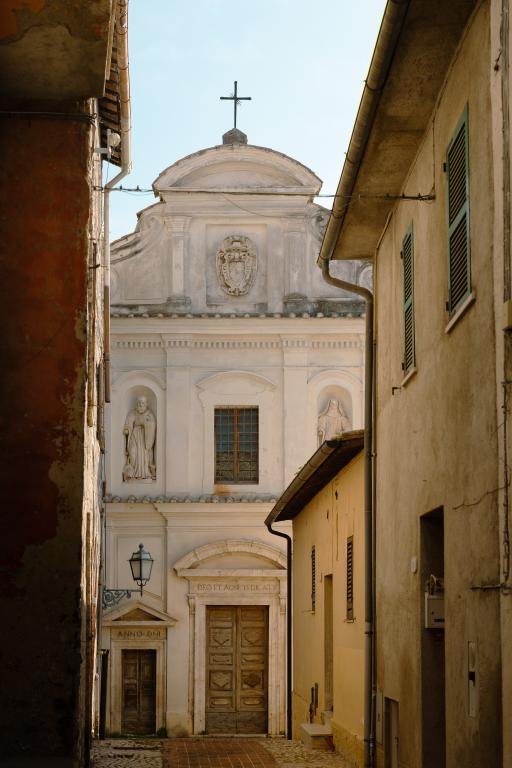 Copyright 2023 Andrea & Federica
Cesi is also one of the most authentic Franciscan sites in Umbria. The Romita di Cesi, a place of rest and contemplation for St Francis, can be reached via a path winding through the woods. The village is best enjoyed hiking, mountain biking and e-biking, as well as rock climbing on the cliffs of Monte Eolo, adrenaline-fuelled paragliding experiences and caving adventures. Just a few minutes from Cesi, the Marmore Falls can be enjoyed in various ways, from walking to water sports. 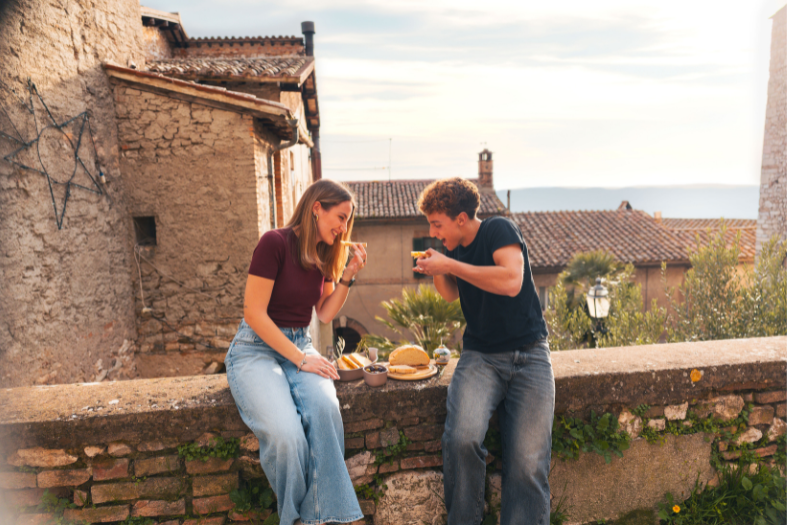 Copyright 2026 Andrea & Federica




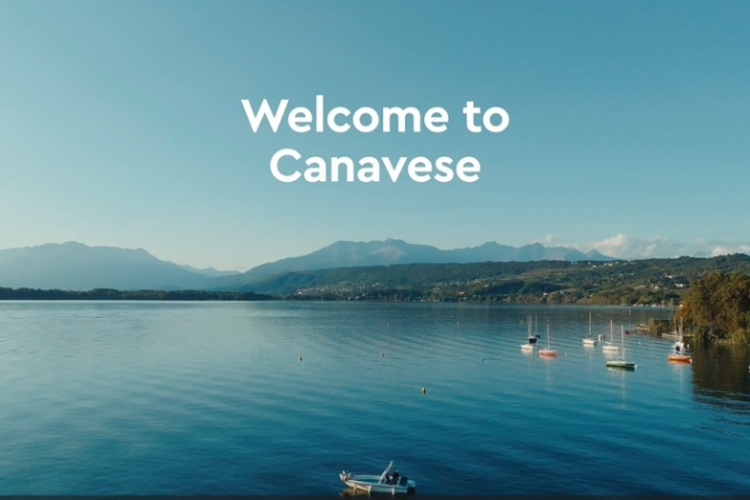
Welcome to Canavese, an unexpected corner of Piedmont where …
844Welcome to Canavese, an unexpected corner of Piedmont where …
844