




3.2 million passengers per year in Calabria
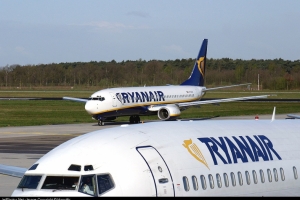
The operation involves four Calabria-based aircraft - two in Lamezia and two in Reggio - for a total investment of $400 million in the region: “This growth will enable us to reach 3.2 million passengers per year (+14%), support over 2,500 jobs and boost tourism and connectivity in Calabria,- says Fabrizio Francioni, head of communications Italy Ryanair. -Thanks to President Occhiuto's decision to abolish the municipal surcharge, Ryanair has already made significant investments in Calabria.”
“Ryanair can deliver 20 million more passengers”
“We now call on the Italian government to follow Calabria's example and eliminate this tax on a national level, so that Ryanair can deliver even more transformative growth, with the addition of 40 aircraft (+$4 billion), 20 million more passengers, 250 new routes and 15,000 new jobs across Italy."
Increased flights also to Italian cities
This summer the Irish low-cost airline's network will cover 42 routes, including five new ones to Lamezia from Bratislava, Budapest, Saarbrücken, Sofia and Warsaw. There will also be an increase in the frequency of existing routes: from Reggio to Milan Malpensa, Turin and Venice, and from Crotone to Milan Bergamo and Bologna.
Two prestigious global accolades
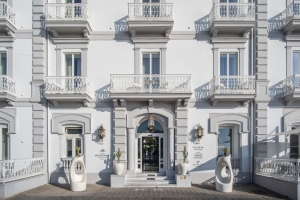
Hotel Mediterraneo Sorrento, overlooking the Gulf of Naples, reopens for the 2026 season at the height of its international trajectory. The five-star property has officially joined the elite Virtuoso Travel network and earned the coveted Recommended rating from Forbes Travel Guide 2026 - two milestones that position it firmly among the world’s most distinguished luxury hotels.
Michelin Keys awarded in 2024 and 2025
These achievements follow consecutive Michelin Keys awarded in 2024 and 2025, confirming a path of consistent excellence for a hotel that began life in 1912 as the private residence of Antonietta Lauro. Joining Virtuoso connects the property with a highly selective international clientele seeking curated experiences, while the Forbes Travel Guide Recommended distinction underscores the property’s meticulous attention to detail and service culture.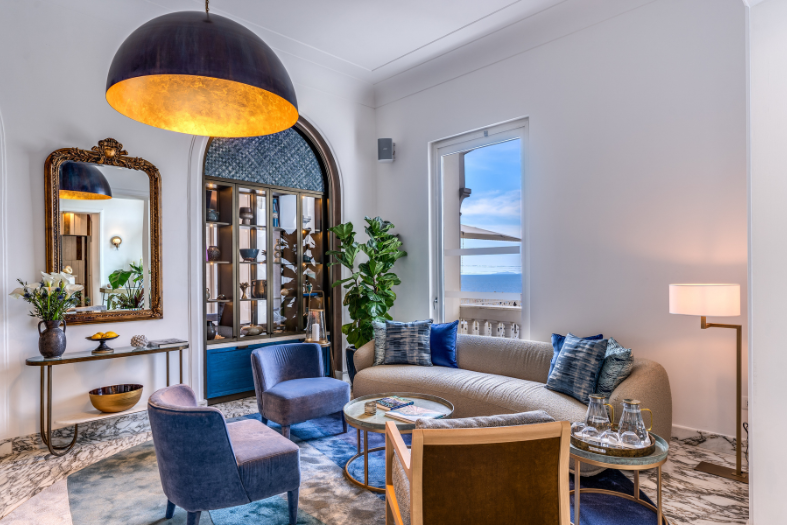
“Offering…not just a stay, but authentic emotions”
“Entering the Virtuoso network and receiving the Forbes recognition is the result of extraordinary teamwork,- says Pietro Monti, CMO and member of the owning family. - Being ambassadors of Italian hospitality to the world drives us to constantly exceed our guests’ expectations, offering them not just a stay, but authentic emotions.”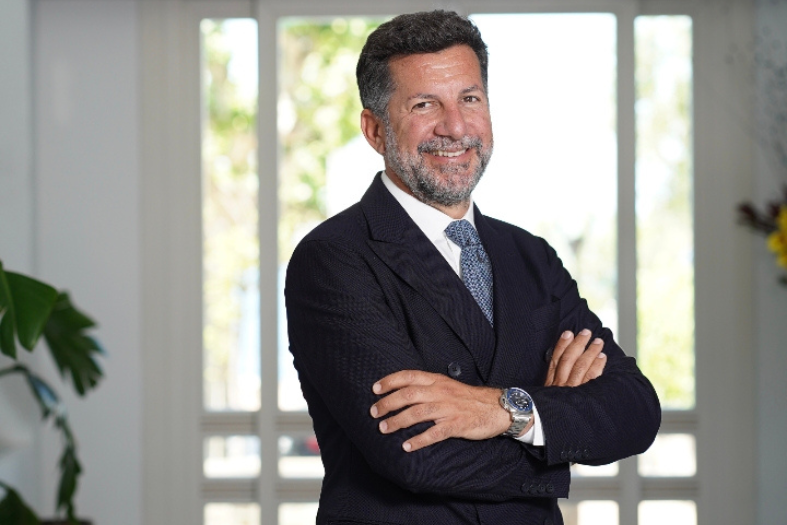
Vista Sky Bar, Sorrento’s first seafront rooftop
Emotions that are rooted in a distinctive balance between heritage and contemporary design. Reimagined in 202, the white façade, Vietri ceramics and natural stone are the work of local artisans, the result refined yet relaxed - more private villa than grand hotel. The Vesuvio Panoramic Restaurant interprets the Campania region’s culinary traditions with refinement, and Terrazza Mediterraneo offers a more informal, open-air experience overlooking the sea. For 2026, the iconic Vista Sky Bar, Sorrento’s first seafront rooftop, will debut a full redesign and an expanded gastronomic concept focused on Mediterranean sharing plates.
Excellence, warmth and a profound sense of place
The hotel’s strength lies in continuity: many team members have grown professionally within the property, and the attention to sustainability, collaborations with local artisans and cultural institutions further anchor the hotel within its community. Globally recognized, family-led, and deeply connected to its territory at Hotel Mediterraneo Sorrento excellence, warmth and a profound sense of place are consistently delivered.
Close to Milan’s Central Station
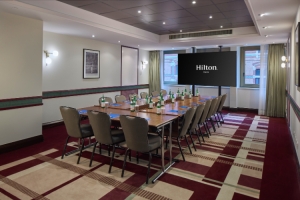
Located on Via Luigi Galvani, a short walk from Milan’s Central Station and the city's main hubs, the hotel is a strategic destination for business travellers who need suitable venues for professional meetings, conferences or high-profile events. The renovation involved all the rooms on the first floor, which underwent a thorough and complete refurbishment.
For meetings, workshops and corporate conferences
The replacement of the carpeting, the restyling of the walls and the introduction of new furnishings have redefined the interior spaces, making them more contemporary, welcoming and versatile. The spaces have been designed to ensure maximum operational flexibility, easily adapting to different formats, from business meetings and workshops to corporate conferences.
A complete refurbishment
Particular attention has been paid to the colour scheme, the new palette alternating refined shades of green with elegant accents of burgundy, a combination designed to give character and personality while creating a balanced and professional ambience.
“Foreign clients have gone from 2% in 2022 to 16% today”
“From 2023 to today our foreign client base has grown significantly,- confirms CEO Marcello Cicalò. We have gone from 2% in 2022 to 16% today.” In 2026 there are requests from 28 different nationalities, a figure that makes the goal of “reaching 30% foreign customers over the next few years” achievable. The percentage of repeat customers is also growing: ‘We record an annual average of 45% of customers who choose our facilities again, but the percentage is as high as 60% if we consider the data relating to bookings in recent months.
The aim is to stretch the season to 150 days
In addition to expansion into new international markets, the development strategy focuses on extending the opening period of the facilities. “From an initial average of 128 days, we have now reached 138 days, with the aim of stretching the season to 150 days. This is an achievable goal considering the new trend in demand, which also sees Italians moving towards the shoulders of August, with good performance also in July and September.”
Soft-Inclusive, All-Inclusive and Ultra-Inclusive
Bluserena kicks off 2026 with the rationalization of its offering, and the launch of three different holiday packages. “The new Inclusive Made in Italy model includes three new types of holiday - Soft-Inclusive, All-Inclusive and Ultra-Inclusive, to meet the needs expressed by customers to create the “perfect holiday. We will extend a “Trattoria” serving typical regional dishes to all our facilities, to boost the link with the local culture. The enhancement of sports facilities is also to the forefront, with renewed activities and top-level instructors. Just think, for example, of the great paddle tennis court designed by Gianluca Zambrotta. We are closely monitoring certain areas in Sardinia, Sicily, Tuscany and Emilia Romagna, and we are not ruling out mountain facilities. We will evaluate any opportunities offered by the market as they arise.”
1.2 million guests in 2025
In 2025 the group exceeded 1.2 million guests and recorded over 440,000 room nights. “From 2023 to today, we have recorded record year-on-year performance and this year, we are raising the bar again with an expected growth of 8-10% in turnover and profitability. The drivers will be an increase in low season volumes, an increase in foreign customers, a renewed relationship with travel agencies (which account for a good 30% of total turnover), a focus on staff (Bluserena has been certified as a “Great Place to Work”), and a constant improvement in the quality of the offering. This ialso involves product redevelopment, in which Bluserena has invested €70 million over three years.
A third aircraft at Turin Caselle Airport
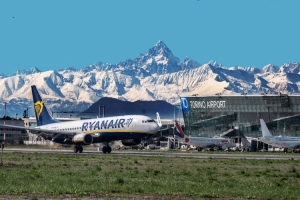
With a total investment of $300 million, 3.3 million passengers forecast annually and over 380 weekly flights, Ryanair is strengthening its presence at Turin Caselle Airport with a third aircraft, following the expansion that began last November.
3.3 million passengers annually
The airline’s Turin 2026 summer schedule includes 32 routes, including two new international destinations: Sofia and Tirana. There will also be an increase in frequencies on more than ten existing routes, including Lamezia Terme, Madrid, Malaga, Malta, Marrakech, Reggio Calabria, Seville and Trapani-Marsala. With this expansion, the airline aims to carry 3.3 million passengers per year (+21%) and support over 2,500 jobs in Piedmont.
A call to eliminate the municipal surcharge
During the presentation of the 2026 summer schedule, Fabrizio Francioni, Ryanair's head of communications for Italy, underscored the company's commitment to the region and renewed its call on the government to eliminate the municipal surcharge at Italian airports. If abolished Ryanair has stated that it could invest further in the country with 40 additional aircraft, over £3 billion in investments, 20 million more passengers per year, 250 new routes and 15,000 new jobs.
“In 2025, we exceeded the record of 5 million passengers”
“Ryanair accounts for about half of the airport's traffic and is one of the main drivers of the airport's and the region's development,- points out Paolo Papale, director of aviation development at Turin Airport. - In 2025, we exceeded the record of 5 million passengers, thanks in part to the third aircraft based there since November and the opening of new routes with increased frequencies. For the summer season, we welcome the launch of flights from Tirana and Sofia, which is strategic for incoming tourism, strengthens our presence in Eastern European markets and responds to significant demand,” As of 31 December, Turin Airport handled 5 million passengers, with overall double-digit growth of between 10% and 15%. The positive trend continued in January, with a 16% increase in both snow-related and ordinary traffic.
Daily Boeing 777-200LR flights with three classes
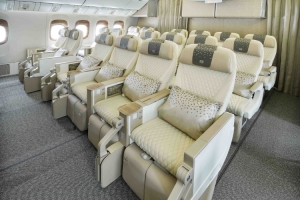
Starting on 10 May the daily EK101/102 service will be operated by a refurbished Boeing 777-200LR with three classes, including Premium Economy. Thanks to this upgrade, all 21 weekly flights to Dubai and seven to New York will offer Premium Economy class. As part of its ongoing modernization programme, Emirates will complete the upgrade of its first high-density, two-class A380 by mid-April. The aircraft will have a new three-class configuration, with 76 seats in Business Class, 56 in Premium Economy and 437 in Economy Class.
The Italian market is of prime importance
By November, the Dubai-based carrier plans to complete the refurbishment programme for all 15 of its two-class A380s to the new three-class configuration. Emirates' proximity to the Italian market is also evident in its search for pilots: the airline is once again recruiting pilots in Milan, on Monday 2 March at 10:00 and 13:00 and Tuesday 3 March at 10:00, at the Marriott Hotel, Via Giorgio Washington 66. The airline recognizes the high value of Italian human capital: with a significant contingent of over 200 pilots and over 900 cabin crew members from Italy, our country ranks among the top five nationalities represented within the airline.
“Investing in the talent of Italian pilots”
“Being part of the Emirates team means working on one of the most advanced wide-body fleets in the world, connecting passengers to over 150 destinations,- says Marco D'ilario, Emirates' country manager Italy. -Our pilots, based in Dubai, have access to world-class training in centres of excellence that prepare them to face new challenges. In this phase of strong growth, we are ready to invest in the talent of Italian pilots to strengthen our presence and continue to raise the standards of the Emirates experience globally."
24 apartments in a prestigious building
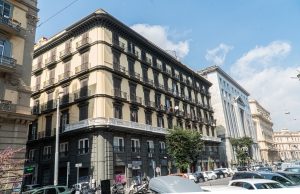
Oriana Homèl, the leading Italian urban hospitality company, has announced the signing of a contract for the opening of its first property in Naples, with 24 apartments in a prestigious building on Via De Pretis 62. This is a strategic and highly symbolic milestone that marks the company's arrival in its city of origin at a time of extraordinary excitement for the Neapolitan capital, also in view of the 2027 America's Cup.
In the heart of Naples
Located in a key position between Piazza Municipio and Piazza Bovio, the building in Via De Pretis boasts a history of great prestige and a privileged location in the business and tourist heart of the city. The listed property will undergo careful restoration, fully respecting its historical and architectural value, in line with Oriana Homèl's philosophy, which has always been oriented towards enhancing Italy's architectural heritage through high-end hospitality projects.
Too open in the first quarter of 2027
The opening, scheduled for the first quarter of 2027, represents a fundamental part of the company's national expansion plan, which in recent months has consolidated new operations in Como, Treviso and Trapani, reinforcing the vision of a brand increasingly rooted in urban centres with a strong cultural and tourist vocation.
Pamela McCourt Francescone
Busitalia, a Trenitalia company specialized in public road transport and integrated mobility, has acquired the City Sightseeing Italia Group.
Expanding the range of service
The City Sightseeing Italia Group provides tourist transport services in major Italian cities, and the operation is part of the vertical integration of the FS Group's Strategic Plan, which aims to strengthen intermodality and expand the range of services, including the urban tourist bus and logistics terminal segments.
“Busitalia consolidates its role in integrated mobility”
“With this acquisition, Busitalia consolidates its role in integrated mobility and strengthens its presence in a strategic sector such as tourism, responding to the needs of Italian and international customers,” said Serafino Lo Piano, CEO and general manager of Busitalia.
Rail-road intermodal solutions
The entry of the City Sightseeing Italia Group represents a further step in the development of Busitalia and the FS Group in the tourist mobility sector, in line with Trenitalia's strategy of focusing on and differentiating the leisure segment. The operation promotes the integration of local transport, railways and sightseeing services through rail-road intermodal solutions that extend the tourist transport value chain and contribute to the enhancement of cities and national cultural heritage.
170 vehicles in Italy’s main cities
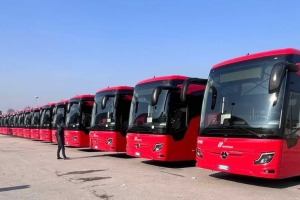
City Sightseeing Italia operates, directly or through subsidiaries or affiliates, in Turin, Milan, Genoa, La Spezia, Civitavecchia, Livorno, Florence, Rome, Naples, Palermo and Verona, with over 170 vehicles, offering hop-on hop-off transport services, bus hire and tourist packages designed to help visitors discover Italy's cultural heritage.


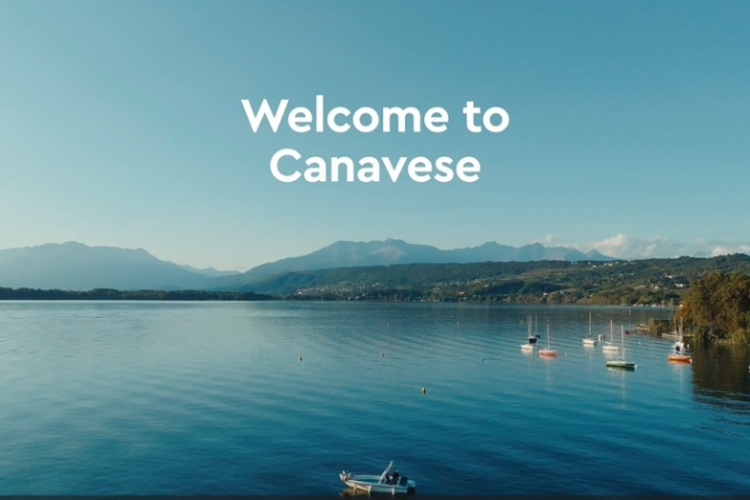
Welcome to Canavese, an unexpected corner of Piedmont where …
843Welcome to Canavese, an unexpected corner of Piedmont where …
843
