


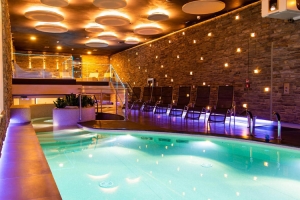


An old tram has been converted into a sauna
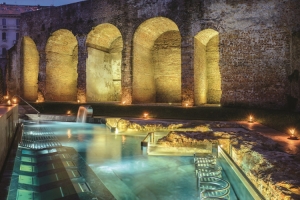
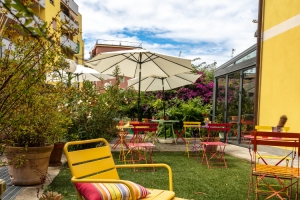
With an enchanted garden, an herbarium and a vegetable garden there is also a cognitive path and an experiential barefoot walk. The garden is surrounded by the 16th-century Spanish walls of Porta Romana and an old ATM tram has been converted into a sauna. On the lawn guests can relax on comfortable designer beds, while small wrought iron tables with white tablecloths are placed in delightful corners in which to enjoy special blends of tea.
Open again after a 12-month closure
"Our aim has always been to do things that please people, offering beauty and quality of life in an accessible way," explains Andrea Quadrio Curzio, CEO, and founder of the group. The QC Terme opens again after a 12-month closure, because “it was not possible to avail ourselves of smart-working. The thermal tourism sector was devastated by the pandemic, and it has not been easy to start over.”
Openings planned for Salsomaggiore and Lake Garda
Now the spa model that was launched in Bormio has been brought into a metropolitan context, and many new projects are underway. While the search for ideal locations around the world continues, and after the opening of the Governors Island headquarters in New York, the next developments in Italy will be Terme Berzieri in Salsomaggiore and Palazzo Arzaga sul Garda. And the group is also looking at new locations in Arizona, the Rocky Mountains and Chicago.
Best Western’s Oasi Sure Hotel Collection, just by a few steps from the historic centre of Levanto, is a boutique hotel 350 metres from the beach. With 14 rooms, each with different colours and design, the rooms on the ground floor have direct access to the garden. Levanto is a coastal town in the Liguria region, just an hour by car or train from Genoa. It has an old medieval centre and one of the longest sandy beaches in the area, and is just half an hour by car or 15 minutes by train from the Cinque Terre.
A range of exciting experiences
In their rooms guests will find a smartphone with unlimited international calls, a smart TV with apps including Netflix and Spotify, concierge service, bike rentals, beach equipment and guided tours. And with a range of experiences including cooking classes, a walk with an aperitif, yoga in the garden, wine tastings in the vineyard and many other activities to chiose from there are endless exciting things to do.
A hotel with a strong personality
The food & beverage is equally exciting with organic breakfasts featuring local products, and with à la carte lunches and dinners in the restaurant which is 200 metres from the hotel and specializes in fish. “Being part of a network such as Bwh Hotel Group Italia we have the opportunity to reach out to new markets. Our hotel has a strong personality and is in a well-known and very attractive location,” says hotel manager Silvia Moggia.


A journey from the museum through the city
This new-generation museum, the work of the Municipality of Feltre in collaboration with the Archaeological Superintendency, will exhibit many unique finds and tell a fascinating story, on a journey that begins inside the museum and winds its way along the city’s major Roman and earlier Rhaetian monuments. Each exhibit has an in-depth digital analysis, connected to a web archive accessed via QR Code directly on the visitor's smartphone. The interactive exhibition path also has other multimedia devices such as video projectors, speaker systems and monitors.
Statuary and refined ornaments
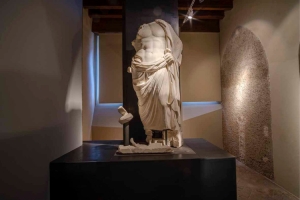
A spectacular parade of Ionic-Italic capitals in soft stone from Vicenza welcomes visitors to the new museum. The adjoining room is dedicated to small statuary and refined ornaments that belonged to wealthy local residences between the 1st century B.C. and 2nd century A.D. Visitors can also see the monumental Greek marble statue of Aesculapius which was discovered during excavations in the cathedral's churchyard in 1974. Next to it is a votive altar to Anna Perenna, the ancient Roman goddess.
Artefacts from ancient burial areas
There is no shortage of artefacts from remote burial areas, such as those found in urban cemeteries, from personal ornaments to coins and furnishings in terracotta, blown glass, and metal. The tomb of Aeronia Maxima, discovered in Sovramonte in the 1950s, is quite unique, consisting of a tuffaceous urn containing incinerated bones and an inscription.
Antique floors and 8k video screens
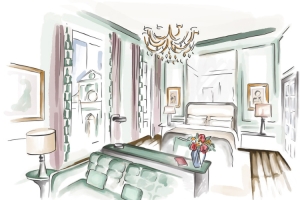
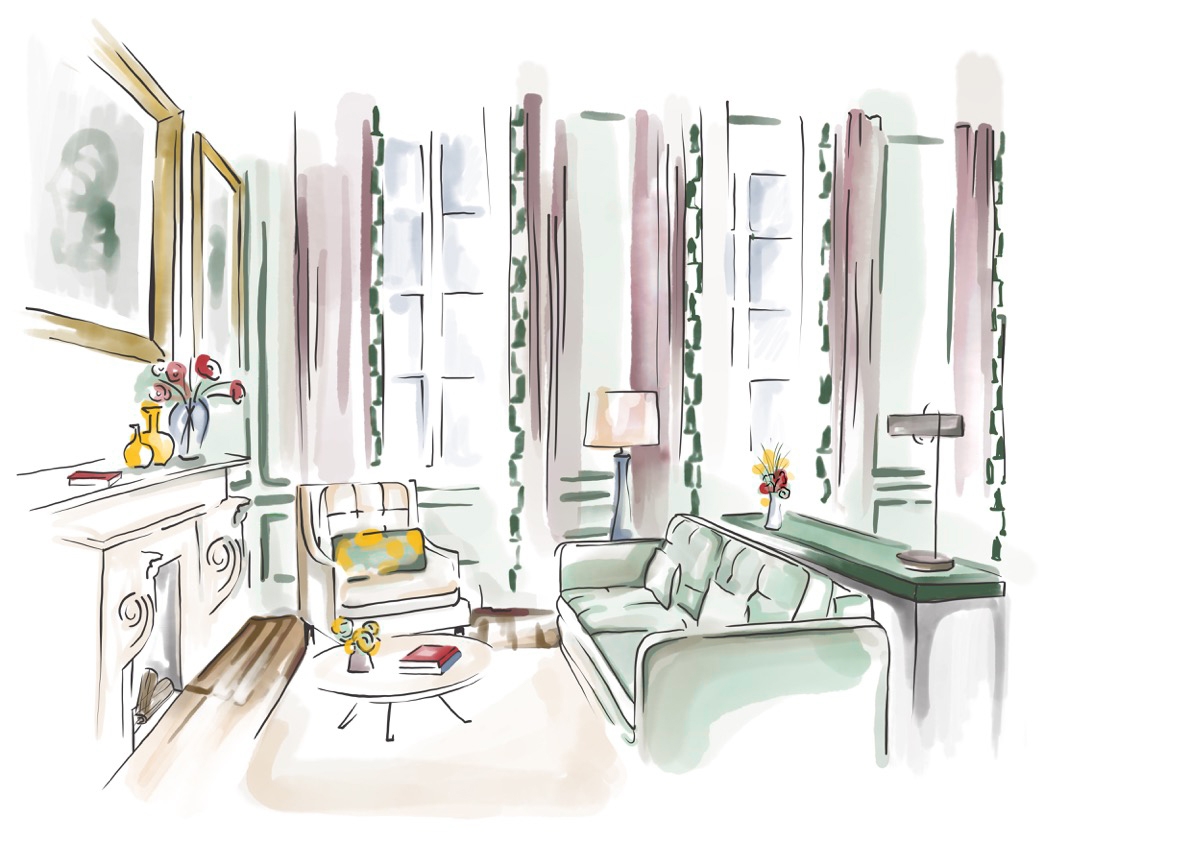
Now bright and airy, these master rooms ooze comfort and an exclusive Florentine intimacy. They have antique floors in reclaimed wood mounted in large geometric tiles, and fine handcrafted leather writing desks that underline the sense of home. Like the ornamental and comfortable sofas in soft shades of greenm they underline the unmistakable style of The Place Firenze. 8K video screens disappear into the furniture, and the sound systems have just the right contemporary tech-touch.
An elegant home away from home
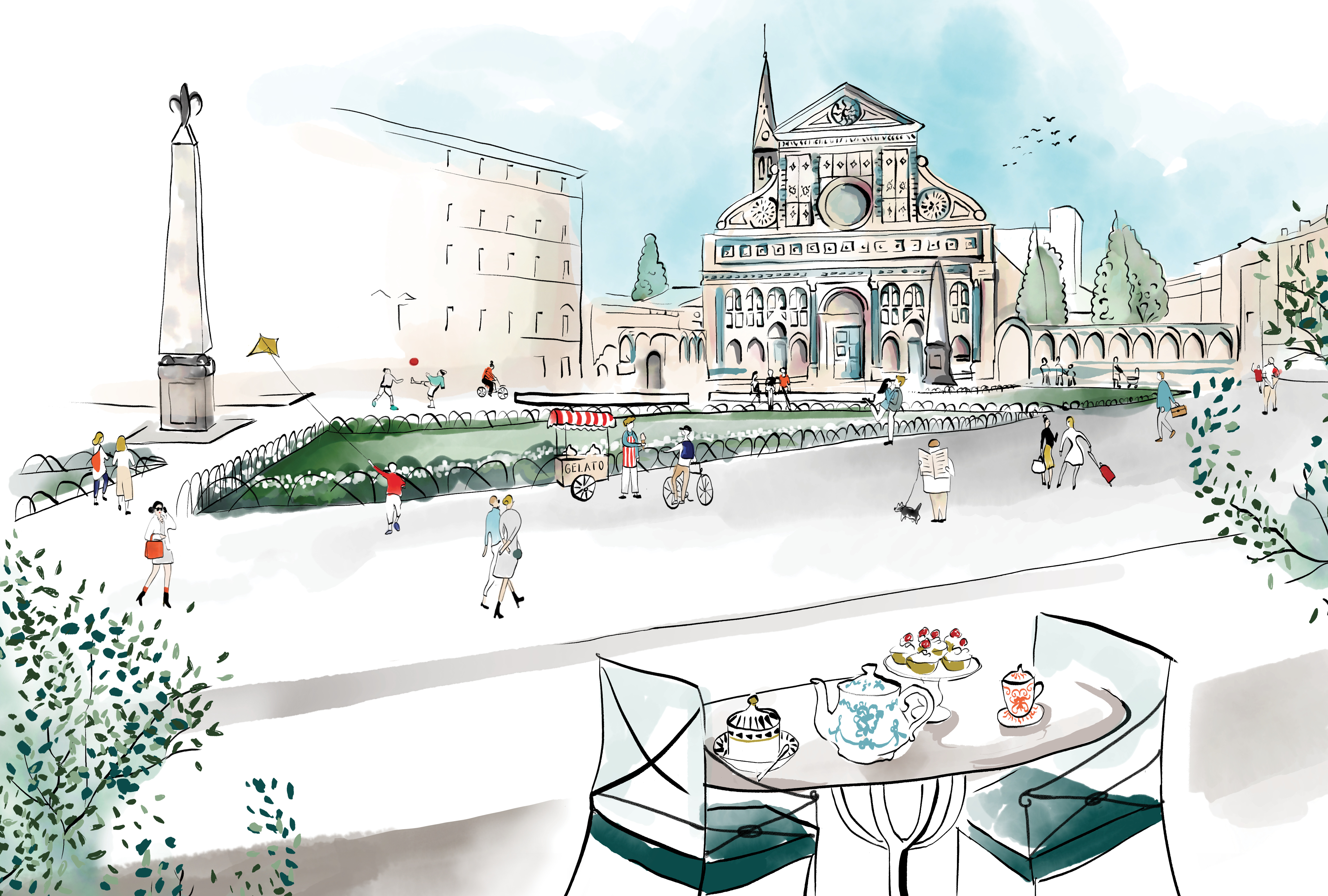
In a world of hospitality that has profoundly changed in recent years, The Place Firenze aims to not only be a place to stay, but an elegant home away from home. Somewhere to entertain and meet friends or business partners, from which to enjoy the splendid view of the square from The Terrace outdoor area, or enjoy an evening with a signature aperitif and impeccable Italian cuisine. With Chef Asso Migliore in The Kitchen & The Bar the cuisine is based on a careful search for ingredients and local suppliers, in full compliance with the-farm-to-table philosophy.
“We put guests at the centre of our universe”
“Over time and along the way, hospitality has become an industry,” says general manager Claudio Meli. "This is not us; we are not that kind of hospitality. We are an artisan shop. Humanism was born in Florence, placing man at the centre of the universe. We put guests at the centre of our universe. For me, this is the essence of The Place Firenze.”
Personalized treatments and multi-sensory experiences
“On the programme we have numerous new facial, body, and personalized treatments, as well as multi-sensory experiences,” says spa manager Stephanie Zini. A team of specialized professionals accompanies guests on a wellness journey through his or her desires, recommending not only the most suitable treatment, but also the best possible wellness path to complete the experience.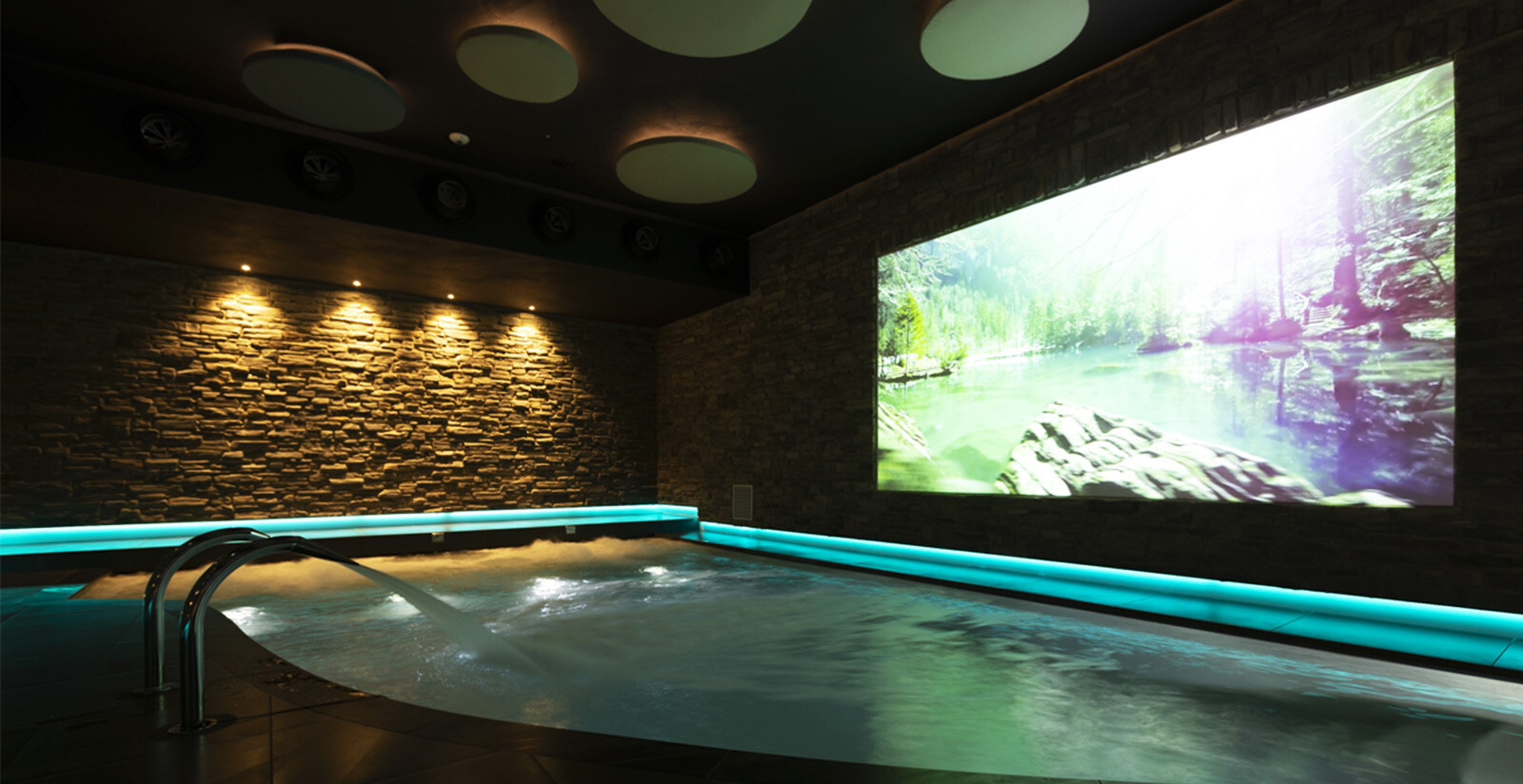
The spa is open to hotel guests and non-residents
The Erre Spa is an exclusive, unique environment on the Ligurian Riviera, representing the culture of wellness. "Our Spa - continues Stephanie Zini - is highly appreciated not only by hotel guests, but also by local clients.”
Whirlpools and an ice waterfall
The Erre Spa has a wide range of facilities: a sauna, Turkish bath, Mediterranean bath, indoor pool, hydromassage areas, jets, whirlpools, emotional showers, an ice waterfall and various themed relaxation areas. There is also a relaxation room with a brazier in which to enjoy herbal teas and hot chocolate, and from 6 p.m. guests can enjoy a savoury snack with a glass of sparkling wine.
 Apparently the affiliation is the result of a 19-year franchise agreement between Piazza Hotels & Residences (Phr), which has been managing the hotel since January 2021, and the Hilton Group.
The Garden Inn will have a new gym and revamped rooms
The Green Park will be rebranded Garden Inn from March 2023, after a complete revamp thanks to a Capex investment of about €1.6 million, corresponding to a value per room of around €11-12,000. The relaunch project also includes the enhancement of the F&B outlets which will be totally renovated, as well as the construction of a gym, and a complete refurbishment for the rooms.
During the winter closure period, Villa La Massa was given a refurbishment that included the restyling of some Villa Nobile rooms and a complete renovation of the gym. Guests can reserve the entire property or individual buildings exclusively for their stay, allowing them to enjoy a unique experience in the Tuscan countryside.
The Arno Spa has many facilities
The Arno Spa, which includes a Turkish bath, sauna, Roman tub with whirlpool and sensory showers, as well as two treatment and massage cabins, is made for total relaxation. There is also a heated outdoor swimming pool with views of the Tuscan hills, a gym, an exercise and yoga area, jogging paths, and bicycles for the more active.
Mediterranean and Tuscan favourites in the restaurants
The exclusive Il Verrocchio restaurant, with a splendid terrace overlooking the Arno river, has refined traditional Italian and Mediterranean menus with a gourmet twist created by Chef Stefano Ballarino. The l'Oliveto bistrot with its laidback atmosphere beside the pool offers a selection of traditional Tuscan dishes featuring fresh and summer flavours.
A live music festival will run all summer
This year L'Oliveto Summer Lounge live music event will be held every Wednesday from June to September, featuring a gourmet pizza menu paired with a selection of matching cocktails, fine Tuscan and Italian wines, spirits, and beers. Chef Stefano Ballarino together with chefs from some of Italy’s most prestigious hotels will create exclusive dinners, each featuring a tasting menu
Tennis, yoga and a motor rally
The Tennis Clinic, with tennis lessons at the Match Ball Firenze Country Club is scheduled for Easter and summer, and yoga classes, are also among the many recreational and sports activities planned this year. The Romantic Journey Through Italy is an experiential journey from Lake Como to Florence staying at Villa d'Este and Villa La Massa. And from 7 to 9 October Villa La Massa will host VLM Excellence Supercars Firenze, a fantastic event featuring supercars produced since 1990.The CdsHotels Group is expanding and diversifying
We are very pleased to announce the addition of a new design hotel to our collection," says CdsHotels, Fioravante Totisco, director of CdsHotels. "This operation fully responds to our Group’s strategy aimed at expanding and diversifying. This is not only to reply to the demands of our customers but also to become a benchmark for seaside holidays in Apulia and Southern Italy.”
Seaside locations and attentive and caring service
"From being specialists in the family resorts segment, we have grown over time in the hotel sector and we can now boast a portfolio of five 4-star and 5-star hotels in some of the most attractive seaside resort towns in Italy, enhanced by attentive and caring service.”
 Aquarium of Genoa. Ph credits: Costa Edutainment
You can also enjoy a walk along Corso Italia, arriving at Boccadasse, a jewel on the coast with a little bay and narrow, cobbled streets that has kept its marine village atmosphere intact. 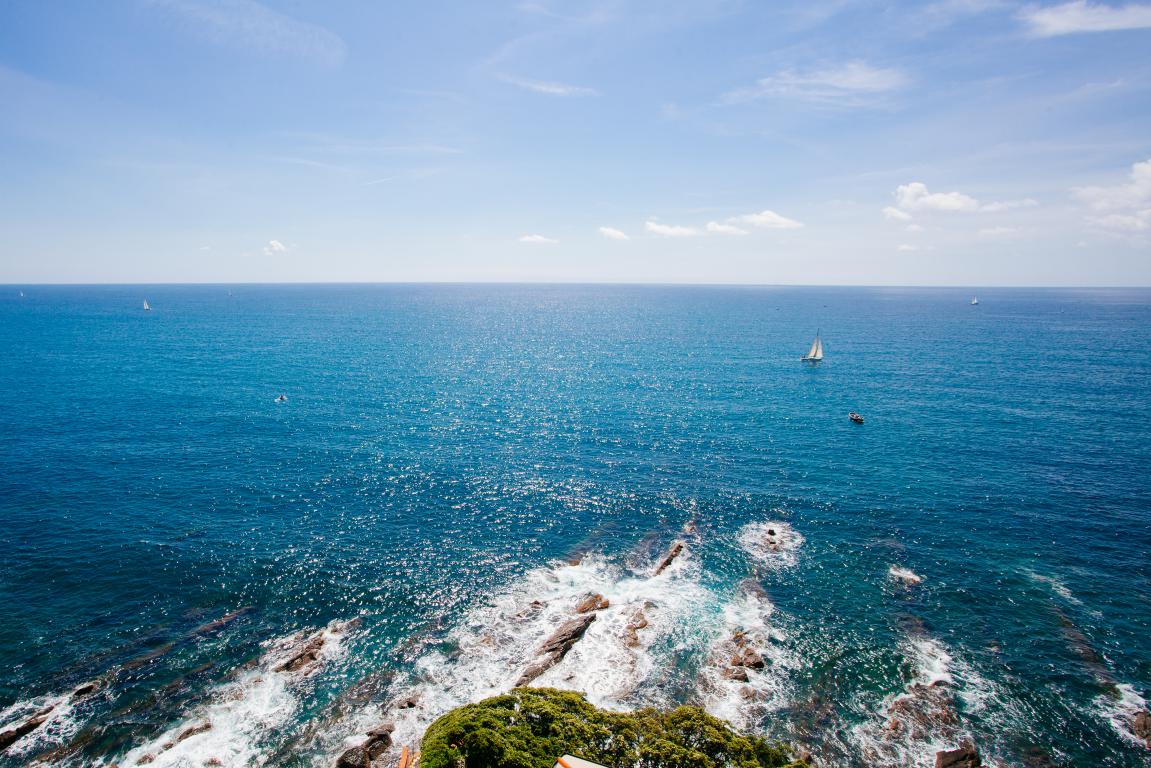 Boccadasse. Ph credites: A.Falcone Xedum
Whale-watching along the coast
From Capo di Santa Chiara we come to Vernazzola, another charming village with pastel-coloured houses. The Anita Garibaldi Walk starts from Nervi and consists of two kilometres of cliffs and coves with tantalizing glimpses of the sea and the intense green of historic parks. Or you can set sail by boat to admire Genoa from the sea and visit some of the most beautiful places on the Riviera di Levante. And you can also do a spot of whale watching!





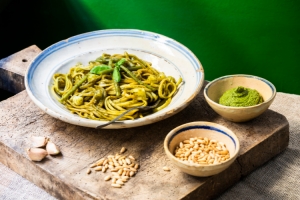
Street food and pesto, Genoa’s gastronomic gems
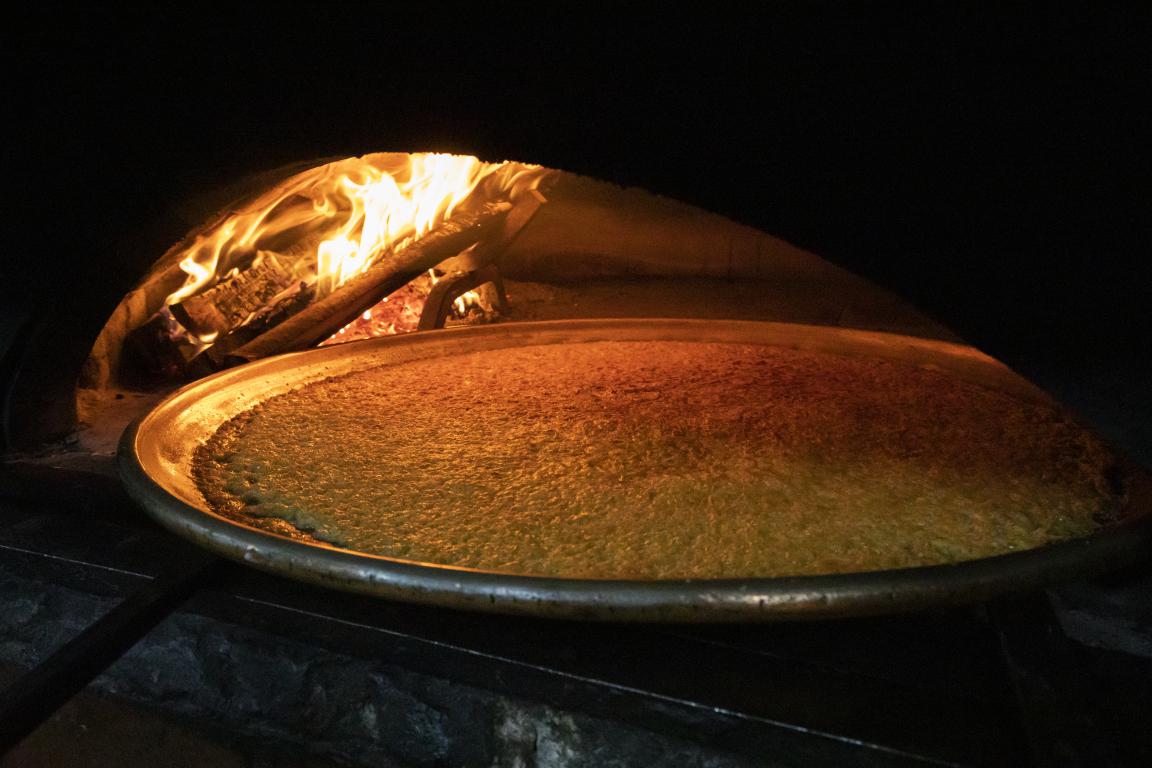
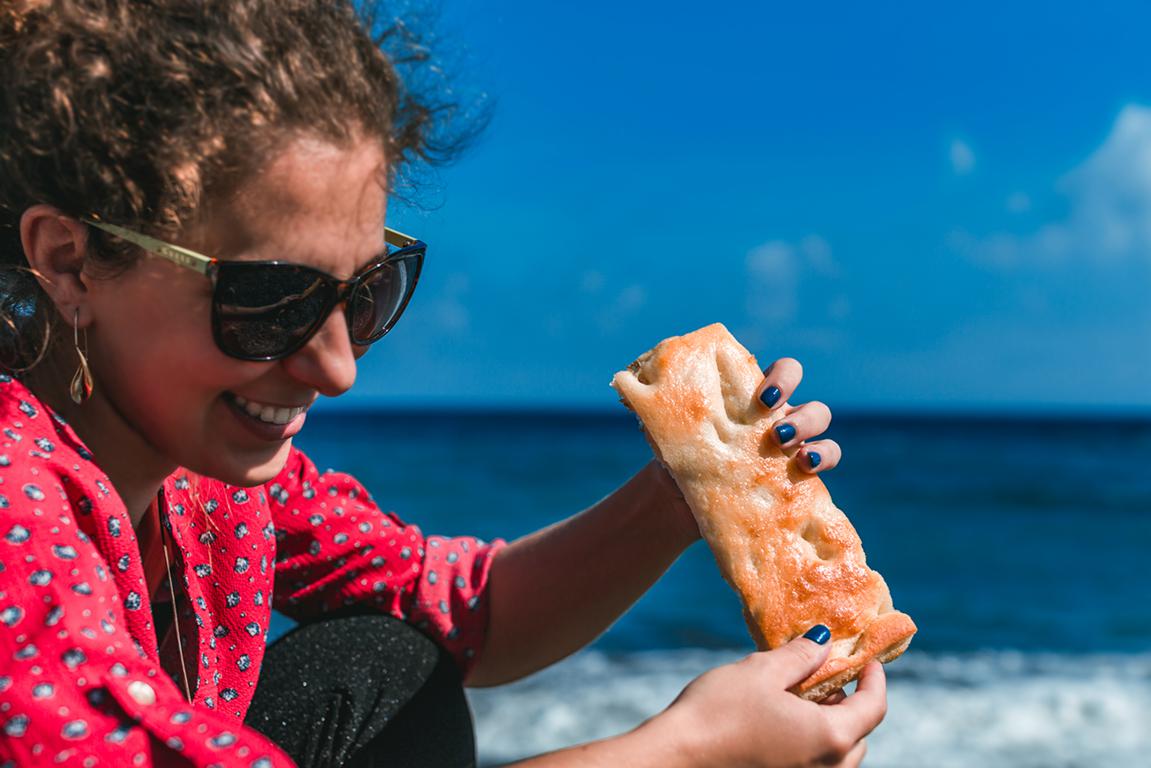
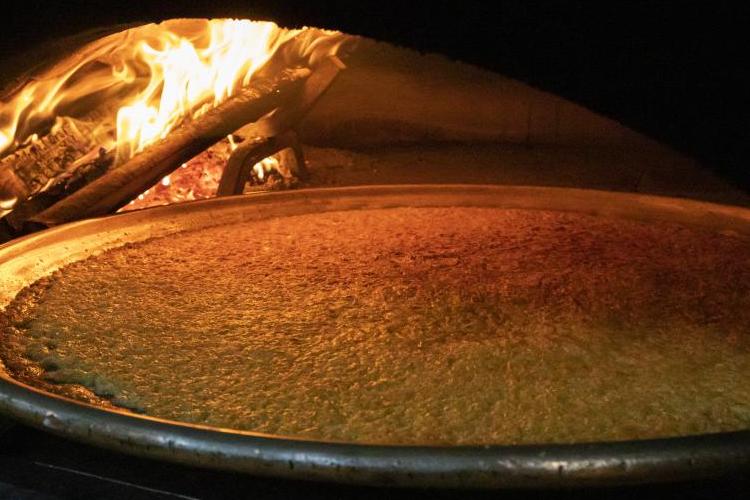
You cannot truly enjoy a holiday in Genoa without experiencing its local delicacies. Spring is perfect for tasting street food, which in Genoa becomes an art form. You must try the focaccia, in its thousand variations, and the farinata, a dough made from chickpea flour prepared in traditional shops with a wood oven, served with freshly made fried anchovies and wrapped in foil - the ideal snack to enjoy with an aperitif. Many local specialties can also be purchased in the certified historic shops scattered throughout the centre.





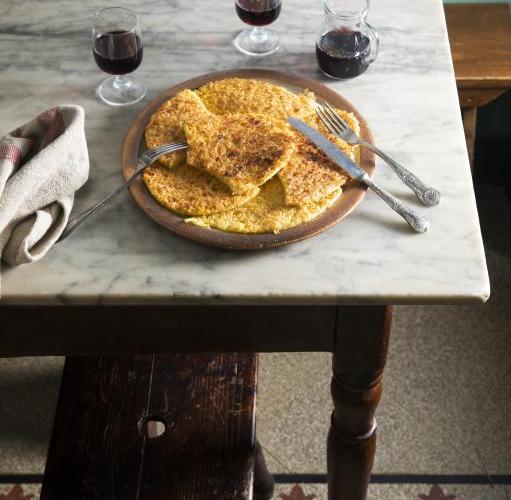


The Pesto World Championship in June
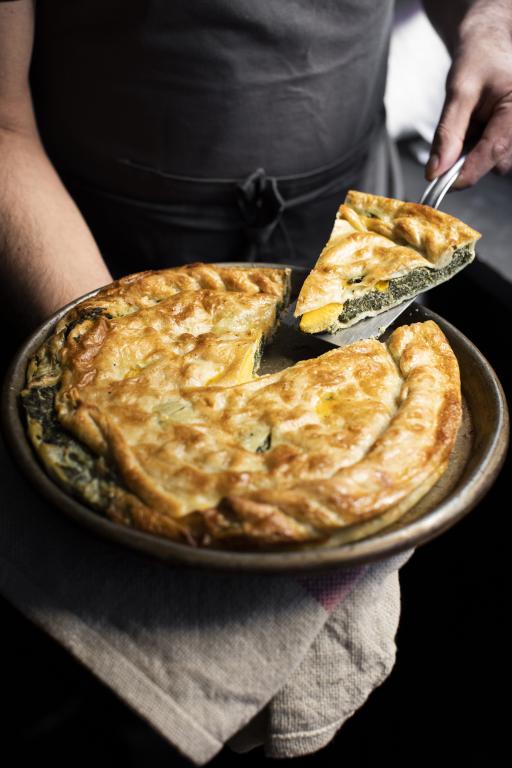
In June pesto, the King of the Genoese table is celebrated with the World Championship of Genoese Pesto. One hundred competitors will compete to create the perfect pesto, and among them there will be a robot from the Italian Institute of Technology in Genoa: an element that adds a touch of fun and originality to the challenge.
The apartments have magnificent halls and large rooms
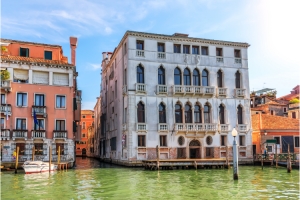
The Gothic-style palace, purchased in 2019 by a French lover of art and Italy, has been completely renovated, and the four apartments have magnificent halls and large rooms, while the apartment on the main floor also has a library. All this is enhanced by Carrara marble, original wall frescoes and door jambs carved by Venetian master craftsmen.
‘Luxury tourism has withstood the crisis’
"Despite the difficulties under the lockdowns and restrictions of various kinds, the luxury market has withstood the crisis and it is the segment on which to focus to relaunch tourism,” says Anne Cecile Quey, director of the Almae Collection. "Venice, with its evocative views, history and heritage of unique beauty, has always been a destination for high-level tourism, for visitors with high spending power who generate wealth for the destination and the surrounding areas.”
Plans for Ibiza and Cognac and a new Veneto property
The Almae Collection’s future plans include the opening in 2023 of a hotel in Cognac as well as projects in Ibiza, Spain, and another property in the Veneto region: the Palladian Villa Emo in Fanzolo di Vedelago, currently undergoing redevelopment and scheduled to open in 2024 or 2025.




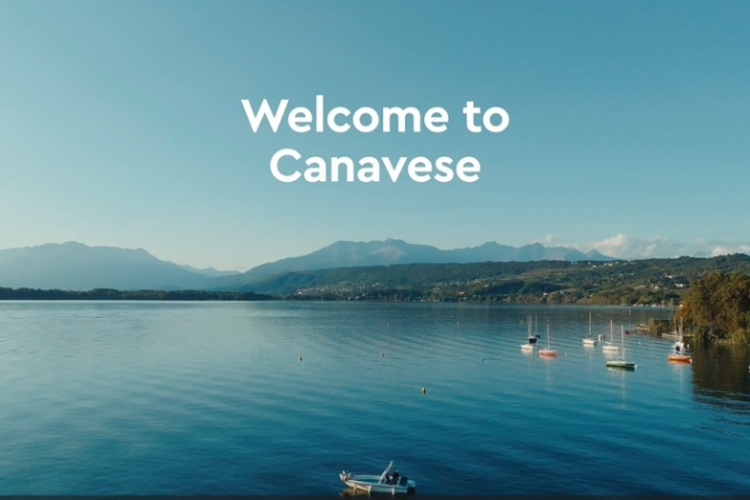
Welcome to Canavese, an unexpected corner of Piedmont where …
846Welcome to Canavese, an unexpected corner of Piedmont where …
846
