





The European Commission is preparing a blow for travel agencies and operators. A huge blow. The Commission, incongruously taking up the cudgel in defense of consumers, has proposed abolishing the down payment customers leave with travel agencies and operators.
Plainly the men in Brussels and Strasbourg have no idea what it means to try to make ends meet in the tourism industry. The down payment - which by the way exists in any kind of transaction, so it is not clear why this should only apply to organised tourism - is one of those cash flows that allow travel agencies and trade in general to keep going, because it is ready cash. I don't think anyone has to call 2022’s Nobel prizewinning economist Philip H. Dybvig to understand something this simple.
The truth is that these decision makers live in an ivory tower and never step outside it, as if they were barricaded into a chamber that is open to the world but sealed off from it. They should try to break these seals, otherwise much more is going to get broken.
 Giuseppe Aloe
Editor in Chief
The cable car starts just outside Vipiteno
From Vipiteno skiers can use the new cable car ski lift that starts directly from the northern outskirts of the city, passes over the Brenner motorway and takes passengers to the heart of the ski area, at 1862 metres. At this high altitude there is a choice of snow-covered trails for a total of about 10 kilometres and there are many refuges where one can enjoy a break while savouring traditional South Tyrolean dishes. 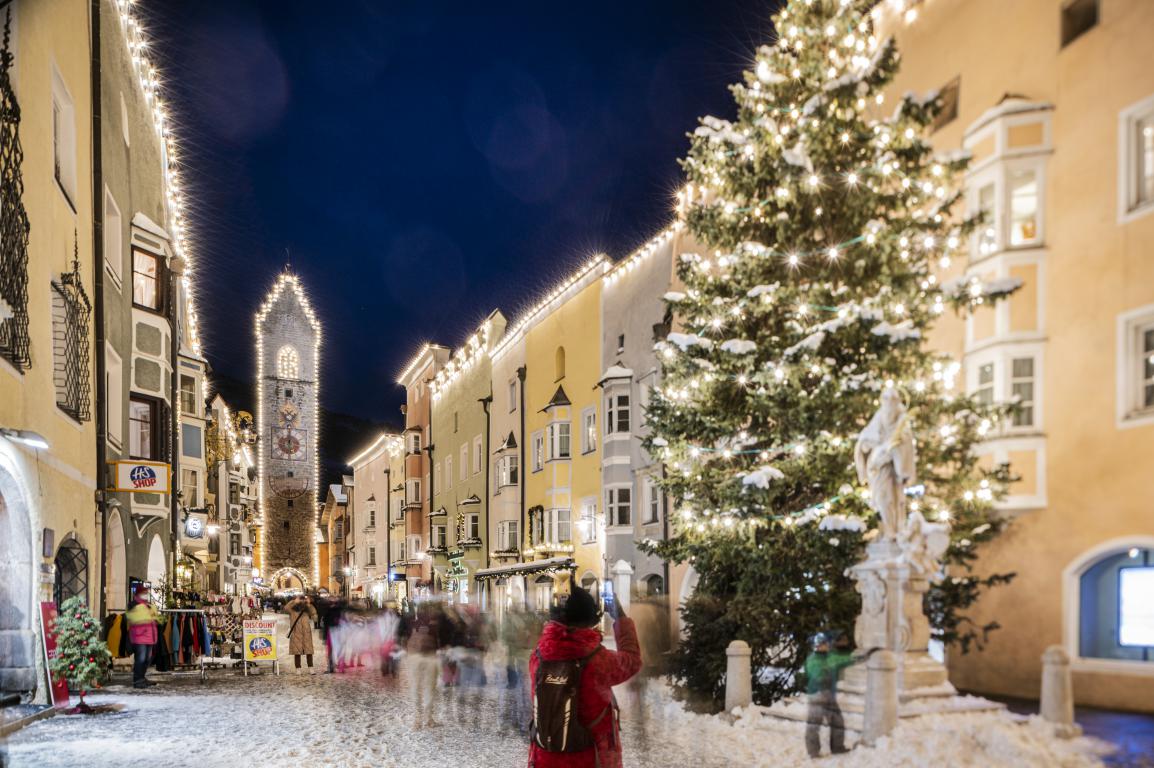 photo credits: Harald Wisthaler
Over 20 kilometres of ski slopes
The ski area of Monte Cavallo is compact with 10 tracks that are always perfectly covered with snow over 20 kilometres of slopes suitable for both expert skiers and beginners. There is also no shortage of areas for young skiers who can learn the basics at the well-equipped Kinderland where they will also be able to enjoy various games on the snow. 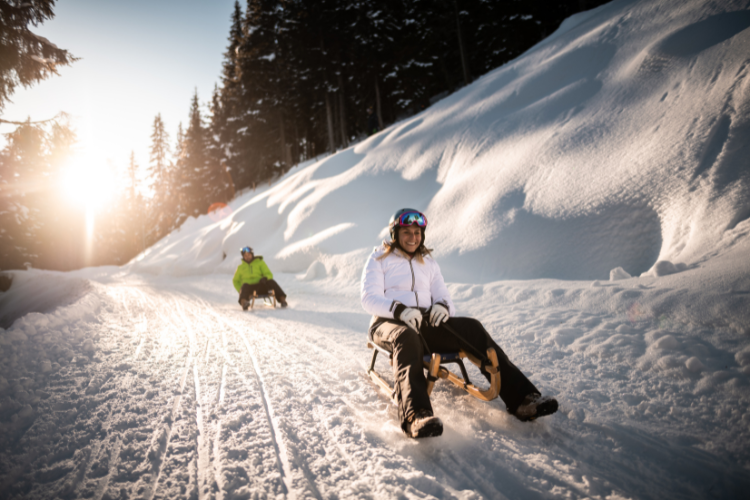
Italy’s record-breaking toboggan run
There is not a resort in South Tyrol that does not have a toboggan run, and the Monte Cavallo run is record-breaking, as it is the longest snow-covered and floodlit toboggan run in Italy. The track covers 10 kilometres with an altitude difference of 900 metres, from the top station of the Monte Cavallo cable car, at an altitude of 1860 metres, down to the valley floor. Almost all through the forest, the track is also accessible at night every Friday, with the lift opening from 6pm to 10pm, while the track remains lit until midnight.
For information: www.vipiteno.com
Sanitised skates and disposable socks and caps
For adults and children Palermo’s skating rink awaits in Via Duca della Verdura. At the rink they will find disposable socks, caps and skates that are sanitised before and after use. And, in full compliance with safety regulations skaters, will be accompanied by a professional skater.
The XL rink is open daily up to 7 January
This year's skating rink exceeds 800 square metres of ice and the XL facility is completely covered. It will be open every day until Saturday, 7 January 2023, from 9 a.m. to midnight (on Fridays, Saturdays, Sundays and holidays it will close at 1.00 a.m.). The entrance fee is €7 for a half-hour and €9 for an hour, and the price includes skate rentals, disposable socks, skate sanitisation, and shoe storage.
“We expect last year’s positive trend to continue in 2023”
During next summer the company will operate over 5,000 flights in Italy, with over 900,000 seats available.
"The summer season that has just ended has demonstrated that there is a strong desire to travel to and from the Nordic countries, and we expect this trend to continue in 2023," says Magnus Maursund, group director for network, pricing, and optimization at Norwegian. "We are now well prepared to meet the expected increase in flight demand."
A fleet of around 85 aircraft against the 69 of summer 2022
The news for the Italian network therefore foresees, from Oslo to Bari two weekly flights from 22 June until 6 August; two weekly flights to Bologna from 22 June until October and two weekly flights to Milan Bergamo from 22 June, all year round.
From Bergen Airport flights will depart for Milan Bergamo twice weekly from 30 April until October. From Copenhagen Airport there will be two weekly flights to Bologna from 22 June throughout the summer; two weekly from Naples from 24 June throughout the summer and two weekly from Palermo from 23 June, only for the summer high season until 6 August.
Many routes have been confirmed for summer 2023
All remaining routes have been confirmed, including four from Rome Fiumicino to Oslo, Bergen, Copenhagen, and Stockholm; four from Pisa to Oslo, Copenhagen, Stockholm, and Helsinki; and four from Venice to Oslo, Copenhagen, Stockholm, and Helsinki. Olbia has three routes to Oslo, Copenhagen, and Stockholm, and Catania has three routes to Oslo, Copenhagen, and Stockholm. Finally, there are routes from Milan Malpensa to Oslo and Verona to Oslo.
Italy is second to France and ties with Spain
In fact, Italy ranks fourth in the world for international tourism arrivals with a revenue of €21.3 billion, up +22.7% compared to 2020. With 9% of preferences Italy is second only to France (11%) and ties with Spain. These figures come from Enit's elaborations on Istat, Unwto, and Bank of Italy data, released today for the presentation of the BIT, scheduled at Allianz MiCo (FieraMilanocity) from Sunday 12 to Tuesday 14 February 2023.
Italy has the highest increase in international airline bookings
According to Enit in November Italy has the highest saturation rate of the hotels booked through Ota among the main European countries (37%), while the saturation of non-hotels is estimated at 39%. And in this same month Italy has the highest increase in international airline bookings at 392,000, which is +65% over 2021.
An acceleration of the recovery to 65% of pre-pandemic levels
The UNWTO reports an acceleration in the international recovery that has now reached 65% of pre-pandemic levels. In the third quarter alone, international arrivals are estimated at 390 million, 50% of the total since the start of the year. Europe continues to lead the rebound. Between January and September, it welcomed 477 million international arrivals, or 68% of the world total, reaching 81% of pre-pandemic levels.
Travellers are looking for sustainable choices
While the progressive elimination or reduction of restrictions in almost all countries has certainly contributed to growth, the real boost seems to come from new travel styles. It is no coincidence that the Sustainable Travel Report 2022 from Booking, which surveyed 30,000 respondents in 32 countries, shows more conscious, sustainable and respectful choices throughout the travel experience, right from the time of booking. Some 93% of Italians, and 81% on a global scale, consider it important to travel sustainably.
Ruled by the Gonzaga family for four centuries
The Gonzaga family ruled and dominated the city of Mantua for over four centuries (1328 to 1707) giving the city splendid palaces, castles and churches, which still bear witness to their power. The historic centre is very small, so it is possible to visit it in a single day and get a good overview of its major attractions.
A magnificent Basilica
A visit to the historical centre of Mantua could start at the Basilica of Sant'Andrea. This is the largest basilica in the city, was designed by Leon Battista Alberti, and was built after his death by the Mantuan architect Luca Fancelli. Located in the heart of the city with its cross-shaped ground plan and 80-metre-high dome by Filippo Juvarra, it houses works of art by the greatest Italian artists.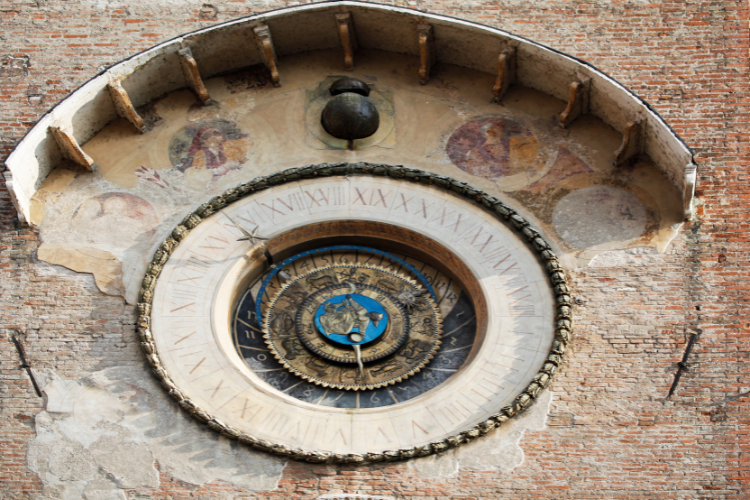
A clock tower with ringing bells
Not far away is the Clock Tower with a clock that measures the hours - marked by Roman numerals, zodiac signs, planetary hours, days of the moon and position of the stars – thanks to a refined mechanism that rings the bells when the hour strikes. From its summit, some 32 metres high, one can see the entire city.
The main square is Piazza Sordello
Piazza Sordello, the centre of the city's political and religious power, redesigned in 1350 by the Gonzaga family, is named after the Italian poet and troubadour Sordello da Goito. On it stand the Ducal Palace, the Bishop's Palace, the Palazzo del Capitano and the Palazzo Castiglioni and, on Thursday mornings, a traditional weekly market takes place here.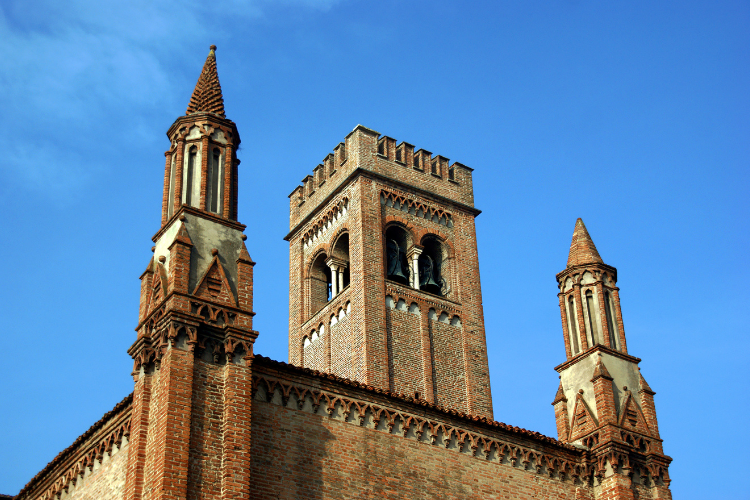
The 2nd largest residence in Italy
The Ducal Palace, also known as the Gonzaga Palace, is one of the world's largest tourist sites and the second largest residence in Italy (after the Vatican) with its 600 rooms (only some are open to the public), seven gardens and eight courtyards. Today it is a vast museum complex and a visit can take a few hours to admire wonderful relics of the past like the Bridal Chamber with the famous frescoes depicting episodes from the lives of the Gonzaga rulers. It took Andrea Mantegna nine years to complete the cycle, which is considered one of the world’s greatest Renaissance masterpieces.


A magnificent suburban villa
Also not to be missed is Palazzo Te, a magnificent suburban villa designed by the great architect Giulio Romano. A little outside the historical centre, today it houses the Civic Museum. It was enlarged by Francesco Gonzaga, the son of Isabella D'Este, creating a place of leisure and refuge for himself and his guests far from the obligations of family life and the court. Francesco’s official mistress Isabella Boschetto also lived here and several rooms are dedicated to her.
River cruises to Ravenna and Venice
Mantua is a city of water washed by lakes and the Mincio River, with canals connecting it to the Po River, its delta and the Adriatic Sea. Many companies offer river cruises to Ferrara, Ravenna and Venice, as well as around the Mincio Park, a protected water area which is popular with birdwatchers and photographers.
The restaurant is like an ancient Roman domus
In the handsomely frescoed restaurant in the style of a Pompeian domus, discover foods as they were prepared and plated according to ancient traditions of over 2,000 years ago, based on the recipes of Apicius, a well-known gastronome of the Imperial age. Caupona was opened in 2016 and is, say its founders Francesco Di Martino and Nello Petrucci, is Italy’s first “archaeo-experiential” restaurant.


A choice of banquet and tasting menus
There is a choice of two banquet menus, one based on Apicius’ dishes and the other on typical Bay of Naples fare with the ancient flavours of antiquity, says host Francesco Di Martino. Guests are served by staff wearing period costume, and many diners enjoy donning the ancient Roman togas that are available. A typical banquet starts with a selection of hors d'oeuvres of duck fillets and eggs or grilled quail, olive spreads and charred vegetables which are served with Mulsum, an aperitif made of white wine, honey, ginger, pepper, bay leaf and other spices. These are followed by hearty soups made with dark leafy greens, beans, peas, chickpeas, lentils and grains, lasagna or other pastas.
Food is served in terracotta dishes and drinks in goblets
The main course goes from a choice of chicken, pork and lamb, ossobuco to tuna or bream washed down with honeyed and spiced wine. The sumptuous food is served in terracotta dishes, and amphorae typical of the old cauponae (from the Latin word for inn or tavern) while the beverages come in goblets; it ends with desserts made with ricotta cheese and fresh and dried fruit.
The ancient Romans were mostly vegetarians
Actually the ancient Romans did not eat a lot of meat, and their diet was primarily vegetarian as well as based on dairy products, oil, honey and wine. We know that before fighting in the arena the gladiators were given spiced barley cakes sprinkled with honey and their energy drink was an infusion of fenugreek. After the fight they thanked the gods by eating crustula which were small wheat biscuits made with honey and butter and stuffed with sheep's milk ricotta.
Caupona is open every day for lunch and dinner and is very popular with groups.
For information: www.caupona.it
An entire class of politicians, some of whom are more and some less good and competent, has failed to give a hand to an industry that could be sailing along on oodles of money, and be filling the treasury with oodles of taxes. The point is that when tourism needs support and backing, politics quite simply disappear. Just like that. Like smoke from a bonfire that melts into thin air.
Giuseppe Aloe
Editor in Chief
Modena, which is in central Italy between its two more famous sisters Bologna and Parma, is famous as the town of slow food and fast Ferraris
The birthplace of Ferrari and Pavarotti
Although relatively small (the population is just 185,000) it is packed with personality. An hour by train, or two by car, from Florence, it is a must-visit for its foodie scene with Parmesan, prosciutto and balsamic vinegar topping the bill. Packed with history and art Modena is also the birthplace of automobile genius Enzo Ferrari and tenor Luciano Pavarotti.
A motor-lovers paradise
Being smack in the heart of Italy’s Motor Valley it is also home to such famous brands as Lamborghini and Maserati and the Maserati Factory, together with the Enzo Ferrari Museum, is a must for anyone even remotely interested in cars. Modena shot to international culinary fame in 2016 when Massimo Bottura’s Osteria Francescana was voted the number one restaurant in the world. This feat was repeated again in 2018 and Bottura continues to be up there with the world’s best and most innovative cutting-edge chefs. Medieval to 18th-century architecture and art 


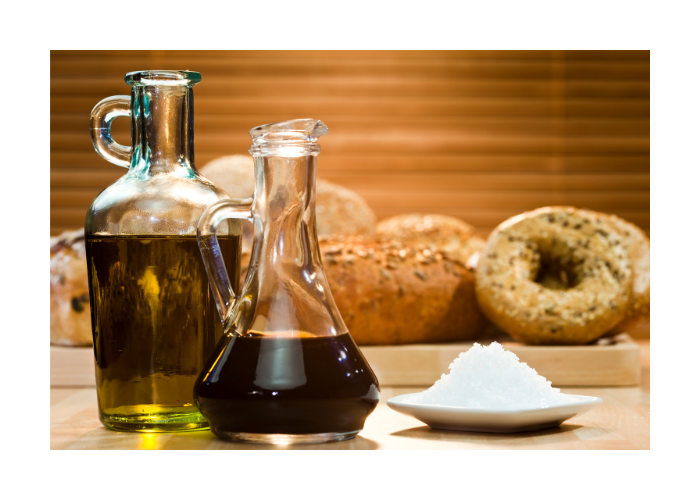
Culture lovers will marvel at the Cathedral and they can climb the Ghirlanda Tower which, like the cathedral and the main Piazza Grande square, is listed as a UNESCO World Heritage Site. Much of the architecture and art in the town is thanks to the Estes, the princely Lombardy family that played a great part in the history of Medieval and Renaissance Italy and ruled in Modena from the Middle Ages to the end of the 18th century.
An Art Nouveau food market
For foodies there are visits to cheese factories, to farmhouses that produce the prized balsamic vinegar and to wineries that produces the charming and much underrated sparkling Lambrusco red wine. Another must is a visit to the town’s Albinelli Market which opened in 1931 and is Modena’s oldest. In Art Nouveau style it is also one of Italy’s most beautiful food markets and the vendors delight in letting customers try their produce. They also like to share the secrets of how best to cook and serve the goods on display, turning a simple market visit into a journey into the lore of Modena’s extraordinary gastronomic traditions.
A paradise for gourmets
Modena is also famous for its tortellini, hand-rolled egg pasta dumplings with meat, vegetables or cheese that can be served in broth or tossed in tomato sauce. It also has two nationally revered specialties linked to Yuletide, the zampone which is a cured stuffed trotter and the cotechino which is made with pork intestines. For information https://www.visitmodena.it
Chianciano Terme, which is famous for its spas, museums and hospitality, is relaunching its image by enhancing and promoting not just its world-famous mineral springs and spas, but the town itself and its appealing environs. The objective, shared by local tourism players, is to promote a new concept of thermal wellness, a paradigm shift between the past and a vision projected towards the future.
A conference to promote the town and its famous spas




This was the theme of the first Programme Conference on Tourism held at the end of October, with Chianciano Terme hosting the main Italian associations and federations together with leading tour operators and industry players. An important occasion for Chianciano Terme, thanks to Massimo Caputi, president of Gruppo Terme Italia (the new owner of Terme di Chianciano) and the town’s mayor Andrea Marchetti with the support of regional councillor for tourism Leonardo Marras and Francesco Tapinassi, director of Toscana Promozione.
A fascinating Etruscan museum
With its rich historical and cultural heritage Chianciano Terme is home to one of Italy’s most beautiful Etruscan museums. The Archaeological Museum of Chianciano Terme is a real gem, and a must-see for anyone visiting the renowned spa resort. The museum recounting the Etruscan civilization, is housed in an old granary dating back to the early 19th century and is spread over four floors.
The Etruscans left little written evidence
"The museum opened in 1997,- explains Roberto Betti, president of the Geo-Archaeological Association, - following a long period of work by our local volunteers. Everything there was found and restored by the volunteers, the aim being to show through the objects and the context who the Etruscans were, as this mysterious people left little written evidence of their civilization.”
A gallery of sacred 13th-19th century Art
The excavations began is 1986, uncovering a 7th-century B.C. princely tomb that has been reconstructed in the museum’s first room. The tour through the reconstructed Etruscan tombs in the underground cellar is very suggestive, displaying many grave goods and mysterious human-shaped cinerary vessels, called canopic jars. Another important collection, the Museo della Collegiata, reopened last June in collaboration between the Diocese and the Proloco of Chianciano. In the 18th-century Palazzo dell'Arcipretura, the museum houses is a gallery of sacred 13th-19th century art.
Hotel Villa Ricci has a new holistic centre
Tradition, hospitality and innovation are the key ingredients of the historic Hotel Villa Ricci which opened in 1958. "My grandmother Elide started with a guesthouse, welcoming the first tourists. Today we have 90 rooms and have made many investments, inaugurating a 250-seat conference hall in 2006, and in 2008 the Holistic Wellness Centre, which was further enhanced in 2011.""We have clients who return year in year out, and we continue to introduce new products like the Holistic Centre.” Villa Ricci’s La Coccola restaurant is also popular with non-resident guests and on the menu has a wide choice of traditional and farm-to-fork Tuscan specialties.



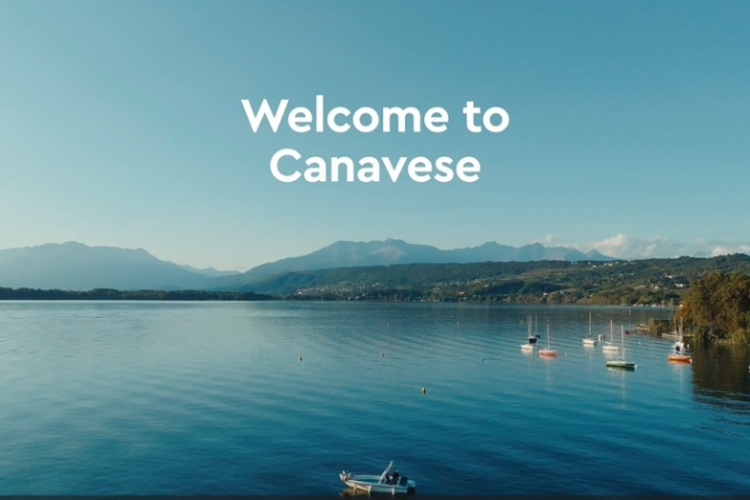
Welcome to Canavese, an unexpected corner of Piedmont where …
843Welcome to Canavese, an unexpected corner of Piedmont where …
843
