


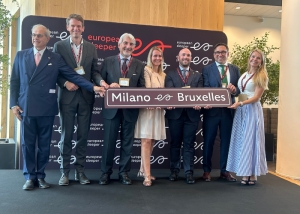





The new night service linking Milan's Porta Garibaldi station with Brussels operates three departures a week, on Wednesdays, Fridays and Sundays. A journey with no changes which, from 14 December, with the start of the winter timetable, will be extended to Breda and Eindhoven in the Netherlands.
“We are launching a new train, but above all we are opening up new opportunities, new connections and new encounters. From today, Milan and Brussels are closer,” said one of the two co-founders, Elmer van Buuren, noting that the train, which, on the Italian section of the route, will rely on the services of Arenaways for traction, passes through Ticino and Aarau in central Switzerland before continuing on to Cologne and finally Brussels.
“It wasn’t easy to integrate this train into one of Europe’s busiest rail hubs, but we managed it thanks to RFI” and to the “long process of coordination with the rail infrastructure managers of four countries, and it is an important step in the growth of the European night train network,” added the other co-founder, Chris Engelsman. “What we always try to do is combine different routes into a single train to ensure sufficient demand. In this case, you can travel to Germany (where, from Cologne, you might be able to reach Hamburg or Berlin by other means), the Netherlands and Belgium on a single train, but you can also travel to Switzerland from the Benelux countries and Germany, and of course all the way here to Milan. We always create this sort of combination, and I think it will be very successful in this instance too.”
A positive outcome that the Belgian-Dutch company (founded in 2021 and operational since 2023) hopes will become “a lasting commercial success...where costs must be fully covered by revenue”. This is where the use of a single locomotive from Brussels to Milan comes in, thereby avoiding a locomotive changeover at Chiasso and saving both costs and precious time. And the length of the train, which can be extended from 10 to 13 or even 14 carriages, will also allow us to increase revenue and meet peaks in demand during the high season.”
The challenge to short-haul air travel
Engelsman adds: “We offer overnight journeys to passengers crossing borders as they sleep, ensuring they have a pleasant and efficient journey. It’s no easy task to set up a company like this, and we’ve done it from scratch. There are certainly many challenges to face, and we’re becoming a major player in the European rail landscape. But I think that, in a sense, we have also achieved more, have done something different. We have a mission which is to make train travel, which is a sustainable mode of transport, more attractive. We want to replace short-haul flights with trains, offering a pleasant, unhurried travel option. We’re already replacing many short-haul flights with our trains and we’re continuing this way." For the current year, European Sleeper is targeting “total revenue of around €25 million, which is positive,” notes Engelsman. “We expect to carry some 200,000 passengers.”
"Bringing Lombardy even closer to the...heart of Europe"
Also present at the presentation was Raffaele Cattaneo, under-secretary to the president of the Lombardy Region with responsibility for international and European relations: “With the new Milan–Brussels overnight rail link, which joins those already operating to the Belgian capital, an important step is being taken to bring Lombardy even closer to the geographical and political heart of Europe. This is not merely a strategic service, but also yet another demonstration of how fully our region is involved in the process of European integration.”
Travel seen as an experience and not merely the time that elapses between departure and arrival. "Simply Italian," the new global communications campaign from ITA Airways featuring Sharon Stone as its global ambassador, revolves around this concept.
The campaign was launched by CEO and managing director Joerg Eberhart and the Hollywood icon, “who has long harboured a deep affection for Italy,” said Eberhart who went on to highlight some of Stone’s distinctive traits: “Charisma, intelligence, wit and a natural sense of irony. Qualities that perfectly reflect the tone of "Simply Italian" - self-assured yet never aloof, sophisticated yet approachable, global yet unmistakably Italian. Thanks to this collaboration, we can share the spirit of our brand with audiences around the world”.
Eberhart explained that the campaign was conceived as a global communications platform with a consistent and recognizable identity across all key markets. Launched in Italy "our home market and the heart of our identity,” it will then expand into the United States and Brazil through an integrated multi-channel media plan. Both markets are crucial for us, where we aim to strengthen the visibility and prominence of ITA Airways.”
With this campaign the airline aims to “turn the page and open a new chapter,” continued the CEO. "From the moment our customers step on board, wherever they may come from, we want them to experience first-hand what makes Italian hospitality so special. What is it? Thoughtful attention and the ability to make even the simplest gesture memorable. We believe that genuine gestures can truly make a difference to the travel experience. The creative concept revolves around brief snapshots of life on board. Each one captures a moment of Italian hospitality, made unforgettable by thoughtfulness, warmth and unmistakable style. This is the promise of "Simply Italian," and we could not have chosen a more globally recognized and suitable ambassador than Sharon Stone to launch our campaign and share this message with the world.”
The actress, who first visited Italy when she was just 19, was full of praise as she expressed her affection for a destination much loved by American travellers: “The sense of family, the gestures, the art, the culture, the music, the theatres and, of course fashion. Italy is the fashion capital of the world.” Sharon Stone’s words were a true declaration of love for Italy. “And then there’s Venice, with the nuns making lace, the historic jewellery shops and everything that happens there. All of this takes place in Italy, only in Italy and nowhere else in the world.” Then there’s the Venice Film Festival, Rome and the Vatican."
Stone went on to mention Sicily, Naples and Florence: “Nowhere else in the world can you find this incredible mix of culture, architecture, climate and everything else. For me, as an American who grew up in an Amish village, it’s truly incredible. The destination still to be discovered? “The Dolomites – a dream I’d love to fulfil.” The new advertising campaign, which will launch in the United States and Brazil on 22 September, consists of a series of short, standalone spots, each built around a single scene, depicting simple and authentic “Simply Italian” situations that express the airline’s distinctive take on Italian hospitality.
Boston-Milan flights to become daily
Delta Air Lines’ summer schedule in Italy will entail several changes that will see increased seat capacity on routes to the destinations most popular with US travellers. It will be adding capacity on the route linking Boston to Milan Malpensa: the seasonal flight in summer 2027, the route’s third year of operation, will become a daily service, compared to the four weekly frequencies operated to date. An Airbus A330 will be deployed on the route; with daily service, thus increasing not only passenger capacity but also available cargo space. The schedule, which will be effective from 6 May 2027, sees the flight departing Logan at 19.55 and arriving at Malpensa at 09.25 while the flight from Milan will depart at 11.35 and land in Boston at 14.40.
There is high demand for travel from the US
Delta’s decision to upgrade the service to a daily flight is undoubtedly driven by several factors: first and foremost, the high demand for travel from the US market, which regards Italy as a top-tier destination and sees Milan as particularly attractive, alongside a wider catchment area that includes the lakes of northern Italy and other destinations. Then there is the direct competition on the route from JetBlue (which operates a daily flight with the A321neo LR, featuring the premium Mint product) which is certainly a factor and Delta’s introduction of a daily service allows for a closer contest.
Olbia and Naples also to get more flights
There will also be more flights introduced on the New York–Olbia route, which will return for a second year in summer 2027, following its debut this summer The service will operate from 28 May with four weekly flights instead of three operated by a Boeing 767-300ER. The Atlanta–Naples route, which begins on 27 May, will also increase from three to four flights a week with an Airbus A330-200 will operate on this route. The reopening of the Seattle–Rome Fiumicino route will be brought forward by almost a month to 12 April 2027, compared with 7 May this year, and the route will be operated by an A330-900neo.
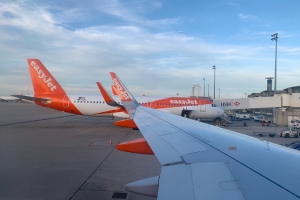
In any case this is a new chapter in the history of easyJet, Europe’s second-largest low-cost carrier, founded in 1995 by the Greek-Cypriot entrepreneur Stelios Haji-Ioannou, which carries around 90 million passengers a year. The offer from the American private equity giant (because yes, it is indeed a US-based firm) would allow current shareholders to reinvest their shares in the new company, enabling Haji-Ioannou (who owns just over 15%of the airline) to become a private shareholder. And, what's more Apollo (which has previously invested in airlines such as Aeromexico, Sun Country Airlines and the Atlas Air cargo group, and provided financing to KLM, Virgin Atlantic, SAS and LATAM) is said to be keen to support easyJet’s current growth strategy, centred on a fleet of larger, more fuel-efficient aircraft and on expanding its leisure travel business.
easyJet brings valuable assets to the table, including its own fleet of aircraft (over 210) and slots at major European airports. But, for the deal to be financially profitable, analysts see the need for significant restructuring (EBIT at least tripled by 2030) or an increase in value through the sale of assets. What is certain is that nothing is going to be straightforward: even the Apollo project will have to contend with strict European regulations which do not permit a continental airline to be controlled by foreign entities. Whish is why further European capital will be needed to secure the green light from Brussels. So all that remains is to wait and see how the situation develops, as it is bound to influence the fate of the "orange" airline.
 Mariella Cattaneo
Journalist
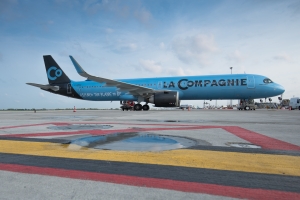
“Business is tougher, competition is fiercer, but overall we expect demand, by the end of the financial year in October, and to be close to budget, with the exception of fuel costs, which have risen significantly." Christian Vernet, CEO of La Compagnie, remains confident about the performance of the current financial year, particularly on the Newark-Milan route, which has faced more than one challenge. From “concerns over immigration and restrictions on foreign nationals entering the US, something that initially made tourists somewhat reluctant to travel to the United States, but which has now stabilized somewhat. The result is that demand has not been as strong as we expected’ and the booking window "has narrowed quite significantly. In other words, people are postponing their decision to travel. And this is the current situation, to which we must and are adapting."
“We are determined to increase our capacity in order to offer daily flights as soon as possible. We are currently operating two A321neo aircraft. The third is on its way: delivery is scheduled for February 2027 although we had expected this sooner. With this aircraft, we will be able to launch new routes in Europe from Newark. A fourth aircraft will arrive in 2028, and it will be an A321neo XLR, which will expand our flight offering from every destination we serve, particularly in Italy, though we are still evaluating other locations as well.”
The carrier’s 100% business-class, combined with "truly premium" ground and in-flight services, appears to have been well received in the Italian market, given that La Compagnie launched the Milan Malpensa–Newark route in 2022, right in the midst of the post-Covid period: “Since then, we have carried around 112,000 passengers between the two cities and operated around 2,100 flights. We currently offer 5–6 flights a week, and aim to increase this to daily flights as soon as possible, once the third aircraft arrives.
On the Milan route, the airline “has captured 18% of passengers, although I think that we deserve more. Increasing our brand awareness is one of the areas where we need to work harder.” Some 75% of this traffic is leisure, with a high proportion of American passengers for whom Italy is an unmissable holiday destination “I would point out that our offering boasts, in any case, affordable prices. On average we are 20–25% cheaper, and sometimes even 30% cheaper, than other airlines. And this makes a huge difference, both for the leisure market and for the business market, which often includes SMEs with budget constraints.”
It’s a scorching summer for Italian and, more generally, for all European airports. And not just because of the particularly hot weather, which is also putting to the test tourists and attractions like the Uffizi and the Louvre, which are finding themselves having to cope with air-conditioning systems ill-suited to such heatwaves. Since last April, passengers arriving from non-EU countries and entering the European Union – and therefore Italy – have had to undergo biometric checks at airports. The so-called EES (Entry-Exit System), in force since April, and previously trialled from October 2025, continues to be a real challenge for airport operators.
The new border checks are causing queues of up to six hours, a marked deterioration compared with the spring, on the eve of a summer that is set to be a record-breaker for air traffic. As a result, dozens of airport management companies are sounding the alarm, in some cases calling for the temporary suspension of entry and exit verification procedures.
Following the warning from SEA, the company managing Milan’s airports, Marco Troncone, CEO of Aeroporti di Roma, now sounds the alarm in the pages of the Financial Times: "We are very concerned about the summer; on a scale of one to ten, I’d say eight or nine. The process is proving incompatible with the traffic peaks we will face,” and he further warned it will probably have to be suspended to avoid “disasters.”
The appeal from Rome is merely the latest in a series. In recent weeks industry associations, led by ACI Europe and IATA, as well as individual airports from Frankfurt to Athens, have drawn attention to the problem. While, on the one hand, there are calls for flexibility regarding the system’s continuation, on the other, now that the peak travel period has begun, the European Commission remains reluctant: “The EES is fully operational in all Schengen countries and is working well,” is the reply from Brussels. “In most cases, long waiting times are not linked to the functioning of the EES, but to pre-existing factors, such as staff shortages, infrastructure constraints and the concentration of flights in certain time slots.”
So, the matter is left entirely to the individual member states. “The rules provide for flexibility to ensure the smooth flow of traffic at borders, particularly in the run-up to next summer”, which means for example, allowing the suspension of biometric checks. “It is up to the member states to ensure the correct implementation of the EES within their territories.” In short, a hot topic. Like the weather.
Mariella Cattaneo
Journalist
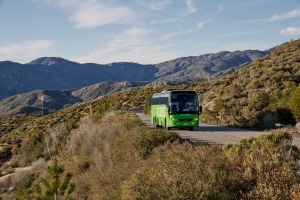
FlixBus is launching in Sardinia on 12 June with its first regional route, connecting five citiew and two airports.
Daily services all summer
The new route will link Cagliari, Sanluri, Oristano, Sassari and Alghero, including strategic stops directly at Cagliari-Elmas and Alghero-Fertilia airports. The service will run throughout the summer, seven days a week, with the aim of facilitating travel within the region during the peak tourist season.
"A price accessible to everyone"
“Our arrival in Sardinia is not just a new route: it marks the moment our network finally covers the entire country. We are bringing a model to the island that prioritizes the right to mobility and the freedom to discover Sardinia’s heritage efficiently and at a price accessible to everyone. It is a milestone we had dreamed of, and which is now becoming a reality thanks to the synergy with our local partners,” commented Cesare Neglia, CEO of FlixBus Italia and Flix vice president Europe West.
Benefitting the entire local tourism sector
Intermodality therefore takes a new step forward in Sardinia: with the new connections, anyone travelling from Fertilia and Elmas airports will be able to reach the terminal every day, in a single journey, from Cagliari, Sanluri, Oristano, Sassari and Alghero. For example, Alghero-Fertilia Airport can be reached from Sassari in just 35 minutes, and in the same amount of time, you can reach Cagliari-Elmas Airport from Sanluri. In addition to residents departing from the island, and visitors heading to Sardinia, FlixBus’s intermodal transport offering will also benefit the entire local tourism sector.
Flixbus has a multi-channel booking platform in 30 languages
Thanks to the routes connecting airports with the island’s less-visited areas, such as Oristano and Sanluri, the new service will help promote a side of Sardinia that is less well-known than the destinations traditionally covered by major tourist circuits. This will attract an international audience to these locations thanks to FlixBus’s global reputation and its multi-channel booking platform available in 30 languages.
Complementing and scaling up the public transport network
“The arrival of an operator like FlixBus is good news for Sardegna's entire regional transport system. We are talking about one of Europe’s leading road transport operators, already present in dozens of countries, which brings to the island a service recognized and used by millions of travellers. The new route connecting Cagliari, Cagliari Airport, Oristano, Sanluri, Sassari, Alghero and Alghero Airport represents a tangible opportunity both for tourists, who will find a familiar service here in Sardinia, and for local residents, as it helps to complement and strengthen the public transport network and offers an alternative to private vehicles,” said Barbara Manca, regional councillor for transport.
As June begins, ITA Airways’ Mediterranean summer kicks off with the launch of new seasonal services.
For some of the most sought-after leisure destinations
The new routes are from Málaga, Valencia and Marseille to Rome Fiumicino and will operate daily until 30 September 2026. “These new routes strengthen Ita Airways’ offering for summer 2026 from some of the most sought-after leisure destinations, expanding travel opportunities for our passengers and further enhancing the strategic role of our Rome Fiumicino hub,” said Emiliana Limosani, chief commercial, network & incentive management officer ITA Airways.
A strong Mediterranean focus
During the summer the airline is also confirming its strong Mediterranean focus, with new seasonal routes from Mykonos, Alicante and Trapani and increased frequencies from Brindisi, Lampedusa, Pantelleria, Palma de Mallorca and Nice. Connections with Tunis have also been strengthened, confirming the importance of the region in the carrier’s strategy. On the domestic network the seasonal Olbia-Turin and Olbia-Genoa routes have been launched, designed to promote increasingly widespread and seamless travel across Italy.
London Heathrow to Rome twice daily
Other key new additions for the 2026 summer season include the route from London Heathrow to Rome, operating twice daily, and the launch of the new direct flight from Houston to Rome Fiumicino, the first non-stop connection in history between the two hubs. From June to September, the Houston route will increase to five weekly frequencies. Finally, the airline continues to invest in routes from Asia, with a strengthening of the Bangkok-Rome-Bangkok serviceto five weekly flights in August and the Delhi-Rome-Delhi service now operating daily, in response to growing demand for long-haul travel to destinations of significant tourist and cultural interest.Looking at year-round connections
Operated by an Airbus A321neo daily throughout the summer season until the end of October, this inaugural service could pave the way for year-round connections, which the airline already operates in Europe to Amsterdam, London Heathrow and Paris; these are complemented by seasonal services to Barcelona, Dublin, Edinburgh, London Gatwick and Madrid.
"Travellers are getting the experience they deserve"
“The launch of this route is part of our expansion strategy, aimed at bringing low fares and excellent service to the markets in which we operate. This new route will connect global markets with high-quality facilities and a premium travel experience. Fares are falling, service is improving, and travellers are getting the experience they deserve. We have completely reinvented transatlantic travel, not only in our award-winning business class, but also in our core experience. In particular we offer a rotating menu inspired by New York City restaurants and local flavours. Everything is carefully designed with customers in mind to offer them more comfort, more choice and more value,” said Stephanie Evans Greene, SVP of Marketing & Brand at JetBlue.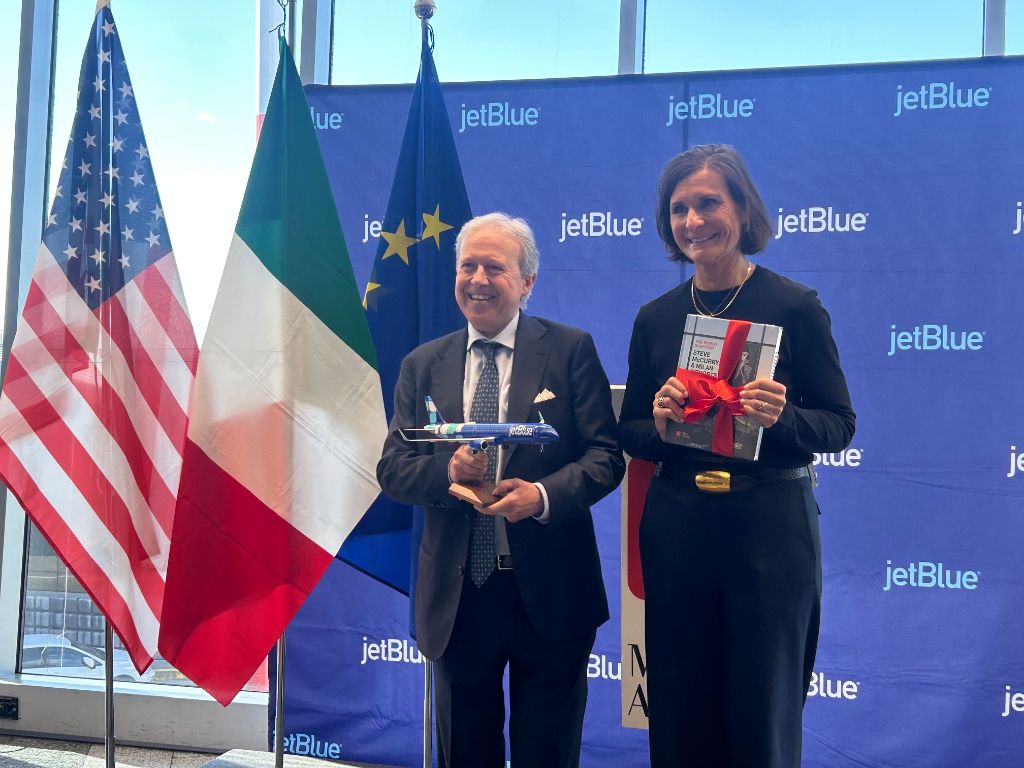
"We offer...a very solid and varied mix of European destinations"
JetBlue currently serves “over 1,000 destinations in the United States, Latin America, Canada and Europe. We operate in more than 30 countries and have probably more than 23,000 employees. We are the sixth-largest airline in the United States with a strong presence in Boston, New York, the Greater Northeast of the US, as well as in Florida, Latin America and the Caribbean.” As for the next steps in JetBlue's European expansion, Stephanie Evans Greene explains that “it depends very much on aircraft availability. Today, we believe we offer our customers a very solid and varied mix of European destinations. All destinations our customers wish to reach”. Milan and Italy, in particular, remain among the most sought-after destinations for US travellers: “Demand on this route is very strong, there has been great interest from our customers in this flight and it is one of the reasons why it operates daily. I believe we are the only airline flying daily from Boston to Milan this season.”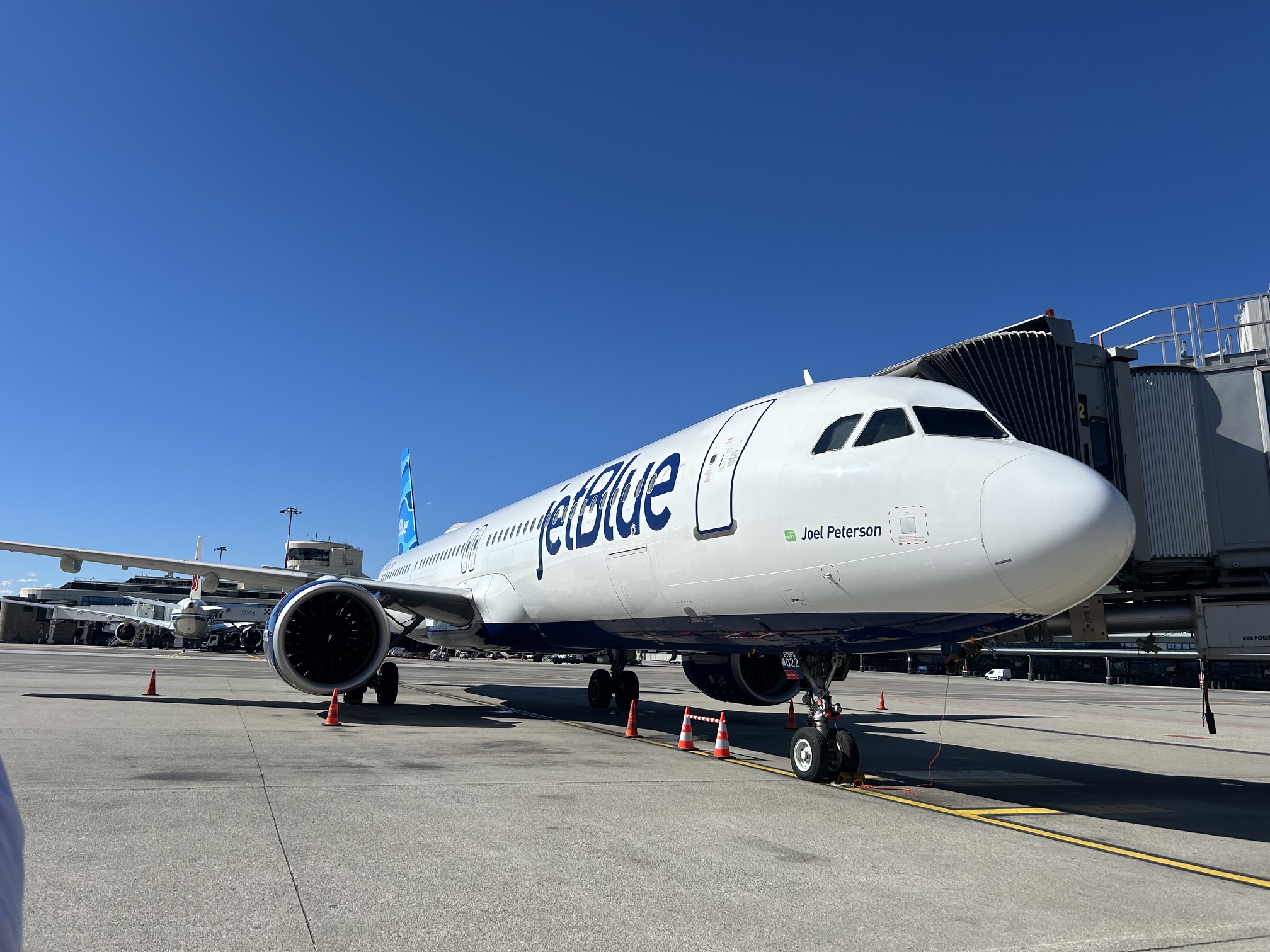
Some 90,000 passengers in total annually
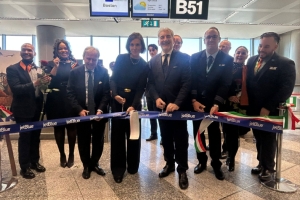
Aldo Schmid, Head of Aviation Business Development at Sea Aeroporti di Milano, highlights the value of a new airline serving Malpensa: “We are very proud that JetBlue has chosen Milan as its first stop in Italy for this ever-growing European venture. The carrier offers a highly original product and an intriguing market positioning, with excellent value for money, delivering an outstanding flying experience.” Noting similarities between Milan and Boston, he adds: “starting with the distinctive European feel that characterises both, but also the many cultural and commercial exchanges, and the growing tourism in both directions. Currently, the route carries around 70,000 passengers a year between the two cities alone, a figure that rises to 90,000 when their respective catchment areas are taken into account, with double-digit growth in recent years and significant further growth potential.
Daily services to South Korea
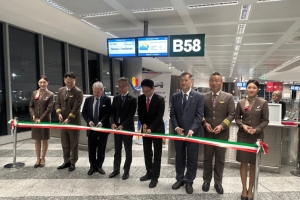
Asiana Airlines’ A350 is now operating on the route between Seoul and Milan Malpensa with three weekly flights on Tuesdays, Thursdays and Saturdays which, combined with Korean Air’s four flights, make for a daily service to South Korea.
Italy is a very attractive destination for Koreans
“We see great potential in this new route and it complements the route already operating from Rome,- said the airline’s vice-president, Jong Man Park, who attended the ribbon-cutting ceremony in Malpensa. -Italy is a very attractive destination for Koreans and Milan is a perfect combination from both a leisure and business perspective, with numerous trade fairs throughout the year. And whilst Rome has become very hot in summer, as have some of our other destinations such as Barcelona or Istanbul, and we see Milan is a valid alternative, and from there our passengers can also reach Austria and Switzerland.”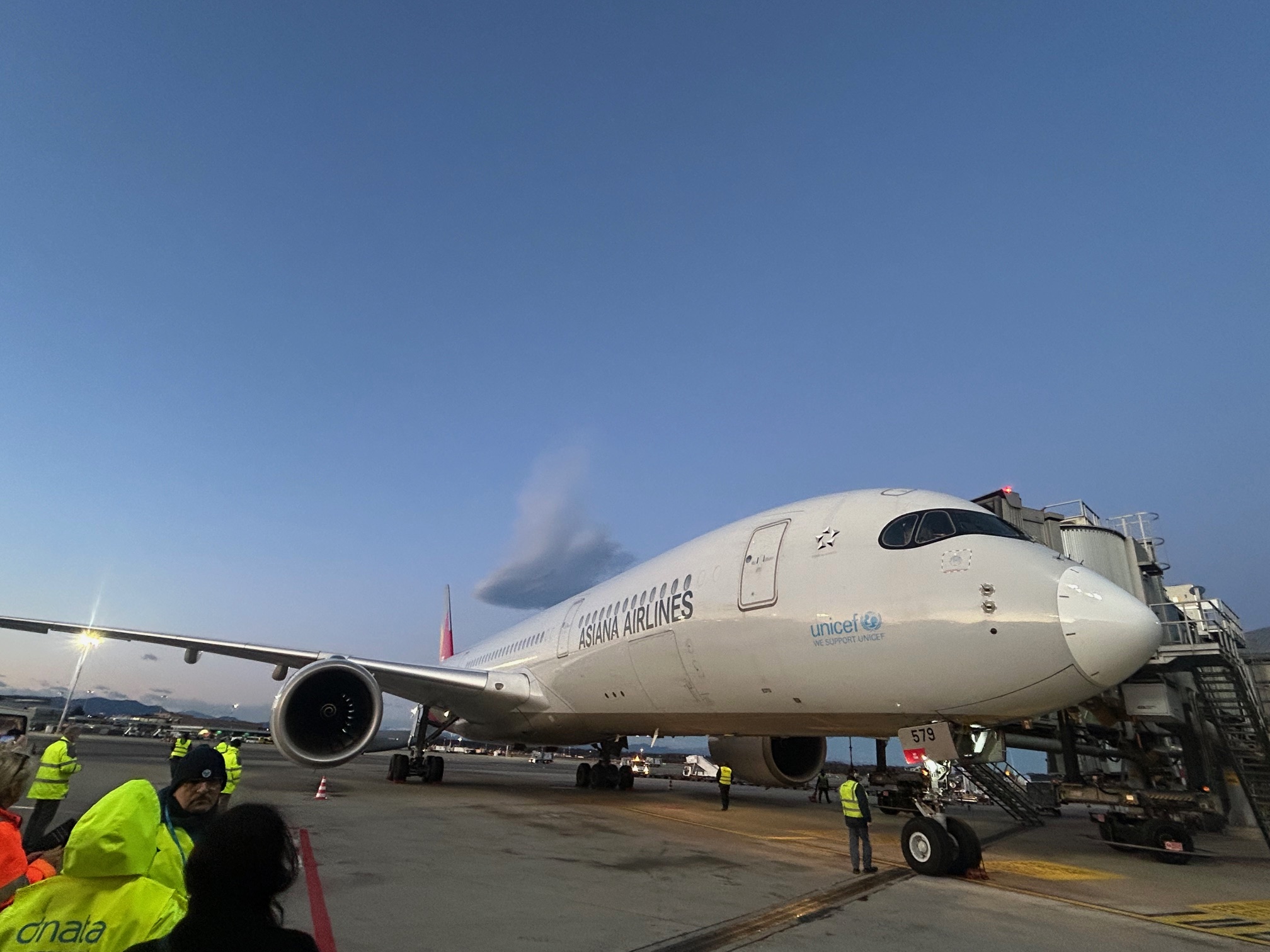
Malpensa has a portfolio of carriers of the highest calibre
"Italian passengers flying to Seoul “can choose from the numerous destinations in the Asiana network to Japan, Australia and, more generally, East Asia. We therefore expect a high number of Italian passengers to continue their journeys. Malpensa is among the top four European airports in terms of direct destinations served in Asia. There are huge volumes of traffic from Seoul to Italy and, increasingly, to Milan, but it is also very interesting to note that South Korea has become increasingly attractive to Italians in recent years for both cultural and economic reasons, so there is significant growth in both directions,- said Aldo Schmid, head of aviation business development, Sea Aeroporti di Milano.
Eight 5-star Skytrax airlines operate at Malpensa
"Asiana is one of the world’s most prestigious airlines, ranking among the ten that boast a 5-star Skytrax rating, and of these, eight operate at Malpensa, confirming a portfolio of carriers of the highest calibre. Over the last 12 months, some 120,000 passengers have travelled between Seoul and Milan a figure that rises to 1,500,000 when considering Malpensa’s wider catchment area, representing a 13% increase over the previous 12 months. A growing market, with an excellent balance between sales in Italy and those in Korea."
Concerns for Middle Eastern skies
Park makes no secret of his concerns regarding the ongoing stalemate in the skies over the Middle East due to the conflict in Iran. “The impact has been felt since the start of the war: the price of oil, and therefore of aviation fuel, has risen, and we will feel the effects from April and May onwards. We can only hope that the situation in the Middle East calms down."
"The fuel surcharge will certainly become a burden for travellers"
"Also affecting us is the fact that Middle Eastern carriers that used to carry many passengers between Asia and Europe are no longer operating. So we are seeing a shift in demand towards us. I notice, for example, passengers who used to fly from Manila in the Philippines, to London via Dubai, but are now moving towards Incheon. Manila, Incheon, London. In March, ticket prices rose significantly and the load factor was quite good. But now in April the introduction of the fuel surcharge will be felt. With the rise in oil prices, the fuel surcharge will increase and will certainly become a burden for travellers, with a consequent negative impact on us."
The surcharges could rise further in May
The surge in fuel surcharges among Korean airlines is more pronounced than that seen among carriers in other countries, mainly due to Korea’s heavy reliance on Middle Eastern crude oil. And, in any case, the surcharge does not fully offset the rise in oil prices, so if the current trend “were to continue, the surcharges would rise further in May and, if the crisis were to drag on, the situation would become even more worrying.”




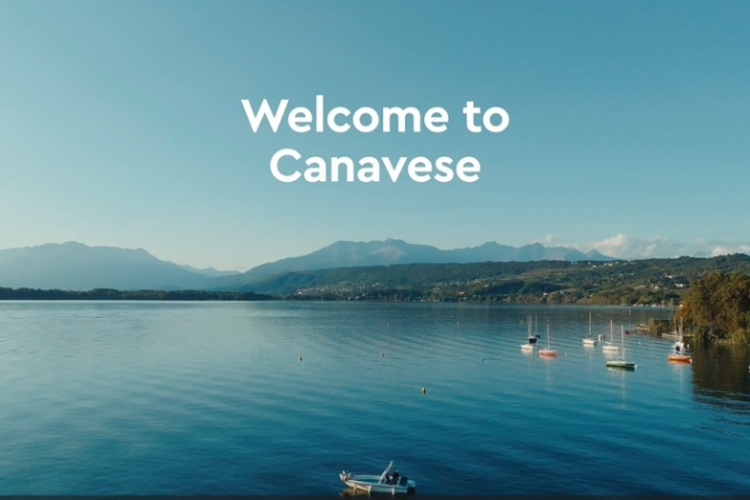
Welcome to Canavese, an unexpected corner of Piedmont where …
846Welcome to Canavese, an unexpected corner of Piedmont where …
846
