



















In the heart of Rome, just a short walk from the Piazza Venezia square, Largo di Torre Argentina is a window into Rome’s historic heart.
Julius Caesar was assassinated here
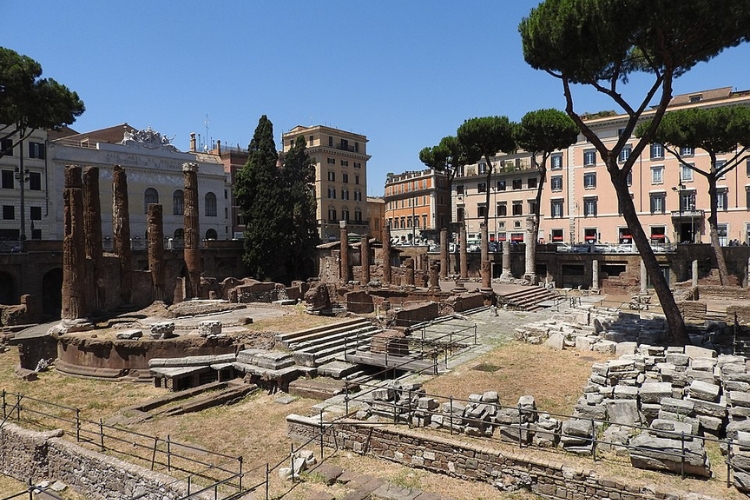
On this archaeological site, shrouded in mystery and history, ancient ruins stand as the capital’s busy traffic swirls endlessly around the square. Most famously, this was the scene of Julius Caesar’s assassination on March 15, 44 BCE. In what was once a sacred area, the great leader met his fate at the hands of a group of conspirators, betrayed by those he once trusted. Stabbed many times, Caesar fell and his assassination sent shockwaves through Rome, altering its course forever and paving the way for the rise of the Roman Empire. Looking down onto these ruins today, one can almost picture the fateful Ides of March, the hear those whispers of betrayal.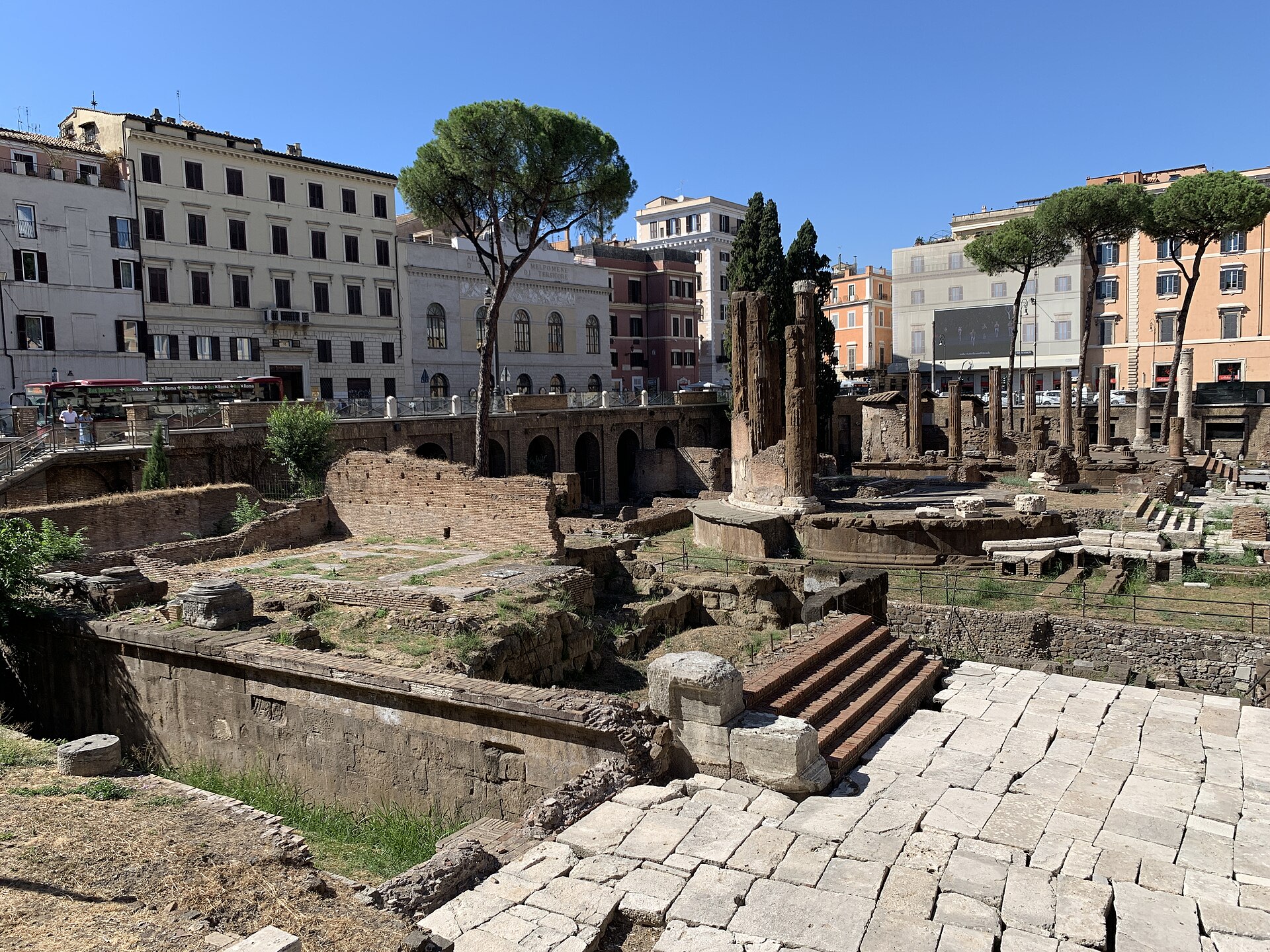 Largo di Torre Argentina ph Credit Chabe01
The remains of ancient Roman temples
The site houses four Republican-era temples, with Temple B believed to honor Fortuna Huiusce Diei, commemorating a military victory in 101 BCE. The remains of these buildings, with their broken columns and worn foundations, stand as silent sentinels of Rome’s grandeur, and remind us of a city that once ruled the known world.  Credit Andy Rush Santa Barbera
A cat sanctuary
Adding to the charm of the Largo di Torre Argentina ruins, a colony of stray cats roams the site, and it is now a cat sanctuary which is run by volunteers. These feline inhabitants weave between ancient stones, basking on sun-warmed ruins and peering curiously at visitors. Thanks also to the cats Largo di Torre Argentina has become one of the city’s attractions, drawing not just history buffs but also animal lovers who come to admire the ruins and the cats.
Rome is a potpourri of old and new
The area’s history is reflected in its name which is taken from a Medieval tower built by a papal official who constructed his residence over ancient ruins, as was common in Rome’s ever-evolving landscape. Walking along the viewing platforms one can imagine the days of ancient rituals, as every stone tells a story, reminding us that in Rome, the past is never far away.


