



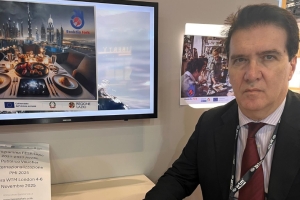


It all began in 2014 when Francesco Martulli, with long experience in tourism, decided to set up a business specializing in guided tours of the Sassi di Matera and the Murgia Park. As the range of services expanded, and with Matera’s designation as European Capital of Culture 2019, Martulli Viaggi was established, and broadened its services to include transfers, outdoor experiences, tastings and cookery classes. And it expanded into Puglia and parts of Campania, particularly in the areas of transfers and tourist experiences. “Today the company is led by the three brothers Michele, Francesco and Gabriele Martulli and organizes tourist experiences and the logistical management of groups and events. Francesco is the technical director of the travel agency, whilst Gabriele is the technical director of the coach division,” says partner Michele Martulli.
Initially, Martulli Viaggi focused primarily on the Italian market. “Over the last five years, however, the company has established an increasingly strong presence in international markets, with a particular focus on North America, especially the United States, and South America.
This growth has been accompanied by an expansion of our services: in addition to guided tours and tourist experiences, we offer private transfers, chauffeur-driven services and logistical support. These services are particularly in demand with international clients seeking reliability, flexibility and comprehensive travel organization. Today we cater to individual travellers and families as well as groups, tour operators and international agencies, without neglecting the Italian market, which continues to represent a significant part of our business.”
“This year there was a sharp decline in Italian customers, offset by growth in the international market, which rose by almost 10%. Today our main overseas market is the US, followed by Europe, where French customers rank first." Our objectives are to expand our range in Campania, enhance our fleet with new vehicles for luxury transfers, and further consolidate our presence in Basilicata and Puglia, which are the company’s main areas of operation. A particularly important objective is to further develop Basilicata, especially the Vulture area and the province of Potenza. These are regions that are still relatively unknown, yet rich in landscapes, culture, traditions and authentic experiences that deserve to be promoted and presented to the Italian and international markets."
Planned investments “mainly concern the expansion of the fleet, with the purchase of new high-end vehicles for luxury transfers and personalized services for individual clients, groups and tour operators, developing comprehensive packages that combine sightseeing, authentic activities and transport, whilst also promoting lesser-known areas and making them easily accessible to Italian and international customers. Our main strength lies in our ability to directly manage the entire travel experience. We have our own fleet of 8-seater minibuses and 24- and 54-seater coaches which enables us to organize transfers, excursions and services for groups to high standards of reliability, flexibility and control.”
Many of the experiences, starting with the guided tours, “are designed, organized and managed directly by Martulli Viaggi. Not being mere intermediaries allows us to control every stage of the service, minimize unforeseen issues and offer the customer a single point of contact, from booking right through to the end of the trip. Our first-hand knowledge of regions in which we work, combined with the integration of transport and experiences, enables us to create comprehensive, bespoke itineraries for individual travellers, groups, agencies and international tour operators. It is precisely this combination that sets Martulli Viaggi apart: we do not merely offer individual services, but a comprehensive, coordinated and reliable travel experience."
Once again, and in spite of everything, Italy has reaffirmed its status as a record-breaking destination. This is confirmed by the latest figures from the Ministry of Tourism, which show 72.4 million arrivals and 276 million overnight stays in June, July and August. This means over 5.5 million more overnight stays than in the same period in 2025, which is a 2% increase with an average stay of 3.8 nights. Foreign tourists, particularly in August, booked more and stayed longer in Italy, poating a 4.4% rise in overnight stays and a 2.2% rise in arrivals. “2025 was a record year, but this year is even more so," says the minister for tourism Gianmarco Mazzi.
The occupancy rate for accommodation facilities on major online platforms stands at 61.8% which is 13.8% higher than in 2025. “We are seven percentage points ahead of Spain and 17 ahead of France, but the most striking thing is the trend over these first few days of September which, at 56.2% , places us a full 13 percentage points ahead of Spain and 23 ahead of France,” says Mazzi.
The province of Trento recorded the highest occupancy rate in Italy at 67.3% thanks to the boom in mountain holidays which was also due to the exceptional heatwaves over the three summer months. Next came Sardinia with 67.2%, Friuli-Venezia Giulia with 66.3% and then Sicily and Veneto, both with 65.5%. Small towns and villages, with fewer than 5,000 residents scattered around Italy, were also a great success. With "a 5.6%increase in arrivals compared to last year" and a 4.4% rise in overnight stays, which are "very significant results thanks to the policies implemented to support these areas," added Mazzi While these figures are partly the result of the international crisis, which has prompted many to choose a country considered "safe" and welcoming, there is a downside: the foreign visitors who, for the very same reasons, preferred to spend their holidays at home.
 Isabella Cattoni
Journalist
“The summer season remains positive. Sicily continues to attract strong interest and impressive figures, confirming its status as a highly sought-after destination. In terms of revenue, it hasn’t been our best summer, but the overall picture certainly remains positive. 2026 got off to a very good start, but international events led to a slowdown. We therefore expect to close the year without exceeding the record figures recorded in 2025,” says Dimensione Sicilia’s general manager Julian Zappalà. 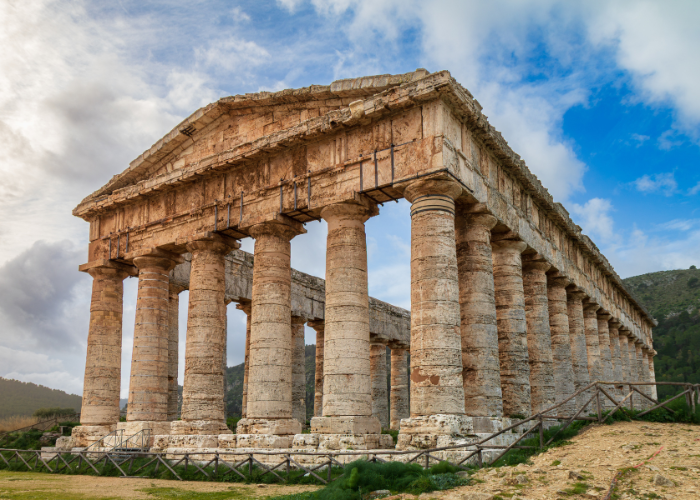
“There were various cancellations in April and May, particularly from the Australian market. This was due to stopovers in Dubai and the Middle East; the uncertainty surrounding the international situation has affected travel. Then there were concerns about costs and flight connections.” For Dimensione Sicilia the main target markets remain the United States, Australia, Canada, Argentina, France and Spain and, more generally, the English, Spanish and French-speaking markets. “Brazil is a very interesting new development. Following our participation in a trade fair there was immediate and very positive interest, which has led us to view this market with great attention and promising prospects.”
“We are seeing increasingly significant growth in last-minute bookings, including for groups and from international markets. We used to work with much longer booking lead times, but this year bookings are being finalized closer and closer to departure dates. This is a significant shift in travel habits and, as tour operators, we must be increasingly flexible and ready to adapt.” Dimensione Sicilia’s philosophy remains one of bespoke service: “We continue to create bespoke itineraries, tailored to the needs each individual customer. We get many requests for quotes based on itineraries generated using artificial intelligence, which naturally must then be verified, corrected and adapted to the reality of the destination. But we see AI as useful, particularly for speeding up certain operational processes, without, however, compromising the value of human experience and advice.”
Among the new features are the guaranteed winter departures for “Sicilian Secrets,” with themed packages for the Feast of the Immaculate Conception and New Year’s Eve. “Particularly interesting is the combination of Carnival and the Feast of Saint Agatha. This year the two dates coincide and we’ve created a package that brings together two of Sicily’s most important and evocative festivals.”
“Our clients, who come mainly from the United States and Canada, also ask us for tailor-made itineraries, and in such cases we are able to organize services and trips throughout Italy. Our core business, however, concentrates on Italy’s lakes, with Lake Como taking centre stage,” says CEO, Richard Rigamonti. Another important customer base is European travellers, although those from countries neighbouring Italy tend to seek bespoke experiences but arrange their own transport. “We offer more than 130 of these tours, ranging from those aboard all kinds of boats to visits to dairies or wineries to enjoy experiences centered on food and wine, culture or sporting activities,” adds Rigamonti.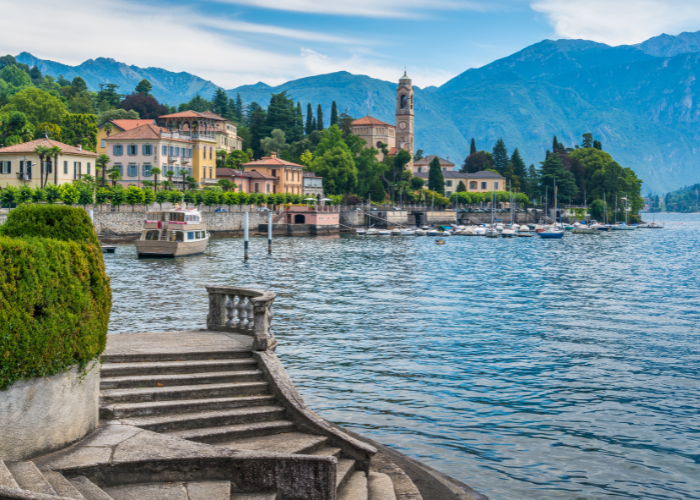
Rigamonti’s clientele is from the upper-middle market; for those arriving from overseas, the organized tour necessarily spans several days and consists of a series of services designed to reveal the authentic spirit of the region. “Some 92–93% of our business is with foreign clients, but we also work with pre-formed groups of Italians, who generally come to us for individual services.” One of Rigamonti Travel Company’s key strengths is its 24-hour support: “We have a phone number that is always available to contact, and we are able to handle any issues like those relating, for example, to overcrowding in small towns which are overrun by tourists during the summer months.”
After a brilliant start to 2026, Rigamonti experienced a lull due to the temporary standstill in Middle Eastern markets. “Following the cancellations we faced in May and June, the season has picked up again, and the tourist flows, particularly from the Western world, should help us close the year at the same levels as 2025. All the more so as we are now beginning to see some recovery from the Middle Eastern markets.” The outlook is therefore optimistic, and the target of some10,000 customers in total - as in 2025 - seems an attainable goal once again this year.
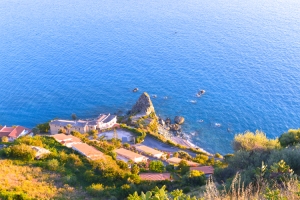
The first half of 2026 saw a significant increase in tourism in Italy, with an overall rise in arrivals of 4.43% compared with the same period in 2025. This was reported by the Italian Ministry of the Interior, which also highlighted the regions that showed the most significant results: Calabria: +10.54%, Umbria: +9.7% and Piedmont: +9.22%. Other regions such as Sardinia (+8.24%), Apulia (+7.43%) and Liguria (+6.56%) also contributed to this positive trend.
With regard to arrivals from abroad the increase was 6.45% over 2025. The regions that benefited most from the boost in international visitors include Calabria (+23.19%Puglia (+14.63%), Abruzzo (+14.04%), Molise (+13.14%), Basilicata (+11.55%), Sardinia (+11.44%) and Piedmont (+10.38%).
These figures give pause for thought and could signal a change in direction, with a move towards "lesser-known" destinations compared to the most prestigious cities and the best known and most sought- after regions. We shall see whether the figures for the second half of the year confirm a trend that could redistribute tourist flows more evenly, while benefitting lesser-known areas and local economies.
Combined with an extension of the peak seasons, this trend could mark a turning point set to develop further in years to come. Meanwhile, regions such as Calabria, Abruzzo, Molise, Basilicata, Piedmont and Umbria are reaping the rewards of a tourism policy that has successfully generated value.
Isabella Cattoni
Journalist
It has never been a secret that Italian tourists, for better or worse, are in a league of their own compared to their international counterparts. But perhaps the differences have never seemed more significant than they do right now.
While in other countries people have resumed booking summer holidays, in Italy tour operators and travel agents are struggling to sustain even the slightest recovery. End customers, fuelled by an excessively alarmist and sensationalist media campaign, are holding off on booking, fearful of not being refunded or of not being able to return home.
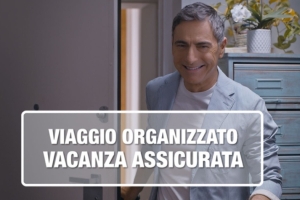
So urgent measures are required to explain that the guarantees offered by organized tour operators protect travellers from any unforeseen event, effectively ensuring ‘worry-free’ holidays. Many tour operators that have launched ad hoc campaigns, and the Italian Ministry of Tourism has also stepped in with ‘Organized travel, guaranteed holiday’ to drive home the importance of relying on travel professionals for protection, assistance and safety.
This is a commendable step, though criticism has been voiced from various quarters, as it should not be an isolated example but part of a comprehensive operational plan in collaboration with those who truly understand the challenges of the sector. The risk to be avoided at all costs is that the more dynamic international markets will snap up allotments and services in advance. And that when the Italian market finally recovers, the accommodation and transport needed to satisfy an increasingly demanding clientele may no longer be available.
Isabella Cattoni
Journalist
TH Group continues to expand its portfolio with the Th Samedan-Hotel Bernina 1865, in the Engadine in Switzerland, and the TH Perugia-Castello di Monterone on the outskirts of Perugia.
Very close to St. Moritz
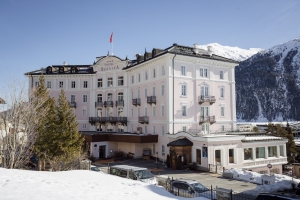
The new acquisition in Switzerland is a strategic step in TH Group’s mountain development strategy. Just a few kilometres from St. Moritz, the new Th Samedan-Hotel Bernina 1865 is a historic Alpine residence that tells a story spanning over a century and welcomes guests into elegant, atmospheric surroundings. “We are delighted to become part of the TH Group, a partner that has shown sensitivity towards the historical identity and value of this property. The hope is that this collaboration will further enhance the hotel’s connection with the Engadine region, whilst preserving the authentic character and atmosphere that have always distinguished it,” says Dante Mazzitelli, owner of the Hotel Bernina 1865.
A medieval building just outside Perugia
TH Group also announces the addition of TH Perugia-Castello di Monterone to its urban portfolio, a medieval residence where stone, frescoes and historic architecture coexist with contemporary comforts. The castle has 18 rooms, each one unique, furnished with antiques, handcrafted details and references to the history of the place, from the Secret Room, the Dragon Room and the Etruscan Room, to panoramic terraces with views over the Umbrian valley and the skyline of Perugia.
Further developments and dedicated innovations
“These acquisitions are a further step in TH Group’s growth journey and reinforce our vision of hospitality that is increasingly experiential and rooted in identity. TH Samedan-Hotel Bernina 1865 and TH Perugia-Castello di Monterone form part of a strategy that sees us enhancing historic residences of great charm. These latest properties join those already in our portfolio such as the TH Madonna di Campiglio Golf Hotel, the TH Borca di Cadore-Park Hotel Des Dolomites, a historic residence in the heart of Cadore, and the TH San Martino di Castrozza-Majestic Dolomiti. This is a segment which will be the focus of further developments and dedicated innovations in the near future, alongside our five-star offering,” says Salvatore Piazza, TH Group's general manager. TH Perugia has been open and operational since April, while TH Samedan is already available on the group’s commercial channels and will open its doors at the end of June.
Tailored excellence
Developed through a careful analysis of guests’ needs at AG Hotels’ properties, the company, founded in 2011, aims to build excellence in hospitality, providing personalized support to all players in the high-end Italian hotel sector, from individual hoteliers to investment funds, family offices and small hotel collections.
Opening doors to key international markets
Each client is assigned a dedicated team and together they oversee the project, developing it through every stage in order to maximize growth by cutting out the middleman on many internal services, which are delegated to AG Hotel Consulting. “The model is a success, just consider that from the 15 contracts signed in 2023, we now have a portfolio of 35 4-star and 5-star properties of various types, and the aim is to reach 70 by 2030," says COO Pietro Moretti who added that the selection focuses on boutique hotels with up to some 100 rooms and on high-end properties in general. "Underpinning the project are economies of scale and the strength of the AG Group brand, which allows us to leverage existing synergies with AG Hotels and AG Boutique Journey, our in-house DMC that opens doors to key international markets.”
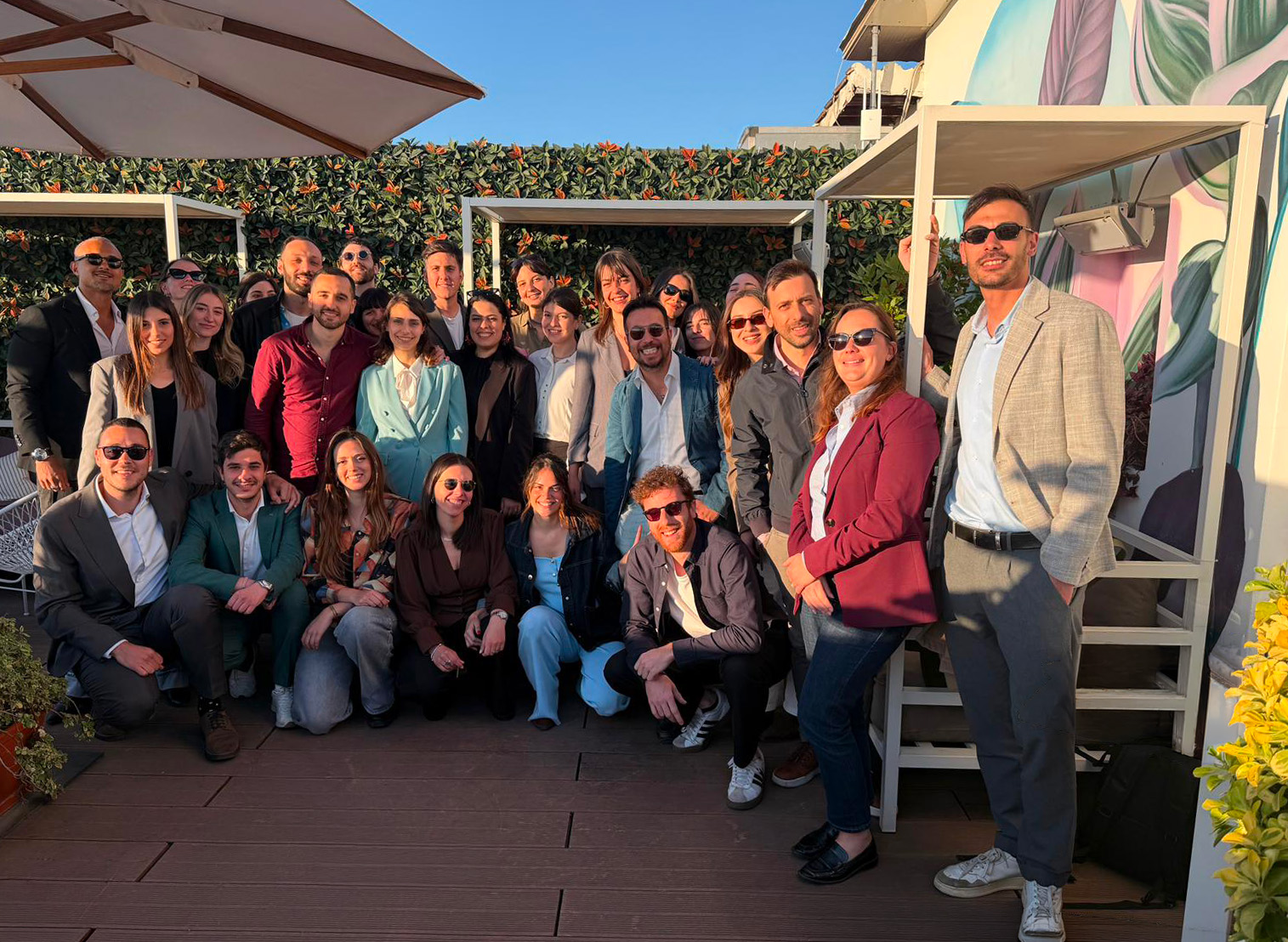 AG Hotel Consulting Team
A dedicated task force
Through a task force dedicated to each specific client, AG Hotel Consulting “develops all the key elements required to support a structured, multi-phase growth strategy” tailored to the individual’s needs in a strictly bespoke manner. “We apply the same business model used for our own properties, offering representation at the main industry trade fairs, as well as revenue, marketing and partnership agreements consultancy”.
The owners retain full decision-making autonomy
“We optimize clients’ websites through targeted digital marketing strategies, develop valuable relationships supported by a very extensive commercial database, and ensure maximum visibility for the properties we represent. A comprehensive service, above all tailored to the client’s actual needs, assessed and agreed upon following a thorough analysis of each individual situation.” The only aspect that AG Hotel Consulting deliberately does not take on is the administrative side: “That remains with the owners, who thus retain full decision-making autonomy,” explains Moretti.
Two management formats
From an operational perspective Moretti refers to two different management formats. “The Distribution Plus formula is aimed at hotels already in operation, interested in improving profitability and performance through qualitative growth. This model offers a range of services and opportunities for improvement in the areas of sales representative, revenue, digital marketing and social media communication, to name but a few of the aspects covered.” For new properties AG Hotel Consulting offers Manchising, “which literally combines the solidity of management with the flexibility of franchising. It is an ideal formula for newly opened hotels, start-ups or establishments requiring strategic repositioning - explains Moretti ".
"AGHC - he continues - -offers them comprehensive consultancy, including for example, a structured database, more in-depth commercial support, technical assistance and support with bookings, as well as social media communication initiatives”.
Know-how honed over more than 25 years
“All activities are carried out by an operational team that works continuously, coordinated by one of our operations managers who liaises with the client’s front office. Under this model, back-office services are managed directly by us, ensuring significant optimization of costs and processes.” A key strength of the AGHC model is being part of a group of hoteliers with know-how honed over more than 25 years of experience in the high-end hospitality sector. “We speak the same language as our clients, and this allows us to create vibrant and dynamic operational synergies that can optimize performance to work on long-term projects.”


The value of training
Another issue particularly close to AG Group’s heart is training. “Our ambition is to establish an Academy, a school that can train young talent across the various fields of the hospitality industry, from front office to F&B, to operations. Furthermore, we are working on fam trips and events in collaboration with tour operators, with the aim of bringing international operators to discover our hidden gems. You don't have to open a hotel in a famous tourist destination, even small, lesser-known locations can hold unique surprises, and AG Group is able to identify and promote these on an international scale.”
A winning business model
An example of this “win-win” business model is the Hotel della Piana in Avezzano. “Thanks to our joint efforts with the owners, who believed in AG Hotel Consulting and invested in creating a country urban resort, the average room occupancy rate in 2025 stood at 77%. This is a significant figure, especially given the property’s location in a small town in the province of L’Aquila. And this is the winning business model from which we would like to take inspiration."
Advertorial
It is much more than just a catchphrase, and in Italy too it is becoming an established trend: the luxury market is the only one that continues to attract travellers and, even in challenging times such as these, manages to make a significant contribution to the revenues of organized tourism operators.
The topic remains highly relevant, and examples are multiplying. For years, a historic brand such as Club Med, with its Exclusive Collection, has pursued an upward repositioning that has yielded tangible results in terms of revenue and, above all, profit margins.
The presence of brands created specifically to offer top-tier products within groups such as Nicolaus-Valtur or Th Group is now well established. In the case of the Nicolaus group, the Valtur Lifestyle collection was conceived, an upscale line that complements the Raro brand, the top-of-the-range offering from Nicolaus.
Within the Th Group, alongside Th Resorts and Baobab, Markando has coexisted for years; though less well-known than the other brands, it is able to fulfil its role as an organzer of high-end tailor-made holidays. One of the latest developments concerns Veratour, a long-established brand dedicated to ‘Made in Italy’ resort holidays. Here too, the tour operator is expanding the Linea segment, dedicated to bespoke travel, with the luxury Aura Wellness Resort collection.
All things considered, an increasing number of tour operators are determined to focus on a segment which, even in times of general market difficulty, manages to deliver satisfaction and have a positive impact on margins and advance bookings.
Isabella Cattoni
Journalist
A robust recovery in inbound tourism
This is confirmed by Lorenzo Rossi, CEO of Beverly Travel and BookdiaFork, part of the Beverly Vacanze group. "This year we anticipate a robust recovery in inbound tourist numbers. The most promising markets include Asia, particularly China and India. These are joined by European destinations, and the United States continues to be a key market, with strong potential for luxury tourism. Among emerging markets, Latin America and certain regions of Africa are gaining attention, thanks to themed packages.”
Greater demand for last-minute bookings and short stays
Beverly’s strategy focuses on quality tourism rather than simply increasing numbers. “We believe that offering unique and well-curated experiences is fundamental. We aim for ‘fewer but better’ to attract tourists willing to invest in memorable experiences. And although volumes still matter, we are aiming for more responsible and sustainable tourism that prioritizes the customer experience.” As for the ongoing crisis in the Middle East: “Traditional destinations may see a decline in numbers, while lesser-known places are gaining popularity. We are also seeing an increase in demand for last-minute bookings and short stays, reflecting a shift in travellers’ priorities and flexibility.”
The new BookdiaFork app
Among the new products designed to boost bookings, Rossi highlights experiential packages, combining gastronomy, culture and outdoor adventures, and with a particular focus on sustainability, with green activities attracting conscious and responsible tourists. Constant technological updates are also essential: “We are working on apps to improve customer interaction and experience, from booking to sharing feedback. The vehicle for this will be our new BookdiaFork app, available to download from the App Store and Google Play; it is a platform for booking tables, menus and events instantly.”

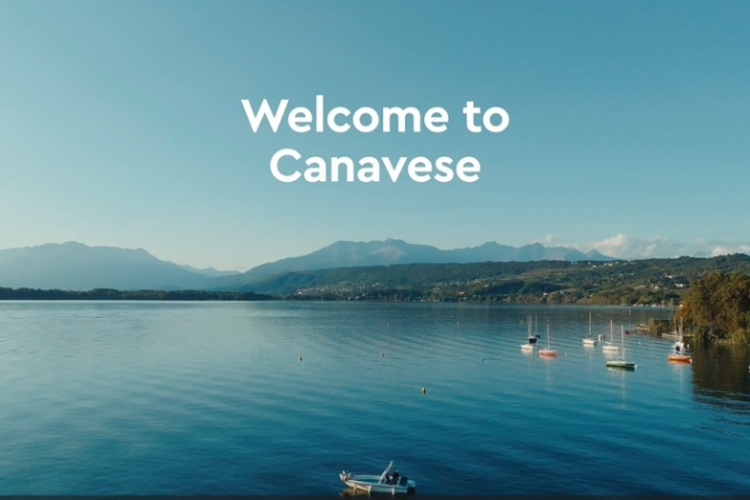
Welcome to Canavese, an unexpected corner of Piedmont where …
842Welcome to Canavese, an unexpected corner of Piedmont where …
842
