




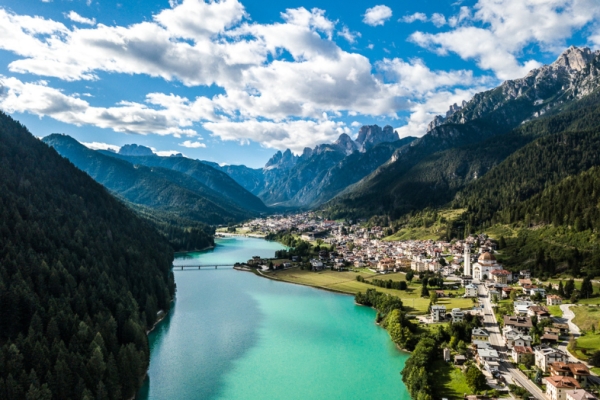
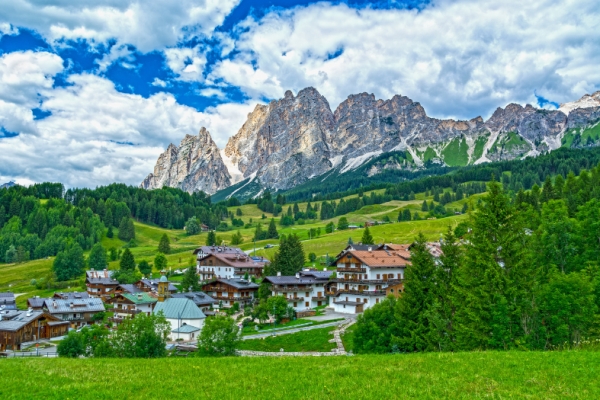
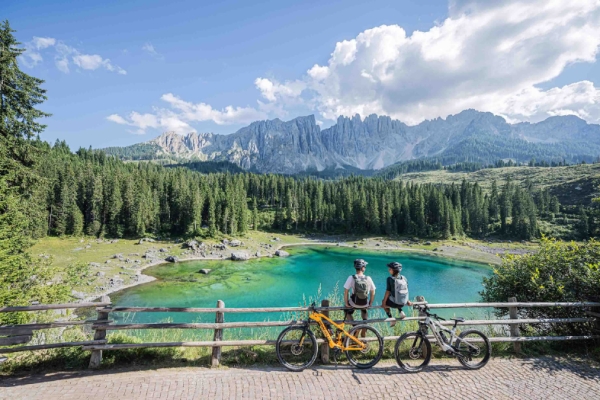
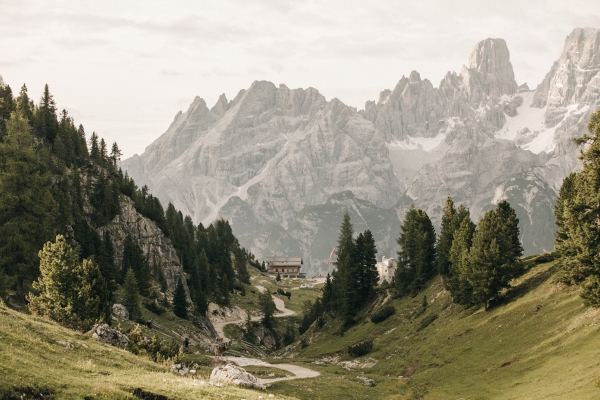







The Lech de Ciampedel seasonal lake, that forms and disappears depending on the seasons and weather conditions, is located in Vallelunga in the Val Gardena a Dolomite valley in the Alto Adige region.
Excursions to see the vanishing lake every Friday in June
This lake reforms every year when the snows thaw, shining in the morning sunlight and remaining visible for only a few weeks, before it disappears again. The people of the Val Gardena and the lucky guests who stay during those weeks love to take the easy walk to admire it, stopping to observe the turquoise waters and taking unique photos. The hike to admire the lake is seven kilometres long (45 minutes from the entrance to Vallunga), and runs all the way to the canyon valley. As part of the Experience Val Gardena Active programme, excursions are organized on Fridays in May and June. The meeting point is at 8:00 a.m. at the Selva Val Gardena Active & Events Office, and for confirmation, it is best to enquire first by phone or email.
Crystal-clear waters, picnic areas and incredible views
The Lech de Ciampedel is quite unique, but the Alpine lakes and other bodies of water in the Val Gardena are equally beautiful and certainly more enduring. With crystal-clear water, picnic areas and incredible views these Alpine lakes are an ideal destination and a great choice for a refreshing break. For example, the Monte Pana aquatic biotope, has a Kneipp path. While children enjoy watching the fish or dare to dip their feet in the cold water, adults can relax on the wooden deckchairs surrounding the lake and sunbathe.
Cable cars help to reach these Alpine lakes
Another example is the Lech Sant, the largest lake on the Mastlé Alp. The name derives from an old local legend according to which a church once stood on the site of the lake. When God punished the peasants for desecrating the place of worship by holding festivals there, he unleashed terrible torrential rains, which eventually caused the church to collapse and the subsequent flooding of the area. A three and a half hour walk separates the Lech Sant from S. Cristina, but the journey can be shortened by taking the Col Raiser cable car up the first section. Also worth mentioning is the Lech da Iman, at Alpe Mastlè, formed in the Alps during the last Ice Age and located at 2,200 metres, within the Puez-Odle Nature Park. The waters are freezing cold but visitors can relax on the banks which provide a comfortable, sunny spot for a break.
Many of the lakes are shrouded in legends
Lake Crespëina, on the Puez Plateau, is some 160 metres long and 70 metres wide and is shrouded in legend. It is said to be the home of a fierce dragon, which became harmless thanks to the many wooden crosses placed around the lake by locals. It can be reached after a walk of about 3 hours, from the Dantercepies cable car station following path No 2A in the direction of the Crespëina Pass and then along the scenic Alta Via route No2, or from the Puez hut towards Passo Gardena. On the shores of Lake Pisciadù stands the Pisciadù Refuge, which was built in 1902. Here we are in the heart of the Gruppo de Sella range and the path to reach it on foot is No 666, from Passo Gardena through Val Setus, or, on the famous and challenging Via Ferrata Pisciadù that leads to the peak of the same name.
The Lech dl Dragon disappears and then returns
Finally, the Lech dl Dragon, a progliaciale lake is located at an altitude of 2,680 metres on the Sella massif. It too fills up only occasionally; for example, it disappeared completely in 1970, only to reappear between 2003 and 2007 and disappear again two years later. The lake's periodic disappearances and appearances have fuelled numerous myths and legends. According to tradition, a dragon once lived in Lech dl Dragon and only emerged from its waters on full moon nights. The animal's roar was so powerful that it could be heard as far as Passo Gardena. Actually the noise was probably produced by the activity of the glacial lake. It usually reappears after very snowy winters and can be reached in an hour's walking along an impervious and poorly signposted path.


