






Not currently operational in Italy
ETIAS is not currently operational in Italy. Italy is one of the 30 countries that will use the system, and this includes Italian airports, ports and other external Schengen borders, but for now the Italian ETIAS application system in not in operation. And neither is it operational in Europe.
The countries that will be involved
If someone is travelling to Italy today from a visa-exempt country such as the UK, US, Canada or Australia, they do not need ETIAS yet. If, for example, you are a British citizen flying from London to Rome, you don't need ETIAS today. But once ETIAS launches, you will need an approved ETIAS before travelling to Italy. The same situation applies across Europe. ETIAS is a single EU-wide system, rather than a national scheme, and will cover 30 European countries, including Italy, France, Germany, Spain, Greece and the other Schengen countries, as well as Iceland, Liechtenstein, Norway and Switzerland. At present, therefore, ETIAS is not actually working for travellers in any of these countries. Eligible visa-exempt travellers do not yet need to apply.
There will be a transitional and a grace period
The system is intended for citizens of countries whose nationals can currently enter the Schengen area without a visa, including the UK, United States, Canada, Australia and Japan. Once operational, travellers will have to obtain an electronic travel authorization before travelling to Europe. ETIAS is expected to cost €20 and normally remain valid for up to three years, or until the passport expires. ETIAS will also not become fully compulsory on its first day. After launch there will be a transitional period, followed by a grace period, allowing travellers and border authorities time to adapt. Consequently, if the current timetable is maintained, ETIAS is likely to become a normal and routinely enforced requirement during 2027 rather than immediately at the end of 2026.
Regular enforcement is expected in 2027
For Italy, therefore, the current position is clear: preparations are underway, but ETIAS is not yet functioning for travellers. This does not mean that Italy is behind the rest of Europe as the system's implementation is coordinated at EU level. The crucial dates for travellers are therefore the European launch in late 2026, and the expected move to regular enforcement in 2027.
SAC, the company that manages Catania Airport, has selected and shortlisted 10 operators for its privatization process.
The ten companies were selected from 14
Selected from the 14 expressions of interest received from Italian and international operators, they are Corporacion America Airports S.A., Royal Schiphol Group, Mundys S.p.A., Adani Airport Holdings Limited, Save S.p.A., 2I Aeroporti S.p.A., Mag Overseas Investment Ltd, Oman Airports Management Company, Macquarie European Infrastructure Fund and Vinci Airports s.a.s.
At stake is at least 51% of SAC’s share capital
In the second stage of the procedure, the selected bidders will be invited to participate in the subsequent stages in accordance with procedures and timelines to be communicated in line with the principles of transparency, equal treatment and the protection of competition. At stake is at least 51% of SAC’s share capital.
Identifying a suitable partner
“The conclusion of this first stage is a significant step in a process that confirms the high level of interest shown in our airport system and the confidence in its development prospects. An equally important phase now begins, in which the aim will be to identify the partner capable of presenting the most robust business plan, able to support the investments needed to strengthen the competitiveness of Catania and Comiso airports, whilst preserving their strategic role for Sicily in the public interest,” said Anna Quattrone and Nico Torrisi, chairperson and chief executive of SAC.
Catania and Catania Airports: strategic assets for Sicily
“The Catania and Comiso airport system is a strategic asset for the whole of Sicily. The high level of national and international participation recorded in this initial phase demonstrates the strength and appeal of an infrastructure that can continue to be a driving force for development, employment and competitiveness,” said Enrico Trantino, mayor of the Municipality and Metropolitan City of Catania.
Italy has no shortage of world-famous stages. La Scala. La Fenice. Teatro San Carlo. The Arena in Verona. Yet its newest UNESCO World Heritage recognition belongs to a very different cast of characters: ten remarkable historic teatri condominiali local theatres in little hill towns in the Marche, Umbria and Emilia-Romagna regions.
At first glance they look quite unassuming and have modest façades. But step inside and you realize that heritage is not always monumental: you find gilded boxes, painted ceilings, velvet seats for at the most a few hundred people, perfect acoustics and the unmistakable intimacy of the Italian theatre. Spaces that seem too grand for the towns that contain them, and yet somehow belong there completely. The UNESCO recognition comes not only for all this beauty, but because, unlike Europe's great royal opera houses, these little theatres were built, financed and managed collectively. An astonishingly modern idea for its time: art not as the preserve of a few, but as a civic investment shared by all.
UNESCO's decision recognizes ten remarkable examples of local theatres in central Italy (eight of them are in the Marche) in Jesi, Ascoli Piceno, Offida, Fermo, Macerata, Fabriano, Urbania, San Severino Marche, Sant'Agata Feltria and Spoleto. Together, they tell a story that extends far beyond architecture: one of collaboration, identity and a uniquely Italian understanding that culture thrives when it belongs to everyone.
For travellers the new UNESCO listing shines light on another Italy - one far removed from the country's iconic landmarks. These theatre towns invite you to slow down, wander medieval streets, linger over lunch in a family-run trattoria and chat with locals as you discover places where heritage is deeply woven into everyday life. At a time when overtourism dominates the conversation, UNESCO has quietly pointed us towards destinations where authenticity still takes centre stage.
At first glance, they seem quite unassuming and have modest façades. But step inside and you realize that heritage is not always monumental as you find gilded boxes, painted ceilings, velvet seats for at the most a few hundred people, perfect acoustics and the unmistakable intimacy of the Italian theatre. Spaces that seem too grand for the towns that contain them, and yet somehow belong there completely. But the UNESCO recognition comes not only for all this beauty, but because, unlike Europe's great royal opera houses, these little theatres were built, financed and managed collectively. An astonishingly modern idea for its time: art not as the preserve of a few, but as a civic investment shared by all.
UNESCO's decision recognizes ten remarkable examples in central Italy (and eight of them are in the Marche) including theatres in Jesi, Ascoli Piceno, Offida, Fermo, Macerata, Fabriano, Urbania, San Severino Marche, Sant'Agata Feltria and Spoleto. Together, they tell a story that extends far beyond architecture: one of collaboration, identity and a uniquely Italian understanding that culture thrives when it belongs to everyone.
For travellers the new UNESCO listing shines light on another Italy - one far removed from the iconic landmarks. These theatre towns invite you to slow down, wander medieval streets, linger over lunch in a family-run trattoria, chat with local residents as you discover places where heritage remains woven into everyday life. At a time when overtourism dominates the conversation, UNESCO has quietly pointed us towards destinations where authenticity still takes centre stage.
 Pamela McCourt Francescone
Executive Editor
Focused on culture, gastronomy, wellness and lifestyle
Founded by Micaela Occhioni and Tania Paganoni, Viatelier combines an American commercial presence with on-the-ground expertise in Italy, creating tailor-made itineraries focused on culture, gastronomy, wellness and lifestyle. The business operates through its US hub in San Diego where Occhioni oversees commercial development, client relations and partnerships, while in Rome Paganoni leads product development, supplier relationships and itinerary design. 
"Journeys built around people, places and privileged access"
Viatelier is more than just another luxury travel planner; it builds journeys through a carefully curated network of direct sources offering experiences that are difficult to access through conventional distribution channels. "We're not selling destinations, what we do is design highly personalized journeys built around people, places and privileged access."
A DMC-style partner delivering bespoke travel
For international luxury travel advisors and tour operators Viatelier is a DMC-style partner with a strong understanding of both the North American luxury market and how to deliver bespoke travel in Italy. The founders regularly travel throughout the Italian regions identifying emerging destinations, new hospitality partners, private guides, art historians, sommeliers, chefs, boutique hotels, historic residences, wineries and artisan producers to ensure authentic experiences. 
Journeys for discerning international clients
As demand continues to shift towards experiential, wellness-led and culturally rich travel, the Viatelier is fast positioning itself as a specialist that takes the best of Italy's diverse regional offer and creates highly customized journeys for discerning international clients.
ENAC has approved ITA Airways’ request to raise the weight limit for pets allowed in the cabin on dedicated domestic flights from 10 to 30 kg. This exemption applies exclusively to domestic routes operated with certain aircraft models, in accordance with the approved cabin configurations and in full compliance with the technical and safety requirements defined by ENAC.
“This is a historic achievement for our country’s civil aviation sector, which will soon serve as an example for the entire industry,- said ENAC President Pierluigi Di Palma. -Allowing dogs to be carried on board as passengers, rather than in the hold as parcels, is a milestone that calls for careful reflection on the outdated technical regulations which still govern our sector, hindering its evolution. It makes air transport not only the driving force of the global economy, but also a model that must link innovation to a well-established tradition, ensuring mobility for billions of people through the interconnection of the world’s most diverse civilizations and cultures, enabling us to overcome age-old prejudices and thus paving the way for peaceful coexistence.”
The implementation of this measure will be accompanied by ongoing operational monitoring, the results of which will be shared with EASA, the European Union Aviation Safety Agency.
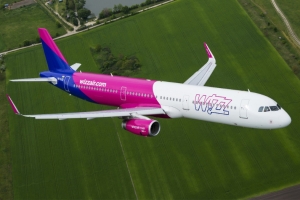
The route to Milan will operate twice daily, every day, from 25 October, and the route to Turin every Monday, Wednesday, Thursday, Friday and Sunday, also from 25 October. With these two new additions, the low-cost carrier is further expanding its domestic network to 26 domestic routes.
"We are continuing to invest in the Italian market, strengthening a key strategic route that is in extremely high demand. This commitment to the market enables us to meet the needs of business travellers, as well as those visiting friends and family, and anyone wishing to discover Italy’s beauty from the north to the south of the peninsula. Our aim is to continue developing an increasingly extensive, accessible and competitive network, serving travellers all year round and offering ever more efficient connections between key destinations. With 26 domestic routes, we now offer our most extensive domestic network ever," said Salvatore Gabriele Imperiale, Wizz Air's corporate communications manager.
For 2026, the airline operates an Italian network of 322 routes to 33 countries. In the summer season alone, the low-cost carrier is offering 20.3 million seats, which is a 43.6% increase over summer 2025. The airline has 44 aircraft based in Italy and has already operated 64,000 flights this year, up 24% on the same period last year.
Discovering Basilicata, the Ionian Coast and ancient Magna Graecia
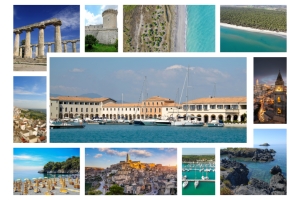
Basilicata, situated between the Tyrrhenian and Ionian Seas, is a region of mountains, hills and natural landscapes. A land of ancient civilizations, from Magna Graecia to the Romans, it boasts a rich historical, cultural and gastronomic heritage. Many know Basilicata for the UNESCO city of Matera, but it is a diverse destination suitable for year-round tourism and an ideal starting point for longer itineraries beyond the summer season.
Policoro and its coastline
Policoro, on the Ionian coast, stands on the site of ancient Heraclea and combines history, the sea and nature with an Archaeological Park, the Siritide Museum and the WWF Nature Reserve. The Lucanian Ionian Coast has sandy beaches, pine forests, and important archaeological sites, making it one of the region’s main tourist destinations. In the town centre, visitors can see the 18th-century Policoro Castle and Piazza Eraclea square which is its vibrant heart, while its strategic location serves as an excellent base for exploring nearby destinations such as Bernalda, Pisticci, Nova Siri, Metaponto and also Matera.
A travel agents' fam trip from 15 to 18 September
From 15 to 18 September, Basilicata and the Ionian Coast together with ItaliAbsolutely will host a group of international buyers from the DACH region, the UK, Poland, the Czech Republic, Slovakia, Lithuania, Latvia, Estonia, Norway, Sweden, Finland, Romania, Bulgaria and Hungary. They will discover the Ionian Coast, from Metaponto to Nova Siri, a fascinating yet under-the-radar coastal destination in one of Southern Italy's most authentic and still largely undiscovered areas. The event is organized by APT Basilicata in collaboration with ItaliAbsolutely.
THE PROGRAMME
Tuesday, 15 September 2026
Participants must arrive at Bari Airport before 12 noon to transfer to Policoro and check into their hotel. The afternoon begins with a guided tour of Policoro, and surroundings. The day concludes with a welcome dinner.
Wednesday, 16 September 2026
Breakfast and a visit to the 5-star Marinagri Resort followed by a two-hour sailing excursion from Marinagri Marina to experience the Ionian coastline from the sea. The programme continues with a guided visit to the WWF Bosco Pantano Nature Reserve before lunch with local cuisine and wines. In the afternoon, participants will have some site inspections. Dinner and overnight.
Thursday, 17 September 2026
Breakfast and site inspections folloews by a hands-on cooking class. Lunch. The afternoon afternoon dedicated to other discoveries in the area. A farewell dinner will conclude the day.
Friday, 18 September 2026
The final morning will include a B2B workshop and networking lunch, providing opportunities for buyers and local tourism operators to establish new partnerships and discuss future collaborations.
How to participate
All the services are offered by the hosts for one representative per agency in a room for single use, and the flights will be partially reimbursed after the end of the fam trip. Participants must arrive at Bari Airport no later than 12 noon on 15th September. There will be one transfer per day for arriving agents and, on 18th September one transfer back to Bari airport to connect with flights departing after 17.00 in the afternoon. Anyone who wishes to stay on and discover more of Basilicata may do so on their own account; ItaliAbsolutely will be happy to assist them with suggestions.
* The program may be subject to changes.
Limited availability – we recommend securing your registration as soon as possible.
⤑⤑ To join this event, please write to This email address is being protected from spambots. You need JavaScript enabled to view it.
Event organized by: 
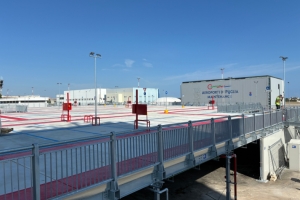
The new two-storey facility comprises 312 covered parking spaces on the ground floor and 299 on the first floor, with weekly rates starting from €6 per day. Each parking bay is the standard size of 5 x 2.5 metres, with ample space designed to ensure ease of access and manoeuvring for users.
“The opening of this new car park is a further step in the measures we are implementing to support the growth in passenger traffic and the demand for more efficient airport services.- said the chairman of Aeroporti di Puglia, Antonio Maria Vasile. “We are investing in infrastructure that improves the travel experience significantly, and ensures solutions accessible to all. Offering affordable parking means bringing our airports ever closer to meeting the needs of local residents, tourists and those using this service for business travel.”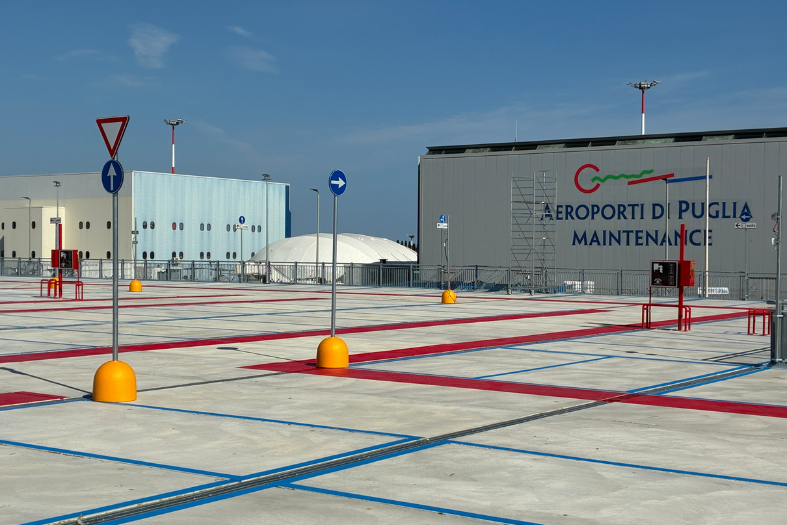
Management of the new facility has been entrusted to APCOA, one of the world’s leading companies in the sector, which carried out the work in accordance with the technical guidelines provided by the AdP Engineering team. The modern and functional car park is based on a system of load-bearing steel beams, which is entirely modular and demountable: a design solution that, as well as ensuring rapid construction, will allow for future extensions in line with changing demand and the airport’s development.
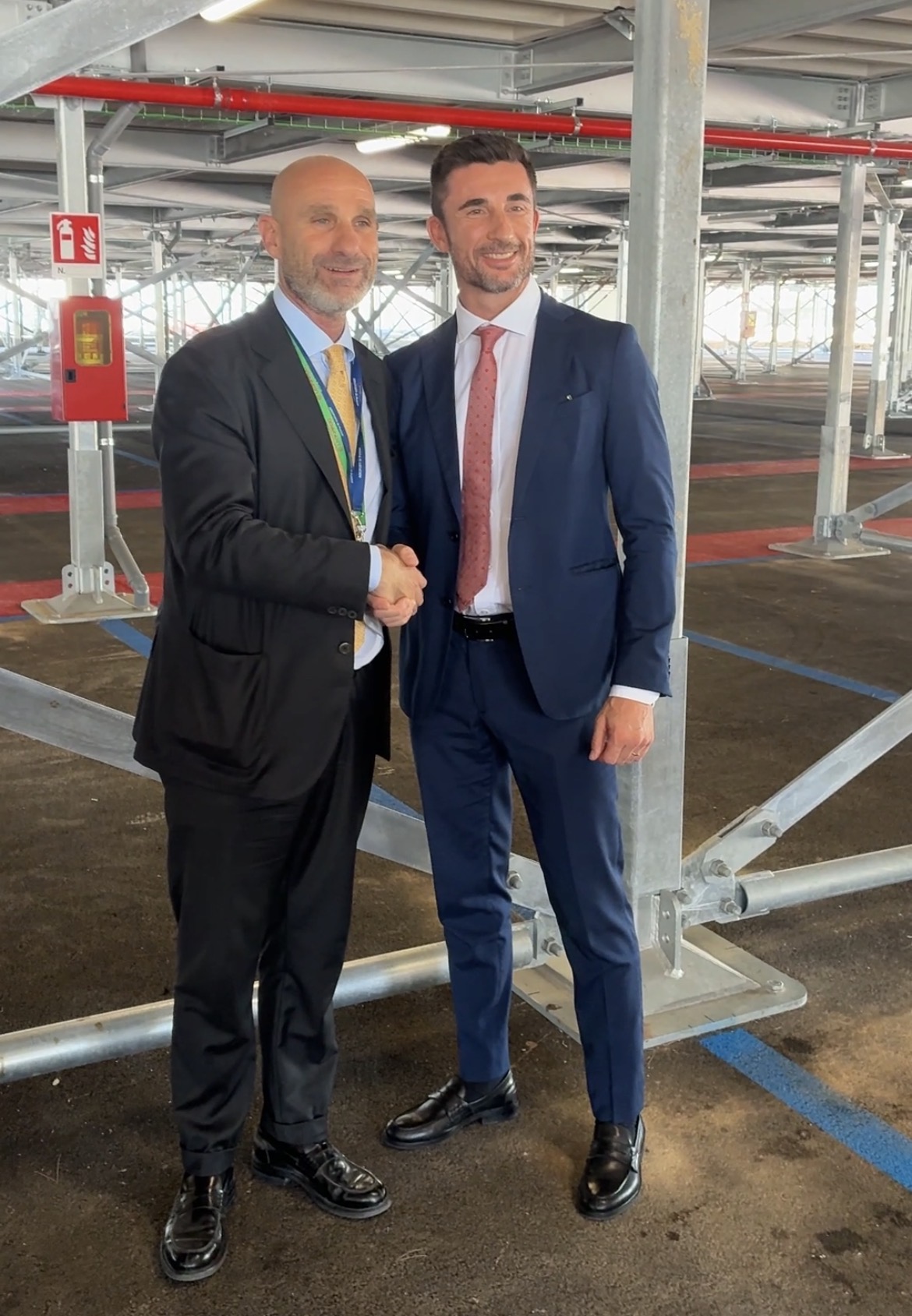 “This facility, with more than 600 new low-cost parking spaces, will bring the total number of low-cost parking spaces to around 1,000. This is more than a third of all the car spaces at the airport dedicated to low-cost passengers, said APCIA’s managing director, Andrea Grassi.- And, thanks to the fact that 300 car spaces are covered, we also offer a high-quality service at a low-cost price, because a car in the shade is a significant benefit. This project forms part of a much broader programme of works for some €8 million in which we are partnering with Aeroporti di Puglia. A car park that, years ago, might have seemed a long way from the terminal building is now brought closer to the Terminal via the covered pedestrian walkway, adding a high-quality service that was not available previously.”
The aim is to expand the opportunities available to customers and facilitate an increasingly seamless travel experience between air and rail transport. Members of both programmes can now convert Suma Miles into CartaFreccia points and vice versa, as well as gaining access to a wide range of benefits and perks, including the chance to redeem additional rewards such as air and rail tickets, and further opportunities and services provided by partners within their respective loyalty programmes.
Thanks to this partnership, Air Europa Suma members can convert their Miles into CartaFreccia points starting from a minimum of 2,000 Suma Miles, whilst CartaFreccia members can convert their points into Suma Miles starting from a minimum of 800 points. The conversion offer is available to members enrolled in both loyalty programmes, provided that the accounts in question are held under the same name.
“This partnership is an important step in the evolution of CartaFreccia, through which we continue to enhance the value of the programme by offering our members increasingly exclusive opportunities, including at an international level," said Mario Alovisi, Trenitalia's CMO & revenue management and CEO of Italia Loyalty. The collaboration with Air Europa expands the ways in which CartaFreccia points can be used, introducing the option to convert them for airline tickets and thus travel to numerous destinations around the world. "Our objective remains the development of a loyalty programme that can accompanying customers throughout their entire journey, responding ever more effectively to their needs.” For the Italian market, this partnership is of particular significance because Italy has always been a strategic market for Air Europa. The airline connects Spain to Italy with direct flights from its Madrid-Barajas hub to Rome Fiumicino, Milan Malpensa and Venice Marco Polo.



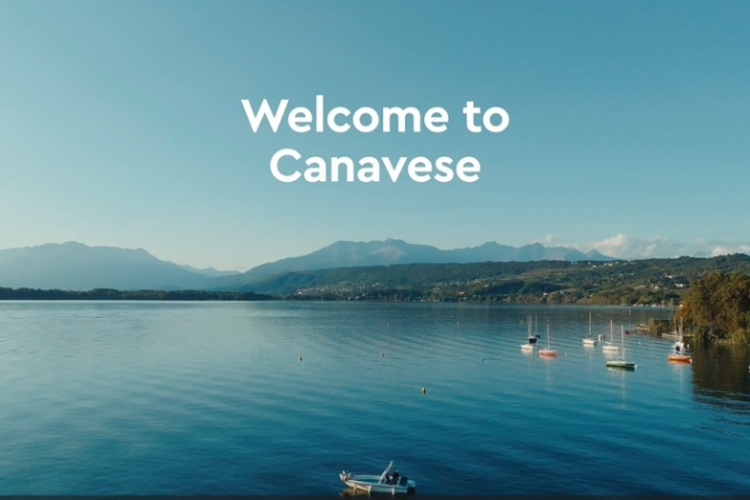
Welcome to Canavese, an unexpected corner of Piedmont where …
842Welcome to Canavese, an unexpected corner of Piedmont where …
842
