




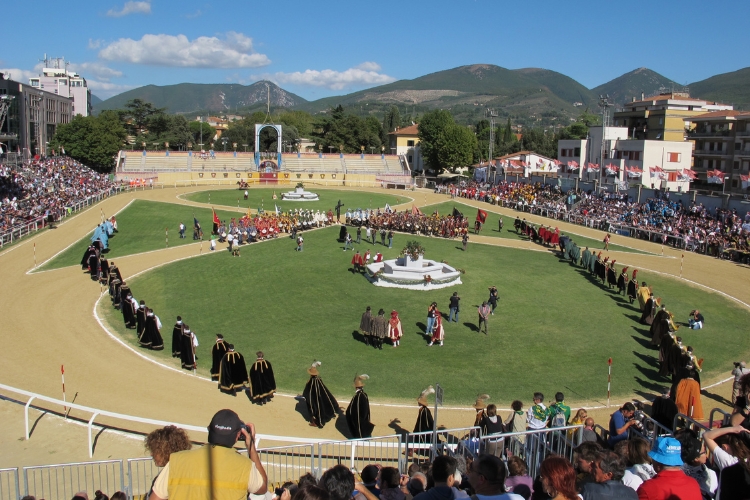









The Giostra della Quintana pageant in Foligno, Umbria, now in its 80th edition, takes Foligno in the province of Perugia back in history to the 17th century.
This year the joust is on 13 and 14 September
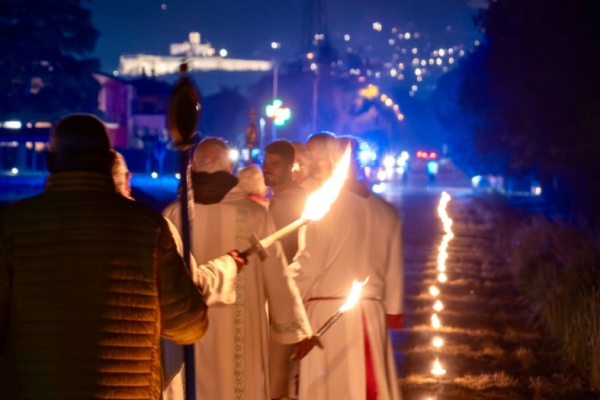
This palio is one of the most structured historical chivalric pageants in Italy, and is held twice a year, in June and September. This year the challenge was on 13 and 14 June, and the Rematch sill be on 13 and 14 September. The two days are divided into the “Corteo” or procession and the “Giostra” or joust. The Corteo represents the scenic and spectacular synthesis of the entire event, whil the following day, in reduced form, it accompanies the districts to the Campo de li Giochi playing field. The evening before the Joust, more than 600 participants in baroque costumes take Foligno back to the past, parading through the city streets in costumes inspired by Spanish fashions between 1580 and 1620.
Side events from markets to banquets and music
The Giostra della Quintana is the most compelling and difficult ring joust held in Italy and indeed it is known as the “Olympics” of equestrian competitions. The event involves the ten city districts in a regulated equestrian tournament and, with its district subdivision, it extends to the entire city with historical taverns, costumes, themed menus and shows. The symbol of Foligno's Giostra della Quintana is the statue placed in the centre of the Campo de li Giochi representing the God Mars, known to many as Quintanone. During the festivities Foligno is enveloped in a 17th-century atmosphere, with many thematic side events like the ancient Fiera dei Soprastanti, the large market that has been held in Foligno since the 15th century. There is also a themed culinary competition that takes place between the ten city districts, consisting of a sumptuous Baroque banquet, with music, period instruments and historical dances.
Shops, museums and restaurants stay open late
The Baroque Night held in the historic palazzi of Foligno features musical concerts and the squares the scene of Baroque performances, with dancers, living statues, musicians and acrobats. It is celebrated on the night between Saturday and Sunday of the first week of the September edition of the Joust. On this occasion, the taverns of the Quintana Jousting districts, as well as the city's shops, restaurants and museums remain open until late at night with games, shows and music.


