


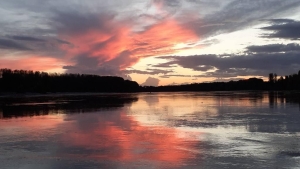




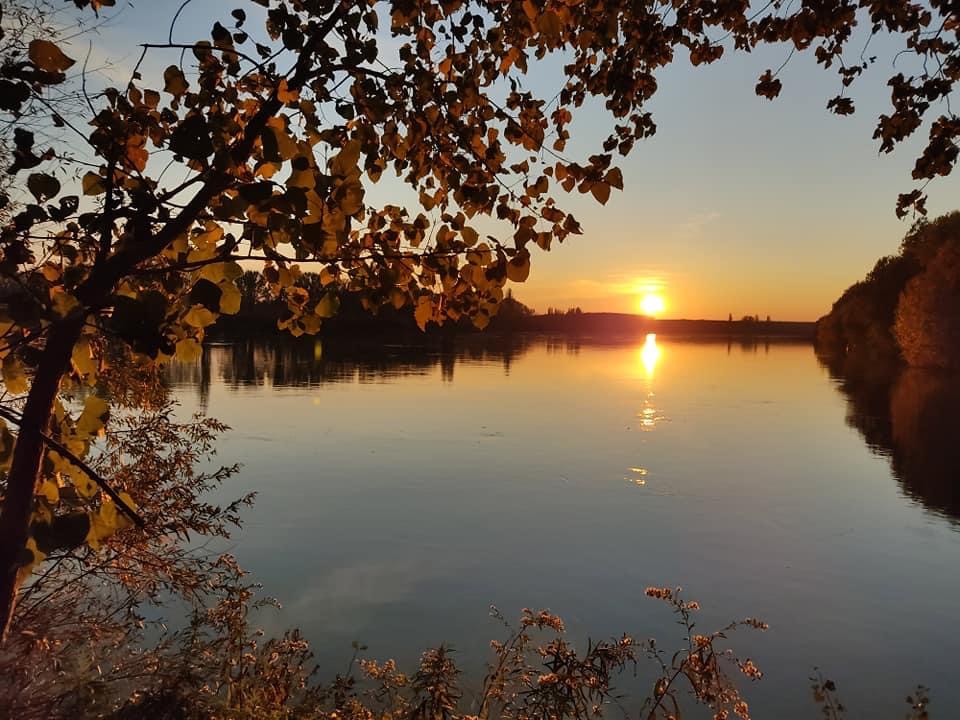
The Po Trail is an itinerary of 600 kilometres along the banks of the great river, starting from Pian del Re and ending in Pila. It is divided into four sections by the river’s evolutionary phases: birth, development, maturity and transformation. The route, which crosses Piedmont, Lombardy, Emilia-Romagna and Veneto can be tackled on foot, by bicycle and also in a wheelchair. The Po Trail was actually created by an amateur sports association of the same name, with the support of local sponsors.
Suitable for people with disabilities
Designed to be accessible to everyone from beginners to experienced walkers, and from families and younger groups to the elderly and people with disabilities, the flat ground and clear markers makes it ideally suited to this wider audience. The aim being to put the needs of non-professional walkers before those of experienced ramblers and trekkers.
Promoting a healthy lifestyle and suitable for all ages
The Po Walk is also aimed at using walking as a tool to convey the message of the Agenda 2030 action programme for sustainable development. Among the aims of this project we find:
- the rediscovery of the value of non-competitive sports and of a healthy lifestyle that respects the relationship between man and the environment.
- an inclusive itinerary that is suitable for all ages, even children and those with disabilities;
- the development of a sustainable and local tourist project in harmony with the environment, the community and local cultures;
- the enhancement of the territory nurtured by the Po, along with the river’s traditions, history and artistic heritage.
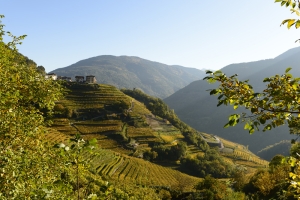
High up where vines grow clinging to tiny mountainside plots supported by dry-stone walls, some 300 heroic Cembra Cantina di Montagna winegrowers cultivate their grapes with tenacity and daily dedication, producing a sublime nectar. The charm of the Val di Cembra is matched only by its difficult orographic conformation: located to the north-east of the province of Trentino, the impervious hillsides and mountainsides of this valley are home to some of Italy’s most authentic vineyards.
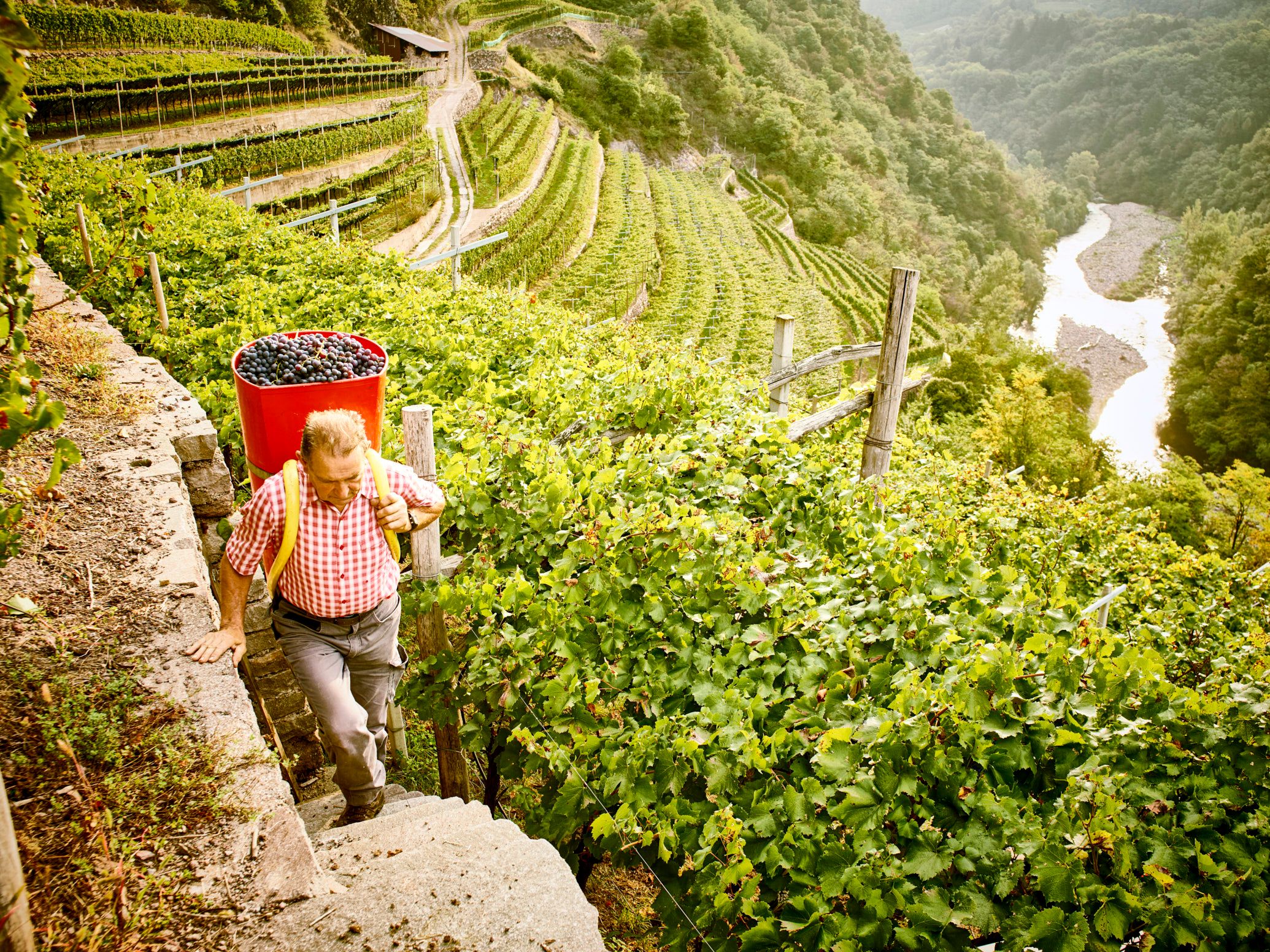 A region with 30% of its land devoted to winegrowing
The Val di Cembra extends over an area of 2,243 hectares, 30% of which is devoted to viticulture along vertiginous terraced hillsides. The origins date back to times when rural dwellers were forced to radically reshape mountains and hillsides, finding ways to carve patches of land out of the steep wooded slopes and using them for cultivation, especially of vines. Here viticulture has given a great boost to the local economy without destroying the natural landscape or the identity of the local population.
Stones that are a UNESCO World Heritage Site
In Val di Cembra there are 708 kilometres of dry-stone walls adding to the beauty of the valley and at the same time supporting its vineyards. Dry-stone walls are on the UNESCO Intangible Heritage List, and the terraces they create are an anthropic monument of inestimable value. The walls play a primary role in the prevention of hydrological disturbances including landslides, floods and avalanches and, at the same time, preserve the precious biodiversity in the vineyards resulting in the authentic expression of the harmony that exists between nature and the winemakers called to safeguard and enhance it.
An age-old tradition that is renewed season after season
This is how season after season, harvest after harvest, the winemaking tradition of the Cembra Valley is perpetuated. Many children and grandchildren of the winemakers choose to follow in their ancestors’ footsteps, starting to work in the family businesses from an early age. They proudly perpetuate the bonds with craftsmanship, bringing with them a breath of fresh air alongside new methods and technological innovations.
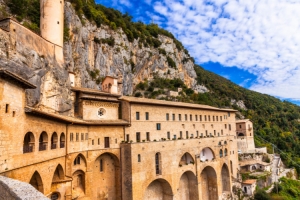
A 300-kilometre trail winding through the heart of Italy from Umbria, crossing Latium and coming close to the border with Campania. An itinerary of 16 stages in the footsteps of St. Benedict of Norcia linking the three main Benedictine sites: Norcia which is the saint’s birthplace, Subiaco where he lived for more than thirty years and founded numerous monasteries, and Montecassino where he spent the last part of his life and wrote The Rule.

In the footsteps of St Benedict and St Rita
The trail starts in Norcia, an enchanting town at the foot of the Sibillini mountains much loved by trekking enthusiasts and naturalists. We pass through small villages in beautiful natural settings from Cascia, where Saint Rita the patroness of impossible causes lived to Roccaporena where she was born. Then on to Monteleone di Spoleto, a fascinating medieval village standing on the edge of the Leonessan plain and Leonessa, at the foot of the Reatini mountains, which is a fusion of medieval and renaissance elements.
A region with strong links to St Francis
Plunging into the vast mountainous beech woods around Poggio Bustone, a town with many Franciscan links, we look out over the Valle Santa, the plain of the Velino river. From the papal city of Rieti we continue on our way to Rocca Sinibalda and Castel di Tora before encountering Pozzaglia, Orvinio and Mandela, delightful small towns in the Lucretili mountains. Then following secondary roads down to the Aniene valley we come to pretty Gerano and to Subiaco which is our first main stop.
Subiaco, a centre of spirituality, art and history
This town with its Benedictine links combines spirituality, history, art and nature. Some of the greatest artists of the fourteenth century worked in Subiaco and St. Francis of Assisi was a pilgrim there. The area was important for ancient Rome, as it was here that the capital had its main reserves of water, so today there are numerous Roman remains from the Claudius Aqueduct in Vicovaro, and the Anio Novus in Trevi, to Nero’s villa in Subiaco and the Roman arch in Trevi.
Montecassino, mother house of the Benedictine Order
Beyond Trevi we come to the Ernici mountains and to the picturesque medieval villages of Guarcino, Vico and Collepardo. We then head towards the Liri valley after a visit to the Casamari Abbey, a magnificent example of Cistercian Gothic architecture. From Roccasecca, home of St. Thomas Aquinas, retracing the steps of monks, pilgrims and soldiers, we finally reach the Abbey of Montecassino, the mother house of an order that extended from one side of Europe to the other and was fundamental to the birth of Europe’s Christian culture. A fitting conclusion to a trail that has led us across a large part of central Italy delving into the life and works of St. Benedict and exploring the area’s great art, culture and history.
For those who want to luxuriate in nature without renouncing the amenities of a grand hotel, glamping is offering a growing range of original and chic options. The Nabi Lakes, formerly sand quarries on the Litorale Domizio (CE) coastal area in the province of Caserta below Naples, are the first Natural Oasis in the Campania region. They are also site of the first glamping facility in Southern Italy: the 4-star Plana Resort & SPA with luxury tents and lodges that rest on floating banks and piers and literally float on the water.
 Sleeping under a roof of stars in the Dolomites
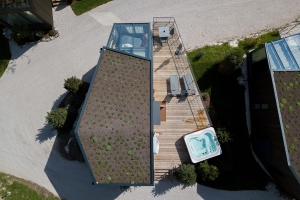
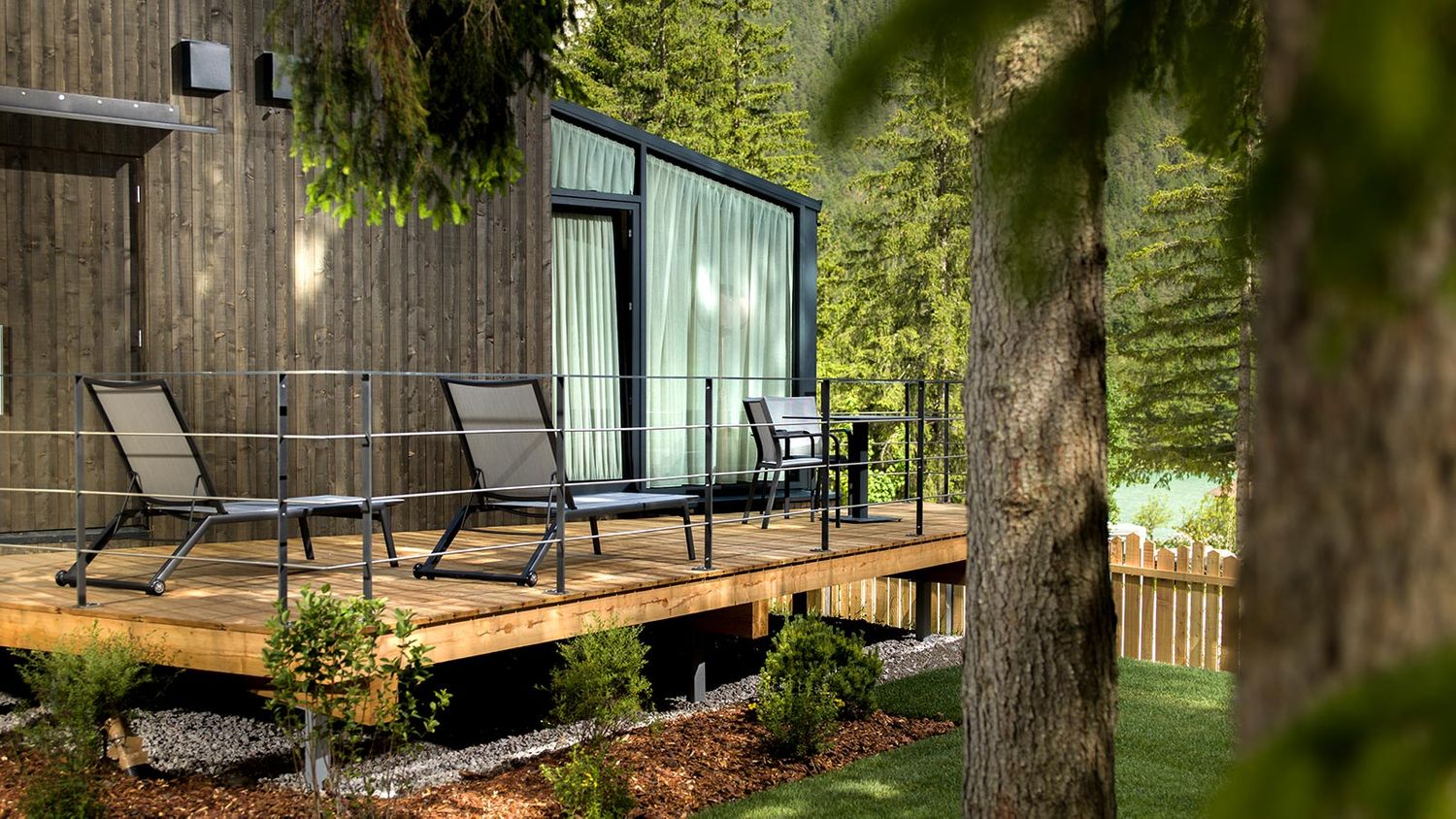
The glamping facilities in the Toblacher See area, on Lake Dobbiaco (BZ) nestled in the Dolomites, are not simple chalets but futuristic structures perfectly integrated into the environment in which you can really sleep under a roof of stars. The Skyview Chalets are for those who love freedom but also maximum comfort; twelve glass cubes in local fabrics and wood with the Deluxe category boasting infrared saunas and Jacuzzis on the panoramic terraces. The organic farm-to-table breakfasts are delivered by electric quad and left at the door.
Genuine Mongolian yurts in a WWF oasis
Ca’ Cigolara is an agritourism camp on six hectares overlooking the WWF Ghirardi Regional Oasis. This corner of Mongolia in a natural Apennine paradise is in the Alta Valtaro area, not far from the city of Parma. The eco-sustainable camp has nine genuine Mongolian yurts in natural materials, and are simply furnished but very comfortable. Standing on wooden platforms they offer excellent insulation from the cold and have lights, private external toilets, and in the colder months pellet stoves. Guests can enjoy plenty of outdoor activities including horse riding, mountain biking, guided excursions, bird watching, yoga, shiatsu, and snowshoeing in winter.
Meditation and holistic experiences in Piedmont’s Alps
Yurte Soul Shelter (Om and Shanti) in Gassino Torinese (TO) is in a forest on the hills just 20 minutes from Turin. The eco-sustainable wooden Mongolian yurts are made from natural marterials, have low-consumption lamps and are heated with wood and sanitized with natural detergents. They also have a large panoramic terrace overlooking the Piedmont Alps and guests can partake in meditation, yoga and other holistic disciplines.
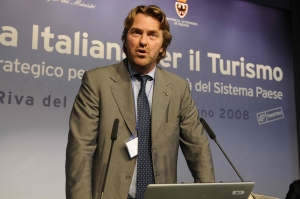
The holiday voucher scheme for hotels, which was not fully used by Italian families, produced over €500 million. It is essential for the hospitality sector that these resources be immediately directed to the most urgent needs of our industry,” said Federalberghi President, Bernabò Bocca.
€500 million from holiday vouchers
“Recovering and redirecting these funds is a priority for our federation because we are the legitimate recipients,” added Bocca. With this ‘cash in hand’ it is essential to finance two measures: the abolition of the second Imu tax instalment and the extension of the rental tax credit up to 31 December 2021.”
“We are not yet out of the woods”
"Things are still difficult, we are not yet out of the woods, but we are hoping for a substantial recovery as early as next year. Essential measures are vital to let us move ahead rapidly and all together in the right direction.
The 24th edition of Frantoi Aperti (Open Olive oil Mills) in Umbria up to 28 November features walking and cycling tours in many of the region’s towns to promote its olive oil heritage and traditions while respecting nature and the environment. The region has a network of well-marked walking and cycle paths, and this initiative is aimed at making food and wine enthusiasts aware of them, and of what else the region has to offer.

The events have been organized by the Strada dell'Olio Dop Umbria Association, specialist walking and cycling tour operators, the FIAB Italian Environmental and Bicycle Federation and the L’Olivo e la Ginestra and I Tuoi Cammini associations. "By highlighting slow open-air tourism and the excellence of Umbrian oil, we are aiming at enhancing our region’s rural routes and making it known from this unusual angle,” said Paolo Morbidoni, President Strada dell'Olio Dop Umbria.
 Four weeks of events on cycle and pedestrian trails through some of Umbria’s most beautiful and verdant landscapes and fascinating historical towns and villages, Frantoi Aperti 2021 is organized by the Strada dell’Olio E.V.O. Dop Umbria, with the support of the Cassa di Risparmio di Perugia Foundation, in collaboration with the Umbria Region. The varied calendar of events aimed at enhancing cycle, pedestrian and sustainable tourism in the central Italian region will end on Sunday 28 November in Assisi and Marsciano with a cycling tour and food tastings at the Cum Gratia Oil Mill. For more information on Frantoi Aperti: This email address is being protected from spambots. You need JavaScript enabled to view it. - www.frantoiaperti.net
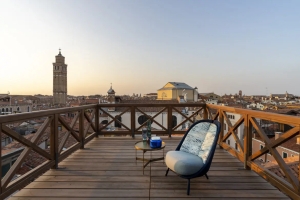
The newly-opened Palazzo Pianca in the historic center of Venice, a stone's throw from St. Mark’s Square between the Church of Santa Maria del Giglio and the Grand Canal, is a 16th-century stately home. Renovated by the Venetian firm Pianca, specialized in furnishing accessories and home styling, it has 16 rooms and two mini apartments that combine pre-existing and contemporary elements.
Colours inspired by the lagoon city
Not far from places of historical and cultural importance such as St. Marco’s Square, La Fenice Theater and the Accademia Galleries, Palazzo Pianca has a strong rapport with the city, has panoramic and urban views, and projects itself as a laboratory of lifestyles. The comfortable and cozy rooms have clean lines, the elegant materials for which the Venetian company is famous, and bright, vivid or neutral hues, inspired by the typical colours of Venetian facades and a constant reference to Venetian traditions.
Suites, Deluxe and Classic rooms
The Peacock Suite, Giglio Suite and Mezzanine Suite all have a living room and a bedroom.
The Botanic Deluxe, Penthouse Deluxe Blue & Brown and Artist Deluxe with their bright fabrics are comfortable and inviting, and in the Classic rooms there is an open desk and wardrobe and warm, soft lighting.
Researching the meaning of hospitality
"Palazzo Pianca is something more than a simple hotel - explains Aldo Pianca, the company’s president – it is a challenge, a desire to put ourselves to the test. The building is an oasis of tranquility in the heart of the city, with spaces that go beyond the pure concept of hospitality. The aim is to engage with the changing forms of living and traveling today. It is what we like to define a place of research into the meaning of hospitality.”
The crisis brought on by the pandemic resulted in losses in the order of 70% of the wealth produced
by Italy’s mountain economy in 2019. Losses that now have to be recovered, especially in the field of tourism.
Establishing identities for mountain destinations
“The pandemic has brought to the fore the need to tackle the serious problem of the identity of many mountain destinations, and of how to reposition their tourist offer to benefit of the quality of life of mountain communities,” said Paolo Doglioni, Councillor Confcommercio speaking at a House Productive Activities, Trade and Tourism Commission aimed at assessing proposals for the economic recovery of accommodation facilities in mountain resorts during the winter season.
“Covid has radically changed the type of demand”
"Support measures for the relaunch of the economy - continued Doglioni - and a well-directed use of PNRR resources, are tools to be used in a coordinated manner. Not just with regard to an immediate reopening of hotels and other facilities, but also regarding how the sector can grow in the future given that Covid has radically changed the type of demand.”
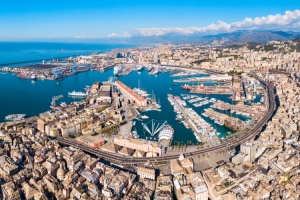
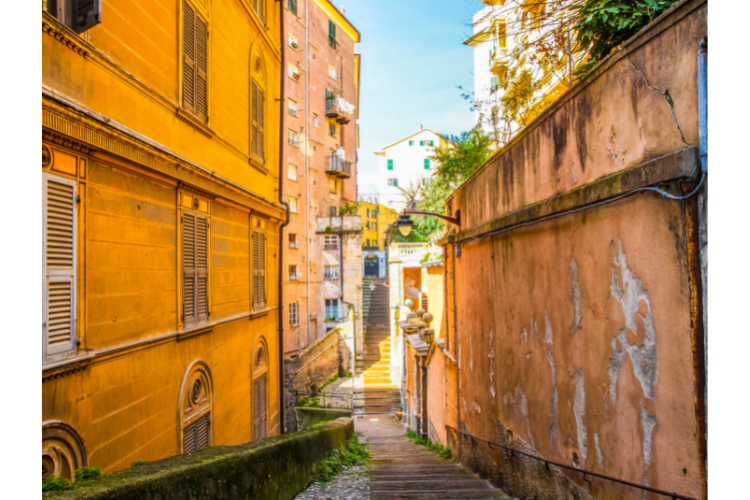
Genoa is a fascinating Mediterranean destination that never ceases to surprise, even in Autumn. But its mild climate is just one of the most pleasant aspects of a stay here. Events, exhibitions, experiences, sites to visit and sustainable transport are all easily accessible, thanks to the City Pass Discovery, which is part of the "Cogli l’attimo" welcome package. And for the first time this package also includes non-hotel accommodation facilities.
One free night in hotels and non-hotel structures
By staying at least one night in one of the participating hotels visitors can take advantage of an additional free night (in a single, double or multiple room) and a special tourist card for each person, valid for 48 hours. And those who choose to stay in the non-hotel structures participating in the promotion will receive the tourist card free.
 Access to public transport and guided tours
The card offers everyone an experience, choosing from one of the guided tours (including the historic center, the Palazzi dei Rolli, the historic shops, a Segway tour) or a visit to the Oriental Market, the towers of the Cathedral of San Lorenzo or the Doge's Chapel in the Doge's Palace.
By choosing the City Pass Discovery + AMT Public Transport version guests will have 48 free hours on the public transport system, while with the City Pass Discovery + sustainable mobility version they c
an use sustainable mobility services such as scooters and electric bikes. The offer is valid until the available packages are finished, and can be used until 20 December 2021.
Museums, exhibitions, music and theatres
In addition to its extraordinary museums the city is also hosting many great exhibitions, from the Escher exhibition in the Doge’s Palace, to Hugo Pratt, also in the Palazzo Ducale, and in the Palazzo Bianco the Triumph of Virtue featuring precious embroidery techniques will be open until 9 January. For lovers of music and theatre Genoa also has an exciting opera, concert and ballet season at the Carlo Felice Theater. Info: www.visitgenoa.it
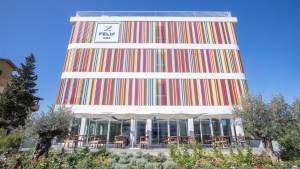
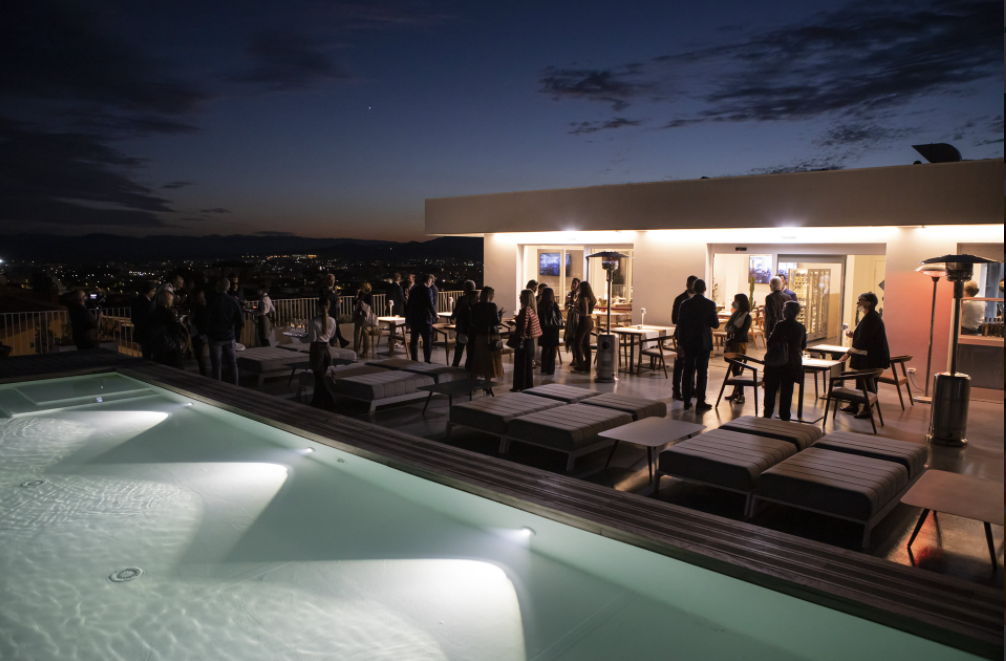
The latest creation of the Felix Hotels group, this contemporary and elegant 4-star superior establishment, is positioned as a new hospitality hub and the new reference point for superior catering and accommodation. Alongside the hotel, two new restaurants are also opening today from Felix Taste, the Group’s gastronomic branch.

With 70 rooms, a spa, an indoor and rooftop pool, a panoramic terrace, two restaurants and a bakery, it is not just for tourists and travellers. There are meetings and event rooms for business events, the Felix Bistrot on the ground floor offers breakfast and brunch, and while enjoying an aperitif or dinner visitors can enjoy spectacular views from the Felix Rooftop.
Managing La Coluccia in Santa Teresa Gallura
The president of Felix Hotels, Agostino Cicalò, explains “In 2021 we laid the foundations for an ever-growing project. We started from the properties, building the Hotel Felix Olbia and taking over the management of La Coluccia di Santa Teresa Gallura.”




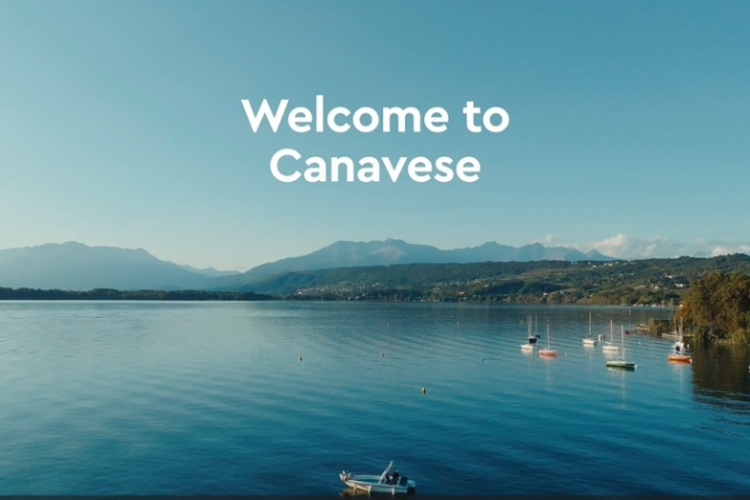
Welcome to Canavese, an unexpected corner of Piedmont where …
843Welcome to Canavese, an unexpected corner of Piedmont where …
843
