







As tourism continues to shift, travelers are no longer driven solely by basic needs; they now look to their holidays to fulfill deeper aspirations and values. We take it for granted that tourism must be environmentally sustainable because, during the Covid pandemic we rediscovered that we live on a planet that welcomes us but, at the same time, governs us. This is why ENIT is committed to sharing best practices in Italy and abroad, leveraging social media as a key channel. To emphasize how deeply this is already incorporated in the customer journey of our Italian holidaymakers, we carried out a study, holding ourselves accountable to this value as well.
ENIT further pursues a wide range of activities that allows it to position itself alongside its European counterparts on the subject of regenerative tourism thanks to the Smarties for SMEs project. And in this Jubilee year it is also developing the theme of spirituality and the impact this has on religious sites, as Italy invests in services aimed at shaping a more advanced offer for this type of tourist.
We remain certain, as we have always been, that tourism must be sustainable from an economic point of view, with a weight of 10.8% of the GDP, without counting the supply chain, and employing over three million workers. Italian tourism revenues are growing steadily, especially internationally, and will exceed €54.2 billion in 2024. ENIT’s research covers this and much more, such as the results of the biggest sector event in Italy in 2025, the Global Summit of the World Travel & Tourism Council in Rome.
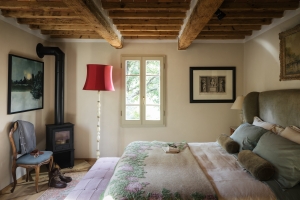
ENIT also focuses on tourism in Italy from the perspective of residents, because what we need today is social sustainability in which we are the most competitive. Thanks to our identity and authenticity, we do not need to invent a narrative, all we have to do is share our tangible and intangible heritage. In our art cities, of course, which are major hubs for international markets, but also in our inland areas which contribute so significantly to our Italian character which is so sought after and loved around the world. Here too, we are strengthening our focus on historic residences, which embody a heritage that bears witness to this very story.
But tourism is also avant-garde, and we are ready to explore opportunities and new frontiers in the field of AI, virtual reality, augmented reality and communication. To conclude, as we usually do ENIT provides the numbers, analyzes the sector and the season as well as providing information and current trends to international markets. It also looks ahead to the near future to provide, as far as possible, support to businesses, operators and institutions, and to jointly develop a sustainable, accessible, regenerative, participatory and innovative form of tourism.
Advertorial


