




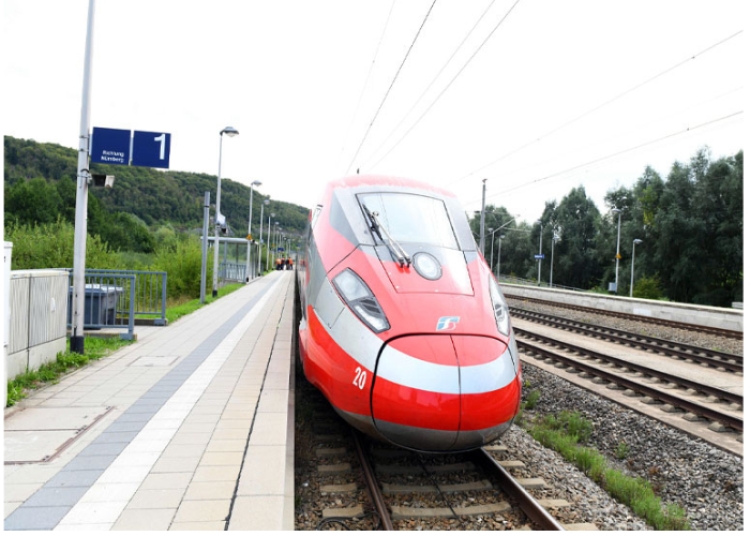


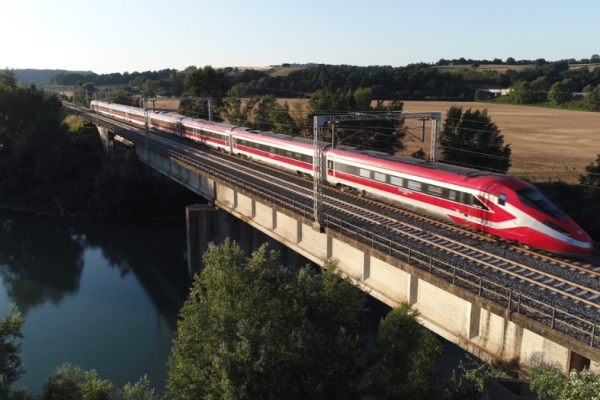









Test runs of the Frecciarossa have begun on the tracks between Austria and Germany.
Services are to begin in summer 2027
Developed in collaboration with Deutsche Bahn and ÖBB, commercial operations are scheduled to begin in summer 2027, with the first routes connecting Milan and Rome with Munich. The tests are taking place on the German rail network along the Berlin-Munich-Kufstein route. In Austria the Frecciarossa is operating between Kufstein and the Brenner Pass and on the Salzburg–Vienna route, both of which are key routes for the development of future cross-border services.
Rome to Munich will take six and a half hours
The initial service will consist of four connections on the Milan-Munich and Rome-Munich routes. The journey between Milan and Munich will take around six and a half hours, with stops in Brescia, Verona, Rovereto, Trento, Bolzano and Innsbruck. From Rome to Munich, the journey time is expected to be around eight and a half hours, with stops in Florence, Bologna, Verona, Rovereto, Trento, Bolzano and Innsbruck. The opening of the Brenner Base Tunnel will reduce journey times by about an hour.
Extensions to Naples and Berlin
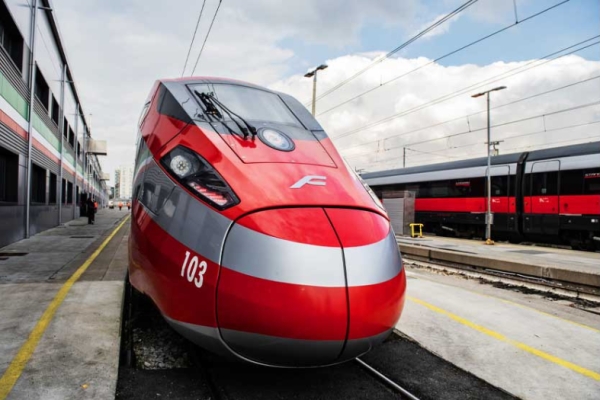
From December 2028, the full service will be expanded to ten connections between Italy and Germany, along the routes linking Milan, Rome and Munich, with extensions also to Naples and Berlin. The service will be operated by the Frecciarossa 1000, Trenitalia’s high-speed train which complies with European technical specifications for interoperability and is designed to run on the rail networks of various European countries, including France, Germany, Spain, Austria, Switzerland, the Netherlands and Belgium. After France and Spain the Frecciarossa is therefore set to arrive in Germany too, helping to make rail connections between the continent’s major cities more integrated. The new service will also be able to cater for demand to other European destinations, such as Frankfurt and Kraków.
“Moving towards the creation of a European high-speed rail network”
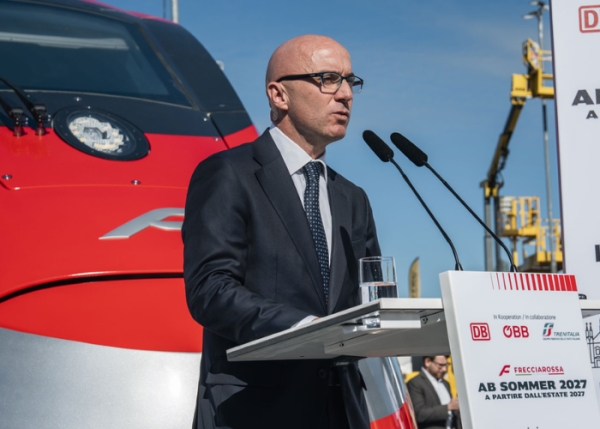
“The launch of trial services in Germany and Austria marks a step towards the realization of a project that confirms our aim to make the train the go-to mode of transport for European mobility. Thanks to our collaboration with Deutsche Bahn and ÖBB, we are moving towards the creation of a European high-speed rail network, providing passengers with a service that can bring territories, people and economies closer together. The Frecciarossa thus continues its path of international growth, taking the FS Group’s technological and industrial excellence abroad and contributing to the development of an increasingly integrated European rail network,” said Gianpiero Strisciuglio, CEO and Director-General of the FS Group.


