


The MOUs establish a strategic framework for promoting the region on international markets. The collaboration will involve coordinated marketing, trade, communications and media relations activities, and the aim is to increase visitor numbers to one of Europe’s wealthiest regions by showcasing its rich cultural heritage, world-famous cuisine, lifestyle experiences and appeal to business travellers. As part of the partnership the Dubai-based airline will collaborate with the two organizations on a series of ventures targeting selected international markets. These may include joint promotional campaigns, educational tours for industry professionals and the media, seminars, webinars and activities aimed at the general public to raise awareness of the region and encourage an increase in tourist arrivals.
Bologna Welcome and Parma Welcome will also support Emirates by taking part in specific promotional activities for Emilia-Romagna including roadshows, events and trade events, and by providing logistical support for selected visits by industry professionals and the media. They will also work closely with local stakeholders to showcase the region as a tourist destination. “Emilia-Romagna is an extraordinary combination of culture, heritage, gastronomy and business opportunities, making it one of Italy’s most attractive destinations. Thanks to our collaboration with Bologna Welcome and Parma Welcome, we are delighted to be able to promote the region even further to travellers within our global network, working closely with our trade and media partners and contributing to the growth of international tourism to Bologna, Parma and the entire region,” says Thierry Aucoc, Emirates' SVP commercial operations, Europe and the Americas.
“This agreement heralds a new phase in the long-standing relationship that has linked Emirates and Bologna for eleven years and is an important opportunity to strengthen the international visibility of Bologna and its metropolitan city, especially to new audiences in key global markets,” said Daniele Ravaglia, Bologna Welcome Foundation's president. Parma Welcome's director added Mario Marini: “Thanks to Emirates’ extensive global network and our collaboration with Fidenza Village, a luxury shopping destination which is part of The Bicester Collection, we can create new opportunities to attract high-end travellers and enhance the region’s international appeal.”
This international occasion focuses on the importance of tourism and its contribution to society, culture and the global economy. Tourism means much more than travelling as it is a tool for preserving cultural heritage and boosting employment and economic growth. But why was 27 September chosen? The date was established in 1979 by the World Tourism Organization (UNWTO), now known as UN Tourism, at its general assembly in Torremolinos, Spain, to mark the day the agency's statutes were adopted, and the first World Tourism Day was celebrated in 1980. Every year World Tourism Day focuses on a specific theme, with conferences, cultural events, exhibitions, educational initiatives and activities organized by governments, tourism organizations, businesses and local communities around the world.
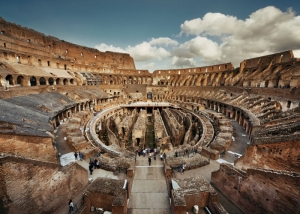
As one of the world’s major tourism destinations Italy uses the occasion to highlight its extraordinary heritage of art, history, archaeology, landscapes, food, traditions and hospitality. This year's theme focuses on the future of tourism in the digital age and the growing role of artificial intelligence, and Italy will give the day a distinctly cultural dimension, with an event announced by the Italian ministry of tourism at the Temple of Venus, between the Colosseum and the Roman Forum in Rome. Entitled “Perché il turismo è un’industria” (“Why tourism is an industry”), the event will bring together government and city administrators with tourism stakeholders to discuss tourism's economic, cultural and social importance for Italy.
The celebrations will also place Rome’s extraordinary heritage in the international spotlight. A special event at the Colosseum with Alberto Angela, the Italian television presenter, author and science communicator who will focus on Julius Caesar and ancient Rome. Angela will bring history and archaeology to a broad television audience, connecting Italy’s ancient heritage with contemporary cultural tourism. The choice of the Temple of Venus and the Colosseum is symbolic, as together they represent the extraordinary historical legacy that attracts visitors from around the world.
The ministry of tourism recently released figures showing Italy hosted 72.4 million arrivals and 276 million overnight stays this summer from June to August. This means over 5.5 million more overnight stays than in the same period in 2025, which is a 2% increase with an average stay of 3.8 nights, leaving occupancy rates for accommodation facilities in Italy "a full 13 percentage points ahead of Spain and 23 ahead of France,” said tourism minister Gianmarco Mazzi.
The airline has unveiled its project to create the new uniforms that will be worn by staff on board and on the ground in the lounges in Rome, Milan and Catania. And for the first time, the project has been entrusted directly to those who wear the uniforms every day, making the most of their skills, operational experience and in-house talent.
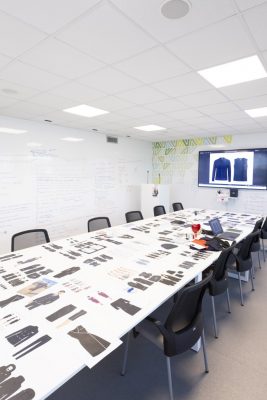 ITA uniformiPilots, ground staff and cabin crew are involved
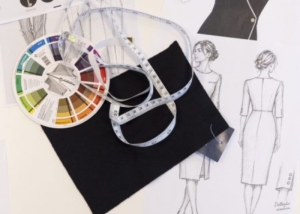
The new uniforms have been designed by Valentina Santini, an ITA Airways cabin crew member with a deep passion and expertise in the world of fashion. Her work has involved not only cabin crew but the entire company from pilots and ground staff to colleagues from various departments who shared their needs, preferences and suggestions, helping to come up with a design that represents the airline.
Launched by CEO and general manager Joerg Eberhart to recognize and harness the skills, creativity and energy present within ITA, from the initial sketches and the selection of fabrics to the creation of prototypes, every stage has been geared towards combining elegance, functionality, comfort and safety. The uniforms have been designed for the practical demands of the job, ensuring practicality, quality and using materials that meet the operational standards of air transport.
"This project shows just how much value can be created by listening to and involving our people. Entrusting a flight attendant with the creative development of our new uniforms means drawing on the real-life experience of those who wear them, transforming it into innovation, identity and shared pride,- said Eberhart. -This choice showcases how the best of Italy's style, culture of beauty and artisanal expertise are part of our tradition. Only here can a project of this kind emerge from within and become an authentic expression of "Made in Italy." I am very proud and pleased with the results so far: we will now move from prototypes to the production of the uniforms that will be worn on board; a truly Italian project, conceived within ITA Airways and built together.”
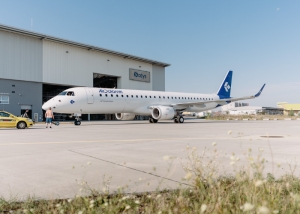
Both the tail and the logo on the fuselage of the aircraft are now painted in Lufthansa Group Core Blue instead of the traditional turquoise, underscoring the airline’s close ties to the Lufthansa Group. Due to arrive in the coming weeks it is the fourth of 13 Embraer E195s sourced from Austrian Airlines, set to be gradually integrated into the airline’s fleet by 2028 to support its plan to expand and strengthen its network. The addition of these aircraft to the fleet reinforces Air Dolomiti’s solid and unchanged business model as a leading wet-lease operator, strengthening the link between the Italian market and the main European hubs.
The livery change will be rolled out gradually across the aircraft arriving over the coming months, whilst those already in service will retain their turquoise colour, as will other elements including details of the new uniform, seating and in-flight service, thus confirming continuity with the airline's values and distinctive features. The aircraft will be configured to Air Dolomiti’s standard 122-seat layout, ensuring the high levels of comfort, quality of in-flight service and customer care that have always defined the carrier’s premium positioning.
“The arrival of this aircraft forms part of Air Dolomiti’s ongoing development plan, and we are proud to unveil its new design,- commented CEO Steffen Harbarth. -As a member of the group we have adopted this new colour scheme whilst reaffirming our status as a member of the Lufthansa Group. This refresh of our external image fits perfectly with our DNA: customer care, operational excellence and quality of service remain the central elements of the Air Dolomiti travel experience, in keeping with our history spanning 35 years.”
The Many Faces of Sardinia: Coast, Culture, Flavours and Traditions
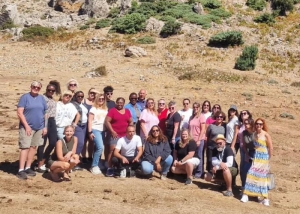
The 6-day tour was an immersive introduction to one of Italy’s most diverse destinations. Designed around the theme “The Many Faces of Sardinia: Coast, Culture, Flavours and Traditions," it went beyond the island’s fame as a sun-and-sand destination to showcase its heritage, gastronomy, wine, landscapes, local communities and distinctive hospitality. Organized by the Sardinia Region and the Nuoro Chamber of Commerce with the collaboration of Travel Open Day and local stakeholders, the programme gave the American agents the opportunity to experience a wide range of products firsthand, from luxury resorts and historic towns to archaeological sites, wine estates and authentic cultural experiences. 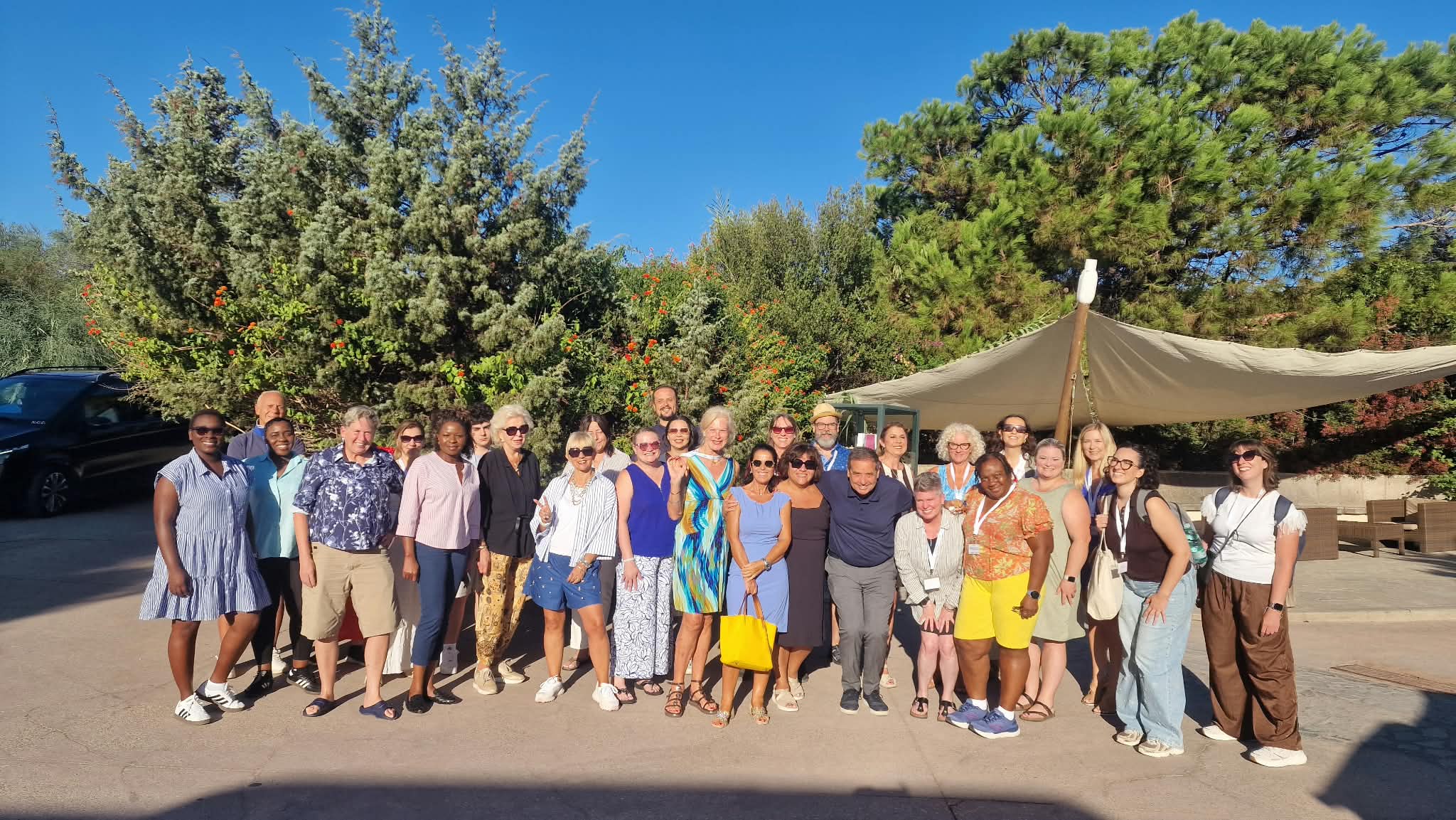
From archaeology to wine and history
For many of the participants, the value of the trip lay in experiencing parts of Sardinia they might otherwise have struggled to discover. Armine Asatryan of Harmony Travels and More in Glendale described it as “a great opportunity to see Sardinia... which is not only beaches but also the cultural side.” The itinerary, she added, took the group to places she would not necessarily have visited independently. The journey began with arrivals at Olbia Airport on September 10, many on the new Delta JFK-Olbia flights, followed by a scenic transfer along Sardinia’s northern coast towards Badesi, passing Santa Teresa di Gallura. The first introduction to Sardinian hospitality came at Le Dune Resort of the Delphina Group, where a site inspection offered an opportunity to explore the resort and beach, and where the agents spent two nights. The next day combined some of Sardinia’s most distinctive attractions: archaeology, wine and history. At Sant’Andrea Priu, the group discovered a prehistoric rock-cut necropolis with tombs and rock art. The itinerary continued with a visit and wine tasting at Cantine Sella & Mosca, introducing the agents to Sardinia’s winemaking heritage and one of Italy’s historic wineries. The group also did site inspections of La Coluccia Felix Hotels, Felix Hotel Olbia, Acqua di Mare Resort, Cala del Falco Delphina Hotels, Is Serenas Badesi Resort, and Club Esse in Cala Gonone.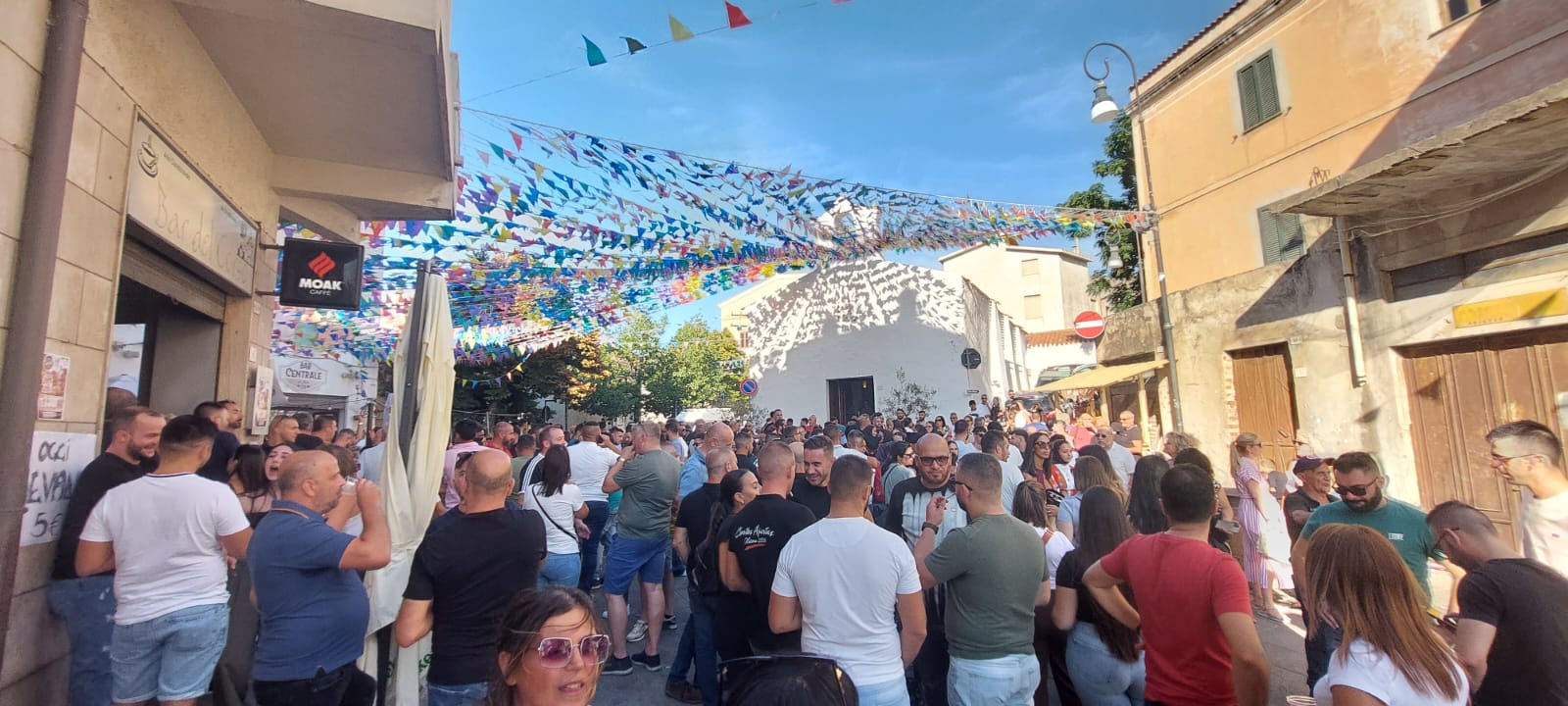
The Maddalena Archipelago and Nobel-winner Grazia Deledda
For Brooke Ray, owner of Travel with Direction in DFW, Texas, the experience reinforced the importance of understanding the island beyond its postcard image. The tour, she said, “re-emphasized how rugged and wild Sardinia is and how there is a variety of things to do,” while also highlighting the need to manage clients’ expectations. Driving, for example, is something she believes advisors should prepare their clients for. Ray plans to return for further groundwork so that she can develop more detailed “experiential travel” itineraries for her clients. The group then headed to Palau and the La Maddalena Archipelago. The ferry journey to La Maddalena provided spectacular views of turquoise waters, islands and rugged Mediterranean landscapes. The day continued to Olbia and the Delta Hotel by Marriott Olbia, where the agents spent the night. The itinerary then moved inland to the heart of Sardinian culture and Nuoro, with a visit to the Grazia Deledda Museum, dedicated to the Sardinian writer and Nobel Prize winner, and to the Museum of Sardinian Costumes. The group then spent time in Oliena, experiencing Cortes Apertas, a festival that brings together local traditions, crafts, food, music and community in the homes and courtyards of local residents. They then checked in at Su Gologone Experience, a resort hotel near Oliena, in the heart of the Supramonte, where Sardinian culture and architecture intertwine with local art and crafts, regional cuisine and colourful guest accommodations. 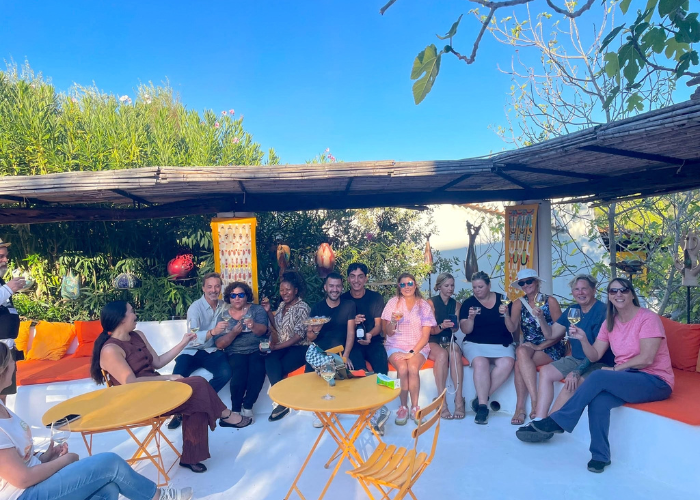
Looking for experiences beyond Italy’s best-known cities
The cultural depth of the itinerary was one of the aspects that stood out for the participating travel advisors. Margaret Loraine King of Bridgetown Travel Agency in Danbury, Connecticut, highlighted the diversity she encountered across the island, noting that “there’s so much culture and history” and how the landscapes and communities can feel remarkably different from one another. She also appreciated the way local people maintain their traditions, observing that “the people hold on to their culture” and continue to return to their communities even after living elsewhere. Nicole Trivelli of Ciao Andiamo, based in New York and Umbria, said this emphasis on local culture comes at a time when international travellers are increasingly looking for experiences beyond Italy’s best-known cities. “In the last few years international travellers are looking for more authentic Italy,” she said, pointing to Rome, Florence and Venice as destinations that have already been extensively explored by many visitors. Sardinia’s beaches remain a major attraction, she added, but “I’m very happy that I got to see this side of the island.”
An alfresco lunch with Supramonte shepherds
The final full day brought the agents on a jeep tour to discover the rural traditions of the Barbagia region and one of the highlights of the tour: lunch with local shepherds on the Supramonte mountains, with traditional Sardinian cuisine and Canto a Tenores, the island’s distinctive polyphonic singing tradition, recognized by UNESCO as an Intangible Cultural Heritage. The tour was particularly significant for some of the newer advisors on the trip. Elise Dagny Lindberg of Fora Travel in Las Vegas, who described herself as “a brand new travel advisor,” said this was her first fam trip. Sardinia’s “rich history” opened her eyes to the destination, while the jeep excursion into the mountains was among her favourite experiences. There was, she noted, “way more to see than what I saw,” adding that the fam would “really help me to sell Italy.” The same desire to explore beyond the familiar was echoed by Sophia Facey, owner of Dream Vacations in Hartsdale who called the trip “a tremendous opportunity” to explore Sardinia in depth, an experience she said she would not have had the opportunity to undertake solo. 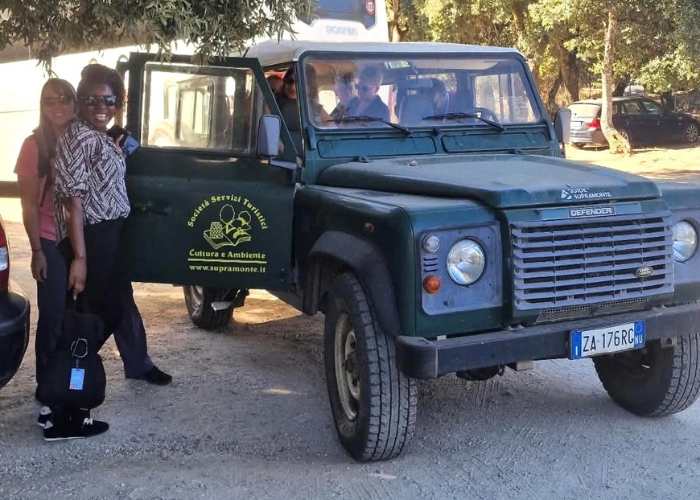
"We wanted to highlight the island’s most authentic spirit"
For Ana Grassi of Anna Grassi Travel Boutique in São Paulo, the trip addressed a growing demand among her Brazilian clients. Specialized exclusively in holidays to Italy, Grassi said her clients have increasingly been asking her to organize trips to Sardinia. She was already familiar with the island’s sea and beaches but wanted to explore “what lies beyond…the traditions, the culture, the food.” The fam trip, she said, gave her the opportunity to experience the authentic side of Sardinia she had been looking for. And, like many of the American agents, she said she was returning home with a deeper understanding of what she can now offer her clients. Raimondo Mandis, a member of staff at the Sardinia Region department of tourism said that bringing the US travel agents to Sardinia meant offering them the opportunity to experience first-hand a destination that still has so much to reveal and so much to discover. "Our aim was to promote a Sardinia that offers a variety of experiences: from sports and outdoor activities to relaxation, as well as culinary excellence and authentic, warm hospitality. Alongside the coast and the best-known resorts, we wanted to highlight the island’s most authentic spirit.”
A lesser-explored Sardinia stretching far beyond the coast
Focusing on a lesser-explored Sardinia with strong cultural traditions, historic villages, archaeological heritage, sophisticated hospitality, distinctive cuisine, and landscapes stretching far beyond the coast, the travel pros discovered a Sardinia that can be sold as a multifaceted Italian experience with coast, mountains, food, history and living traditions all becoming part of the same journey.
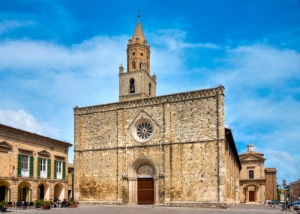
There are Italian towns you visit, and Italian towns you wonder why you didn’t discover sooner. Atri belongs firmly to the second category. This hilltop town in the province of Teramo has the Adriatic coastline on one side and some of the most spectacular landscapes in central Italy on the other. An ancient town that has the rare ability to feel both timeless and completely alive, it is beautiful without being over-polished and historic without feeling like a museum.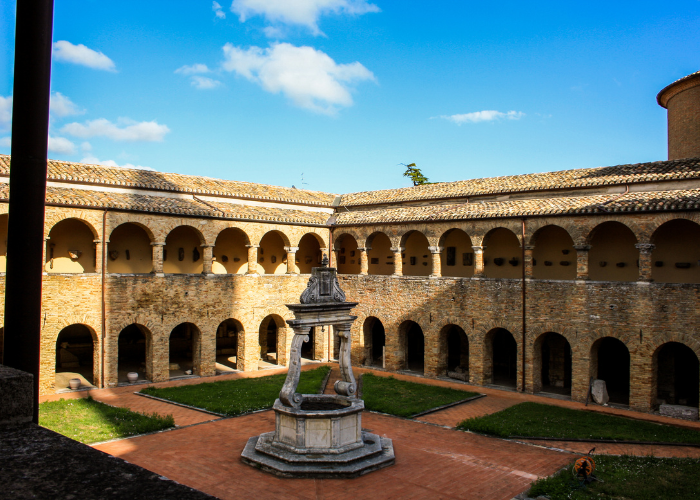
Starting in the historic centre the Basilica of Santa Maria Assunta, one of the great medieval monuments of Abruzzo, was built between the 13th and 14th centuries and combines Romanesque and Gothic elements and is particularly famous for its extraordinary frescoes. Thee work of Andrea De Litio, this cycle of paintings inside the cathedral is considered one of the masterpieces of Renaissance Abruzzo.
Atri’s position is one of its greatest pleasures: from the town and surrounding countryside, the view moves from vineyards, olive groves and gentle hills towards the Adriatic, while the mountains form a dramatic backdrop further inland. Just outside town the Calanchi di Atri Nature Reserve has been sculpted by erosion into pale, dramatic ridges and valleys: a wild, almost cinematic place, and a reminder that Abruzzo is not just about mountains and beaches.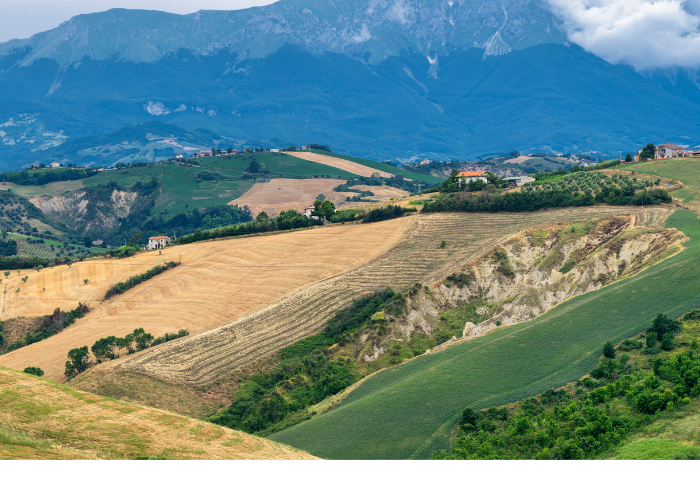
And then there is the food. Atri is famous for liquorice, a tradition that dates back centuries and is deeply woven into the town’s identity. Look for local liquorice in historic shops, but do not stop there. This is Abruzzo, after all, so there is also handmade pasta, pecorino cheese, cured meats, hearty soups, and the legendary arrosticini grilled lamb skewers. In the wider Teramo area the Timballo alla Teramana is a wonderfully rich baked dish made with layers of delicate scrippelle, cheese, eggs and tiny meatballs.
Atri also makes an excellent base for exploring. The Adriatic coast and seaside towns such as Silvi Marina and Roseto degli Abruzzi are close enough for an easy day trip, while the mountains and national parks of Abruzzo are within reach in the opposite direction. By car Atri is easily reached from the A14 motorway, while from Rome the A24/A25 provides the principal route across the Apennines. The nearest airport is Abruzzo Airport in Pescara, approximately 24 kilometres away, making it a good choice for international visitors, while Rome Fiumicino is the nearest major international hub, around 167 kilometres away, and works particularly well if Atri is part of a wider Italian road trip.
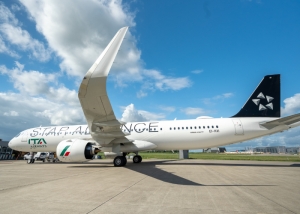
This is the second aircraft to sport the alliance’s livery, following the Airbus A320 introduced when the airline joined Star Alliance on 1 April. The presence of two aircraft with dedicated livery in the ITA Airways fleet is in line with the standards required for membership as the 26th member of the world’s largest airline alliance.
Thanks to its membership of Star Alliance passengers can enjoy an even more connected travel experience, with access to over 1,150 destinations in 190 countries, covering 90% of the world. Key benefits include integrated and exclusive services, such as one-stop check-in, mutual recognition of loyalty programmes and access to Star Alliance lounges and those of the Alliance’s member airlines. The Airbus A321neo sets the benchmark for technology, digitalization, innovation, efficiency and Made in Italy design within Ita Airways’ medium-haul fleet. The aircraft features the Airspace cabin, designed to ensure the highest levels of comfort with greater space, latest-generation seats and a customized interior lighting system.
The configuration comprises three classes of service: Business Class, with 12 fully flat reclining seats that convert into proper beds; Premium Economy, with 12 seats; and Economy, with 141 seats, 12 of which are dedicated to Comfort Economy. With the entry into service of this aircraft in Star Alliance livery, the number of Airbus A321neo aircraft in the ITA Airways' fleet has risen to nine.
This new phase of development for the airline officially further strengthens Turin and Piedmont’s connectivity with the rest of Italy and Europe. The first aircraft will be joined by a second from 25 October 2026, bringing the total number of aircraft permanently based at Turin's Caselle airport to two. The investment will enable the airline to significantly expand its network from the Piedmont airport and to offer a total of sone 1.3 million seats for sale this year alone.
The new Turin base will introduce ten new routes: Barcelona which started on 14 September, with 11 flights a week; Bilbao, a brand-new route, also from 14 September, with three flights a week; Lamezia Terme, from 25 October, with five flights a week; Madrid, from 25 October, with four flights a week; Malaga, from 26 October, with three flights a week; Naples, from 1 December, with seven flights a week; Rome Fiumicino, from 14 September, with 11 flights a week; Sharm el Sheikh, from 27 October, with two flights a week; Suceava, from 18 December, with two flights a week; Valencia, from 15 September, with four flights a week. In addition to these new routes, there will be four further new ski routes to Wrocław, Gdańsk, Katowice and Prague, every Saturday from 16 January 2027.The network from Turin – which already includes routes to Bucharest, Budapest, Catania, Chișinău, Iași, London Luton, Palermo, Tirana and Warsaw – will therefore comprise a total of 23 routes and ten connected countries.
“Today we are bringing to fruition a project we have been working on for months, which is a strategic step of great importance for Wizz Air, for Turin and for the whole of Piedmont. The arrival of the first two aircraft based in Turin within the space of a few weeks marks the start of a new phase of growth. We have recently expanded our project, continuously adding new destinations to a network that has already been significantly strengthened. Today Turin is closer to Europe, and Europe is closer to Turin,” said Mauro Peneda, Managing Director, Wizz Air Malta.
Andrea Andorno, chief executive of Turin Airport, added: “The new Wizz Air base significantly expands travel options from Turin. With 23 routes passengers can choose from major European cities and capitals, holiday destinations and Italian destinations, with numerous flights and affordable fares. It will be easier and more convenient to fly from Turin, both for holidays and business trips. The new base makes our airport more competitive, offering Turin and Piedmont direct connections to an ever-increasing number of destinations.”
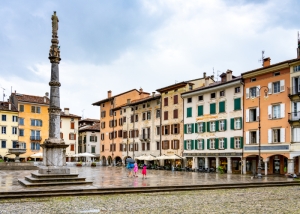
Udine is one of those Italian destinations that rewards travellers who are willing to look beyond the great art cities. The elegant capital of Friuli-Venezia Giulia combines Venetian architecture, outstanding eighteenth-century art and a deeply rooted Friulian identity, yet it receives surprisingly little international tourism. The result is a city that feels authentic rather than staged, that is lively enough to enjoy but relaxed enough to explore without the crowds found in Venice, Florence or Verona.
According to local tradition Attila the Hun created the hill on which the castle stands. The story says that his soldiers piled up earth using their helmets and shields so that Attila could watch the destruction of nearby Aquileia from a commanding height. The hill is actually natural, but the legend has become part of Udine’s identity.
The best place to begin is Piazza della Libertà, often described as one of Italy's finest Venetian-style squares. Its star attraction is the Loggia del Lionello, an elegant 15th-century Gothic building with a distinctive white-and-pink stone façade. Opposite stand the Loggia and Chapel of San Giovanni and the Torre dell’Orologio bell tower, creating a remarkably Venetian scene beneath the hill with Udine’s castle. From the square, walk through the Porticato del Lippomano and climb to Udine Castle, which houses the city’s civic museums and an impressive collection of art, including works by Carpaccio, Caravaggio and Tiepolo. But Udine’s greatest artistic treasure is arguably its connection with Giambattista Tiepolo. The Venetian master produced some of his most spectacular frescoes here, particularly in the Archbishop’s Palace and the Duomo area. Explore the narrow medieval streets and head to Piazza Matteotti with its arcades, cafés and historic buildings, with Udine’s network of picturesque "rogge," or small urban waterways, adding another unexpected feature to its historic centre.
Food is another compelling reason to visit. Try "frico," made with Montasio cheese and potatoes; San Daniele cured ham, produced only a short distance away; and "cjarsons" delicate filled pasta. For dessert, look for "gubana," a spiral-shaped cake filled with nuts, dried fruit and spices. Pair the meal with a local Friulano, Ribolla Gialla or Schioppettino, ideally in a traditional osteria. Friuli is one of Italy’s great wine regions, and Udine has a particularly strong culture of informal wine bars and osterias.
Udine is also exceptionally easy to reach. There are main rail connections between Venice and Trieste, and the nearest airport is Trieste Airport (Friuli Venezia Giulia Airport) which is some 40 kilometres away. The nearest major city is Trieste, around an hour away by road or train and also has an airport while Venice is farther but still easily accessible for a day trip. For history beyond the city, the nearest UNESCO World Heritage Site is Aquileia, less than an hour south of Udine. Once one of the most important cities of the Roman Empire, Aquileia is famous for its extraordinary archaeological remains and 4-century Christian mosaics. It makes an excellent excursion from Udine and adds a completely different layer of history to the trip.
Far from the region’s better-known coastal destinations, Murano Calabro is the kind of place that rewards curiosity: a small mountain town that shows a slower, more authentic side of Calabria. here medieval streets, forests, local traditions and mountain air come together in an atmosphere that feels authentic and untouched.
The historic centre is the first place to explore, wandering through narrow stone lanes, small squares and past old houses. The surrounding Pollino landscape with the mountain range of the same name, is an essential part of the experience: this is a destination for walking, photography and simply enjoying the quiet. Nature lovers should allow time to explore the nearby Pollino National Park, one of southern Italy’s great wilderness areas. Hiking trails lead through forests and mountain scenery, with opportunities to discover the remarkable biodiversity of Calabria and, with some luck, spot local wildlife. The area is also ideal for those who prefer gentle slow walks rather than demanding mountain excursions.
The village itself is a journey into Calabria’s rural heritage, its churches, historic buildings and traditional architecture reveal layers of religious and local history, while the streets offer glimpses of a way of life that has changed remarkably little. This is one of Morano’s greatest charms: heritage here is not simply something to be admired, but something that still belongs to the community. Then there is the food. Expect the robust flavours of mountain Calabria: handmade pasta, hearty soups, cured meats, local cheeses, mushrooms and seasonal vegetables, often given extra character by the region’s famous spicy hot chillies and excellent olive oil. Family-run restaurants are the places to seek out traditional dishes made with ingredients from nearby farms and forests, best enjoyed with a glass of local wine.
Morano Calabro is easiest to reach by car, which also allows visitors to explore the surrounding villages and mountain roads at their own pace. It is just 10 kilometres from Castrovillari, the nearest major town, and around 80 kilometres from Cosenza. Lamezia Terme International Airport, the nearest major airport, is approximately 120 kilometres away.



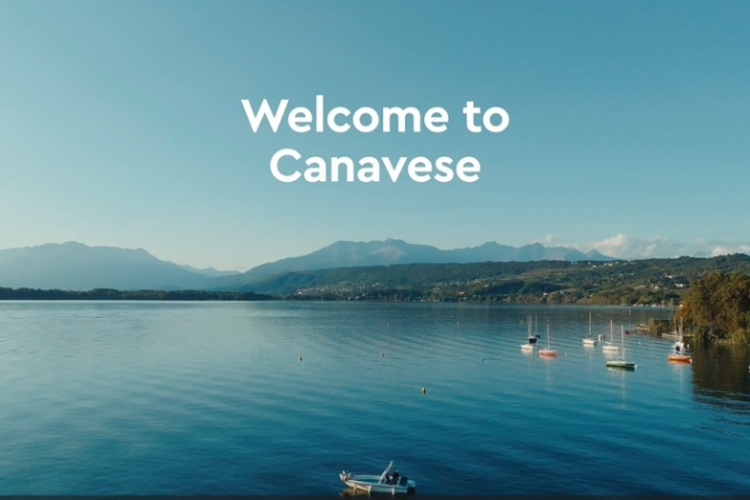
Welcome to Canavese, an unexpected corner of Piedmont where …
843Welcome to Canavese, an unexpected corner of Piedmont where …
843