


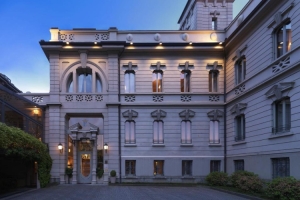


A 4-star in the centre of Como
Acquired in April 2025 from the previous owner LarioHotels, the 4-star hotel located in the centre of Como on the lakefront thus opens a new chapter in its history. The transition took place in continuity, maintaining the historical staff and preserving the identity of the property. Overlooking the Lungo Lario Trieste and built in 1900 to a design by architect Italo Zanolini, the Terminus has kept its Art Nouveau and Belle Époque style, with original details, historical materials and sober, elegant interiors.
A dining room with a panoramic terrace overlooking the lake
The hotel has 50 rooms and suites in the historic building and a more recent wing. The Bar delle Terme, the hotel's popular restaurant and bar, is the heart of the hotel's gastronomic offerings, with a large dining room and a panoramic terrace overlooking the lake. The cuisine draws inspiration from both Italian tradition and local gastronomic heritage. The kitchen is helmed by executive chef Alessandro Rinaldi, who also runs the Altariva restaurant at Palazzo Venezia, the nearby 5-star hotel that is part of Villa d'Este La Collezione.
Special Christma and New Year’s menus
During the day, the Bar delle Terme offers a light lunch, while in the evening it transforms into a classic Italian trattoria. The hotel remains open during the holidays and offers dedicated experiences, including Christmas lunch for guests staying between Christmas Eve and St. Stephen’s Day and New Year's Eve dinner for those who choose to spend New Year's Eve in Como.
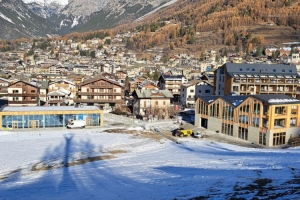
Bormio is the pearl of Alta Valtellina
With the inauguration of the Ski Stadium and Ski Park -built by Concessioni Autostradali Lombarde - Bormio, the pearl of Alta Valtellina, takes a decisive step towards the Milan-Cortina 2026 Winter Games, but above all opens a new season of tourism development that looks far beyond the sporting event.
Minimizing environmental impact
The works were created with a clear objective in mind: to integrate into the Alpine landscape and minimize environmental impact, while enhancing the experience of Bormio residents both in winter and in summer. So local materials such as wood and stone were used, to echo the architectural identity of the area, while state-of-the-art plant engineering solutions were adopted.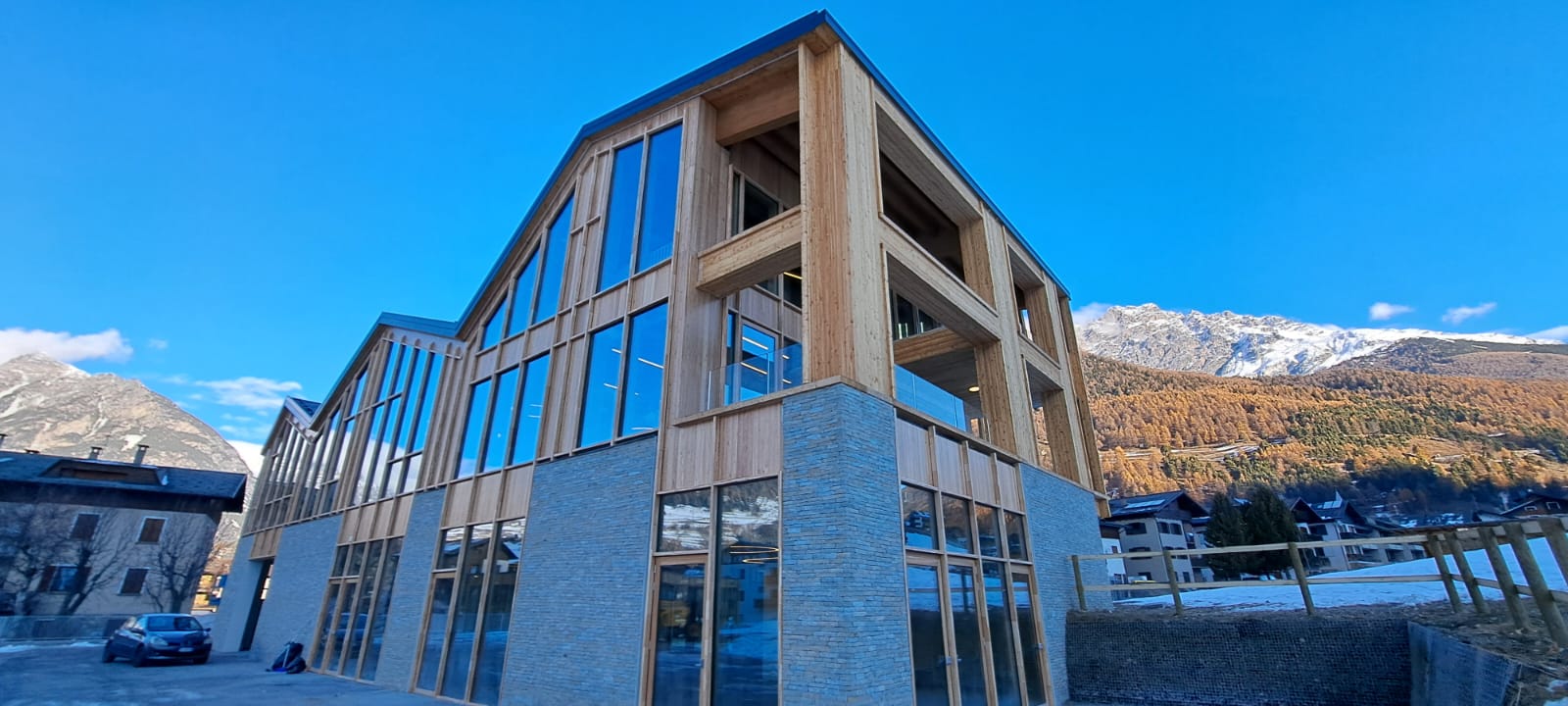
The works were delivered ahead of schedule
The new Ski Stadium, the heart of the arrival area of the famous Stelvio slope, houses the Family Lounge and Hospitality Lounge: modern, bright and completely flexible spaces, to host sports events, tourist events, exhibitions, cultural meetings, co-working activities and community services. Next to the Stadium, the Ski Park redesigns the accessibility to the ski area with a modern vision of mobility: a multi-storey car park, dozens of electric recharging stations, a new roundabout and the suggestive cycle-pedestrian walkway on the Frodolfo, which directly connects the parking area to the ski lifts. Reinforcing the value of these interventions is the fact that the works were delivered ahead of schedule and in full compliance with the planned budget.
“A concrete legacy for tourism”
“Bormio today is among the first Olympic cities that are ready, thanks to beautiful, functional and sustainable works,- says Cal president Cristiana Molin. -The Ski Stadium and the Ski Park were built on time and within the allocated public resources, with local materials, a renewable energy system, and maximum attention to their inclusion in the landscape. But above all, they are structures designed to stay: a concrete legacy for tourism, for events, for the social and economic life of the area even after the Olympics. This is the deepest sense of Cal's work: to create quality infrastructure at the service of communities and places.”
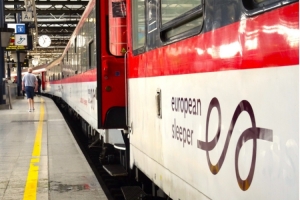
Three weekly trains from Brussels and Amsterdam
The service, which follows the launch of the Paris-Berlin line on 26 March 2026, will run three times a week and will offer, direct carriages from both Brussels and Amsterdam. Planned intermediate stops include Cologne, Berne, Brig and Stresa. The Belgian-Dutch railway company currently connects Brussels, Amsterdam, Berlin, Dresda and Prague three times weekly and has already transported almost 240,000 passengers on more than 750 night trains. A second European Sleeper night service will start at the end of March 2026 on the line between Paris and Berlin, taking over the connection that Öbb and Sncf will discontinue on 15 December 2025.
Important new connections for European cities
The new line from Amsterdam and Brussels to Switzerland and Milan creates an important north-south connection at European level. The service caters to both leisure and business travellers, connecting major economic and cultural areas. Connections in Brussels (to and from London), Cologne (to and from Hamburg and Berlin), Berne (to and from Zurich and Geneva) and Milan (to and from Venice, Florence and Rome) further extend the scope and relevance of this new night train.In Switzerland, the train will follow the historic Simplon line via Bern, Brig and Domodossola into Italy, stopping in Stresa before arriving in Milan.
Economically viable with strong travel potential
To ensure adequate departure and arrival times from Amsterdam, Brussels and Cologne, European Sleeper decided to route and then combine two separate sections of the train in West Germany, one departing from Amsterdam and one from Brussels. The company is convinced that all three of these city break destinations are crucial for the economic viability of the connection, not least because of their large populations and strong travel potential. Departures from Amsterdam and Brussels are scheduled for Monday, Thursday and Saturday evenings, arriving in Switzerland and Milan the following morning. The return service from Milan is scheduled on Wednesday, Friday and Sunday nights.
Sales will open between January and February 2026
European Sleeper is currently defining the final timetable in coordination with the railway infrastructure managers of each country. Sales for the Amsterdam/Brussels-Milan connection are scheduled to open between January and February 2026. The train will offer travel classes typical for night trains, with a fare structure in line with current European Sleeper services.
No more queues on arrival in the airport
From 22 October Rome Fiumicino, Geneva and Zurich Kloten airports, Avis First has eliminated queues and waits, offering an exclusive and personalized journey from the moment of arrival, and the service will soon be activated in other locations. Avis First introduces a true concierge-style service: travellers are greeted directly at arrivals by a dedicated Avis representative, who personally escorts them to their premium BMW - a sophisticated 3, 4 or 5 Series, or a luxurious and versatile X3 or X5 SUV - parked a short walk from the terminal. This tailor-made service ensures an immediate and stress-free transition from plane to car, allowing customers to skip the traditional rental counters altogether.
“We have taken an increasingly customer-centric approach”
"At Avis Budget Group we have embarked on an ambitious transformation path. Our goal is to redefine the car rental industry through innovation, with an increasingly customer-centric approach,- said √ Anna Pawlak-Kuliga. -We want to give our customers back their valuable time and take the entire travel experience to the next level.” "Avis First is not just an upgrade. It is a completely new way of thinking about the beginning and end of a journey for those seeking a premium experience,- adds James Adams, vp chief commercial officer, international. - We have listened to our customers and created a service that offers unprecedented convenience and peace of mind.”
An Avis contact person welcomes travellers at arrivals
Key benefits of the Avis First experience include: a personalized concierge service: a dedicated Avis contact person welcomes travellers at arrivals and escorts them directly to the vehicle; Bmw Premium model guarantee: the service ensures the availability of a BMW Premium model, selected for comfort, style and performance and simplified return: the return process allows the vehicle to be left in a dedicated area near departures, simply handing over the keys to an attendant.
Avis' commitment to innovating premium travel
Furthermore there is dedicated support: the service includes access to a priority phone line and an app-based communication system for booking and collection management, to ensure maximum rental control and convenience. (Avis on app store and Avis on Google Play), and there is no refuelling obligation: travellers are not required to fill up their car before returning it. Refuelling is handled by Avis at a cost equal to the market price of fuel. Rapid expansion is planned for Avis First, coming to additional European and global locations starting next year, confirming Avis' commitment to innovating the premium travel industry.
“More accurate detection of dangerous substances”
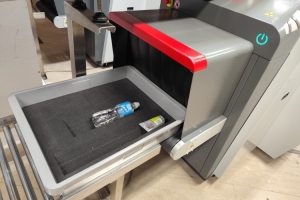
In the next few days passengers will be allowed to carry containers of liquids larger than 100 ml in their hand luggage, thanks to the new double-view X-ray machines for security checks - model Fep Me 640 Amx. This was announced in a note by SAC, the Catania and Comiso airports' management company, which also specifies how these machines are “designed to improve the effectiveness of controls on hand luggage, liquids and electronic devices, ensuring more accurate detection of dangerous substances.”
Liquids, PCs and tablet out of the luggage
The machines can analyze several containers at the same time, for a total volume of up to two litres per passenger. It will still be necessary to remove the liquids from the hand luggage, along with PCs and tablets, and place them in a special tray for the scanner.
Passengers should arrive early at the airport
The Pio La Torre Airport in Comiso is among the first small Italian airports to introduce these new control systems, an important step towards an airport that is increasingly safe, efficient and in line with international standards. The company recommends that departing passengers “arrive early at the airport, so as to facilitate control operations and ensure the smooth flow of security procedures.”
“We want every guest to feel better than at home”
La Gemma Collection, a young, independent and 100% Italian hotel group was founded by Massimiliano Cecchi, an entrepreneur with roots in real estate, and aims to transform hospitality into a cultural language. "At the heart of the project is a vision rooted in our family history, our sense of aesthetics and a contemporary idea of hospitality. We are interested in creating places that generate emotions, where every detail is designed to tell the story of the territory, express beauty and offer luxury based on privacy, tailor-made attention and human warmth. We want every guest to feel better than at home,” says Massimiliano Cecchi, CEO of La Gemma Collection.
The United States is the main market
After the success of the first hotel in Florence, La Gemma Hotel Firenze which opened in 2023 and is a luxury benchmark with a turnover of €7.1 million - 2025 closes with a growth forecast of around €8 million. The quality of the offer finds further confirmation in the recognition of the first Michelin Star awarded for 2026 to the hotel's Lucas' restaurant. The geographical distribution of guests shows a strong international presence. The United States represents the main market with a 46.28% share, followed by the United Kingdom (5.57%) and Canada (3.15%). This mix confirms the structure's ability to attract travellers with a high propensity to spend and sensitive to the quality of service.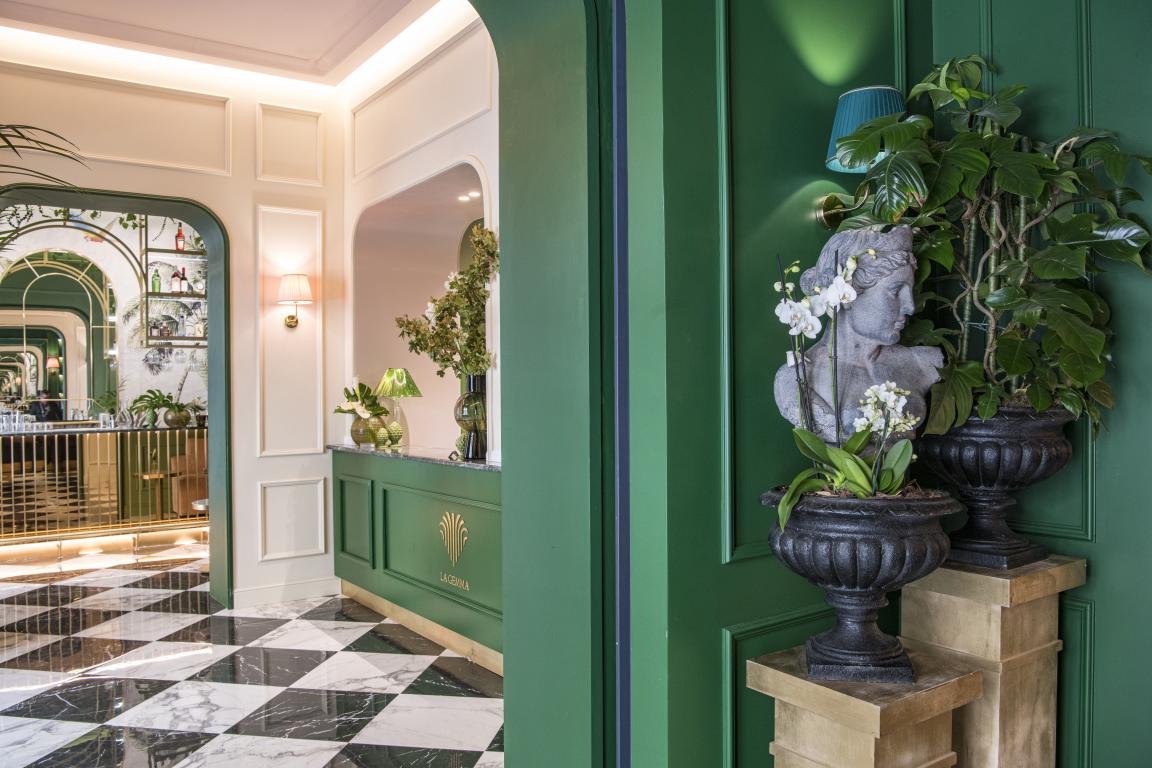 ph credits: Stefano Scatà
Six new openings are planned by 2023
"The luxury sector is undergoing a profound transformation: customers are more selective and looking for experience, value and authenticity. Our response puts the guest at the centre, far from standardised logics," adds Laura Stopani, general manager of the group. With six new openings by 2030, for a total investment of more than €100 million, the next opening will be in Milan in 2026, followed by new Italian destinations with high cultural and tourist value, including Rome, Venice, the Amalfi Coast, Lake Como, and Puglia.
Direct management and property ownership
Each property, between 30 and 50 rooms, will offer tailor-made design, cuisine, art, wellness and experiential paths embodying an idea of contemporary luxury, and unlike many international players, La Gemma Collection adopts an integrated model with direct management and property ownership. This strategic choice allows the group to maintain full control over the positioning, quality and asset value of the properties in the long term. Growth will be supported mainly by its own capital, with the possible opening to selected minority investors, and the project aims to reach an aggregate turnover of over €45 million by 2030.
11 daily services in each direction
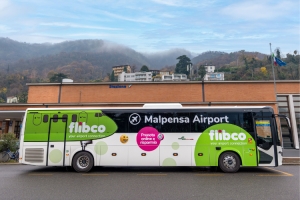
With an intermediate stop in Como Grandate, the line provides 11 services per day in each direction, operating daily and scheduled in time slots that follow the main airport flows. This airport shuttle service thus launches the solution with the highest frequency available today between Como and Malpensa, offering travellers a service truly tailored to their mobility needs. The journey lasts about 50 minutes, making it practical and straightforward at any time of day.
Accessible stops for residents and visitors
The stops have been designed to fit in with movements in the city and to be easily accessible: in Como San Giovanni the service departs from the square in front of the station, a short walk from the centre, while in Grandate Breccia the stop is in front of the ASF depot, at the Como Centro interchange car park. This is a strategic asset for residents and tourists, who can now count on a direct, frequent and easy connection to the airport.
“Timetables built around flight flows”
The service is operated in collaboration with Bus Miccolis, one of the most reliable companies in the passenger transport sector in Italy. The company stands out for the high quality of its services, the modernity of its fleets, and an operational management based on safety, punctuality and attention to the traveller. "This first Flibco line in Como expands the mobility solutions available for those who need to reach Malpensa,- says Giuseppe Martino, country manager of Flibco Italia.- The new route is an airport service designed for travellers, with timetables built around flight flows. We will continue to invest in Italy to make travel easier and more efficient.”
Maximum flexibility for flight delays
The new line guarantees a modern and stress-free travel experience thanks to on-board comfort, spacious seats, free wi-fi, USB sockets and ample luggage space. And it also offers maximum flexibility: if your flight is delayed, you can take the next bus. There is also free cancellation up to six hours in advance, and thanks to smart technology tickets can be saved in smartphone wallets.
A new bridge with views of the aprons
With a completely renovated environment designed to enhance time at the airport with more modern and functional spaces, the architectural fulcrum is the new connecting bridge, an elevated structure linking the different units of the terminal, and improving the fluidity of the internal routes. It has large glass surfaces with privileged views of the aprons, and contributes to making the flows more intuitive and smooth.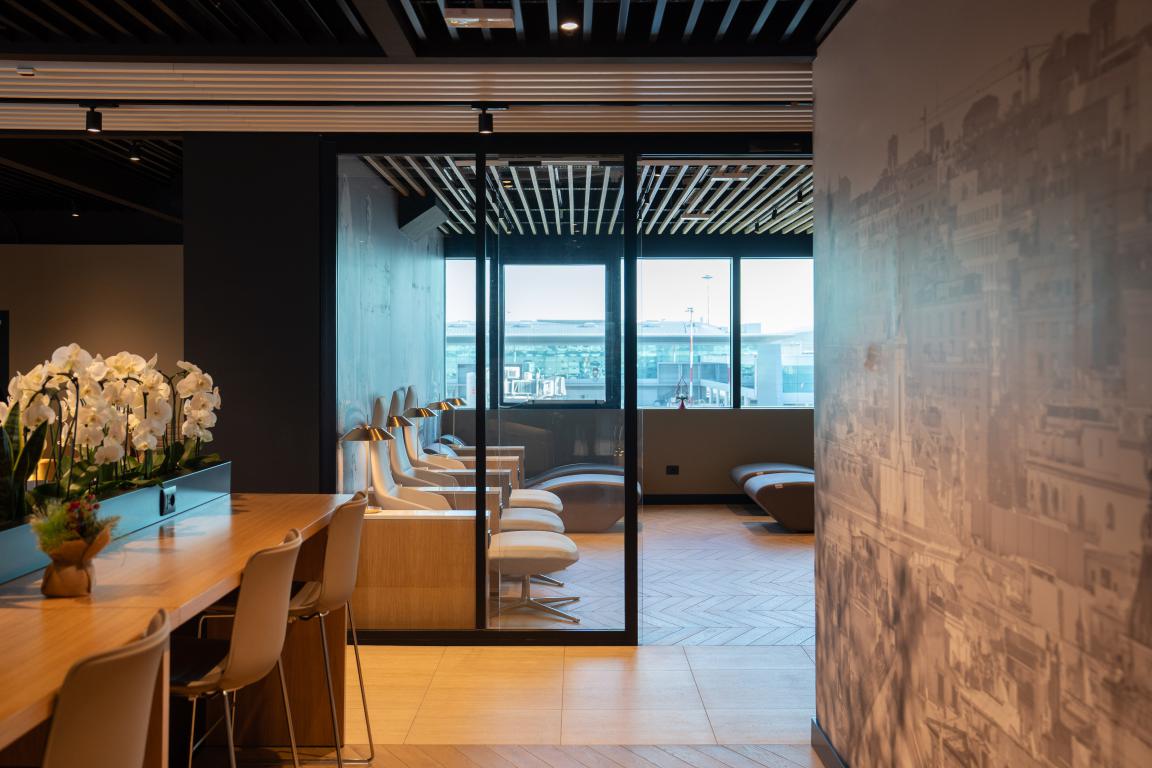
New Prima Vista Lounges by Aviapartner
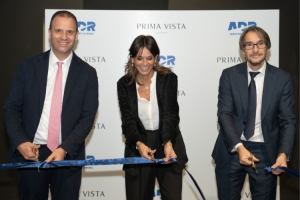
Inside the area, the new Prima Vista Lounges by Aviapartner, is an elegant and modern space, inspired by the city of Rome with materials, colours and architectural details that echo its classical and contemporary style. The environment offers relaxation and work areas equipped with Wi-Fi, recharging sockets and flight information monitors, while the buffet boasts a selection of dishes inspired by Italian cuisine, with authentic traditional flavours. An exclusive Top Premium area is also available, which can be booked for an even more private and personalized experience.
Work, relaxation and food areas
Open from 05:15 to 21:45, the lounge is accessible for a fee, with business or frequent flyer tickets from partner airlines, or via the main lounge circuits. Among the services available are the Top Premium Private Lounge, a meeting room, the outdoor terrace with a smoking area, free Wi-Fi and workstations, a relaxation area with a selection of beverages, snacks and a seasonal buffet, an open buffet with a seasonal selection, a Meet&Assist service and a premium shower room.
Aviapartner is Europe's leading ground handling provider
Aviapartner is Europe's leading provider of ground handling, VIP lounges and pre-mium services under the Prima Vista brand. The group specializes in providing state-of-the-art, differentiated and personalized experiences, driven by constant customer demand and technological advances.
The Ara Maris Hotel for celebrating the festive season in style
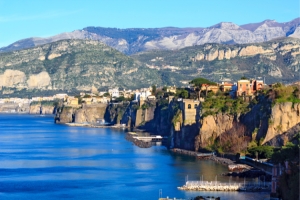
Sorrento dresses itself in magic for the festivities with glittering illuminations, markets scented with tradition, music that resounds through the alleys and cultural events that enliven every corner of the city. This year, the rich playbill “Surriento Gentile, Christmas 2025” will accompany visitors and residents until 30 December with performances, music, theatre, exhibitions, meetings and events celebrating the city's identity which is linked to welcome, culture, beauty and kindness. Against this backdrop, those seeking an elegant stay will find the 5-star luxury Ara Maris hotel the ideal place to celebrate the festive season in style.
A cultural itinerary dedicated to kindness
“Surriento Gentile,” inspired by the famous verse of the song “Serenata a Surriento” will be an artistic and cultural itinerary dedicated to kindness as a social and human value. During the entire month of December, the city will host meetings on the theme, with theatrical and travelling performances and events aimed at rediscovering the value of relationships and small gestures. The aim being to invite citizens and guests to find in art and culture a way to regenerate harmony and a sense of community.
Performances and an 18th-century Nativity
The festival also offers a varied cultural calendar that enriches the visitor experience with exhibitions, thematic itineraries and activities for young and old. A special place is reserved for the nativity tradition, with the exhibition “Giuseppe Ercolano and the Masters of the Nativity Ccene, 25 Years of Art and Tradition” at Villa Fiorentino until 18 January 2026, and with the itinerary “Ariprit' 'e purtune... 'ncè stà 'o Presepio” in the historical centre with living scenes of the eighteenth-century nativity scene, an ancient and popular tradition still deeply rooted in the local culture. To welcome the New Year with taste, refinement, and a touch of magic, the Ara Maris Hotel is offering a selection of exclusive packages designed to experience 2026 in style.
A new and exciting wine outlet for Verona’s airport
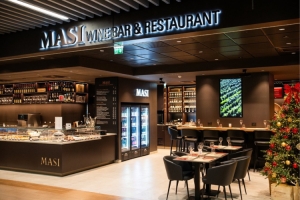
Masi Wine Experience has launched a new Masi Wine Bar & Restaurant inside Verona's Valerio Catullo Airport. The opening, announced by Masi Agricola and Lagardere Travel Retail Italia, is a further boost to the collaboration between the two companies and brings to Verona airport a format already present in other international locations.
After security, near the. boarding gates
The venue is in the area accessible to passengers after security checks, near the boarding gates, and consists of a single-brand wine bar and restaurant inspired by the distinctive elements of the Masi Wine Experience. Lagardere Travel Retail Italia is in charge of the operational management, applying its experience premium airport dining to a concept that continues a partnership developed over the years in various airports.
“Departing passengers can enjoy a toast with Masi”
“We are leading players in duty free and travel retail all over the world, but we were missing a Masi Wine Bar in a top airport,- said Federico Girotto, CEO of Masi Agricola. “Now we have it and it is right here in Verona, thanks to Lagardere, which with its expertise and sensitivity is the ideal partner. Departing passengers, perhaps after visiting our locations in Valpolicella and on Lake Garda, can now enjoy a toast with Masi before boarding, and also have the chance to buy a bottle at the DutyFree Shop. It's another way to stay in touch.”
A cosmopolitan and lifestyle format
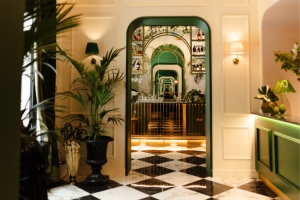
The new Masi Wine Bar & Restaurant is the ideal place for a pleasant stopover before taking off from Verona. It is an elegant space with contemporary, design furnishings and a warm atmosphere; a distinctive and versatile concept, combining the elegance of a traditional Italian wine bar and restaurant with a more cosmopolitan and lifestyle format. In recent years Valerio Catullo Airport has been updated and redesigned and is a vital support to tourism in Verona and Lake Garda, which get 19 million overnight annually.
Venetian cicchetti and a creative selection of Masi wines
In line with the ‘wine first’ approach, the new Masi Wine Bar & Restaurant has the range of Masi wines, offered in combination with an eclectic selection of dishes, ranging from traditional Veneto to more international flavours. The leitmotif is always wine, which often becomes an ingredient in dishes that follow the rhythm of the seasons and are based on a selection of quality raw materials. For a quick experience, traditional Venetian cicchetti are combined with a creative selection of cocktails and aperitifs that use Masi wines. The opening inside Valiero Catullo Airport enriches the network of the Masi Wine Experience outlets, which includes the Cantine Masi and Possessioni Serego Alighieri in Valpolicella, Tenuta Canova in Lazise del Garda (Verona), Canevel Spumanti in Valdobbiadene (Treviso), Masi Tupungato in Argentina, the Masi Wine Bar on the ski slopes of Cortina d'Ampezzo (Belluno) and the Masi Wine Bar & Restaurant in Maximilianstrasse in Munich. More recent openings include Monteleone21 in Valpolicella.


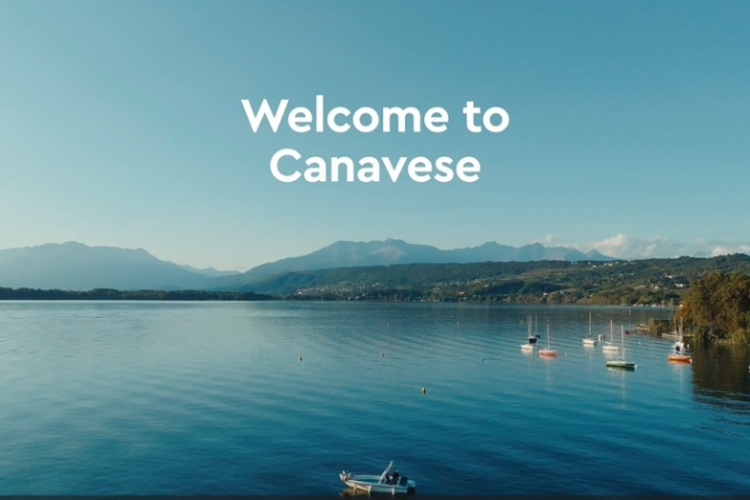
Welcome to Canavese, an unexpected corner of Piedmont where …
846Welcome to Canavese, an unexpected corner of Piedmont where …
846
