


A full recovery in the peak holiday months
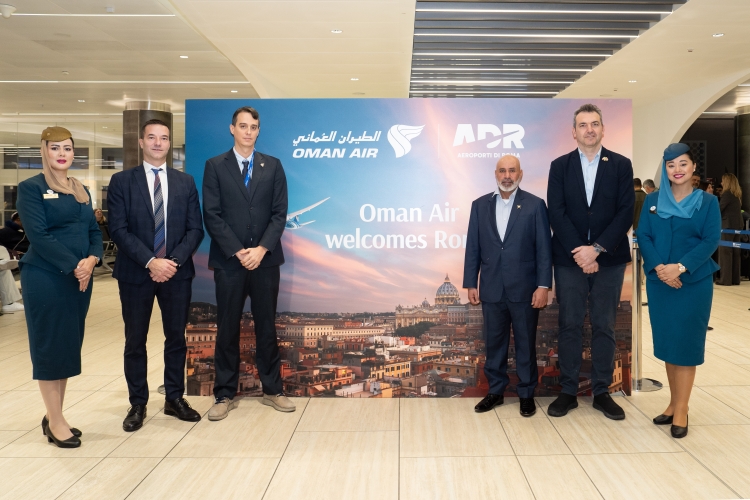
The peak months will see a full recovery for Aeroporti di Rome with flights on routes from North America counting 34 daily departures to Rome Fiumicino, 11 of which from New York alone. This is thanks to the new flights to be launched by ITA Airways and those operated by the American carriers which will see a 50% growth compared to the pre-pandemic summer.
Rome’s Leonardo da Vinci will be Europe’s third hub
Leonardo da Vinci will position itself as the third European hub after London and Paris for the number of flights from and to the Big Apple and among the airports with the greatest growth in flights to North America, including Canada. Among the main novelties are the new ITA Airways and United Airlines’ San Francisco-Rome flights, and flights from Mexico City thanks to the debut of Aeromexico. Destinations historically linked to the capital will also increase, with New York in the lead and Norse Atlantic Airways as a new player with daily flights.
US and Canada, but also Buenos Aires flights
ITA Airways will introduce a new direct flight from Washington starting in June, while the increased Air Canada and Air Transat services will rise to three daily from Toronto and Montreal. WestJet will also invest in Rome by boosting flights from Calgary, the only direct connection from Western Canada to Italy, launched last year, which will be operated up to five times weekly. And from South America Aerolineas Argentinas will connect Leonardo da Vinci with five weekly Buenos Aires flights.
“2023 could really be the year of the definitive recovery of traffic”
“During the summer Fiumicino's traffic is set to return very close to pre-pandemic levels. 2023 could really be the year of the definitive recovery of traffic, with Rome’s the two airports playing a crucial role, - said Marco Troncone, CEO of Aeroporti di Roma. - The dynamism of the American market, the gradual opening of flights from Asia, and the return of strategic areas such as South America and the Middle East, confirm a trend of progressive growth that will boost Rome's role as a strategic gateway for Italy."
Experiences in contact with nature for adults and children
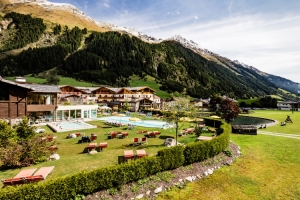
The Schneeberg Family Hotel is in the heart of South Tyrol’s Val Ridanna valley, in beautiful natural surroundings that the resort has always been committed to preserving. The Schneeberg is also an extraordinary treasure trove of nature experiences for adults and children, with daily walks and excursions to explore the alpine landscape, along miners' trails or on the tracks of forest animals.
An indoor infinity pool and bathing lake
In the Schneeberg Family Hotel nature becomes a wellness experience in the Adults Only area on 2,000 sqm with an infinity indoor pool and a natural bathing lake, and offering a range of treatments using herbs and local products. For the whole family there is also the Bergiland Family Water Park with water and tunnel slides, a baby pool and adventure corner, the Mini-Club and an indoor and outdoor playground.
The Light All-Inclusive package includes soft drinks
Sustainability is at the core of the philosophy of the Schneeberg Family Hotel. Only renewable materials are used for the energy supply and the wellness area. Prices for the Bergl Room (2-4 people) start from €120 per person with the All-Inclusive Light package (soft drinks included from the buffet both at lunch and dinner) and all services included.
“We are using new digital and downloadable innovations”
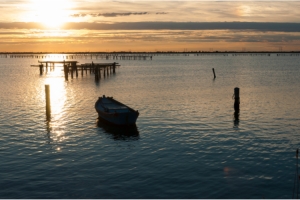
Experiencing Rovigo and its surroundings means experiencing the emotions of surprising and unexplored places, where life unfolds at a gentle pace, in a setting untouched by time.
“To boost awareness of area, the Rovigo Convention & Visitors Bureau is promoting leisure and business travel with the help of new digital and downloadable innovations,” says Cristina Regazzo who heads the Rovigo CVB
The Rovigocard gives access to monuments and exhibitions
Besides the Discover Rovigo app, released shortly before the pandemic, which provides insight into a wide range of attractions, there is the new Rovigocard, an integrated ticket that provides access to places of historical and artistic interest at a discounted price.
“This new tool facilitates visits to symbolic monuments in the city and is part of a broader project to promote the Rovigo,” adds Roberto Tovo, municipal councillor for culture and tourism.
The Grandi Fiumi Museum has appeal for mythology and amber lovers
With the Rovigocard visitors can access the Two Towers, the ancient Medieval Castle built in 1138 and the Temple of the Beata Vergine del Soccorso. The card also covers the Social Theater and the Grandi Fiumi Museum, with its two new rooms dedicated to mythology and amber, as well as the exhibitions in the Roverella and Roncale palaces.
The Renoir exhibition focuses on post-Impressionism
A Renoir exhibition will run from 25 February to 25 June in Palazzo Roverella with 40 masterpieces from the most important European museums.
“The exhibition puts the spotlight on Renoir’s post-impressionist period - says Alessandra Veronese of the Cariparo Foundation - during which time the great painter embarked on a tour of Italy.”
The prototype of a royal train for a sensory gastronomic journey
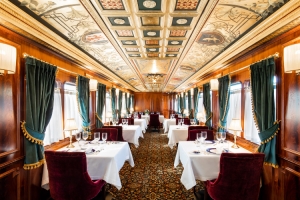
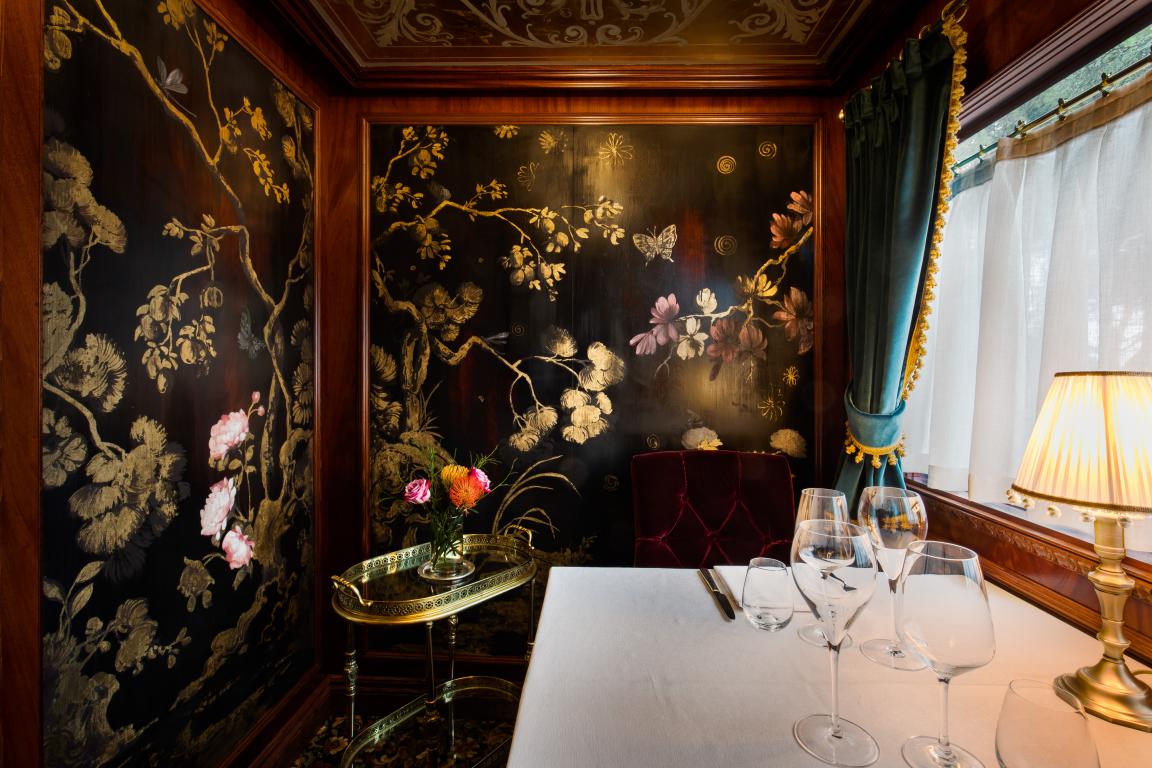
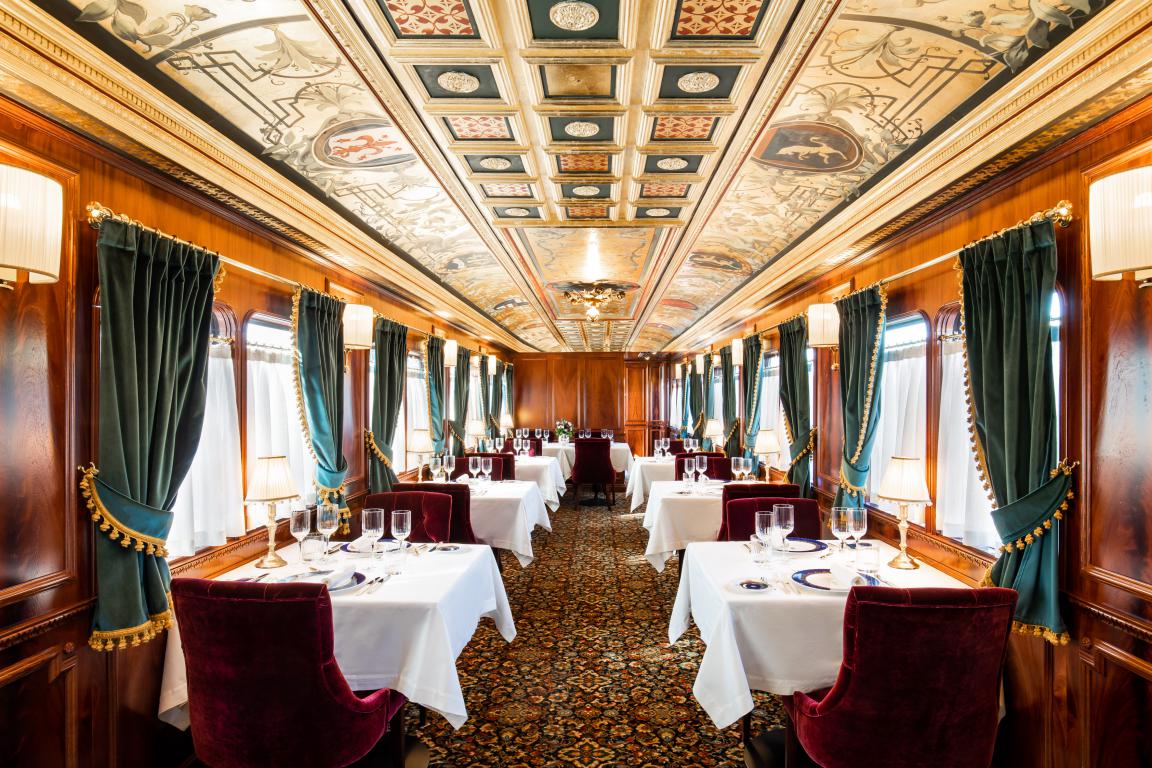
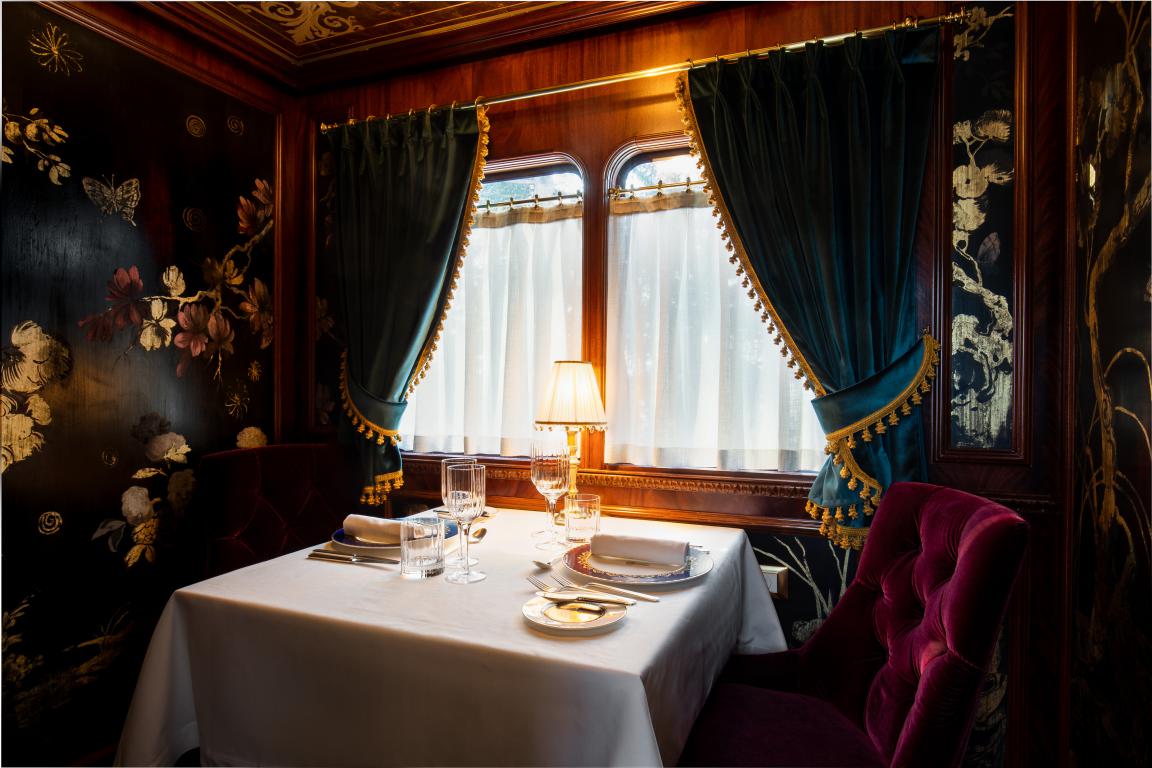
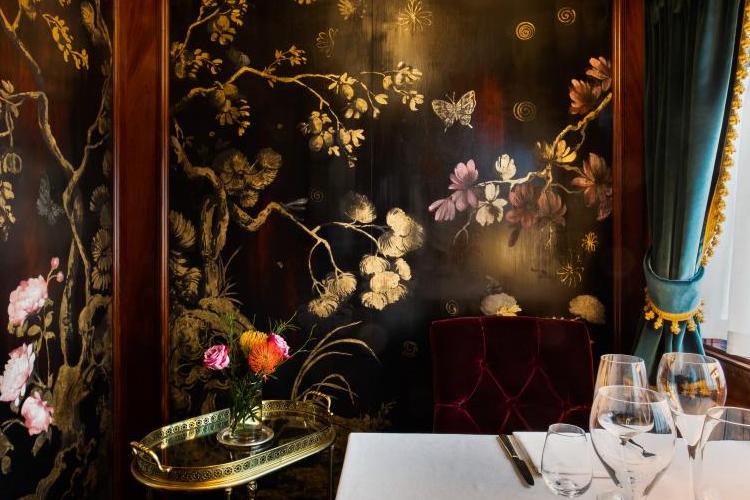
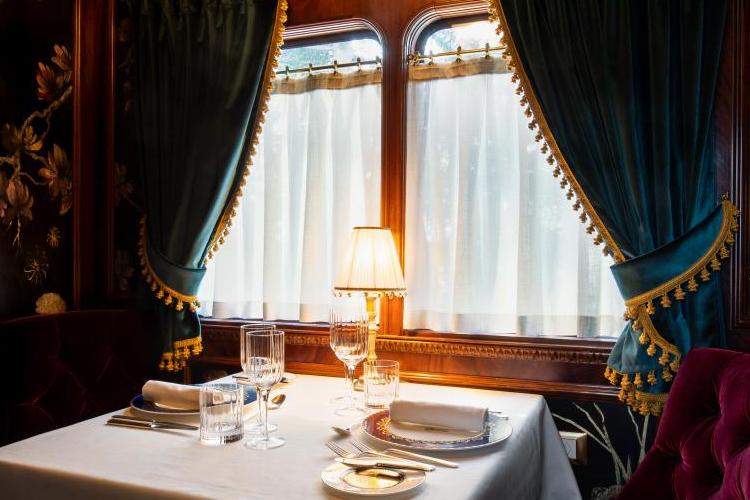
This gastronomic journey transports guests to other places and times, and the star of this sensory experience is an authentic period carriage dating back to 1921. This refined culinary proposal from Palazzo di Varignana’s executive chef Davide Rialti is set in a prototype of a royal train. The refined and elegant cuisine takes guests on a culinary journey that celebrates the routes and historical period of the royal train.
A menu to match the magnificence of the setting
Each course becomes the star of an unusual dinner, a journey through time with flavours, and ancient preparation techniques that entice the senses and elicit emotions. Risotto with Sangiovese Palazzo di Varignana creamed with Stiffonte EVO oil, Parmesan fondue and bacon, and Crespella stuffed with dairy mascarpone, almonds from Podere Rio Rosso, and pear creme anglaise are two of the most memorable dishes.






For private events and special occasions
The restaurant, which is open every Saturday, has 22 seats divided between the main “carriage” and a private room. A space designed for private events and special occasions that is ideal for celebrating any kind of event. Dinner begins at 20.30 with a whistle to mark the journey's departure, and the setting, the food and the service are designed to accompany guests into a new dimension of good taste and elegance.
Four choices for fine dining
The Treno Reale-Carrozza Ristorante completes Palazzo di Varignana's gastronomic offer, joining the fine-dining Grifone Restaurant, the Aurevo Pool Restaurant with its contemporary oil-centric cuisine, and Le Marzoline, which specialises in traditional Emilian cuisine.
A medieval town with a mighty 11th-century fortress
This little medieval town, the beating heart of the Aniene Valley, immersed in the Monti Simbruini Regional Natural Park, is the cradle of monasticism and printing. The first stop on our itinerary is the Rocca dei Borgia, the most important and imposing building in the historic centre of the town. The fortress was built in the 11th century to establish monastic rule over the castle of Subiaco. Equipped with fortifications, dungeons and a mighty tower, the fortress also has a small church dedicated to St. Thomas the Apostle. Subiaco
The birthplace of Cesare and Lucrezia Borgia
Cardinal Rodrigo Borgia restyled the fortress in 1476, raising the fortified tower, and it was here that the cardinal's two famous children, Lucrezia Borgia and her brother Cesare, were born. Today it still preserves numerous works of high historical and artistic value, and inside the fortress we can visit the MACS - Museo delle Attività Cartarie e della Stampa (Museum of Paper and Printing Activities), which will guide us through the history of written communication and its media.
A villa built by Emperor Nero and a town famous for its paper
Emperor Nero had his Imperial Villa built in Subiaco in 60 A.D. This luxurious summer residence extended over an area of 75 hectares, and the emperor used to take refuge here during the hot summer months surrounded by waterfalls, water features and caves. Today, some remains of the Villa can be seen on the sides of the Via Sublacense including a cistern and numerous rooms which were baths and built with bricks and latticework. The ancient Borgo degli Opifici district is in a strategic position in the town between the Piazza Sant'Andrea square, the site not only of the Basilica of the same name but also of the Town Hall, and the Piazza Benedetto Tozzi. The Borgo dei Cartai papermakers district is an immersive museum that combines didactic enjoyment with the production of paper artefacts.
Rafting, skiing, snowboarding…and polenta!
The limestone cliffs of Subiaco are a popular destination for climbers and hikers. One of the best ecological experiences to be had in the Aniene Valley is on a ten-seater rubber raft-style dinghy gliding along the emerald river currents. And you can stop every now and then to take a dip in the clear waters. For skiers and snowboarders the Monna dell'Orso facilities are perfect for all levels, from kids to experts, and its several slopes are divided into blue, red and a black. Subiaco’s Sublacensis polenta, unlike the blend of polenta found in northern Italy, is thin and soft and sprinkled with a rich tomato sauce and meat, usually juicy pork ribs.
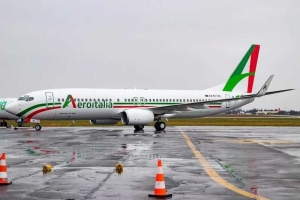
The 189-seat Boeing 737-800 flights will operate every Thursday and Sunday.
"Aeroitalia is proud to begin operations at Perugia Airport, a fast-growing airport serving an area of great beauty and interest that covers a vast part of central Italy. We will be picking up the strong demand that the market is still unable to satisfy," says Gaetano Intrieri, chief executive officer of Aeroitalia.
“Aeroitalia is the sixth airline to operate on our airport”
"This route has been operational in the past and will now allow us to boost the links between two extraordinary areas such as Umbria and northern Sardinia. It is a pleasure to be able to welcome Aeroitalia, the sixth airline to operate on our airport, and we look forward to a long and fruitful collaboration," says Umberto Solimeno, general director of the Umbrian Airport.
Two symbols of resilience to the pandemic's violent impact
The Italian government decided to support the proposal made by Bergamo and Brescia, which have become two symbols of resilience to the pandemic's violent impact in Italy, by promoting their nomination as Italian Capital of Culture 2023 and electing two cities instead of one, as an exception to normal procedures. The aim being to support a project that would not only compensate the territory for the tragic pandemic experience and its losses but would also direct all energies towards a true relaunch in which culture would serve as a catalyst for innovations and visions in the most diverse spheres. 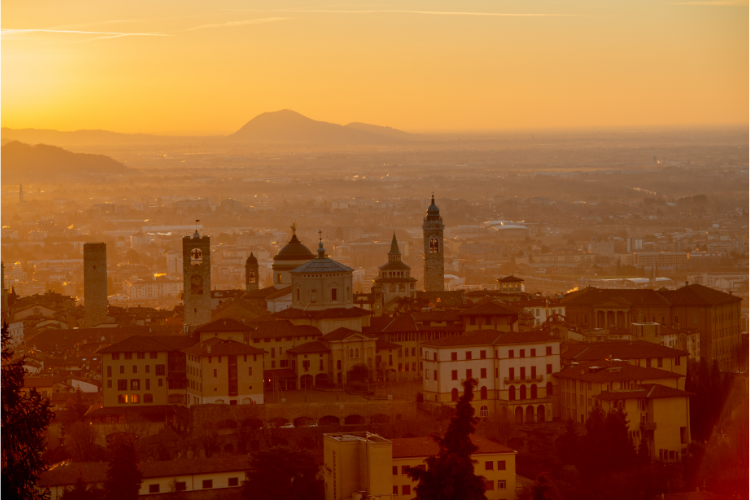 Bergamo
The Italian Capital of Culture 2023 focuses on the theme of the illuminated city
Bergamo and Brescia, located along the pre-Alpine belt and overlooking the Po Valley, have historically been distinguished by the presence of neighbouring civilizations, similar hydrogeological systems, a diverse yet similar urban and housing distribution and similar climatic and environmental challenges. Two cities so close, that they have chosen to embark on a path of growth and development together. The dossier presented for the Italian Capital of Culture 2023 focuses on the theme of the illuminated city, an expression that encompasses various meanings, such as tolerance, creativity, scientific research and technological development.
Public and private players will implement a rich programme of events
The Italian Capital of Culture 2023 project is based on four thematic macro-areas: culture as a cure, the city of nature, the city of hidden treasures, and the city that invents, around which a rich programme of events will unfold, organised in collaboration with public and private players. The events will comprise meetings and conferences, art competitions, exhibitions, music festivals, sporting events, the creation of nature trails as well as raising environmental sustainability awareness among children and organizing infrastructural interventions to improve accessibility to places of culture.
Snow-capped peaks and thermal waters
And what better way to cap off a day at high altitude than among the snow-capped peaks of the Adamello? And stay overnight in one of the exclusive igloos on the Presena Glacier? Created by a team of specialised architects, the rooms are innovative ice suites, offering a truly unique stay! Guests will also find a spa and a swimming pool, as well as an ice cellar where you they sample authentic Trentino spirits. For a romantic couple's getaway you can count on a wide range of spas in Brescia and its surroundings for relaxation and reinvigoration in stunning locations. And do not miss the splendid outdoor swimming pool overlooking the lake with warm water at the Aquaria Thermal spa in Sirmione.
A charming historic centre and UNESCO Roman heritage
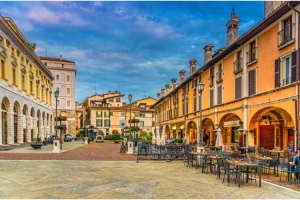
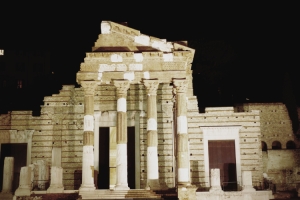
With its historic charm, the centre of Brescia is the ideal setting for enjoying a romantic stroll with your partner. From the central Piazza Loggia, you can reach Piazza Vittoria and Piazza Paolo VI where the old and new cathedrals stand out. From there, we suggest you explore Via Musei, the heart of historic Brixia, from Roman Brescia with its UNESCO heritage to the Roman Theatre, every step leading to something exciting!
Three lakes, cycle and pedestrian trails and lakeside aperitifs
Lake Garda, Lake Iseo and Lake Idro: with its three wonderful lakes, the province of Brescia offers endless opportunities for walking in the open air by the water surrounded by picturesque landscapes. From the cycle and pedestrian path of Limone sul Garda to the lakeside walks of Pisogne, from the timeless beauty of Monte Isola to the unique peace of little villages like Anfo, Crone and Lemprato, there are many paths and walkways for romantic moments. And to conclude the afternoon, you can take refuge in one of the many bars by the lake and savour a delicious aperitif with a view!
Winter guided snowmobile excursions
During the winter months, for adrenaline junkies looking for something fun to do in Brescia’s mountains, there are night-time snowmobile tours. Expert instructors will accompany you on guided snowmobile excursions, far from the chaos of the busiest slopes. The evening ends with a warm dinner in a refuge incorporating local produce, artisanal wines and grappa.
The central San Carlo square has many historic cafés
The first stop in Turin is undoubtedly Piazza San Carlo, the elegant pedestrian square that the people of Turin have nicknamed "the living room of Turin." Under its arcades, there are elegant shops and some of the city's historic cafes, including the simply stunning Caffé Torino, which dates back to 1903. In Liberty style, which was an Italian variant of Art Nouveau, the Caffé Torino was the first bar to have electric lighting.
The world-famous Egyptian Museum is a must-see
From Piazza San Carlo, taking Via Maria Vittoria for about a hundred meters, you reach the vicinity of the Egyptian Museum. It is the oldest Egyptian museum in the world and the most famous after the museum in Cairo. Founded in 1824, it is dedicated exclusively to Egyptian art, and among the collection's artifacts there are mummies, sarcophagi, papyri, statues, and much more.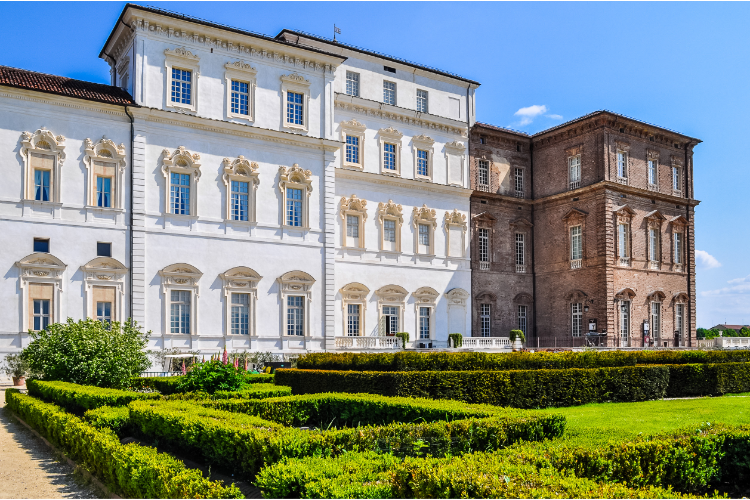
Turin has many magical and esoteric places worth visiting
Piazza Castello, the elegant former capital’s main pedestrian square, can be considered the heart of Turin. Turin’s main shopping streets branch out from it, including Via Garibaldi, Via Po, and the luxurious Via Lagrange and Via Roma. Then there is the Royal Palace, the most important of the Savoy residences in Piedmont, and Palazzo Madama, now the seat of the Museum of Ancient Art. Perhaps not everyone knows that this is one of the places in the Turin magic triangle. If you are interested in discovering the history and magical and esoteric places of Turin, you can take the Magical Turin tour, every Thursday and Saturday evening at 9 pm, starting from Piazza Statuto.
Is the Holy Grail in the Gran Madre di Dio Church?
Strolling under the arcades of Via Po you reach Piazza Vittorio Veneto, one of the largest porticoed squares in Europe, recently restored and made pedestrian. Piazza Vittorio overlooks the Po River, looking towards the Church of Santa Maria del Monte dei Cappuccini, and towards the Church of the Gran Madre di Dio. It is in this beautiful church, on the other side of the river, that legend has it, that the famous Holy Grail, the chalice from which Christ drank during the Last Supper, is located.  Mole Antonelliana
Exceptional 360° views from the elevator in the Museum of Cinema
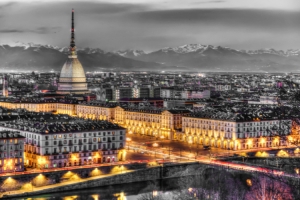
Passing through the elegant former capital’s Via Montebello, you reach Turin's iconic building, the Mole Antonelliana. Built in 1873 by the architect Alessandro Antonelli, it was initially designed as a synagogue, but the construction eventually reached an enormous height (topping 167 meters it is the tallest building in Turin). It houses the National Museum of Cinema which is another absolute must-visit! There is a panoramic elevator that takes visitors up to a height of 85 meters. And, on clear days, they can admire an exceptional 360-degree view of the city, the Turin hills, and the Alps with their snow-capped peaks for much of the year.
The Reggia di Venaria royal palace is not to be missed
For nature lovers there is the Valentino Park, Turin's green lung, with its medieval village, and from there, you can follow the Po river by walking along the Murazzi, which reconnect to Piazza Vittorio Veneto. You should not miss the opportunity to visit the Reggia di Venaria royal palace with its magnificent gardens and splendid temporary exhibitions. Also worth a visit are the recently reopened salons of the Palazzina di Caccia di Stupinigi, a charming hunting lodge, and the other Savoy residences in the area surrounding the elegant former capital of Italy.
German visitors like to explore lesser-known destinations
“Germany is Italy's first inbound market. In 2022, 9.4 million German visitors came to Italy, with 58.5 million overnights and a 6.2-day average stay. It is a more diverse kind of tourism, with people coming, and then returning to Italy, to discover new destinations, try new experiences, and to explore smaller and lesser-known destinations.”
“The German market feeds into other industries”
“To put Minister Santanchè’s idea into action, ENIT (the Italian national tourist board) works closely with operators, providing assistance and training, and ensuring the quality of the offer, because we know how valuable the German tourist flows are. It is a thriving market that feeds into other industries,” said Ivana Jelinic, CEO of ENIT, the Italian tourist board. “German travellers stay in Italy for at least a week. Some 25% of air arrivals in 2022 were for 6 to 8 nights (26.5% in 2021), and 81% of airport arrivals were leisure travellers.”
Focusing on Ischia, and on food and wine
The ministry and ENIT are focusing on an Ischia promotional campaign to aid the island's recovery through tourism and reposition it once again as a prime international destination. Another sector coming in for attention is food and wine,
“which represents one of Italy’s most important excellences, and is a true flagship for our country,” said Ivana Jelinic.


Castellabate is a charming hilltop town located in southern …
303Castellabate is a charming hilltop town located in southern …
303