






Pet-friendly pitches, bungalows and mobile homes
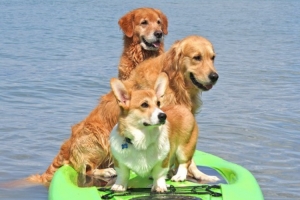
For pet lovers The Lago di Garda Camping villages have opted for a pet-friendly policy, offering their customers the opportunity to bring their four-legged friends along with them. This Garda consortium is not limited to pitches, but also has bungalows and mobile homes that allow guests to bring along all the members of their family. Which is a great convenience as it frees them from the hassle of hiring someone to pet-sit or having to entrust them to a dedicated boarding facility.
Beaches where dogs are welcome
Almost all the area’s accommodation facilities, in line with the philosophy of natural and eco-sustainable tourism, are offering animals the same welcome reserved for their guests, for example pampering them with welcome kits and comfortable kennels. In addition there is a series of services that are not easy to find - not just the well-established pet-friendly areas, but also numerous playgrounds and beaches where guests with dogs are welcome.
Some campsite restaurants also offer delicacies for pets
Camping Fornella and Camping Europa Silvella have reserved part of their beaches for dogs, and near the Baia Verde Camping in Manerba del Garda there is the Fido Beach. In the immediate vicinity of the Camping Bergamini Boutique in Peschiera del Garda, the Braccobaldo Beach has a wide range of services including deckchairs, sunbeds, beach umbrellas, showers and bowls and welcome kits for four-legged friends. And some campsite restaurants also offer delicacies dedicated to pets.
Trekking and Nordic walking trails
The area also has a lot of activities to be enjoyed outside the campsites, like discovering the lovely villages along the coast and there are numerous trekking and Nordic walking trails, with different levels of difficulty, throughout the area surrounding the lake.
For more information on pet-friendly holidays on Lake Garda: http://bit.ly/it-pet
For information and reservations: www.lagodigardacamping.com
On the upswing
At the same time occupancy rates reached 49.6% (17.4% the previous year and 45.1% the forecast), while average rates were €103.48 (vs. €68.8 in the first half of 2020-21). Hnh Hospitality had already closed 2021 positively, a year in which it recorded a total direct management turnover of €34.8 million. Compared to the previous year (21.4 million), the group's turnover increased by 62.3%. Consolidated ebitda as at 31 October 2021 was then €3.5 million, while profit was €1.4 million.
An average occupancy rate close to 65%
“The first half of fiscal year 2022 closed on a decidedly positive note, even exceeding forecasts, and in addition to increased bookings we are also recording a strong recovery in the conference segment – said CEO Luca Boccato. - We believe the second half of the year will also exceed forecasts allowing us to close the fiscal year with an average occupancy rate close to 65% and a total turnover in excess of €70 million: a result never achieved before (even higher than the €60 million indicated at the time of the approval of the financial statements last April. Ed).
Looking at new opportunities in Sardinia and Milan
Revenue performance will also be boosted by the company’s expansion and the opening of two new properties: the Voco Milan-Fiere Hotel in Milan in September 2021 and the Almar Giardino di Costanza Resort in Mazara del Vallo, Sicily in May. The company is considering further opportunities in Sardinia and Milan.
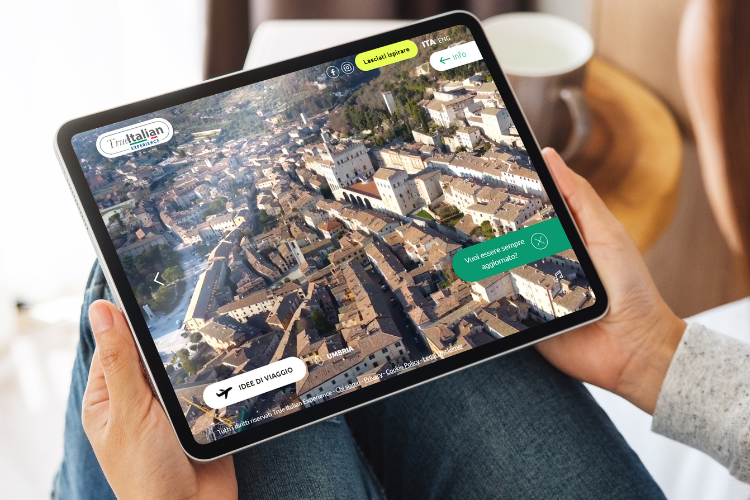
How did it all start?
True Italian Experience started in 2019, the result of a private investment and the expertise acquired in 35 years by the communications and marketing group Assist Group S.r.l. After three years of study, research, testing and analysis we are finally here today.
The word experience is often overused in the world of tourism. On this portal the claim is Experience Italy minute by minute and it has thousands of videos, one for every minute of the day, promoting Italy's attractions in visual storytelling. Where did the idea come from?
Italy is an evergreen, but the tools and the ways of communicating it need updating. To capture the attention of today's tourists we inspire them with videos: hundreds of hours of images that we produce ourselves and that are available on our portal.
This month the portal opens a b2b section with access to all affiliates. Why is this important?
We are focusing a lot on the b2b segment. We want everyone to participate in the project - institutions, regions, distribution, the transport and hospitality sectors. Our objective is to aggregate the entire supply chain.
Ita Airways is a partner and was very much involved in the launch of the portal. What role does it play?
Ita Airways is a strategic partner for us and will be the only participating airline.
Will the True Italian Experience offers also be available as ancillary services that can be booked online when buying an ITA ticket?
Yes, that is already the case. And the aim is to open this up to other transport components to enhance and sell this quality Italian product.
Gattinoni is also a partner: will you be operating through its agency network?
Gattinoni is a technical and administrative partner through which we operate. But it is just one of the b2b networks: we are addressing the entire agency system.
Who can propose experiences to be included in your offer? Does it have to be an already digitized product? Is there an entry selection?
Absolutely yes, the experiences are selected and identified through a value matrix. There are parameters that the offer must respect, and the experience must already be online. Though in some cases we can intervene to make it digitizable. We try to give everyone an equal chance of entry.
How can someone propose their experience to True Italian Experience?
We are already in the process of collecting new proposals, starting with large international groups. So if there is anyone who wants to make a proposal, just send us an email.
“Taking our hospitality to new heights with Hilton”
"We are committed to offering an authentic and independent stay and experience. Over the years we have operated as an independent hotel, welcoming tens of thousands of guests. Now, with the strength of the Hilton brand, we will take our professionalism and our style of hospitality to new heights,” said Walter Pecoraro the owner and CEO of G&W Invest.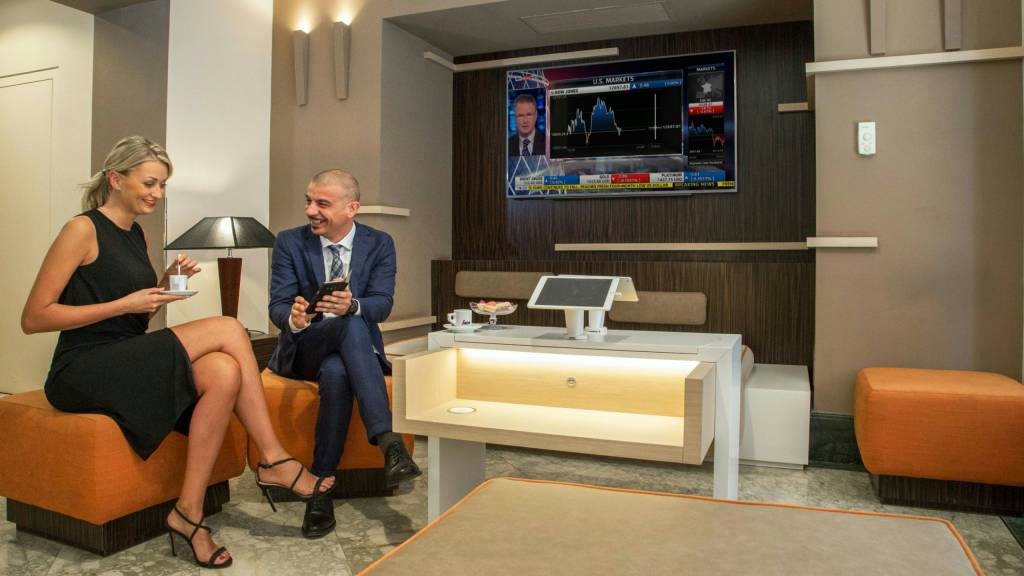
Close to ancient Roman monuments
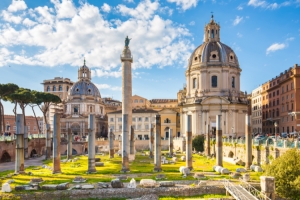
The building, the Palazzo Capranica del Grillo, is one of the oldest in the city, and is situated in the core of Rome's historic district. It is just two blocks from Piazza Venezia and surrounded by ancient Roman monuments and top-notch dining options, as well as wonderful museums, with the Trevi Fountain, the Spanish Steps, and the Coliseum just a short walk away.
Tapestry is growing across Europe
According to David Kelly, Senior Vice President Operations, Continental Europe “Tapestry Collection by Hilton, the second brand we launched in Italy this year, is fast growing across Europe with debuts in Portugal, Spain, France, and the United Kingdom.
76 rooms in an historic building
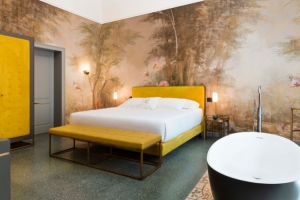
“The current composition of the Cosmopolitan Hotel - explains André Straja, founder and creative director of GaS Studio - is the result of changes that took place in different periods on an historic building, thus giving life to a hotel that can boast 76 rooms. The design team focused on historical features like vaults and arches and on light colors, maximizing the use of natural light.”
After the recent confirmation of the rumours concerning the Danieli in Venice, to be managed by the Canadian company from 2025, rumours are now circulating about it opening two hotels in Rome. At present it is not clear whether they are both possible, or whether one excludes the other. Co-star of the two events, the Italian daily Corriere della Sera tells us, is the Puerto Rican investment company Fort Partners founded by Nadim Ashi, who has collaborated with Four Seasons in the past.
Close to the Vatican and to the Trevi Fountain
The Puerto Rican company was provisionally awarded the tender for Palazzo della Rovere, a stone's throw from St. Peter's, almost at the same time they seem also to have signed a preliminary contract, for €165 million for Palazzo Marini in Piazza San Silvestro which is just across the road from the Trevi Fountain. Fort Partners are said to have paid a deposit of €20 million, effectively locking the operation. And a management contract with Four Seasons would seem to be already on the table.
Apparently the Pope is not happy with the proposal
For now neither company has confirmed the rumours. But it is known that the eventual transformation of Palazzo della Rovere into a 5-star hotel has sparked controversy, because Pope Francis does not like the idea of a super-luxury structure so close to St. Peter's. With regard to Palazzo Marini, an ad hoc investment structure has already been set up to find the necessary resources to cover the renovation costs estimated at an additional €100 million. Luxembourg-based Marini International Sicav is in charge of raising capital for Marini Asset (the Italian corporate vehicle that seemingly signed the preliminary agreement) and for the closed-end real estate fund reserved for Millennium Luxury.
The voters of the awards, that celebrate the very best in travel, were the demanding, high-spending readers of The Times newspaper, and this year, having put Italy first they voted the UK second and Greece third. Roberta Garibaldi, CEO of the Italian Tourist Agency ENIT, says Italy’s supremacy is thanks to “locations that make people dream and give them exclusive experiences.”
And, we add, thanks to people in the industry who are some of the hardest working, most creative and hospitable you can find. Because beyond Italy’s natural beauty, magnetic appeal, unparalleled food and wines and enviable climate, Italians do it better!
 Pamela McCourt Francescone
Executive Editor
Secondly we have to incentivize, and thirdly we need to seriously punish offenders when things go wrong, like the tourist who pockets a piece of Pompeii, or scribbles on the Coliseum.
The EU has invested heavily in eco-digital transition. How is this working in Italy?
Resources have been allocated intelligently, but there is still much to be done. Eco-digital technologies must be better used to encourage sustainable tourism. For example, giving alerts when a destination is overcrowded - don't go to Positano today because there are a thousand boats docked. The mass tourist does not like being a mass tourist, he finds himself as one. So if we can help him understand that an area is off-limits at certain times, then we can reduce the annoyance for him, and the impact on local communities.
You spoke of the need for certifying green offers. Do tourism players see this as a threat or a salvation?
Those who do things seriously will see it as a positive thing, those who on the contrary have other objectives, who prefer to remain in a grey area, have no interest in certification. We have to involve the big players. If the big companies choose to work only with certified setups, then there will be a chain reaction and everyone will seek certification. There are many successful examples, take Jesolo (a popular seaside resort town on the Romagna Riviera. Ed) where many beach establishments are already safety and sustainably certified. The problem is to progressively make it a national standard.
The planned reform of beach concessions could jeopardise years of investments by small businesses. What is happening?
This proposal has been very badly handled. Italy has not been able to make regulations that distinguish between those who speculate - at the cost of the community - and family businesses that for years have also been maintaining the coastline. Now we must ensure that these family-run concerns are protected, and I hope that in the new calls for tenders there will be greater attention to social and environmental issues. Italy has a great tradition of hospitality, we are a quality tourist destination, but we do need to further improve the level of services. For example to achieve higher levels of sustainability beach establishments should all be running on solar energy. I made the solar law 15 years ago in 2007 when this idea was first launched.
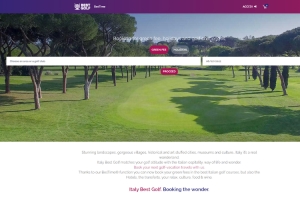
Italy Best Golf is a B2B platform created for the 2023 Ryder Cup which will be held in Rome from 29 September to 1 October 2023
Italy is 10th in the world as a golfing destination
This unique sporting event will put Italy into the world spotlight as a golf tourism destination. According to data from the Italian Tourist Board, Enit, Italy is currently in tenth place worldwide for golfing tourism with 1.8 million arrivals and 3.9 million overnights.
The Ryder Cup comes third after the World Cup and the Olympics
The Ryder Cup that Rome will host in 2023 is the third most followed sporting event in the world in terms of popularity and media resonance after the World Cup and the Olympics. According to the Italian Golfing Federation it will bring revenues of €157 million with another €56 million coming from television rights and sponsorships, and the economic spin-off, which will have a very wide geographical and seasonal spread should not be underestimated.
A B2B platform for golf packages
The Italy Best Golf platform will allow tourists from all over the world to plan and book their golfing holiday in a single operation, selecting the real time availability of green fees, hotel experiences and tourist services, and all with a single payment. In addition it will provide B2B access to tour operators with golf holiday packages, while hotels will be able to access the reserved B2B area and make green fee bookings directly for their clients or create hotel+golf course packages.
“€1 billion more in tourism turnover in the post-Ryder Cup period”
“With the Ryder Cup in Rome the world of golf is offering a great opportunity to Italian tourism,” says Paolo Garlando, general manager of Italy Best Golf. “Italy attracts an estimated 65 million foreign visitors annually and no less than 5% of these play golf. With an average expenditure, excluding travel, of €800, we could generate €1 billion more in tourism turnover in the post-Ryder Cup period.”
Guestrooms in soft pastel colours
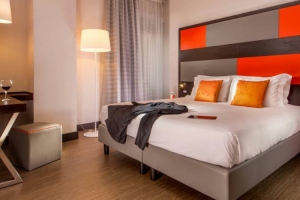
The jewel in the crown is the Ambar Bistrot Restaurant, which is also open to non-resident customers, where local dishes and Lombardy and Brianza typical dishes can be enjoyed. The rooms, in soft, pastel colours have original wall art and headboards featuring the foliage of the plant varieties after which the different floors are named.

A group with female leadership
"We are proud to enhance our city, the nerve centre of the ever-expanding Apulia region, - explains Mariadele Casillo and Gaia Cobol, who act as spokespersons for the group, revealing a marked female leadership. - Hence the decision to invest in the world of luxury hospitality.
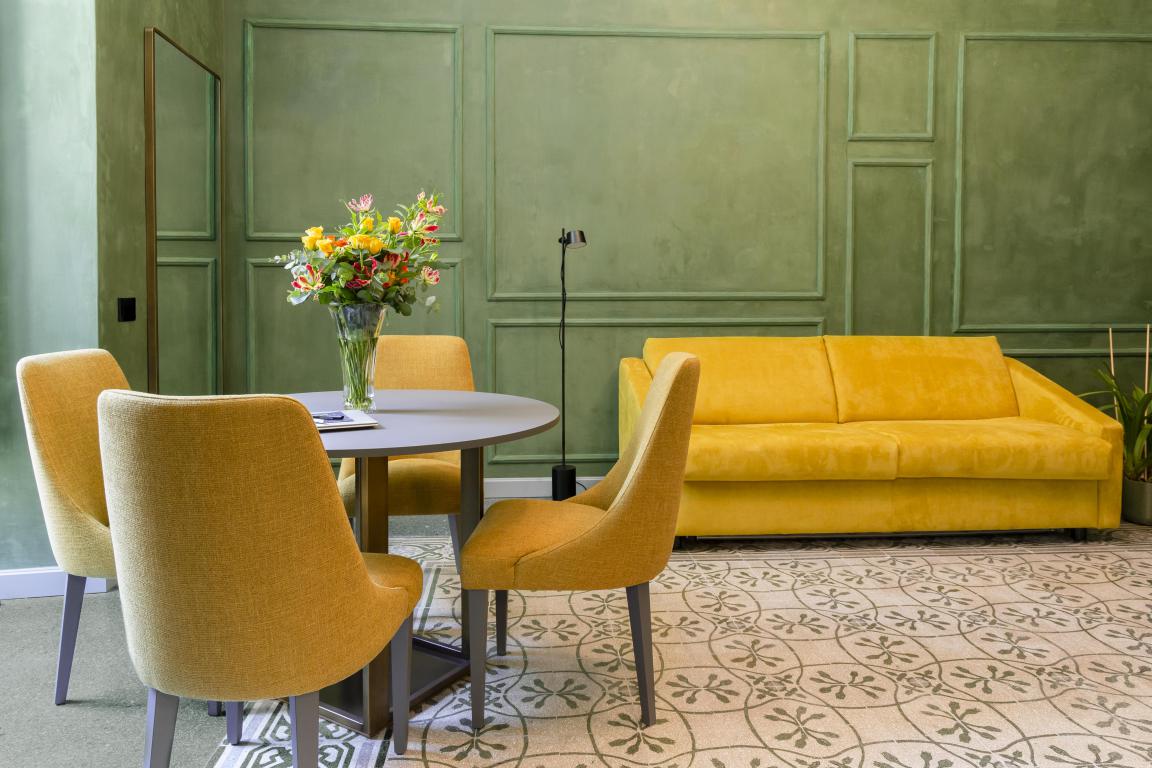
One suite has a private pool
The 12 rooms are apartments with ample space; four have outdoor terraces, and one suite also has a private swimming pool carved out of the rock. The spa is in the palace's ancient cellars and envelops guests in a cozy atmosphere with its swimming pool and treatment areas.
Code access for guests
The boutique hotel’s reception will be open until 10 p.m. and guests will be given code access. The breakfast room is designed as an open space, and is also for outside guests. The rooftop of the Vis Urban Suites & Spa, to be opened in spring 2023, is also designed for private events in the city centre.



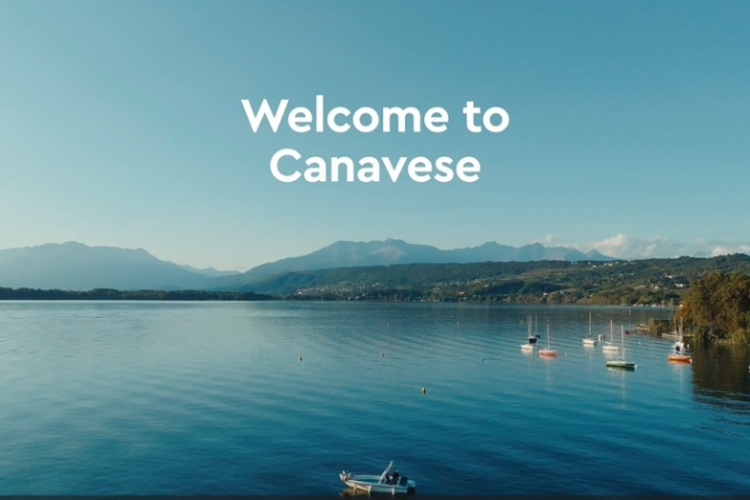
Welcome to Canavese, an unexpected corner of Piedmont where …
850Welcome to Canavese, an unexpected corner of Piedmont where …
850
