



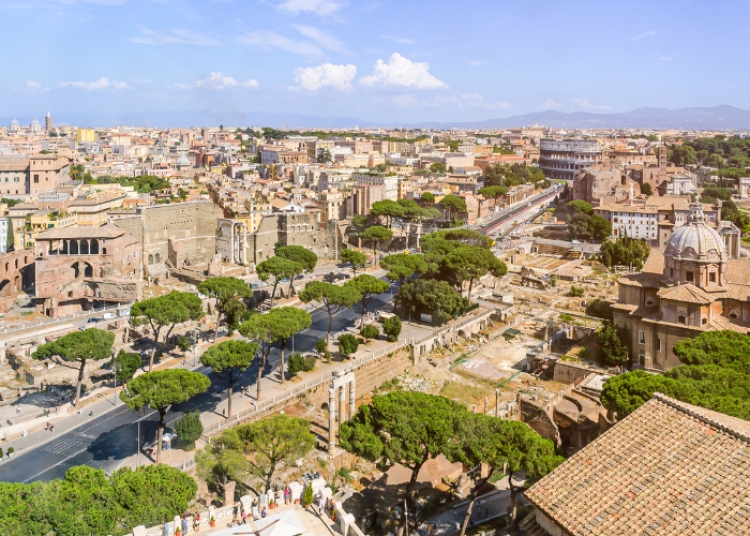









Rome’s historic Imperial Fora are set for a major transformation, with a series of projects aimed at giving pedestrians greater access to one of the Eternal City’s most important archaeological areas.
Considering removing vehicles altogether
Under the new traffic plan only two central lanes will remain for public transport. However, the long-term goal could be even more ambitious. According to Rome Mayor Roberto Gualtieri, once the new Metro C station at Piazza Venezia opens, currently expected in 2032–33 the city could consider removing vehicles from the area altogether. [The "2032-33" date is open to a wide range of interpretations, the other day when I mentioned it to a taxi driver, he laughed and said "more like 2050." Ed.]
Bonding the ancient ruins with the modern city
The current project will already significantly increase pedestrian space. Four lanes will be returned to pedestrians, while the existing difference in height between the road and pavements will be removed. Gualtieri said the redesigned Via dei Fori Imperiali road will create a stronger relationship between the ancient ruins and the modern city. Rather than viewing the monuments from a car as a distant backdrop, visitors will be able to move through the archaeological landscape and better understand the different layers of Rome’s history.
Improvements in adjacent areas
Several other improvements are expected to be completed by the end of this year or during the first months of 2027. New terraces overlooking the Roman Forum are due to open in January, together with a new bridge connecting the Monti neighbourhood with the Mamertine Prison, passing alongside the Forum of Caesar. The transformation of Via dei Cerchi is already complete, including a new cycle and pedestrian path, and the low wall along the road will soon be removed, creating a direct connection between the Circus Maximus and the Palatine Hill.
Creating a pedestrian archaeological experience
Nearby work on Via di San Teodoro has also been completed. What was previously an open-air car park has been transformed into a public space with trees, benches and a small square. From January 2027 the uphill and downhill approaches to the Capitoline Hill will also be cleared of cars and redesigned, further expanding pedestrian areas around the historic centre. Another important project concerns the Torre dei Conti, a medieval tower near the Imperial Fora. Work was halted following the collapse of part of the structure, which tragically killed a construction worker last November. Once it is redeveloped, the tower is expected to become a small exhibition space focused on the medieval history of central Rome. These projects are a broader plan to transform the Fora from being a traffic-dominated environment to a more accessible archaeological and pedestrian experience.


