









Prioritizing quality over volume
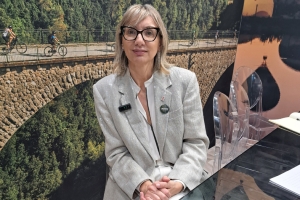
“We are also seeing growing, albeit still modest, interest from the UK and the Mexican markets in mid-to-high-end, quality travel,- says Antonella Chiaranzelli, CEO and general manager, Tomorrow Travel. -Recent geopolitical tensions, particularly the conflict in Iran which has significantly slowed the Asian market, are also affecting demand from Anglo-Saxon countries.” Tomorrow Travel has always prioritized quality over volume, focusing on sustainable growth. “We specialize in creating tailor-made trips, for both individuals and groups, bespoke to the client’s needs. This approach allows us to maintain a high level of personalization and attention to detail, offering authentic experiences and quality services without compromising the product’s identity.”
At this stage, “the American and Canadian markets are experiencing a slowdown in demand, mainly due to airport delays and rising airfares, driven by high fuel costs. We incoming tour operators, together with many of our suppliers, are absorbing the cost increases linked to fuel prices, particularly for transfers and daily car and coach hire services. However, should the situation fail to improve, an increase or adjustment in the prices of package holidays is foreseeable, with an inevitable impact on the end customer and a possible contraction in tourist demand. Although Italy continues to be perceived as a safe and reliable destination, the global context is affecting perceptions of travel. There is greater attention to planning and a growing demand for flexibility in booking conditions, as well as concern over rising costs."
Boutique hotels and villas in strategic locations
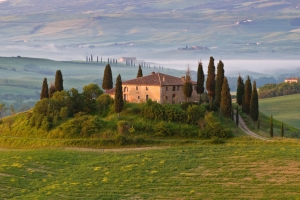
By 2026, demand will increasingly be geared towards authentic, exclusive and highly personalized experiences. “Alongside the major art cities, there is a growing desire to experience the region in a more intimate way, with options that allow direct contact with the local culture. We have expanded our products with an even more carefully curated selection of boutique hotels and villas in strategic locations, allowing guests to immerse themselves in local life without sacrificing the chance to explore iconic destinations through day trips, as is the case, for example, in Tuscany or along the Amalfi Coast. Among emerging trends there is a growing interest in the Dolomites, even during the summer, and in Sardinia, whilst destinations such as Puglia and Sicily continue to attract strong interest, often included as subsequent stops following an initial stay in Rome. At the same time, demand is growing for multi-generational trips and small group tours, formats increasingly appreciated for their ability to combine flexibility, shared experiences and bespoke itineraries.”
A more informed demand for sightseeing
2026 is shaping up to be another positive year for inbound tourism with a few caveats, and CEO of Green Line Tours, Emanuele Orlando Desideri, says it's important to view the Jubilee without the hype. "It generated huge visitor numbers but also led to concentration rather than a broad distribution of value. We’re seeing a more selective and informed demand for sightseeing. The urban experience is growing, but with greater focus on accessibility and products such as Hop-On- Hop-Off become strategic as they allow us to manage visitor flows in an orderly manner and respond to individual and last-minute demand.”
Last-minute bookings are on the rise
The United States remains the key market for organised sightseeing, “with solid, high-quality demand. The Gulf markets are also very interesting, geared towards private and premium services, and there are positive signs from Asia, particularly Korea and South-East Asia, which show a growing preference for flexible and well-structured experiences.” International tensions are leading to a more cautious attitude among travellers, “but Italy continues to be perceived as a safe and attractive destination. This translates into more flexible and responsive demand for sightseeing, with a preference for easily adaptable services. Last-minute bookings and the use of digital channels are on the rise which particularly favours products such as Hop-On-Hop-Off, which lend themselves to being purchased even during the stay and perfectly meet the contemporary traveller’s need for flexibility.”
Objectives and strategies
Green Line Tours aims for “balanced growth, with a strong focus on the quality of sightseeing services. We are investing in vehicles, training and content, but also in product development: Hop- On-Hop-Off, for example, is no longer just transport, but a genuine tool for discovery, enriched by multilingual storytelling and integration with themed experiences.” By 2026, the operator had expanded its sightseeing offering with small-group experiences, themed tours and alternative itineraries, also promoting less crowded destinations. “At the same time,” adds the manager, “we have evolved existing products, integrating services such as the Hop-On- Hop-Off with richer content and experiential combinations.”
New and reimagined products
Efforts to launch new products have paid off: “Demand from Anglo-Saxon markets is growing and increasingly focused on quality and authenticity. In this regard, even established products such as Hop-On-Hop-Off have been reimagined to offer a more refined experience, with greater attention to content and user experience, in line with the expectations of an increasingly discerning customer.”
"A growing focus on diversification and quality"
“Despite the uncertainties, the outlook remains positive overall, and we are confident of bringing the season to a close with satisfactory results. Europe remains the main target market, both due to its proximity and the stability of demand. At the same time, we are closely monitoring the American market, which is currently maintaining good levels and still represents a significant contribution in terms of volume and value. At this stage the main objective is to consolidate our figures, maintaining the levels achieved in recent years, but with a growing focus on diversification and the quality of our offering," says Zappalà
Tapping into new high-potential market niches
"Rather than choosing between volume and quality, the strategy is, on the one hand, to preserve existing flows and, on the other, to tap into new high-potential market niches. An interesting example is groups with specific needs, such as the one recently hosted linked to the world of Parkinson’s disease, which has opened up new prospects for more targeted and inclusive tourism. This shows that there are segments that are still largely unexplored but very promising. There has been a significant decline in visitor numbers from Australia, though they have not disappeared entirely. Overall things are uncertain, which is reflected in conversion times which have lengthened and bookings which are more fragmented and less predictable. There is a slight decline of around 5% in some markets, offset by growth in others. This rebalancing confirms a transitional phase rather than a genuine structural crisis".
"Focusing primarily on small, bespoke groups"
Demand from Anglo-Saxon markets remains largely stable: ‘Although it does not currently represent our main market in terms of overall share, the clientele continues to show interest in the destination, but with requests increasingly focused on personalized experiences. We are therefore focusing primarily on small, bespoke groups, that ensure greater flexibility, attention to detail and content more in line with expectations, whilst also offering some regular-departure tours, selected to meet a more structured demand.” Dimensione Sicilia’s strength remains its bespoke product, which forms the heart of its offering. “The bespoke approach, applied to both groups and individuals, allows us to respond precisely to the needs of an increasingly demanding and segmented clientele. At the same time, our regular programme has been enhanced with the introduction of French-language tours, a targeted investment that is already yielding positive results. This expansion enables us to boost our presence in specific markets and improve the accessibility of our offering.”
Holidays with the extended family, a need for privacy, an immersion in nature, a desire for authentic contact with the local area and community: the characteristics of the most sought-after holiday in 2026 follow a very specific paradigm, which many operators in the tourism sector have already developed and interpreted. This is a trend that ties in well with the increasingly frequent demand for villa stays. Not just any property, but a villa perfectly integrated into the local landscape, with a range of five-star amenities that make the holiday feel like a stay in a five-star hotel, just for you.
This is precisely why the survey by Il Sole 24 Ore is so timely, highlighting how the luxury property market is particularly thriving, especially in the South. Italy’s luxury property market is is in fact operating at two speeds, with demand in the high-end property sector set to rise by 6.3% by 2025. The analysis is contained in the Market Report Italia 2026 presented by Engel & Völkers in collaboration with Nomisma.
Whilst in the North around one in two transactions is for the purchase of a first home, the South and the Islands account for the highest proportion of investment purchases in the luxury property segment, amounting to 23% of the total. These are investments that often stem from a desire to convert properties for tourist use, and that Sardinia, the jewel of the national property market, tops the rankings. On the Costa Smeralda between Porto Cervo and Porto Rotondo, sea-front villas and luxury penthouses are reaching record prices, while the Amalfi Coast and Capri are also consolidating their status as top destinations.
Between these two hubs lies Central Italy, which stands out as the favourite destination for international investors. In this area, foreign buyers, mainly from Europe and North America, account for 52% of the total. In the Tuscan hills and Chianti, moreover, over half of buyers are foreign nationals. Engel & Völkers’ outlook for the current year remains positive. The high-end and luxury segments will continue to benefit from solid demand, driven both by domestic buyers with high spending power, and by international buyers keenly interested in lifestyle and tourist destinations, such as rural areas of particular scenic beauty, art cities and coastal resorts.
 Isabella Cattoni
Journalist
The US and Canada are key markets
The markets in which it has been operating for over 20 years, North America – in particular the United States and Canada – remain solid, key markets. “There is also a growing, albeit still modest, interest from the UK and the Mexican market in mid-to-high-end, quality travel,- says CEO and general manager Antonella Chiaranzelli. -Geopolitical tensions, particularly the conflict in Iran which has severely slowed the Asian market, are also affecting demand from Anglo-Saxon countries.”
"Authentic experiences and quality services"
Tomorrow Travel has always prioritized quality over volume, focusing on sustainable growth. “We specialize in creating tailor-made trips, for both individuals and groups, bespoke to the client’s needs. This approach allows us to maintain a high level of personalization and attention to detail, offering authentic experiences and quality services without compromising the product’s identity.”
Booking trends are fluctuating
At present, booking trends are fluctuating. “The American and Canadian markets are in slowdown due to airport delays and rising airfares, driven by high fuel costs. We incoming tour operators, together with many of our suppliers, are absorbing the cost increases linked to fuel prices, particularly for transfers and daily car and coach hire services. However, should the situation fail to improve, an increase or adjustment in the prices of package holidays is foreseeable, with an inevitable impact on the end customer and a possible decline in demand. Although Italy continues to be perceived as a safe and reliable destination, the global context is affecting perceptions of travel. We are seeing greater attention to planning and a growing demand for flexibility in booking conditions, as well as concern about rising costs.
New, more local products
“Alongside the major art cities there is a growing demand for local areas in a more intimate way, favouring options that allow direct contact with the local culture. With this in mind, we have expanded with an even more carefully curated selection of boutique hotels and villas in strategic locations, allowing guests to immerse themselves in local life without sacrificing the chance to explore iconic destinations through day trips, as is the case, for example, in Tuscany or along the Amalfi Coast. Among emerging trends, there is a growing interest in the Dolomites even during the summer season and in Sardinia, whilst destinations such as Puglia and Sicily continue to attract strong interest, often included as subsequent stops after an initial stay in Rome. At the same time, demand is growing for multi-generational trips and small group tours, formats increasingly appreciated for their ability to combine flexibility, shared experiences and tailor-made itineraries.”
The international situation is a delicate one and tourism is struggling to interpret how travellers are going to react.
Authoritative sources warn against the risk of focusing solely on nearby destinations because, they say, the fact that Italians are staying in Italy, Germans in Germany and so on is more than just a possibility. It is a trend that would trigger inevitable chain reactions, from traffic congestion to rising prices and an inevitable decline in quality. But it would also mean a loss of revenue from all those foreign markets that are the lifeblood of Italian tourism.
Looking further afield there are dynamics emerging at a European level that need to be kept under close check. For example tourism in the eastern Mediterranean is reacting unevenly to the current regional crisis. Greece remains widely perceived as a safe European destination and could even benefit from a reoriented demand for travel. Turkey is showing resilience, but faces caution due to its proximity to theatres of war and flight disruptions. The situation is different for Cyprus, the area closest to the conflict, which is exposed to the highest tourism risk due to uncertainty over bookings.
What seems clear is that many travellers will continue to travel, but they will choose places they consider safer and easier to reach. This creates “winners and losers” within the eastern Mediterranean itself. Destinations that are geographically close to the crisis but politically stable could benefit from travel demand, while destinations that appear too close to the front line or receive stricter government warnings are more likely to experience a slowdown in bookings.
In this context Italy would seem to be called upon to play a leading role, but it is still too early to understand if and how inbound tourism flows will evolve. Meanwhile, the Easter holidays are just around the corner.
Isabella Cattoni
Journalist
The international situation is a delicate one and tourism is struggling to interpret how travellers are going to react.
Authoritative sources warn against the risk of focusing solely on nearby destinations because, they say, the fact that Italians are staying in Italy, Germans in Germany and so on is more than just a possibility. It is a trend that would trigger inevitable chain reactions, from traffic congestion to rising prices and an inevitable decline in quality. But it would also mean a loss of revenue from all those foreign markets that are the lifeblood of Italian tourism.
Looking further afield there are dynamics emerging at a European level that need to be kept under close check. For example tourism in the eastern Mediterranean is reacting unevenly to the current regional crisis. Greece remains widely perceived as a safe European destination and could even benefit from a reoriented demand for travel. Turkey is showing resilience, but faces caution due to its proximity to theatres of war and flight disruptions. The situation is different for Cyprus, the area closest to the conflict, which is exposed to the highest tourism risk due to uncertainty over bookings.
What seems clear is that many travellers will continue to travel, but they will choose places they consider safer and easier to reach. This creates “winners and losers” within the eastern Mediterranean itself. Destinations that are geographically close to the crisis but politically stable could benefit from travel demand, while destinations that appear too close to the front line or receive stricter government warnings are more likely to experience a slowdown in bookings.
In this context Italy would seem to be called upon to play a leading role, but it is still too early to understand if and how inbound tourism flows will evolve. Meanwhile, the Easter holidays are just around the corner.
Isabella Cattoni
Journalist
Positive tourism trends recorded
“The trend has been positive for these destinations promoted by the Foundation,- confirms general manager Luca Caputo. - The organization I run encompasses the two DMOs of Lake Garda Veneto and the art city of Verona, as well as the four brands of the province of Verona: Lessinia, Pianura dei Dogi, Soave-Est Veronese and Valpolicella. These are different products in terms of both seasonality and type of clientele, but they have recorded positive tourism trends."
“Increasing the number of tourists from key markets”
The result has certainly been helped by the gradual expansion of the international customer base, an area on which the Destination Verona Garda Foundation is actively concentrating. "We are gradually increasing the number of tourists from key markets. Over the last two and a half years, we have invested in the United States, in France and in Spain. This has been facilitated by our collaboration with airlines such as Air France, which, after two years, reintroduced its first direct routes for the entire season. Hence the significant effort made by Destination Verona Garda in terms of co-marketing to strengthen and support the investments made by the carrier."
Promoting sustainable and balanced tourism growth
Looking ahead to 2026, Caputo is confident: "The goal is to repeat the brilliant performance of 2025. We are working on increasing the average length of stay in Verona, which is already showing positive signs, and we will continue to reposition the product on the US and other international markets that are strategic for us. Verona must increasingly become the starting point for exploring the Veneto region, extending as far as Milan and Venice. To this end we will also work on the hospitality system, promoting a more in-depth and widespread knowledge of the region." Great attention is also being paid to sustainable development. “The foundation is at the forefront of promoting sustainable and balanced tourism growth. We are the first destination in Veneto to address this issue, and one example of this is the GSTC certification, one of the most authoritative standards in the sector.”
Using culture as a lever to drive tourist flows
The next steps in the business plan are clear: "We will develop new initiatives in the Veneto and the domestic market involving the management of cultural attractions in different municipalities. The Foundation is not only a tool for promotion and communication, but also for managing important levers to drive tourist flows. Through a business plan shared with individual municipalities, Destination Verona Garda could take on the management of attractions to boost the competitiveness and appeal of destinations." Caputo further stresses the need to enhance the management of the tourist Info Points.
The Milan Cortina 2026 Olympics are in full swing. Leaving aside the controversy over the soaring hotel room prices and many ancillary services, and setting aside discussions about the delay in completing infrastructural works, we have entered the vortex of an event that puts the spotlight on our entire country. With a long-lasting impact that, as past editions of various events have shown us, will be felt even more strongly in the years ahead.
This is the driving force behind major events: capitalizing on the power of word of mouth and media exposure, and generating interest and curiosity even in those who, for now, have only seen Italy on television screens or social media.
In the meantime, however, the first figures are starting to arrive. Linate and Malpensa airports are enjoying a peak in flights from Canada, the United States and even China. The positive data collected by IATA contrasts with the analysis conducted by Cirium, which puts the traffic into Milan on a par with what happened with the Olympic Games in Paris. And neighbouring countries seem somewhat hesitant to visit Milan and its region during the sporting event, with bookings from Germany down 1.8% and down 8.3% from France.
It‘s still too soon to offer even a preliminary assessment, but the international attention our country is receiving these days gives us every reason to feel optimistic.
Isabella Cattoni
Journalist
Close to 8 million visitors in 2025
The 800th anniversary of the death of St. Francis puts the spotlight on a tradition of sustainable and slow tourism that finds one of its strengths in the Cammini paths. But also in the ability to amaze thanks to its authenticity, as this is a region where you can enjoy experiences in contact with small local communities and savour particularly distinctive food and wine. Simona Meloni, councillor for tourism, sport and agriculture of the Umbria region, explained to Italiabsolutely how to win the international tourism challenge. “This is a challenge,- she said, -that gave us great satisfaction in 2025, bringing us close to the milestone of 8 million visitors.”
Exploiting wellness and sport
This is a significant result, which projects the region into 2026 with important ambitions. “We’ll continue to leverage the excellence we have, first and foremost, the celebrations for the anniversary of the death of St. Francis, but also the important combination of wellness and health, as well as sport,” added the councillor.
Increasingly popular “even in the shoulder months”
Cycling tourism is extremely popular, a slow and eco-sustainable way to discover the region, and it is increasingly appreciated by foreign travellers “who are choosing our region in ever-greater numbers, even in the shoulder months."



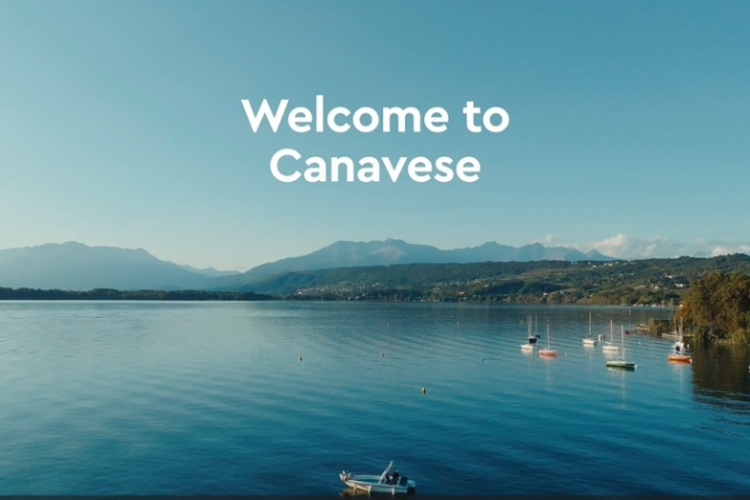
Welcome to Canavese, an unexpected corner of Piedmont where …
843Welcome to Canavese, an unexpected corner of Piedmont where …
843
