


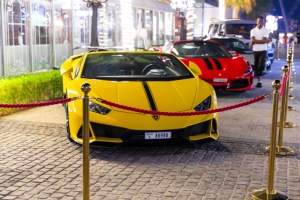



No visit to the area is complete without exploring the world of Ferrari. Just outside Modena in the town of Maranello stands the famous Museo Ferrari, where visitors can see historic Formula 1 cars, trophies and legendary road models. The nearby Museo Casa Enzo Ferrari in Modena celebrates the life of founder Enzo Ferrari and displays rotating exhibitions of racing and road cars. Many tours also include a panoramic bus ride around the Ferrari factory and the Fiorano test track, offering a glimpse of where the latest supercars are developed. (ferrari.com)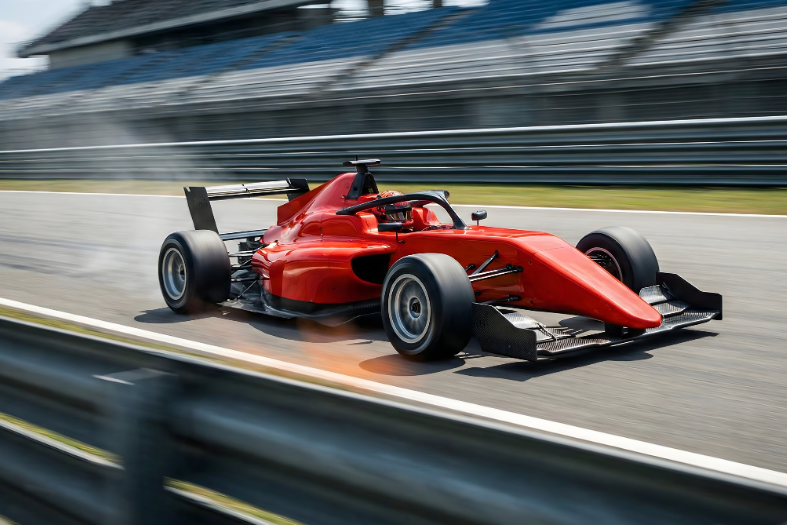
Within a short drive you can also visit other icons of Italian performance engineering. At Automobili Lamborghini in Sant’Agata Bolognese, guided tours combine a museum visit with a look inside the production line where Lamborghini supercars are assembled. (Motor Valley)
Back in Modena, the headquarters of Maserati offers factory tours and a showroom highlighting the brand’s racing heritage. Nearby attractions include collections dedicated to historic marques such as Pagani and Stanguellini, making the entire region a paradise for car lovers. (visitmodena.it)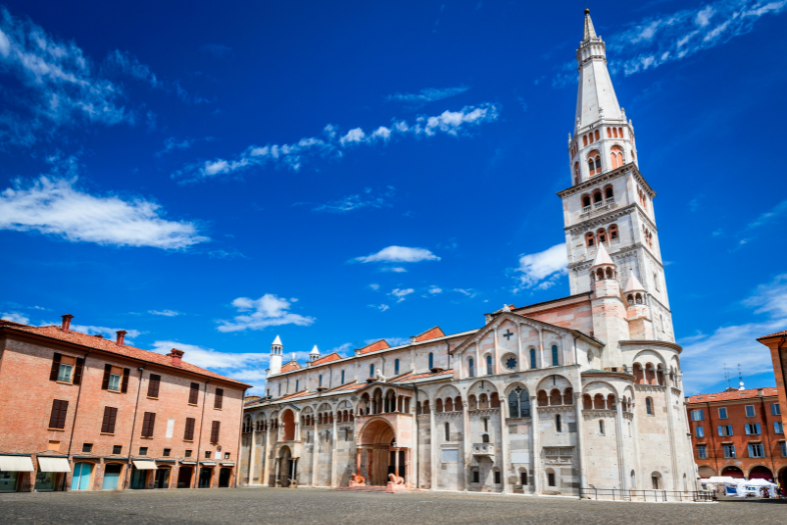
Motor Valley is not only about engines—it is also one of Italy’s greatest food destinations. The countryside around Modena produces world-famous specialties such as Parmigiano Reggiano, traditional Aceto Balsamico Tradizionale di Modena and the sparkling red wine Lambrusco, all of which can be tasted at dairies, vinegar cellars and wineries across the region. (Emilia Storytellers Tours)
The historic center of Modena also holds cultural treasures. The ensemble of Modena Cathedral, Piazza Grande and the Torre Ghirlandina is recognized as a UNESCO World Heritage Site for its outstanding Romanesque architecture. (Italia.it)
Together, fast cars, extraordinary food and remarkable art make the Modena area a uniquely Italian travel experience—where the thrill of racing heritage meets centuries-old culinary traditions.
Over 25 e-bikes to choose from
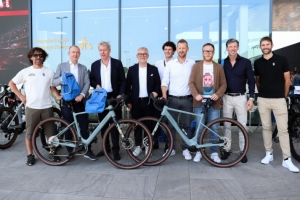
The project is a collaboration between DIF Spa and SACBO, the company that manages Milan Bergamo Airport, with the support of technical partners Würth and Bergamont. There are over 25 latest-generation Bergamont e-bikes (Scott Sports group) to choose from, depending on your tastes and style; premium e-MTBs equipped with various comfort features and available in different variants to suit your needs.
Bespoke tours for families, couples and solo travellers
In addition to simple hire, you can enjoy a range of guided experiences: in the Upper Town, for example, with "Città Alta, where Bergamo tells its story," a 4-hour tour including a cycle guide, or the half-day option which includes a traditional Bergamo lunch. You can also opt for a guided ride through the Moscato di Scanzo vineyards or to Malpaga Castle, with guided tours, tastings and lunch available as options in both cases. All the current options are detailed on the Nextbg.it website, with more to be added in the coming weeks. For those seeking an even more personalized experience, NextBG designs bespoke tours tailored to families, couples or solo travellers.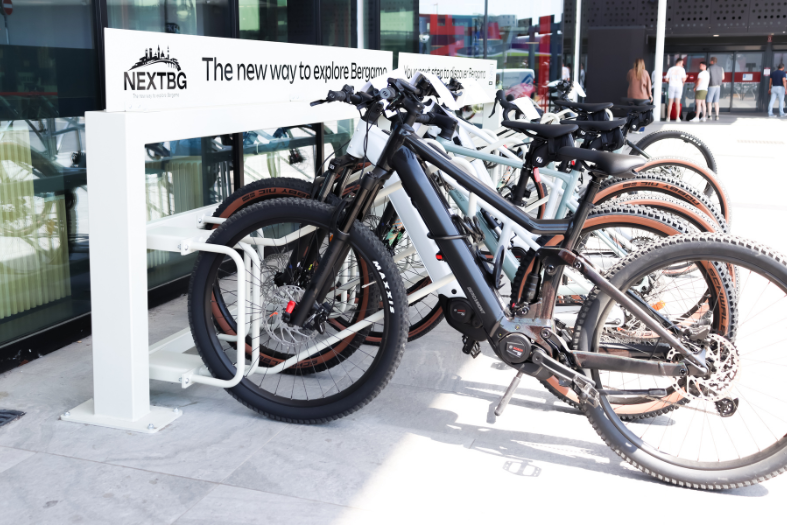
Europe's first bike-friendly airport
Milan Bergamo is the first airport in Europe to be recognized as bike-friendly, and the project is part of SACBO’s broader commitment to sustainability, evidenced by the attainment of "Cycle Friendly Employer" certification in 2021 and the gold level for sustainable mobility in 2024. In collaboration with SACBO, NextBG is therefore presenting not just a new service, but an innovative hub focused on the sustainable mobility of the future, in line with the objectives of the 2030 Agenda. “Our airport has embraced the concept of multimodality, focusing its development plan on programme lines of sustainability in the broadest sense, accessibility and the most versatile approach to mobility for air transport services,” says Giovanni Sanga, president of SACBO.
A cycle path network around the airport
The cycle path network surrounding the airport grounds provides access to an ever-expanding branch of the regional and inter-provincial cycle network. This creates opportunities of great interest to tourists, a focus that SACBO has always supported and which is now taking shape with the launch of an e-bike hire service that goes beyond simply providing the bikes and offers excursions that are sure to appeal to travellers who want to explore and discover the region’s most hidden gems.”
Also flights from Hamburg, Düsseldorf and Stuttgart
This brings the number of destinations served by the German airline, part of the Lufthansa Group, from Sardinia’s main airport to four: in addition to the new Salzburg route, the summer 2026 schedule confirms flights to and from Hamburg, Düsseldorf and Stuttgart
Eurowings is part of the Lufthansa Group
Thanks to the new Eurowings flights, Cagliari and Sardinia will be able to attract further tourist traffic from an area with historic ties to the region, aided by the opportunity to travel via the extensive network of Eurowings and the Lufthansa Group.
Strong interest in southern Sardinia
“The new Salzburg flights are a further step forward in the consolidation of our airport’s international links and confirms the strength of our partnership with Eurowings and the Lufthansa Group,” explains a statement from SOGAER, the company managing Cagliari Airport. The launch of this route, the note continues, is a strategic opportunity both for inbound tourism to Sardinia, thanks to the strong interest in southern Sardinia from the Austro-German region, and for the outbound market, offering Sardinian passengers the chance to easily reach one of Europe’s most fascinating cities.
The Eternal City’s many fountains are statements of power, engineering, and theatrical statement. While the Trevi Fountain draws the crowds (too many crowds, Romans complain) some of the city’s most spectacular water displays lie elsewhere. And, experiences without the crush of Trevi’s - now paying – visitors, they are equally thrilling emotional experiences. 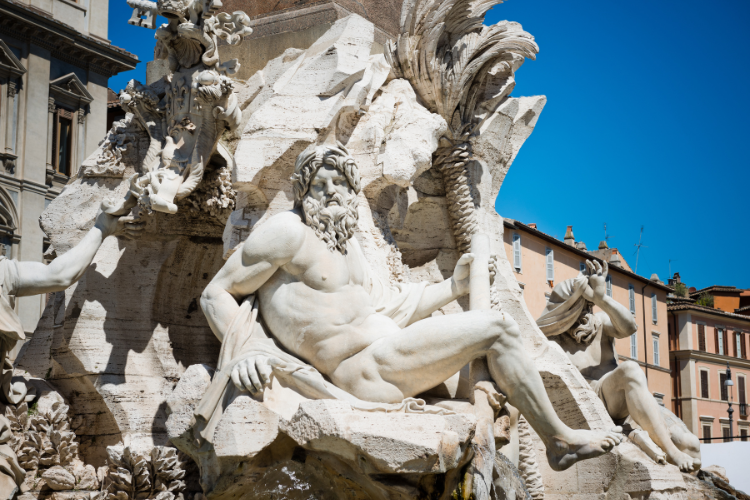
Bernini’s fountain on Piazza Navona is spectacle in motion. Four colossal river gods - representing the Nile, Ganges, Danube, and Río de la Plata rivers, one for each continent - twist and strain around a rock formation, above which rises an ancient Egyptian obelisk. What makes this fountain extraordinary is its sense of instability, with the stone appearing to cave in, the figures reacting to unseen forces, and the water animating the entire structure. This fountain is a controlled explosion of movement, and is best appreciated by walking slowly around it.
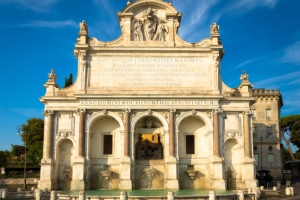
Known to Romans simply as il Fontanone (the big fountain) this monumental fountain is less sculptural but more overwhelming in scale. Built to mark place where the Acqua Paola aqueduct arrives in the city, it functions as both water terminal and urban façade. Its wide arches pour water continuously into a vast basin, producing a constant roar that dominates the entire Janiculum hilltop. And below it Rome spreads out in one of the city’s broadest and most spectacular panoramas. 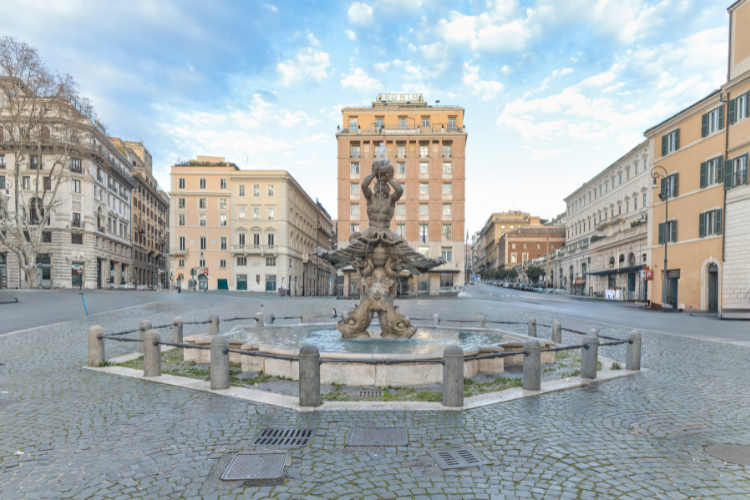
Compact but intensely dynamic, Bernini’s Triton Fountain is a masterclass in vertical energy. The muscular sea god kneels on four intertwined dolphins, blowing water upward through a shell. Unlike grand basin fountains this work concentrates the force of water into a single jet, making water itself the main protagonist, the fountain becoming a living, pulsing mechanism at the centre of the square.
These three stunning fountains show in how many different ways Rome uses water. No one of them relys on sheer size alone, instead they reveal Rome’s ability to turn engineering into emotions and to make water speak as loudly as the stone from which they are carved.
A total of 89,000 seats to the four Italian cities
Tickets for the flights from Bilbao to Rome, Venice, Naples and Turin are already on sale, increasing the number of seats available on existing routes for the 2026 winter season, with over 100,000 additional seats. The winter schedule, which will therefore offer around 89,000 seats from Bilbao to these four destinations, is structured as follows: the Bilbao-Rome route, previously available until 13 September, will remain operational throughout the winter season and, from 25 October, will operate four times a week, on Mondays, Wednesdays, Fridays and Sundays.
"We added over 250,000 seats from Barcelona and Bilbao this year"
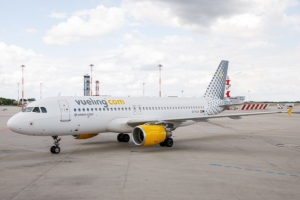
The route to Venice will operate three times a week (on Thursdays, Fridays and Sundays) from 25 October; the route to Naples will commence on 4 December, also with three weekly flights on Mondays, Fridays and Sundays; finally, the route to Turin will be available from 25 October with two weekly flights, on Thursdays and Sundays. “At Vueling, we are committed to strengthening connections between Italy and two of our main hubs in Spain, Barcelona and Bilbao, where we have added over 250,000 seats this year, consolidating our leadership at both airports,” said Jordi Pla, Vueling’s chief network & strategy officer.
More routes also from Barcelona
As a result, over the course of the year, the airline will offer up to 31 routes from Bilbao Airport, 17 of which are international. Vueling will also scale up its service between Bilbao and Milan, increasing it to seven weekly flights, which is one daily flight, and over 55,000 available seats. The carrier will also expand its service from Barcelona to three destinations: Naples, which will increase from 14 to 21 weekly flights; Turin, which will add six flights to reach 11 per week; and Palermo, which will have eight weekly flights, three more than last winter.
Turin and Palermo also get more flights
Furthermore, in the second half of the summer, Vueling has also increased frequencies from Barcelona to Turin (from 5 to 11 weekly flights) and Palermo (from 7 to 11 weekly flights), between 15 September and 24 October. The airline is thus adding over 150,000 extra seats on these routes, bringing the total to over 330,000 seats.
A dynamic new district
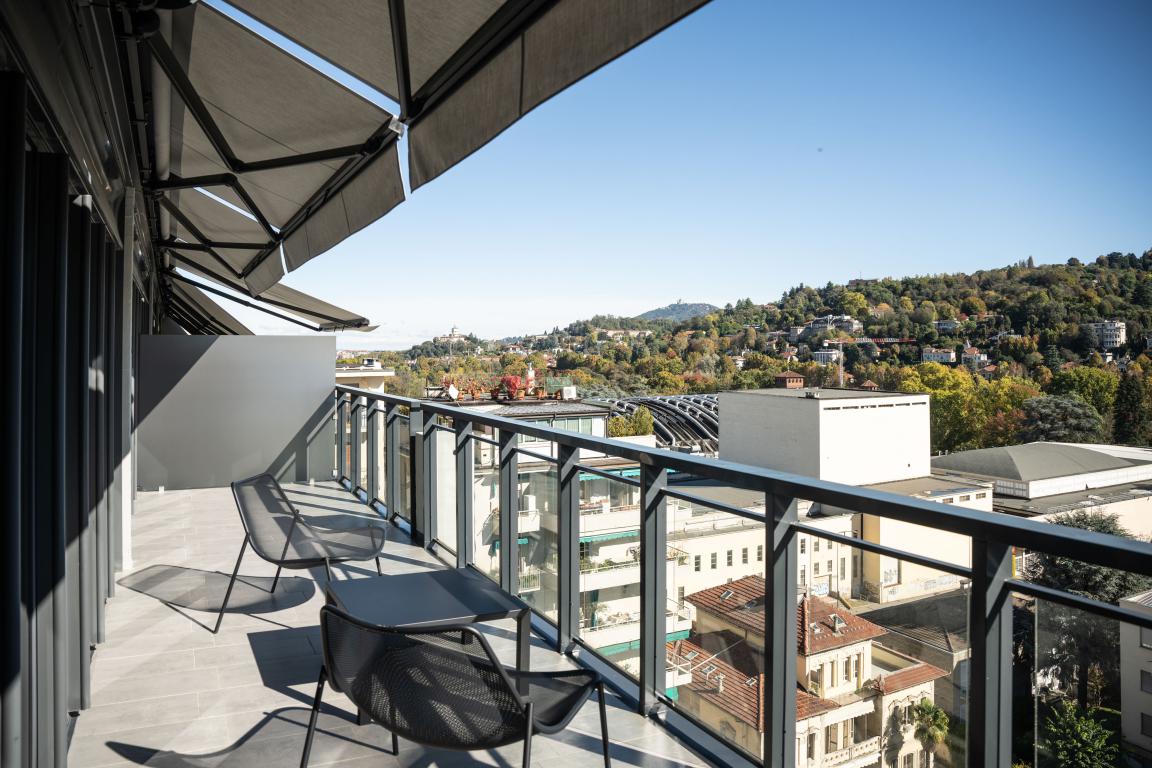
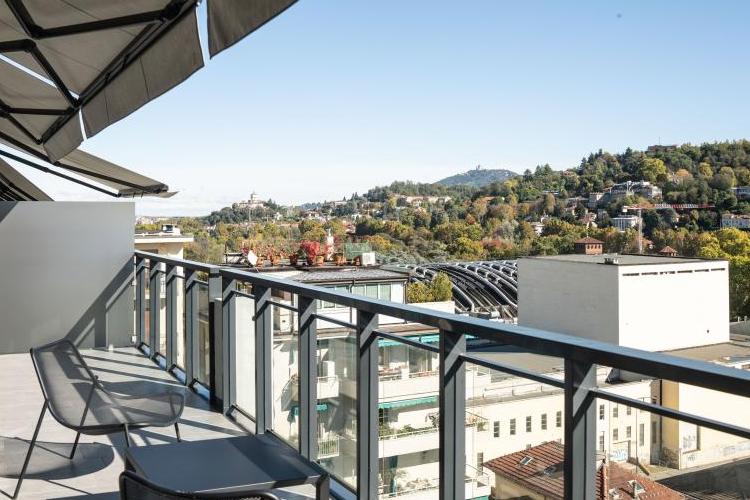
Turin is a city that evolves while preserving its elegant, Savoyard soul and embracing contemporary culture, architecture and design. And nowhere is that balance more visible than in the district surrounding DUPARC Contemporary Suites which is poised to become a dynamic cultural destination following the restoration of the Medieval Quarter and Valentino Park, the redevelopment of the Po River cruise service and the arrival of the futuristic new National Library.
"A genuine urban and cultural renaissance"
For Ana Paula Bracarense, general manager of DUPARC Contemporary Suites, these changes are a natural continuation of the hotel’s identity. “The extraordinary transformation currently taking place in our area serves to amplify the DUPARC’s inherent character. We find ourselves at the heart of a genuine urban and cultural renaissance, a dynamism that perfectly reflects our own identity.”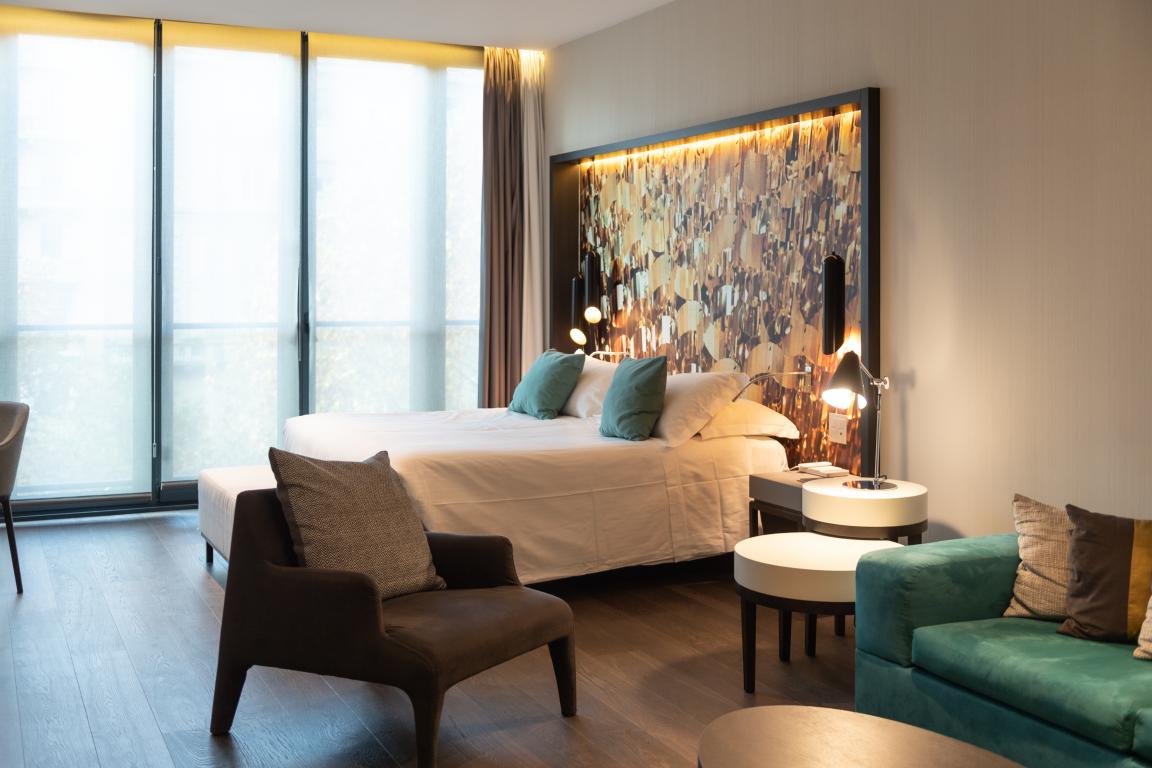 DUPARC Superior Junior Suite
"A new type of design-conscious traveller"
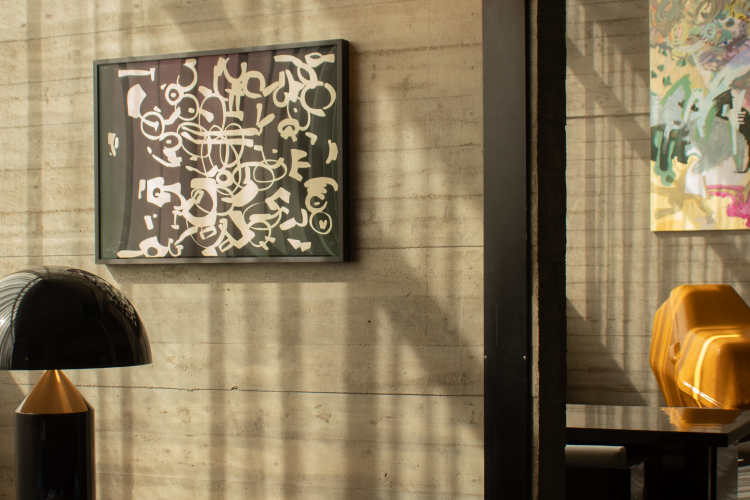
Designed as a modernist architectural landmark with a permanent contemporary art collection, DUPARC Contemporary Suites has always occupied a unique position in Turin’s hospitality landscape. And today, as the city attracts a new generation of international travellers drawn to culture, design and creativity, the property’s original vision feels more relevant than ever. “This urban buzz naturally attracts a new type of design-conscious traveller who is seeking an extension of the cultural experience the city has to offer,” says Bracarense.
A fluid and vibrant cultural hub
The DUPARC supports emerging designers and local creative businesses, positioning itself not simply as accommodation, but as an active participant in Turin’s artistic ecosystem. Looking ahead, Bracarense envisions the hotel evolving into “a fluid and vibrant cultural hub, integrated into the urban fabric. Rather than simply staying within a work of art, the experience we offer our guests is that of inhabiting art itself,” she says. “We want to move beyond the static and purely contemplative experience typical of a museum visit.”
The art is woven into the guest experience
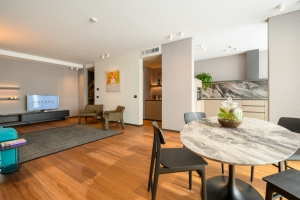
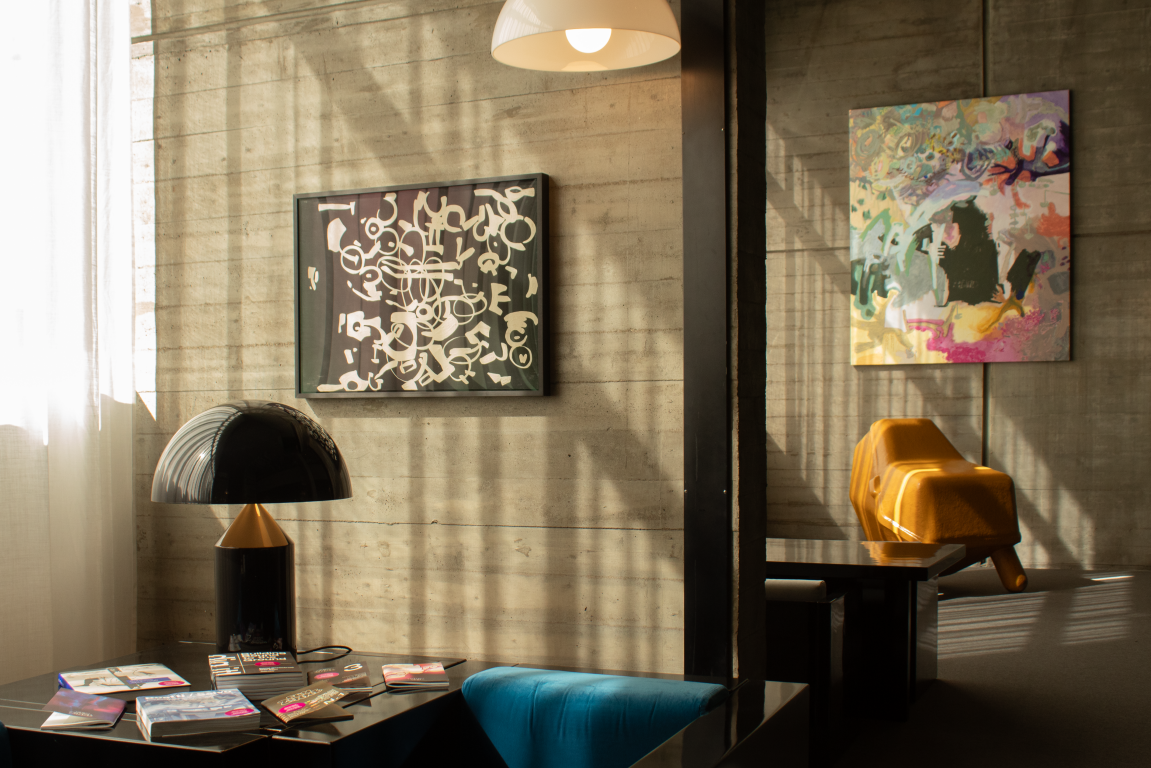
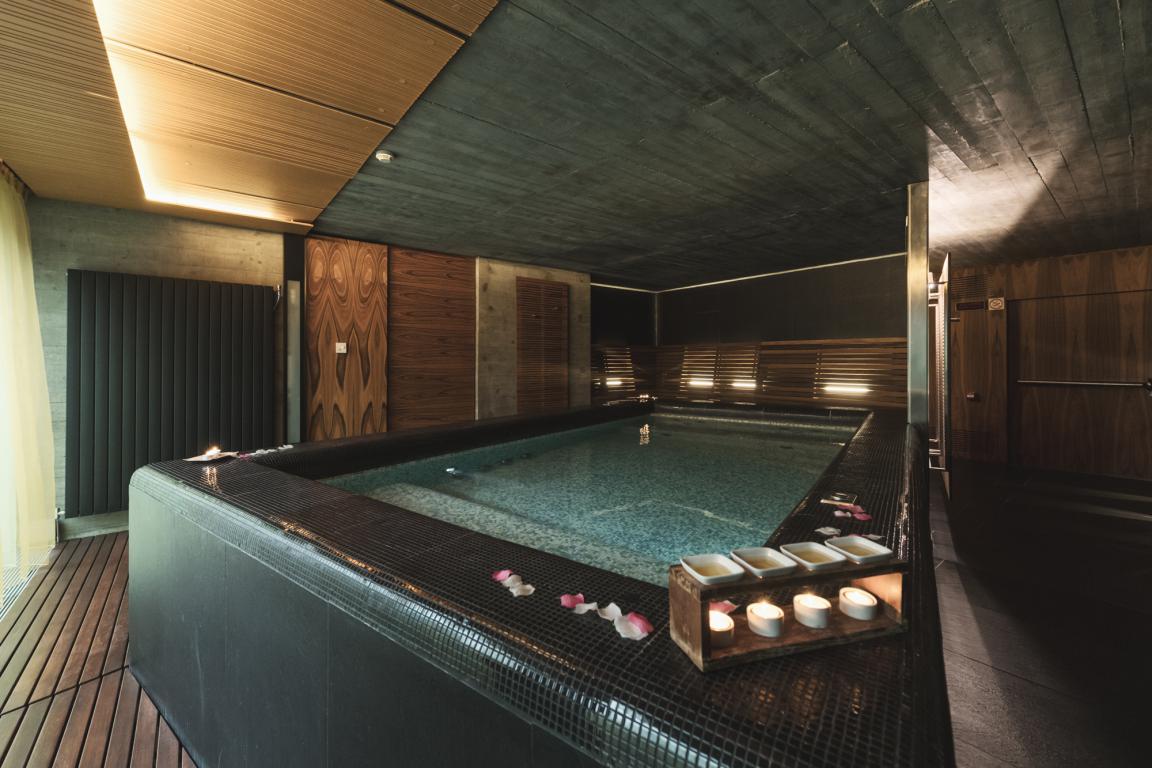
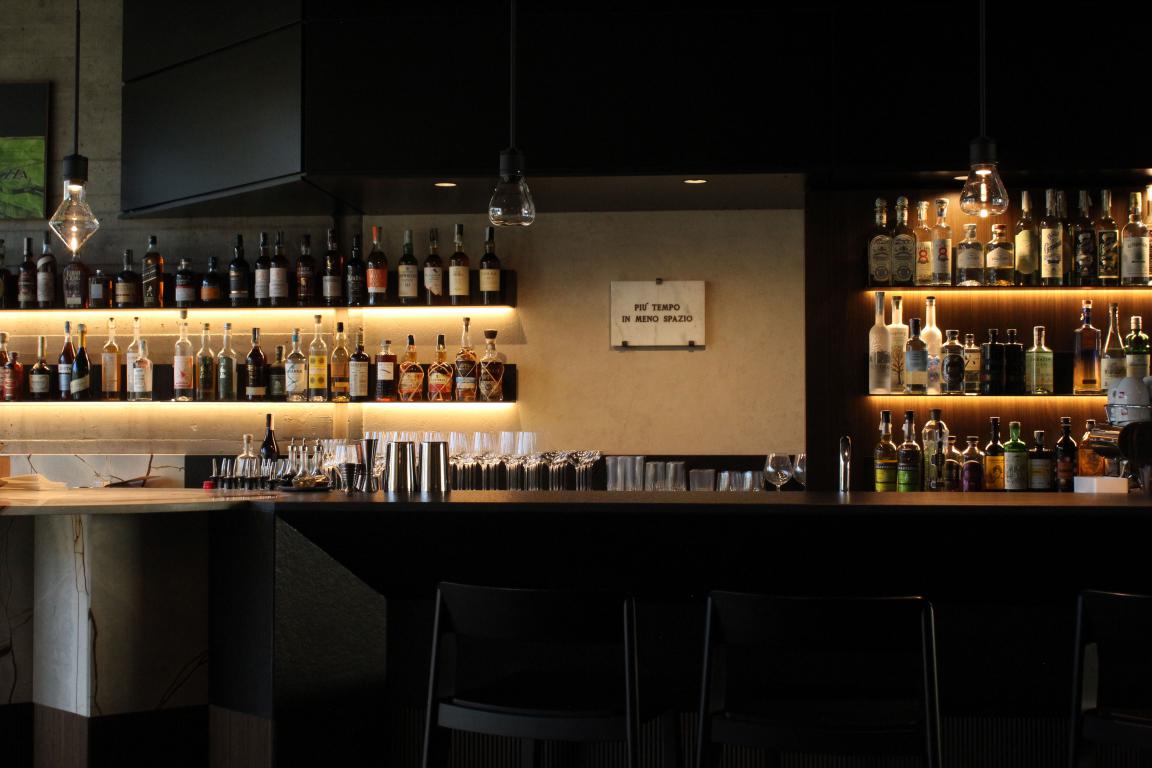
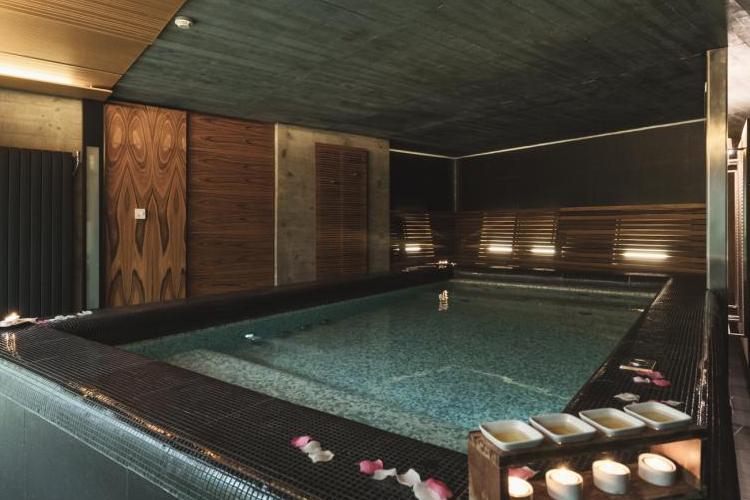
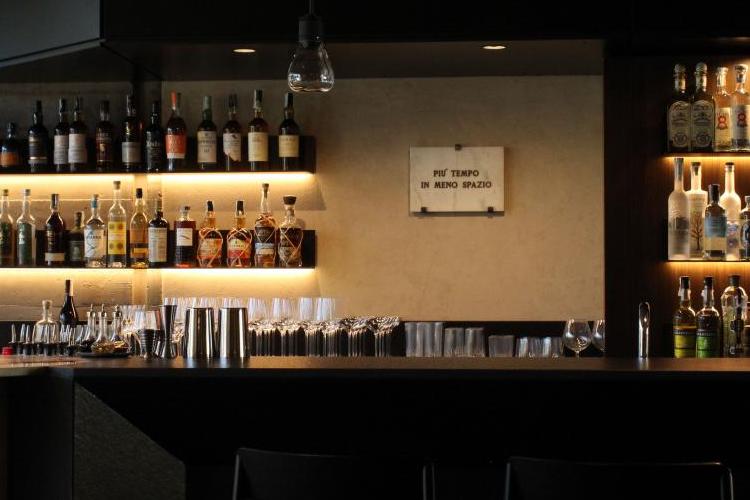
Throughout the property works by leading figures of Arte Povera and Italian contemporary art coexist naturally with daily life with the art woven into the rhythm of the guest experience, from enjoying a signature cocktail in the bistro to relaxing in the spa. “The artworks are not merely decorative elements, but an integral part of daily life. The spacious proportions of the original building remain, with the addition of expansive glass walls that flood the interiors with natural light. The Classic Suites are minimalist with the period furnishings of the original structure, while newer Superior Junior Suites reinterpret those generous spaces in a more contemporary hospitality spirit, while the refined Junior Suites and larger Luxury Suites are undergoing a complete redesign.
And elegant city and a hub of art and culture
This sanctuary in the centre of Turin is a place where architecture, art and hospitality coexist with rare harmony. And Bracarense sees DUPARC continuing to evolve remaining faithful to Turin’s distinctive identity while embracing its increasingly international cultural future. "Turin is a splendid city that has always adapted to the changes imposed by the times. The Turin of the future cannot be different from its essence: it will always be the Savoyard city, elegant and reserved, yet unafraid to open its doors as an international hub of art and culture.”
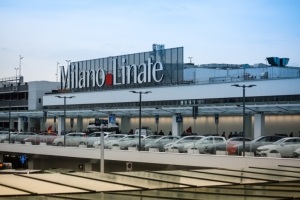
Linate is Milan's city airport
Perhaps. And according to speculation by the Italian daily Il Corriere.it, which has had access to the draft document on the new National Airport Plan, the strategic document outlining the development of Italian civil aviation up to 2035. According to this document the Ministry of Infrastructure and Transport is reportedly considering opening Milan’s city airport to intercontinental flights, particularly flights from and to New York, provided they are operated by single-aisle aircraft configured exclusively in business class and managed by traditional airlines.
Only narrow-body aircraft
This would inevitably require an amendment to current legislation. At present Linate is subject to strict restrictions set out in the so-called ‘Giovannini Decree’ of 2022, which permits only point-to-point flights; the use of narrow-body aircraft; routes within 1,500 km; and connections only to airports in the European Union or countries with which agreements are in place (such as the United Kingdom).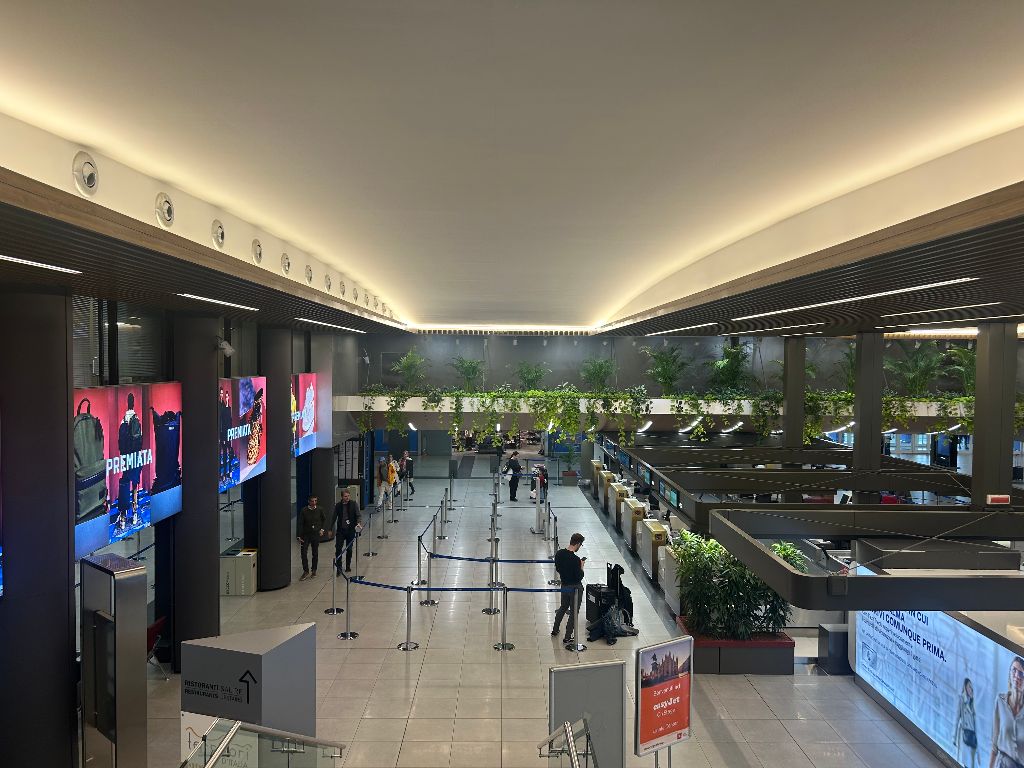
Linate Airport is already very congested
The Ministry’s aim would be to offer airlines greater commercial flexibility and attract premium customers directly to the centre of Milan, taking advantage of Linate’s strategic city airport location. However there is a significant constraint on the table: the airport can handle a maximum of 18 movements - take-offs and landings - per hour. But the airport is already very congested, so the introduction of long-haul flights would likely result in a reduction in some domestic or European flights.
Milan Malpensa could lose profitable traffic
If the project were to go ahead it would impact negatively on Milan Malpensa Airport as the latter could lose some of its most profitable traffic to Linate. It is no coincidence that the restrictions on the city airport were introduced precisely to encourage the growth of Malpensa as an international hub, especially following the crisis that led to Alitalia’s withdrawal from the airport. Among the airlines potentially most affected is ITA Airways, which, together with the Lufthansa Group, already holds a dominant position at Linate (around 52% of scheduled flights for the whole of 2026, according to Cirium data).
50 routes to 23 countries from Milan Malpensa
The number of aircraft based by the low-cost carrier will rise from 10 to 11, enabling the launch of four new international routes to Santander, Zaragoza, Porto and Agadir-Al Massira, all commencing in mid-September. With the arrival of this additional Airbus A321neo, Wizz Air’s offering at Malpensa will therefore comprise a total of 50 routes to 23 countries.
Two new aircraft in just two months
In Milan the announcement of the 11th aircraft based there comes just under two months after that of the 10th Airbus A321neo stationed at Malpensa and the launch of seven new routes from Milan within the airline’s network: two domestic routes to Palermo and Naples (both with twice-daily frequencies) and five international routes to Dortmund (daily), Bilbao (five weekly flights), Cluj (four weekly flights – Tuesday, Thursday, Saturday and Sunday), Iasi (three weekly flights – Monday, Wednesday and Friday) and Palma de Mallorca (daily flights).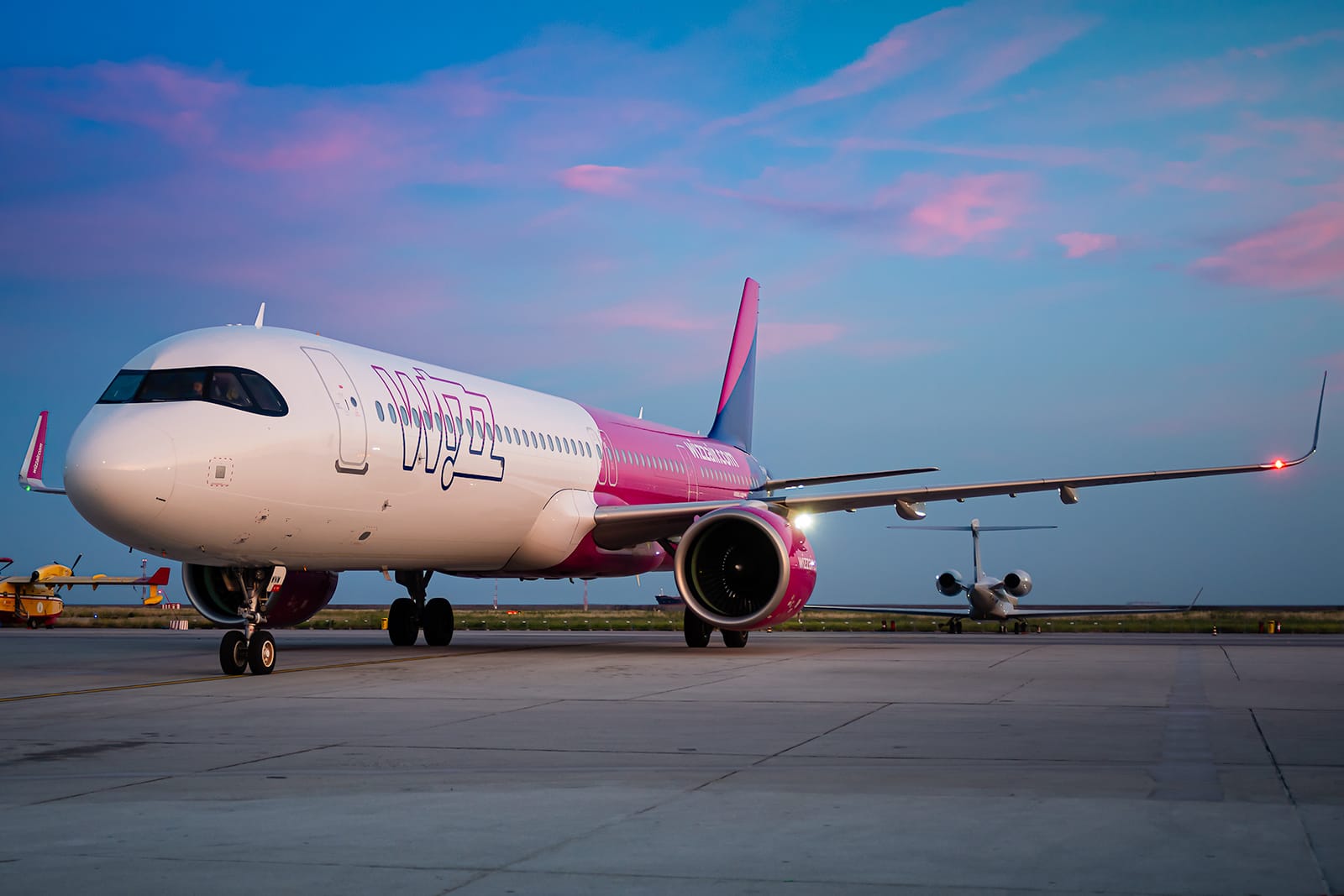
3.4 million seats on sale this summer
This year, the airline will offer over 5.5 million seats to and from Milan Malpensa, an increase of 16.3% over 2025. During the summer 3.4 million seats will be on sale, with operational capacity up by 19.8% compared to last summer. “Milan is our second-largest base in Italy and has always been one of the most dynamic and strategic markets for our growth in Italy. The strengthening of our presence at Malpensa, with the arrival of our 11th based aircraft, confirms the confidence we have in this region and its potential. This investment is not only about the company’s operational expansion, but also a concrete contribution to the region’s development: together with our partner SEA – Milan Airports, we are proud to support the growth of Milan’s connectivity, creating new opportunities for tourism, business and the local economy,” commented Ian Malin, Chief Commercial Officer at Wizz Air.
Milan Malpensa's strategic centrality within European aviation
“Wizz Air’s further expansion at Milan Malpensa Airport confirms the airport’s strategic centrality within the European aviation landscape. We welcome the decision to further increase the number of aircraft based at Malpensa and the launch of new international routes such as Agadir, Santander and Zaragoza (the latter two are brand-new destinations for Malpensa) which expand its network and strengthen its role in connecting the region, enhancing accessibility to Milan and Lombardy,” commented Luigi Battuello, chief commercial cfficer SEA Milan Airports.
An on-time performance rate of 99.6%
In 2025, Wizz Air carried over 21 million passengers in Italy, recording an 8% increase over the previous year and maintaining an exceptional on-time performance rate of 99.6%. With a fleet of 44 aircraft based in Italy this year and a market share of 12%, Wizz Air is now the second-largest carrier in Italy, aiming to offer more than 32 million seats in 2026 and to upscale its presence across the country.
Condé Nast Traveller recently reminded us of something Italians have always known - that travel isn’t about size, it’s about experience. In its article “20 Beautiful Small Towns in Italy to Plan Your Next Trip Around" the magazine lingers lovingly on small towns (at least five have fewer than 2,000 inhabitants) where "whatever your idea of a good time is, there’s a small town in Italy bound to satisfy your desires.”
Or course in Italy a “good time” can mean a thousand contradictory things, like a bar that opens when the owner feels like it, a church bell determined to make itself heard no matter the time of day, a view so theatrical it almost seems staged, and a plate of something so simple that it ruins you for everything else.
These little towns do not perform for visitors; they simply continue being themselves and make you wonder Can life really be this pared back? Well, you soon come to realize that it can. And that when it comes to having a good time less can hold far greater value than more, and how easy it is to be tempted to stay just a little longer.
 Pamela McCourt Francescone
Executive Editor
A scenic route from Piedmont to Liguria
Showcasing Italy through the leisurely pace of discovery, the beauty of the landscape and the promotion of regions stretching from the Alps to the Mediterranean these historic trains will bring passengers to the Piedmontese hills, a UNESCO World Heritage Site, while the catering service will feature local produce This scenic route connects Piedmont to the Ligurian coast, passing through the Val Roya and the Mercosur Park aboard the 1920s Centoporte carriages.
Departures will be on Sundays
These are a journey through time accompanied by food and wine experiences on board, featuring tastings of Italian and French wines that showcase the regions along the way. Departures are scheduled every Sunday from 5 July to 6 September, with the exception of 25 July, 8 and 22 August, with services also running on Saturdays from Turin with stops at Cuneo, Limone, Tende, Breil-sur-Roya, Ventimiglia, Sanremo and Imperia.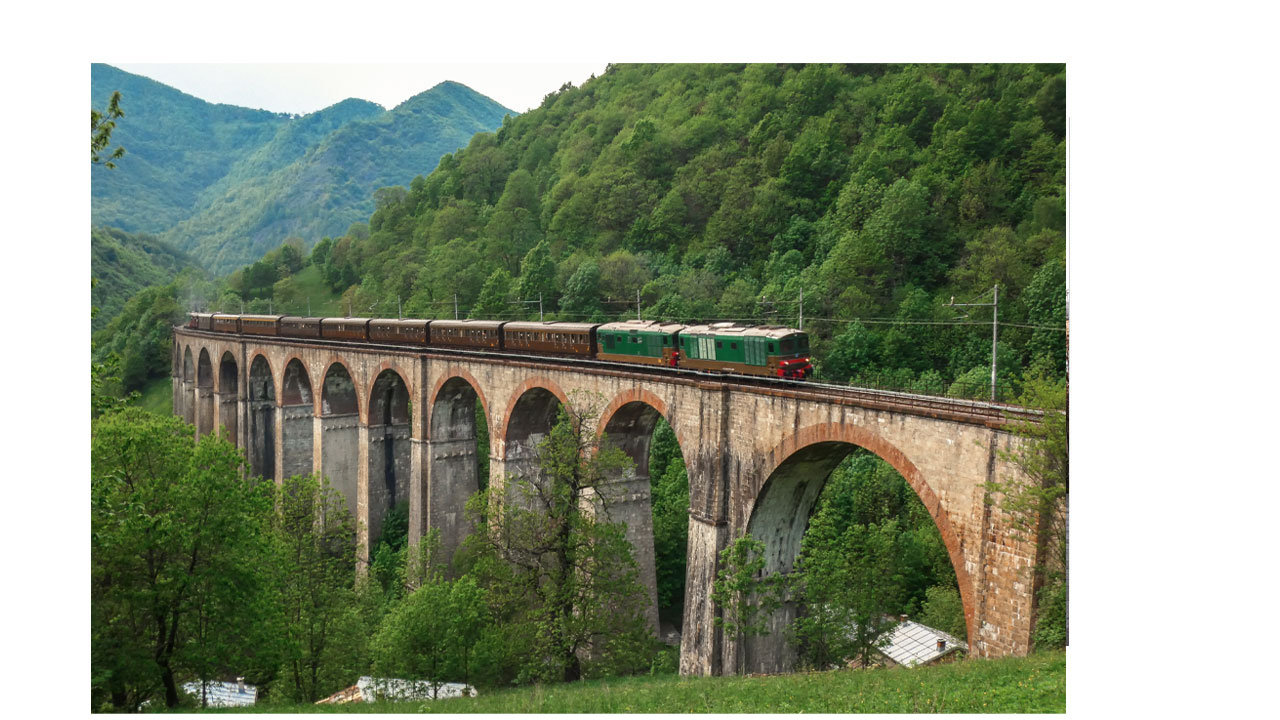
A catering service featuring local produce
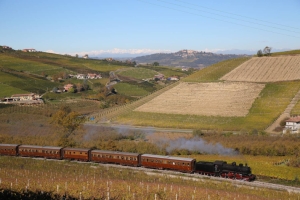
Enriching the range of historic trains in Piedmont are two itineraries dedicated to showcasing the wine-making tradition in the UNESCO-listed Langhe region. Every Sunday, from 11 October to 27 December, passengers can experience the thrill of travelling aboard the famous Gran Confort carriages, departing from Milan and arriving in Alba and its renowned Truffle Fair. Passengers will be able to board carriages that epitomized the elegance of Italian travel and the great international connections of the 1970s, with spacious blue velvet seats and a cozy atmosphere. There will also be a catering service featuring local produce and the promotion of the region’s culinary heritage. Every Sunday between 1 and 29 November it will be possible to travel between Turin and Canelli on the Langhe, Roero and Monferrato Railway, aboard the Centoporte carriages for a journey back in time which, on its maiden voyage, will feature a steam locomotive.



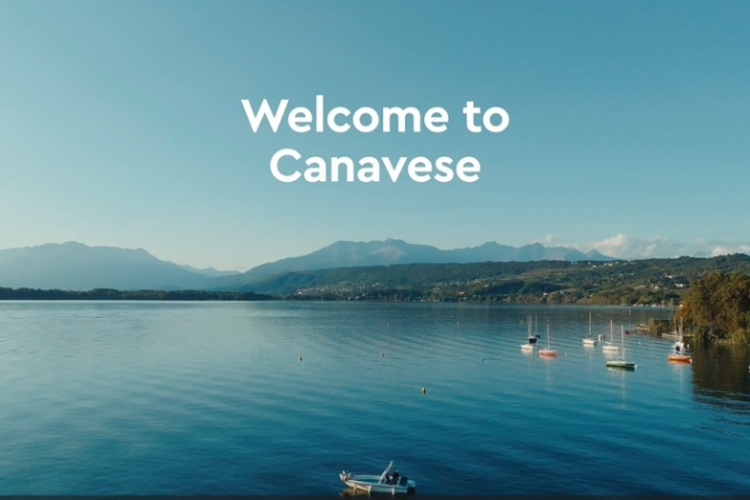
Welcome to Canavese, an unexpected corner of Piedmont where …
255Welcome to Canavese, an unexpected corner of Piedmont where …
255
