


Dust off your walking boots, because Italy has just unveiled one of its biggest hiking projects in years. The newly unified Way of St Francis stitches together 1,500km of trails across six regions: Abruzzo, Emilia-Romagna, Lazio, Marche, Tuscany and Umbria. Linked together through an official pilgrimage network, all roads eventually converge on Assisi, the hilltop town where St Francis was born and is buried.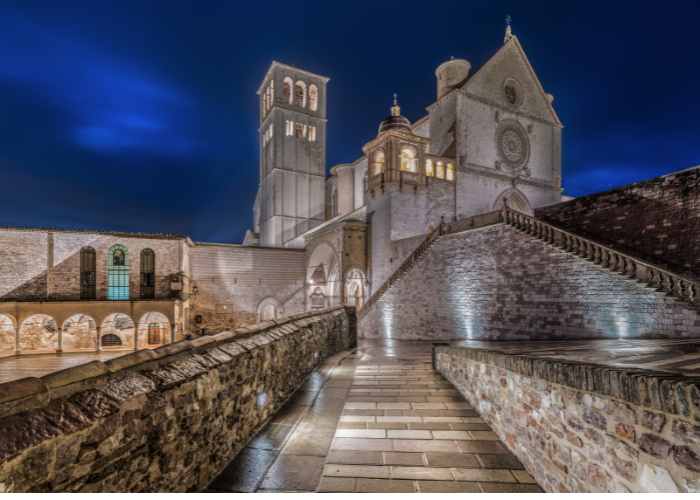
The project brings together trails that already existed in various forms, including the 110 kilometre stretch from Rimini to the mountain sanctuary of La Verna, where St Francis is said to have received the stigmata. Handily, the routes have been mapped and sorted out by Italy’s national anniversary committee, meaning they are all listed together on the official tourism platform, Italia.it complete with maps and stage-by-stage itineraries. Franco Boarelli, president of the association that coordinated the project alongside the government said the project required years of cross-regional cooperation. Italy’s undersecretary of culture, Pietro Cannella said the project was about "uniting places, institutions and people around a shared heritage, making culture a tool for national cohesion and international dialogue."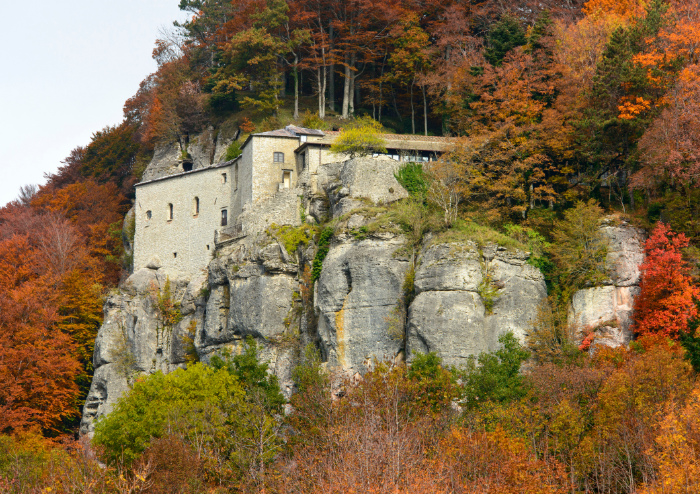
The launch is part of celebrations marking the eighth centenary of St Francis’s death and coincided with Pope Leo XIV’s visit to Assisi on August 6. If you fancy tackling it yourself, here's how it works. Walkers can request a credenziale, or pilgrim’s passport, online before setting off, which gets stamped and dated at various points along the route. Different routes have their own separate passports, and there’s even one for your dog too! Complete the final 100 kilometres on foot, or 200 kilometres by bike, and you'll be issued with a document proving you made it all the way to St Francis's tomb.
There’s even more of Italy in United Airlines’ network for summer 2027: starting with direct flights to the islands, which will see the launch of two new destinations, Olbia and Catania, served from Newark. Alongside these two new additions will be the further introduction of a service from Washington to Milan Malpensa, marking a return to this route after many years. The flight to Olbia will commence on 27 May three times weekly, and the service to Catania (which will therefore join Palermo airport, already served by United) will take off from 28 May, operating four times weekly
This investment in Italy forms part of United’s wider plan to expand its international network, with the launch of services to 10 new cities by 2027 (eight of which are not served by other US carriers) and three new routes in Europe and Asia. The airline also unveiled the latest international aircraft in its fleet, the A321XLR “Born to Explore”, during an event held at Newark Liberty International Airport.
“The creative and strategic way in which we have expanded our international network since the start of the pandemic has made all the difference, not only for our passengers and employees, but also as a means of differentiating United and building a customer-centric brand. We offer the most flights across the Atlantic and the Pacific, and Newark is the best Atlantic hub in the country. So far this year, it has been the most punctual airport in the New York City area. We will continue to build on this momentum as we welcome the new A321XLR into our fleet and continue to improve the travel experience for every customer who chooses United,” said the airline’s CEO, Scott Kirby.
In addition to the 10 new cities, the airline is adding new flights from Los Angeles to Osaka; from Washington, D.C. to Milan; from Denver to Paris; and will resume service from San Francisco to Tel Aviv. The airline will serve more destinations in Japan, Spain, Portugal, Italy and France than any other US carrier. The addition of the “Born to Explore” Airbus A321Xlr to the fleet will support the airline’s international growth in the summer of 2027 with routes to new destinations such as Ibiza, Luxembourg, Marseille, Toulouse and Valencia.
The configuration of the new aircraft features 32 premium class seats, including 20 United Polaris suites and 12 United Premium Plus seats: 16 more premium class seats than the Boeing 757-200.The A321Xlr is expected to begin operating on selected domestic routes this coming September and will transition to international service on 1 December, with flights from Washington, D.C.’s Dulles International Airport to Amsterdam and Dublin. Tickets for the first international flights went on sale on Thursday 27 August.
The flights will operate twice a week on Mondays and Fridays throughout the year. The route further strengthens Cyprus Airways’ presence in Italy, where the airline already operates year-round flights to Milan Malpensa, supplemented by seasonal summer services to Venice. The Rome flight is part of the airline’s wider expansion plan in Europe, which also includes the launch of a new route to Munich and the addition of an extra weekly frequency to Heraklion.
“The launch of Rome and Munich as new year-round destinations marks another important step in the ongoing expansion of our network. Both cities are extremely attractive for both leisure and business travel, and their addition offers our passengers even greater choice and flexibility throughout the year. Together with the additional service to Heraklion, these new routes strengthen our European connections and reinforce our commitment to building a sustainable, year-round network from Cyprus,” said Thanos Pascalis, CEO of Cyprus Airways.
The Cypriot carrier’s network also includes year-round scheduled flights to Paris, Milan, Athens and Heraklion, as well as seasonal destinations such as Barcelona, Venice and the Greek islands, and other routes operated as charter flights. In the Middle East, the airline operates key year-round scheduled flights to Tel Aviv, Beirut and Dubai, offering convenient connections for leisure and business travellers throughout the year.
Italy is the ultimate opera pilgrimage. This is where Verdi, Puccini, Rossini and Donizetti created some of the world’s most enduring music, and where historic theatres, Roman arenas and open-air stages still provide some of the most unforgettable settings in which to hear it. From glamorous Milan and its La Scala Opera House to the Roman Baths of Caracalla under the stars, here is where to experience opera at its most Italian.
No opera itinerary would be complete without Milan’s Teatro alla Scala, one of the most famous opera houses in the world. Seeing a performance here is as much about the experience as the music: the red velvet auditorium, glittering tiers of boxes and sense of history make La Scala a bucket-list destination. The main season generally runs through the autumn, winter and spring, with a programme of opera, ballet and concerts. And even if there is no performance during your visit, the theatre’s museum offers a fascinating glimpse into the history of Italian opera and some of its greatest names.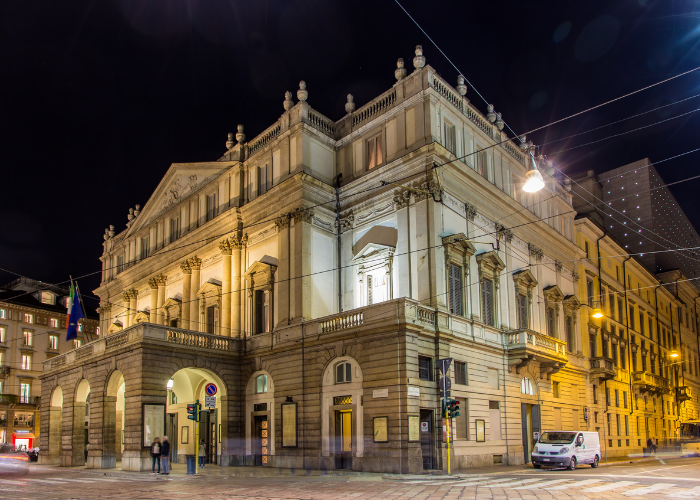
For sheer spectacle, nothing quite compares with the Arena di Verona. Every summer, this ancient Roman amphitheatre becomes one of the world’s most dramatic opera stages, with thousands of spectators gathering beneath the stars. The 2026 Arena Opera Festival runs to 12 September, with major productions including Aida, La Traviata, Nabucco and Turandot. The Teatro La Fenice in Venice is one of Italy’s great opera venues, with performances throughout much of the year. It is particularly appealing for travellers who want to combine opera with one of the world’s most extraordinary and beautiful cities.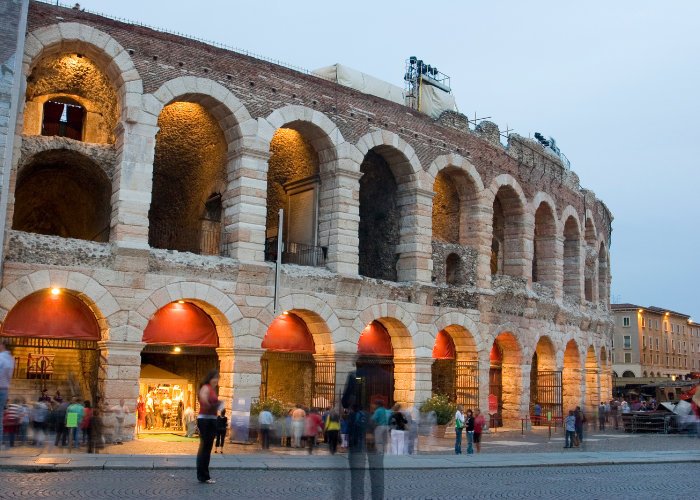
The Teatro di San Carlo opened in 1737, and is widely recognized as the oldest continuously active opera house in the world. The season typically runs across the autumn, winter and spring, with opera, ballet and concerts. A visit is also a perfect excuse to explore Naples itself – from the historic centre and archaeological treasures to pizza, pastries and the Bay of Naples. Rome offers the best of both worlds: a traditional opera season at the Teatro dell’Opera di Roma and spectacular summer productions staged at the Baths of Caracalla. The main theatre season generally runs through the cooler months in the Rome Opera House, while the summer programme transforms Caracalla into one of Europe’s most atmospheric open-air venues.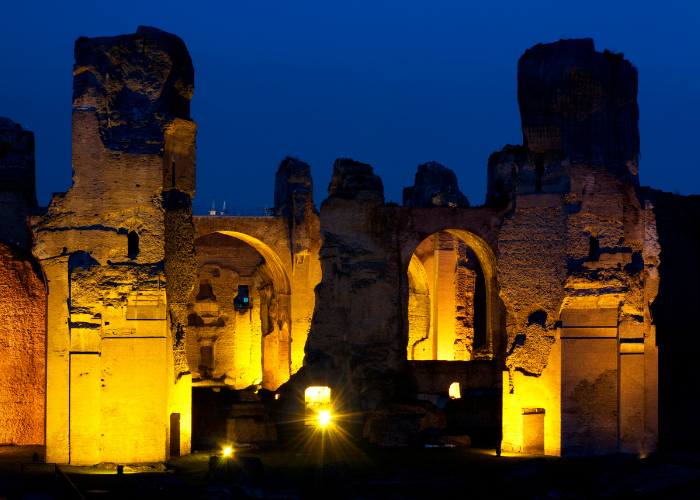
For fans of Giacomo Puccini Torre del Lago is a must. This is where the composer lived and worked, and every summer the Puccini Festival (with only operas by Piccini) celebrates his music beside Lake Massaciuccoli, close to his former home. If Rossini is your composer, head for Pesaro, his birthplace on the Adriatic coast. Every summer, the Rossini Opera Festival attracts opera enthusiasts from around the world with productions ranging from famous works to rarely performed masterpieces. Another summer highlight is the Macerata Opera Festival, staged in the extraordinary Sferisterio, an open-air arena with an exceptionally wide stage and dramatic architecture.
“With the reopening of the iconic Danieli, Venice, a Four Seasons Hotel, and our fourth property in this spectacular collection in Italy, we are ushering in a new chapter in the history of this famous Palazzo,- said Rainer Stampfer, Four Seasons president of global operations. -In collaboration with our long-standing partner, the Statuto Group, we are offering guests the unique opportunity to experience the splendour of Venice in a completely new way.”
The hotel, whose history dates back to 1822, consists of three buildings: Palazzo Dandolo, built in 1471 as the residence of the noble Dandolo family, Palazzo Casa Nuova, once the seat of the Treasury of the Republic of Venice and Palazzo Danieli Excelsior. The hotel reopens with 120 rooms and suites, but the total number of guest rooms will rise to 168 once the restoration of Palazzo Danieli Excelsior is completed in 2027. “The reopening of the Danieli as a Four Seasons experience marks a milestone following months of restoration,” said Christian Zandonella, general manager of the Danieli Four Seasons Hotel. - We are delighted to welcome guests once again to one of Venice’s most iconic addresses, where the hotel’s extraordinary heritage is reimagined through Four Seasons’ legendary hospitality,
The restoration has resulted in more spacious rooms and an expanded collection of Junior Suites and One-Bedroom Suites. Technology is discreetly integrated into the interiors to enhance comfort. Automated blinds, customizable lighting and an intuitive climate control system further personalize the guest experience. The refurbishment has also transformed the Danieli Terrace, the famous rooftop restaurant overlooking the lagoon. While respecting the restaurant’s historic setting, the atmosphere has been transformed without altering its architectural identity. The transformation of the Hotel Danieli will continue in the second half of 2026 with the opening of the new spa with three treatment rooms, one of which will be for couples, a sauna and a hammam.

Not currently operational in Italy
ETIAS is not currently operational in Italy. Italy is one of the 30 countries that will use the system, and this includes Italian airports, ports and other external Schengen borders, but for now the Italian ETIAS application system in not in operation. And neither is it operational in Europe.
The countries that will be involved
If someone is travelling to Italy today from a visa-exempt country such as the UK, US, Canada or Australia, they do not need ETIAS yet. If, for example, you are a British citizen flying from London to Rome, you don't need ETIAS today. But once ETIAS launches, you will need an approved ETIAS before travelling to Italy. The same situation applies across Europe. ETIAS is a single EU-wide system, rather than a national scheme, and will cover 30 European countries, including Italy, France, Germany, Spain, Greece and the other Schengen countries, as well as Iceland, Liechtenstein, Norway and Switzerland. At present, therefore, ETIAS is not actually working for travellers in any of these countries. Eligible visa-exempt travellers do not yet need to apply.
There will be a transitional and a grace period
The system is intended for citizens of countries whose nationals can currently enter the Schengen area without a visa, including the UK, United States, Canada, Australia and Japan. Once operational, travellers will have to obtain an electronic travel authorization before travelling to Europe. ETIAS is expected to cost €20 and normally remain valid for up to three years, or until the passport expires. ETIAS will also not become fully compulsory on its first day. After launch there will be a transitional period, followed by a grace period, allowing travellers and border authorities time to adapt. Consequently, if the current timetable is maintained, ETIAS is likely to become a normal and routinely enforced requirement during 2027 rather than immediately at the end of 2026.
Regular enforcement is expected in 2027
For Italy, therefore, the current position is clear: preparations are underway, but ETIAS is not yet functioning for travellers. This does not mean that Italy is behind the rest of Europe as the system's implementation is coordinated at EU level. The crucial dates for travellers are therefore the European launch in late 2026, and the expected move to regular enforcement in 2027.
SAC, the company that manages Catania Airport, has selected and shortlisted 10 operators for its privatization process.
The ten companies were selected from 14
Selected from the 14 expressions of interest received from Italian and international operators, they are Corporacion America Airports S.A., Royal Schiphol Group, Mundys S.p.A., Adani Airport Holdings Limited, Save S.p.A., 2I Aeroporti S.p.A., Mag Overseas Investment Ltd, Oman Airports Management Company, Macquarie European Infrastructure Fund and Vinci Airports s.a.s.
At stake is at least 51% of SAC’s share capital
In the second stage of the procedure, the selected bidders will be invited to participate in the subsequent stages in accordance with procedures and timelines to be communicated in line with the principles of transparency, equal treatment and the protection of competition. At stake is at least 51% of SAC’s share capital.
Identifying a suitable partner
“The conclusion of this first stage is a significant step in a process that confirms the high level of interest shown in our airport system and the confidence in its development prospects. An equally important phase now begins, in which the aim will be to identify the partner capable of presenting the most robust business plan, able to support the investments needed to strengthen the competitiveness of Catania and Comiso airports, whilst preserving their strategic role for Sicily in the public interest,” said Anna Quattrone and Nico Torrisi, chairperson and chief executive of SAC.
Catania and Catania Airports: strategic assets for Sicily
“The Catania and Comiso airport system is a strategic asset for the whole of Sicily. The high level of national and international participation recorded in this initial phase demonstrates the strength and appeal of an infrastructure that can continue to be a driving force for development, employment and competitiveness,” said Enrico Trantino, mayor of the Municipality and Metropolitan City of Catania.
Italy has no shortage of world-famous stages. La Scala. La Fenice. Teatro San Carlo. The Arena in Verona. Yet its newest UNESCO World Heritage recognition belongs to a very different cast of characters: ten remarkable historic teatri condominiali local theatres in little hill towns in the Marche, Umbria and Emilia-Romagna regions.
At first glance they look quite unassuming and have modest façades. But step inside and you realize that heritage is not always monumental: you find gilded boxes, painted ceilings, velvet seats for at the most a few hundred people, perfect acoustics and the unmistakable intimacy of the Italian theatre. Spaces that seem too grand for the towns that contain them, and yet somehow belong there completely. The UNESCO recognition comes not only for all this beauty, but because, unlike Europe's great royal opera houses, these little theatres were built, financed and managed collectively. An astonishingly modern idea for its time: art not as the preserve of a few, but as a civic investment shared by all.
UNESCO's decision recognizes ten remarkable examples of local theatres in central Italy (eight of them are in the Marche) in Jesi, Ascoli Piceno, Offida, Fermo, Macerata, Fabriano, Urbania, San Severino Marche, Sant'Agata Feltria and Spoleto. Together, they tell a story that extends far beyond architecture: one of collaboration, identity and a uniquely Italian understanding that culture thrives when it belongs to everyone.
For travellers the new UNESCO listing shines light on another Italy - one far removed from the country's iconic landmarks. These theatre towns invite you to slow down, wander medieval streets, linger over lunch in a family-run trattoria and chat with locals as you discover places where heritage is deeply woven into everyday life. At a time when overtourism dominates the conversation, UNESCO has quietly pointed us towards destinations where authenticity still takes centre stage.
At first glance, they seem quite unassuming and have modest façades. But step inside and you realize that heritage is not always monumental as you find gilded boxes, painted ceilings, velvet seats for at the most a few hundred people, perfect acoustics and the unmistakable intimacy of the Italian theatre. Spaces that seem too grand for the towns that contain them, and yet somehow belong there completely. But the UNESCO recognition comes not only for all this beauty, but because, unlike Europe's great royal opera houses, these little theatres were built, financed and managed collectively. An astonishingly modern idea for its time: art not as the preserve of a few, but as a civic investment shared by all.
UNESCO's decision recognizes ten remarkable examples in central Italy (and eight of them are in the Marche) including theatres in Jesi, Ascoli Piceno, Offida, Fermo, Macerata, Fabriano, Urbania, San Severino Marche, Sant'Agata Feltria and Spoleto. Together, they tell a story that extends far beyond architecture: one of collaboration, identity and a uniquely Italian understanding that culture thrives when it belongs to everyone.
For travellers the new UNESCO listing shines light on another Italy - one far removed from the iconic landmarks. These theatre towns invite you to slow down, wander medieval streets, linger over lunch in a family-run trattoria, chat with local residents as you discover places where heritage remains woven into everyday life. At a time when overtourism dominates the conversation, UNESCO has quietly pointed us towards destinations where authenticity still takes centre stage.
 Pamela McCourt Francescone
Executive Editor
Focused on culture, gastronomy, wellness and lifestyle
Founded by Micaela Occhioni and Tania Paganoni, Viatelier combines an American commercial presence with on-the-ground expertise in Italy, creating tailor-made itineraries focused on culture, gastronomy, wellness and lifestyle. The business operates through its US hub in San Diego where Occhioni oversees commercial development, client relations and partnerships, while in Rome Paganoni leads product development, supplier relationships and itinerary design. 
"Journeys built around people, places and privileged access"
Viatelier is more than just another luxury travel planner; it builds journeys through a carefully curated network of direct sources offering experiences that are difficult to access through conventional distribution channels. "We're not selling destinations, what we do is design highly personalized journeys built around people, places and privileged access."
A DMC-style partner delivering bespoke travel
For international luxury travel advisors and tour operators Viatelier is a DMC-style partner with a strong understanding of both the North American luxury market and how to deliver bespoke travel in Italy. The founders regularly travel throughout the Italian regions identifying emerging destinations, new hospitality partners, private guides, art historians, sommeliers, chefs, boutique hotels, historic residences, wineries and artisan producers to ensure authentic experiences. 
Journeys for discerning international clients
As demand continues to shift towards experiential, wellness-led and culturally rich travel, the Viatelier is fast positioning itself as a specialist that takes the best of Italy's diverse regional offer and creates highly customized journeys for discerning international clients.




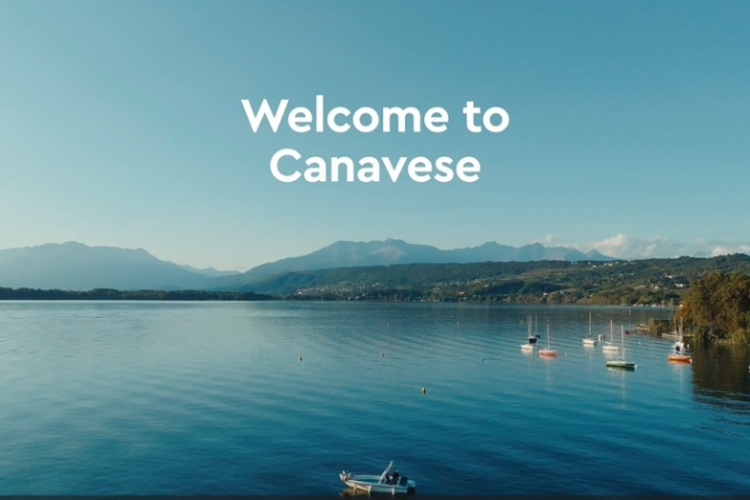
Welcome to Canavese, an unexpected corner of Piedmont where …
546Welcome to Canavese, an unexpected corner of Piedmont where …
546