










Pantelleria, one of Italy’s best-kept secrets, is a volcanic island, known as The Black Pearl of the Mediterranean.
The Castle of Pantelleris hosts events in summer
Just 37 miles from Cape Mustafà in Tunisia, and about 47 miles from the Sicilian coast, with its 83 sq kms, Pantelleria is the largest of the Sicilian islands, and the fifth largest island in Italy. To get to Pantelleria there are both flights into the little airport and ferries that leave from Trapani in Sicily. Arriving by sea, the first striking view is of the imposing Castle of Pantelleria. Built in medieval days and made of lava stone it had a defensive function and was used as a prison up to 1975. Today it is a museum and in the summer months it hosts numerous events. Pantelleria
Don’t expect long sandy beaches
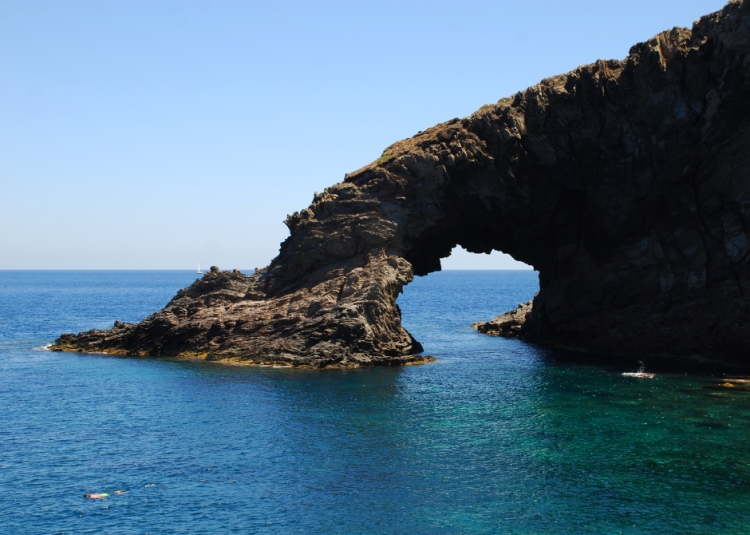
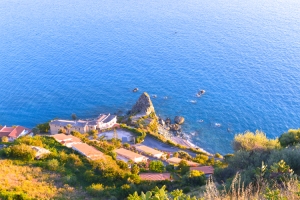
The island’s highest point is the Montagna Grande peak at 836 metres asl. In the south-east we find the crater of Monte Gibele which is visited by flamingos and in which a small green lake forms during Pantelleria’s wet winters. This island is not for anyone looking for a traditional beach holiday, as it is distinctly lacking in the typical Adriatic kind of sandy beaches. Instead the impressive coastline is dotted with marine grottos and rocky bluffs that lead down to hidden coves and caves, so it is much loved by divers.
A beach in the caldera of a volcano
Pantelleria’s most famous beach is the Specchio di Venere (Mirror of Venus) which is the only sandy beach on the island. It is not on the sea but is a lake in the caldera of an ancient volcano, and the reflections on its surface do indeed make it resemble a mirror. The Bue Marino beach is the most famous of the sea beaches. With its shallow waters it is protected from the winds so it is very popular with families and children. Pantelleria
Boats tours of the island
You cannot leave Pantelleria without having taken a tour of the island by boat. This is the other Pantelleria with a high coastline dropping into the sea, vertiginous cliffs guarding quiet coves of incredible colours and mysterious sea caves alternating with gently sloping rocky esplanades. And if you’re lucky you may come across sea turtles, small tuna and playful dolphins.
Mouthwatering local delicacies, from wine to capers and cheeses
The Zibibbo grape arrived on the island from distant Mesopotamia or perhaps from Egypt, and is used to produce the delicious passito sweet dessert wine, considered the nectar of the gods. The island can also boast the large juicy Pantelleria caper which is used with meats and fish and in salads, also together with fragrant oregano and tumma, a fresh local cheese. The local pesto has an intense aroma. Made from raw tomatoes, garlic, basil and chilli pepper it is used to season pasta or served with roasted fish. Couscous, which came to Pantelleria from Africa is also popular, as is the tasty caponata of local vegetables, known as sciakisciuka.
Watch the video


