


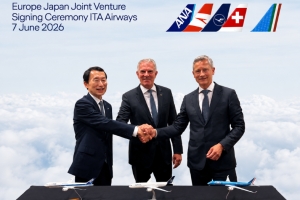
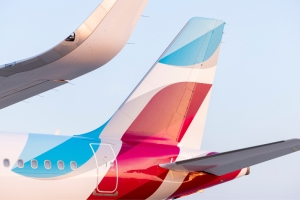


ITA Airways is taking a further step towards integration within the Lufthansa Group, from this autumn, it will join the strategic Lufthansa-ANA Europe-Japan joint venture.
Deeper cooperation across strategic areas
The agreement was signed on 7 June during the IATA Annual General Meeting in Rio de Janeiro and the Italian airline’s entry into the major Europe-Japan joint venture will enable deeper cooperation across numerous strategic areas. It will encompass ITA Airways’ European network, including domestic routes within Italy, the Maghreb region (North Africa) and its long-haul service between Rome-Fiumicino and Tokyo-Haneda. This expands the scope of the joint venture in Italy, which already includes the existing route operated by ANA between Tokyo-Haneda and Milan-Malpensa.
Daily Rome-Tokyo Haneda flights from Rome Fiumicino
At the heart of the agreement is ITA Airways’ hub at Rome Fiumicino Airport, from where the leading Italian carrier operates a daily direct flight to Tokyo Haneda. Both airports have been awarded the highest five-star rating by Skytrax. From autumn onwards, this intercontinental route will also be bookable by customers of ANA, Lufthansa, Austrian Airlines and Swiss, allowing for flexible connections with their own flights. Furthermore, the introduction of a joint offering will be rolled out progressively from autumn 2026. Customers will be informed as soon as it becomes available.
Shorter journey times between Japan and Southern Europe
As the joint venture also includes code-share flights operated by ITA Airways to Rome, passengers travelling to and from Japan will benefit from additional travel options. In particular the Rome hub will ensure shorter journey times for connections between Japan and destinations in Southern Europe, the Mediterranean region and North Africa. At the same time, ANA will offer ITA Airways passengers numerous opportunities to connect from Tokyo Haneda to its domestic network in Japan.
"A greater number of travel options"
All passengers will also have access to the respective airlines’ lounges in Rome and Tokyo and will benefit from the mutual recognition of tickets and loyalty programmes between the two airlines. “This agreement is a milestone in the international development of ITA Airways and further strengthens the airline’s connectivity to the Asia-Pacific region, an area of great strategic importance,- commented Joerg Eberhart, CEO and general manager ITA Airways. -We can now offer our customers a greater number of travel options, more efficient connections and an increasingly integrated experience.”
Don't miss Rubens in the heart of Rome. Just steps from Campo de’ Fiori, one of the city’s greatest Baroque masterpieces, is surrounded by local attractions.
The church is also known as the Chiesa Nuova
For cultural travellers the Rubens altarpiece is also the ideal starting point for an immersive walk through one of Rome’s richest historic quarters. The Rubens is to be found in the Church of Santa Maria in Vallicella, which Romans call the Chiesa Nuova or New Church, in the historic center of Rome, just west of Piazza Navona and along Corso Vittorio Emanuele II. The church is open daily and entry is free.
A medieval icon is hidden under Ruben's altarpiece
Rubens created the remarkable altarpiece for the high altar between 1606 and 1608 as a combination of painting and sacred image. At the center is a miraculous medieval icon of the Virgin Mary and Child, covered by a copper painting. The work is most unusual because one painting hides the other underneath it. The "hidden" work is an ancient miraculous icon of the Virgin Mary and Child and was deeply respected and worshipped by the faithful. Rubens the painted the visible image on copper panels that could be lifted or opened.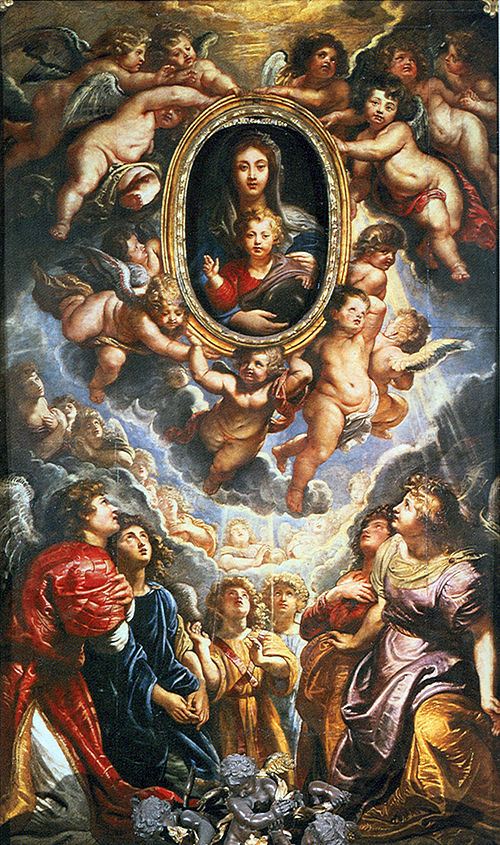
A mechanical system reveals the hidden icon
During special ceremonies, the upper painting was raised to reveal the sacred image below, the aim being to inspire devotion and emphasize the glory of the Catholic Church during the Counter-Reformation. Still today the icon is revealed during important religious celebrations and feast days. One of the main occasions is the feast of Saint Philip Neri, the founder of the Oratorian order on May 26. It can also be revealed during special liturgical ceremonies or Marian celebrations.
Caravaggio masterpieces not to miss
In a side altar there is a copy of a Caravaggio painting, The Entombment of Christ (also called The Deposition) the original of which is now in the Vatican Pinacoteca. And for anyone wanting to see some real Caravaggios a short walk away the Church of San Luigi dei Francesi is home to his celebrated cycle of Saint Matthew paintings.
One of Rome’s most lively open-air markets
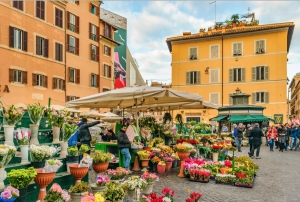
This neighbourhood is ideal for enjoying curated itineraries. Just minutes away from the Rubens, a visit to Campo de’ Fiori, which is vibrant by day and atmospheric by evening, is a seamless way to move from sacred art to Roman daily life. What makes the Campo de’ Fiori area especially appealing for travellers is that in the early morning the square comes alive with one of the city’s most colourful open-air markets, where locals shop for flowers, fruit, spices, and seasonal produce. Around the market stalls café tables fill with espresso drinkers watching how daily life unfolds, and in the surrounding streets small food shops and historic bakeries are ideal stops.
La Carbonara is famous for its pasta
Campo de’ Fiori also has many traditional trattorie such as La Carbonara which serves robust, Roman cuisine that feels untouched by trends and, of course, no meal there is complete without a plate of Rome’s famous Carbonara pasta Then, just around the corner there is Michelangelo’s architectural masterpiece, Palazzo Farnese, a Renaissance palazzo that was once the seat of papal power and artistic patronage and today houses the French Embassy to Italy
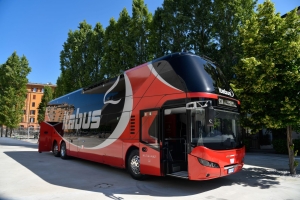
Itabus marks 5 years from its debut in long-distance coach travel with 8 million passengers carried.
4,000 routes serving more than 120 destinations
From 2021 to the present day the company has carried 8 million passengers (each coach has a maximum of 73 seats), travelled over 100 million coach-kilometres, and recorded year-on-year growth in operations of 20%. Itabus offers over 4,000 routes serving more than 120 destinations (almost double the number since the service began), ensuring comprehensive coverage of the country and providing regular services on the main routes. Ia total it operates 52 journeys a day between Rome and Naples, 30 between Rome and Florence, 22 between Puglia and Naples/Rome, and 20 on the Rome–Milan route.
Itabus went international in 2024
The Itabus network stretches from Sicily to Piedmont, serving major cities and smaller towns with high transport demand. And in 2024 it crossed national borders connecting numerous foreign destinations from Italy, including Paris, Lyon, Grenoble, Montpellier, Perpignan, Barcelona, Zurich and Ljubljana. Thanks to its own fleet of 100 Man coaches, all powered by Enilive’s HVOlution diesel, a 100% biofuel made from renewable raw materials, Itabus has built up a range of ancillary services for travellers, culminating in the recent launch of its own loyalty programme.
Adding new tourist destinations
Looking ahead, the aim is to continue to grow, starting as early as next summer with new routes to Italy’s main seaside resorts and the integration of seasonal tourist destinations with high-demand national routes. Sicily, Puglia, Calabria and Campania will benefit from enhanced connections and the introduction of new seasonal stops inTaormina, Cefalù, Gallipoli and many other destinations to facilitate domestic travel for Italians and transport the many foreign tourists on holiday.
Ambitious plans for further growth
“We are only at the beginning of this adventure. After just five yearswe have already achieved satisfactory results. We now operate throughout the day and also at night, and reach key destinations in Italy and abroad, and we have established synergies with trains and ferries. Over the years we have built a network that meets passengers’ travel needs, offering a range of additional services. Our main objectives for the future are to continue expanding the network and frequency within Italy, where we now have excellent coverage, and to increase international routes, serving more and more countries, and growing the number of services, destinations and travellers.”
The homepage has been personalized
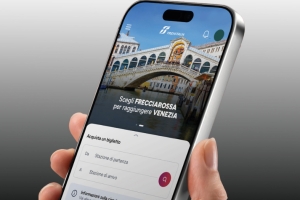
Designed to support passengers at every stage of their journey, from buying a ticket to managing their trip, the revamp makes navigation more intuitive and highlights useful information and services, making it easier to organize a train journey. According to the company the new app centres on a homepage that has been personalized. In fact users can save their most frequent routes and find them instantly, whilst also highlighting their favourite services.
A streamlined booking process
The booking process has also been streamlined, with quicker options for tickets, season tickets and booklets, and the option to complete payment in a single click. The app also makes it easier to access customer support and allows users to enable notifications providing real-time updates on train movements, schedules and service announcements.
Tracking journeys thanks to timely updates
Among the new features, a digital assistant based on artificial intelligence is also being tested designed to offer support and assist users during the purchasing process. It also offers tools designed to help manage every stage of the journey: with geolocation you quickly find the nearest station, whilst during the journey you can track your journey and receive timely updates. In the event of a change of plans, the “Move journey ±2h” function allows you to change your departure time in a matter of seconds. With this update, Trenitalia confirms the FS Group’s path of digital innovation, focusing on solutions that simplify the experience and make travel increasingly connected.
Beyond temples and frescoes, Rome reveals a second identity shaped by infrastructure, systems, and interesting mechanical and engineering sites.
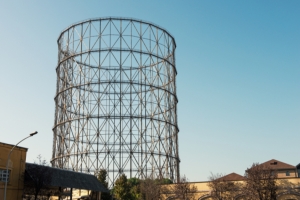
The skeletal Gasometro gas holder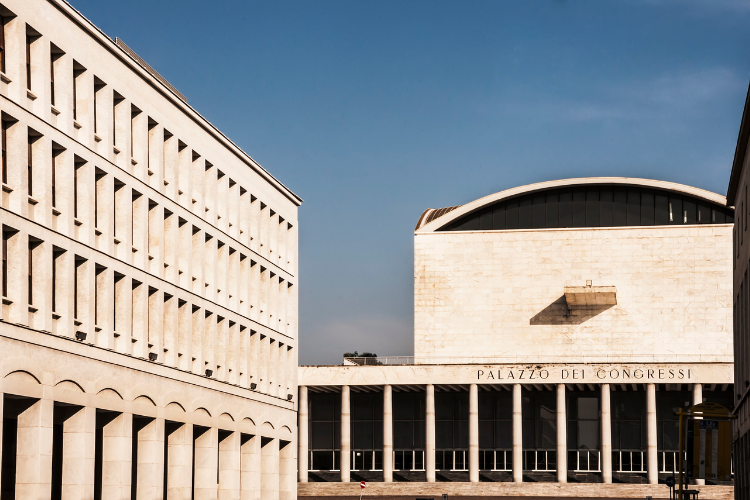
For visitors drawn to how cities work – which is to say how they move water, energy, and people - Rome offers a surprisingly coherent set of mechanical and technical sites that can be explored over a focused day. One example is a natural continuation of the Centrale Montemartini in the Ostiense district - a museum that combines classical archaeology with industrial machinery – the Gasometro which was once part of the city’s gas distribution system, is a vast steel structure that dominates the riverfront with its skeletal geometry. Though no longer operational, it remains one of Rome’s most powerful industrial forms, best appreciated from a distance along the Tiber river or at sunset, when its latticework stands out against the sky.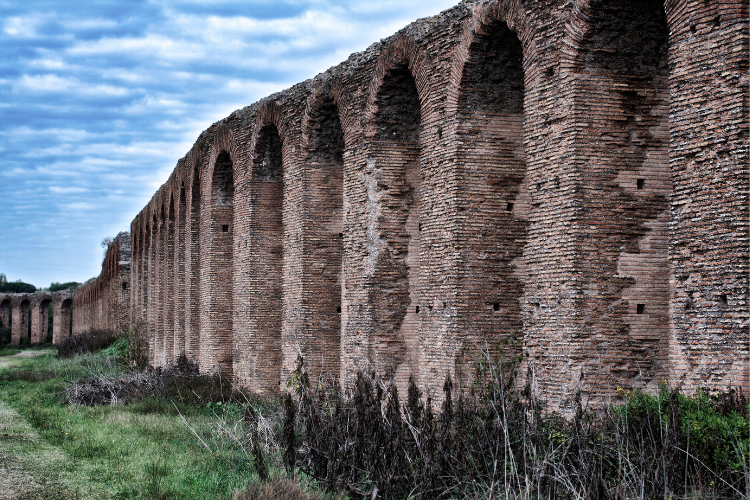
Ancient aqueducts and modern EUR
Equally revealing, though far older, is Rome’s water infrastructure. At the Parco degli Acquedotti, multiple ancient aqueducts intersect across open fields, their arches marching across the landscape. Walking beneath these ancient structures makes Rome’s reputation as a city of builders feel literal rather than symbolic. For a more modern expression of engineered order, the EUR district offers a different perspective. Planned in the 20th century as a rational city, EUR is symmetrical, modular and structurally logic, its wide roads and planned vistas underlinig a vision of the city as a controlled, engineered system.
Rome’s mechanical and engineering sites
These mechanical and engineering sites reveal a Rome built not only on symbolism and beauty, but on function and systems, and for anyone interested in mechanics, engineering, and urban infrastructure, they offer a parallel reading of the city, with Rome is seen as a machine as much as a monument.
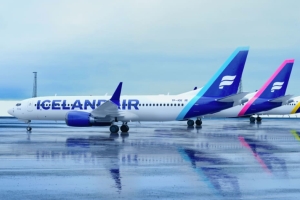
A ribbon-cutting ceremony was held to mark the launch Icelandair's new flight from Reykjavik to Venice.
Icelandair's fourth destination in Italy
Operating on Marco Polo Airport three times a week until 18 October, on Tuesdays, Fridays and Sundays and operated by a Boeing 737-Max8 aircraft, Venice thus becomes the Icelandic airline’s fourth destination in Italy, after Verona, Rome and Milan.
"Venice holds great appeal in our key markets"
The launch of the Venice route “is a further step forward in strengthening Icelandair’s network between North America and Europe via our Keflavík hub,- said Icelandair’s COO, Tomas Ingason. -Venice is one of Europe’s most prestigious cultural destinations and holds great appeal in our key markets: Iceland, North America and Italy. - We are also proud that the launch coincides with our support for the Icelandic pavilion at the Venice Biennale, connecting Icelandic travellers to one of the world’s leading cultural events.”
Good for both inbound and outbound traffic
Camillo Bozzolo, Save Group director of aviation development, said that Iceland is a country particularly sought-after by Italians, “and the flight to Reykjavík is a great travel opportunity for our catchment area. Added to this is the network of connecting flights from the Icelandic hub to North America, thus stimulating both the American inbound market to Italy and the Italian outbound market.”
No visit to the area is complete without exploring the world of Ferrari. Just outside Modena in the town of Maranello stands the famous Museo Ferrari, where visitors can see historic Formula 1 cars, trophies and legendary road models. The nearby Museo Casa Enzo Ferrari in Modena celebrates the life of founder Enzo Ferrari and displays rotating exhibitions of racing and road cars. Many tours also include a panoramic bus ride around the Ferrari factory and the Fiorano test track, offering a glimpse of where the latest supercars are developed. (ferrari.com)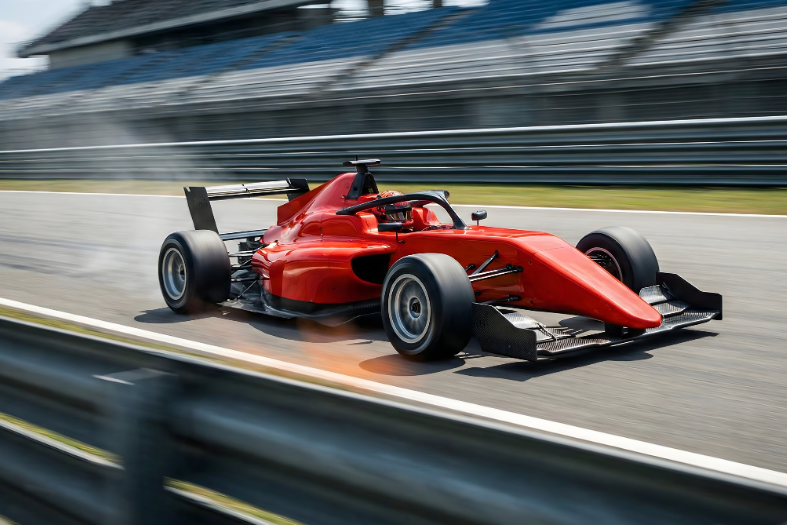
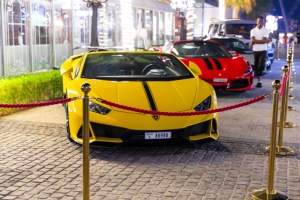
Within a short drive you can also visit other icons of Italian performance engineering. At Automobili Lamborghini in Sant’Agata Bolognese, guided tours combine a museum visit with a look inside the production line where Lamborghini supercars are assembled. (Motor Valley)
Back in Modena, the headquarters of Maserati offers factory tours and a showroom highlighting the brand’s racing heritage. Nearby attractions include collections dedicated to historic marques such as Pagani and Stanguellini, making the entire region a paradise for car lovers. (visitmodena.it)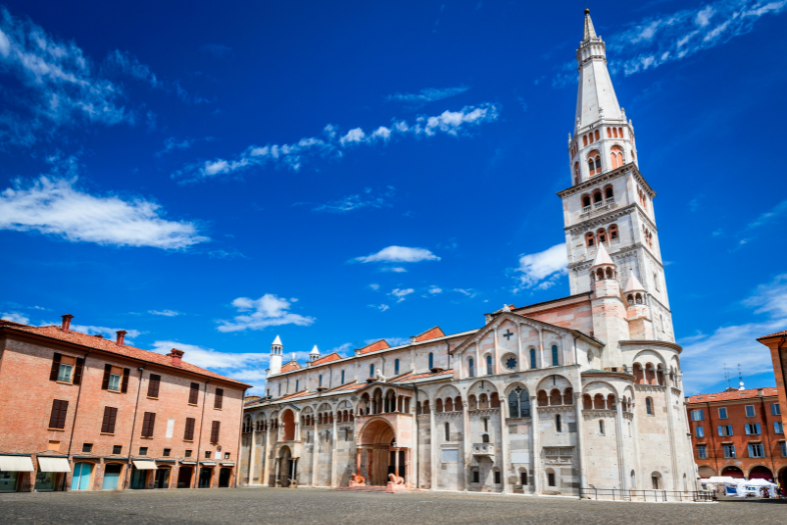
Motor Valley is not only about engines—it is also one of Italy’s greatest food destinations. The countryside around Modena produces world-famous specialties such as Parmigiano Reggiano, traditional Aceto Balsamico Tradizionale di Modena and the sparkling red wine Lambrusco, all of which can be tasted at dairies, vinegar cellars and wineries across the region. (Emilia Storytellers Tours)
The historic center of Modena also holds cultural treasures. The ensemble of Modena Cathedral, Piazza Grande and the Torre Ghirlandina is recognized as a UNESCO World Heritage Site for its outstanding Romanesque architecture. (Italia.it)
Together, fast cars, extraordinary food and remarkable art make the Modena area a uniquely Italian travel experience—where the thrill of racing heritage meets centuries-old culinary traditions.
Over 25 e-bikes to choose from
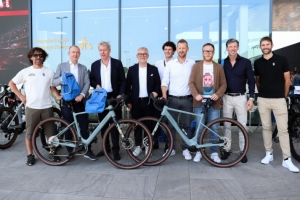
The project is a collaboration between DIF Spa and SACBO, the company that manages Milan Bergamo Airport, with the support of technical partners Würth and Bergamont. There are over 25 latest-generation Bergamont e-bikes (Scott Sports group) to choose from, depending on your tastes and style; premium e-MTBs equipped with various comfort features and available in different variants to suit your needs.
Bespoke tours for families, couples and solo travellers
In addition to simple hire, you can enjoy a range of guided experiences: in the Upper Town, for example, with "Città Alta, where Bergamo tells its story," a 4-hour tour including a cycle guide, or the half-day option which includes a traditional Bergamo lunch. You can also opt for a guided ride through the Moscato di Scanzo vineyards or to Malpaga Castle, with guided tours, tastings and lunch available as options in both cases. All the current options are detailed on the Nextbg.it website, with more to be added in the coming weeks. For those seeking an even more personalized experience, NextBG designs bespoke tours tailored to families, couples or solo travellers.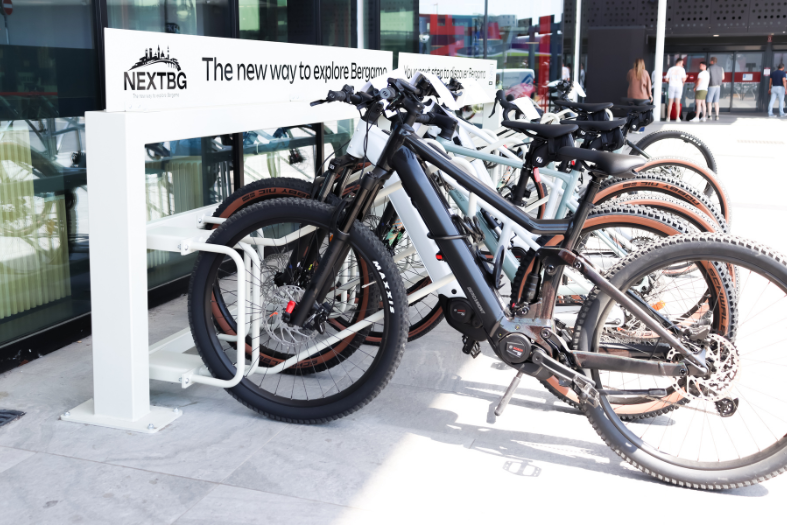
Europe's first bike-friendly airport
Milan Bergamo is the first airport in Europe to be recognized as bike-friendly, and the project is part of SACBO’s broader commitment to sustainability, evidenced by the attainment of "Cycle Friendly Employer" certification in 2021 and the gold level for sustainable mobility in 2024. In collaboration with SACBO, NextBG is therefore presenting not just a new service, but an innovative hub focused on the sustainable mobility of the future, in line with the objectives of the 2030 Agenda. “Our airport has embraced the concept of multimodality, focusing its development plan on programme lines of sustainability in the broadest sense, accessibility and the most versatile approach to mobility for air transport services,” says Giovanni Sanga, president of SACBO.
A cycle path network around the airport
The cycle path network surrounding the airport grounds provides access to an ever-expanding branch of the regional and inter-provincial cycle network. This creates opportunities of great interest to tourists, a focus that SACBO has always supported and which is now taking shape with the launch of an e-bike hire service that goes beyond simply providing the bikes and offers excursions that are sure to appeal to travellers who want to explore and discover the region’s most hidden gems.”
Also flights from Hamburg, Düsseldorf and Stuttgart
This brings the number of destinations served by the German airline, part of the Lufthansa Group, from Sardinia’s main airport to four: in addition to the new Salzburg route, the summer 2026 schedule confirms flights to and from Hamburg, Düsseldorf and Stuttgart
Eurowings is part of the Lufthansa Group
Thanks to the new Eurowings flights, Cagliari and Sardinia will be able to attract further tourist traffic from an area with historic ties to the region, aided by the opportunity to travel via the extensive network of Eurowings and the Lufthansa Group.
Strong interest in southern Sardinia
“The new Salzburg flights are a further step forward in the consolidation of our airport’s international links and confirms the strength of our partnership with Eurowings and the Lufthansa Group,” explains a statement from SOGAER, the company managing Cagliari Airport. The launch of this route, the note continues, is a strategic opportunity both for inbound tourism to Sardinia, thanks to the strong interest in southern Sardinia from the Austro-German region, and for the outbound market, offering Sardinian passengers the chance to easily reach one of Europe’s most fascinating cities.
The Eternal City’s many fountains are statements of power, engineering, and theatrical statement. While the Trevi Fountain draws the crowds (too many crowds, Romans complain) some of the city’s most spectacular water displays lie elsewhere. And, experiences without the crush of Trevi’s - now paying – visitors, they are equally thrilling emotional experiences. 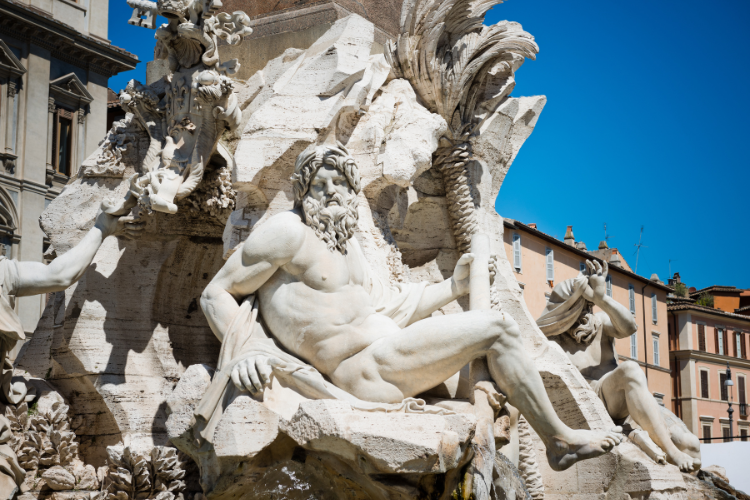
Bernini’s fountain on Piazza Navona is spectacle in motion. Four colossal river gods - representing the Nile, Ganges, Danube, and Río de la Plata rivers, one for each continent - twist and strain around a rock formation, above which rises an ancient Egyptian obelisk. What makes this fountain extraordinary is its sense of instability, with the stone appearing to cave in, the figures reacting to unseen forces, and the water animating the entire structure. This fountain is a controlled explosion of movement, and is best appreciated by walking slowly around it.
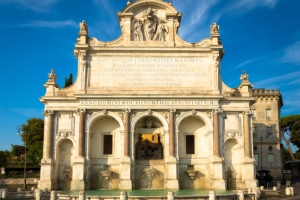
Known to Romans simply as il Fontanone (the big fountain) this monumental fountain is less sculptural but more overwhelming in scale. Built to mark place where the Acqua Paola aqueduct arrives in the city, it functions as both water terminal and urban façade. Its wide arches pour water continuously into a vast basin, producing a constant roar that dominates the entire Janiculum hilltop. And below it Rome spreads out in one of the city’s broadest and most spectacular panoramas. 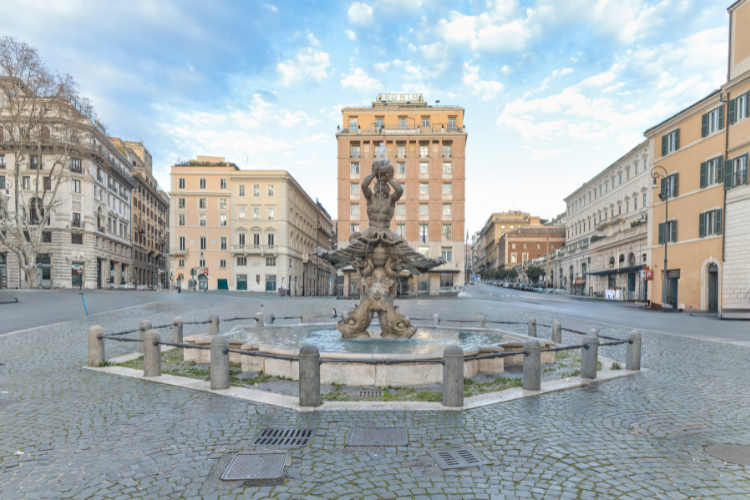
Compact but intensely dynamic, Bernini’s Triton Fountain is a masterclass in vertical energy. The muscular sea god kneels on four intertwined dolphins, blowing water upward through a shell. Unlike grand basin fountains this work concentrates the force of water into a single jet, making water itself the main protagonist, the fountain becoming a living, pulsing mechanism at the centre of the square.
These three stunning fountains show in how many different ways Rome uses water. No one of them relys on sheer size alone, instead they reveal Rome’s ability to turn engineering into emotions and to make water speak as loudly as the stone from which they are carved.



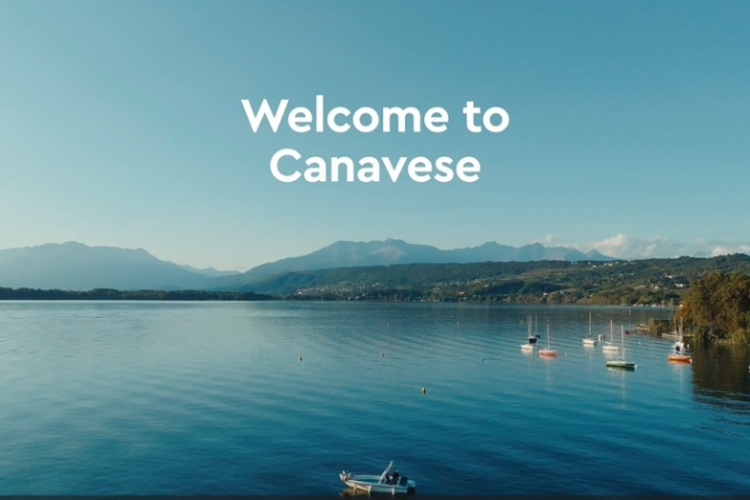
Welcome to Canavese, an unexpected corner of Piedmont where …
844Welcome to Canavese, an unexpected corner of Piedmont where …
844
