











Visit Emilia is once again proposing visits to twelve historical theatres in the provinces of Parma, Piacenza and Reggio Emilia from 5 to 8 December.
“That part of us that needs beauty…to not forget who we are”
“I like to think that opening a theatre is not just a gesture towards tourists, but a political gesture. In the noblest sense of the word: it means taking care of the polis, of the community, of that part of us that needs beauty in order not to forget who we are,” says Simone Fornasari, president of Visit Emilia.  ph credits: Teatro Farnese
Two stunning provincial theatres
The Teatro Regio in Parma, built by Duchess Maria Luigia in 1829, is a small neoclassical masterpiece, and guided tours, for a fee, take about 30 minutes. The Teatro Farnese in Parma is a wooden miracle. Built in 1618 the Teatro Farnese should have collapsed a thousand times, but instead it has remained there, a wonder in wood. Verdi Theatre in Busseto - ph credits Lorenzo Moreni
A place of pilgrimage for Verdi fans
The Verdi Theatre in Busseto was inaugurated in 1868 by the people of Busseto in honour of the great composer Giuseppe Verdi who, however, never set foot in it. Inside the Rocca Pallavicino, the horseshoe-shaped hall, the painted medallions with the theatre muses and the bust of Verdi at the entrance are a secular pilgrimage for many visitors from all over the world, whether or not they are opera fans. Pallavicino Theatre in Zibello - credist Visit Emilia - photo by Francesca Bocchia
Piacenza has two historical theatres
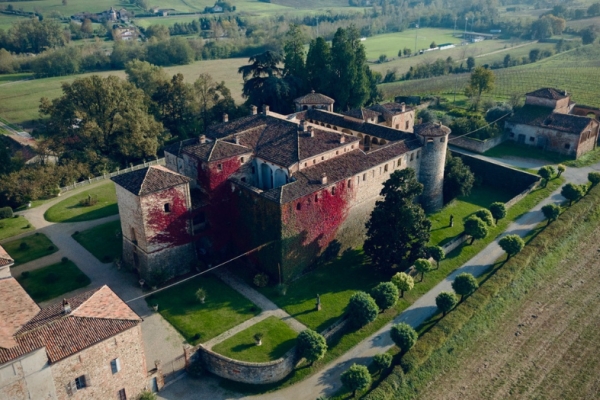
The small, elegant Pallavicino Theatre in Zibello was inaugurated in 1804 in the palace of the marquises from which it takes its name. In the little theatre of Vigoleno Castle, visits are not only guided, but animated. Which means that, among the medieval walls and ancient bricks, you are likely to meet a ghost who wants to tell you his story. Piacenza can boast two historical theatres: the Municipal Theatre, built in 1804 to a design by Lotario Tomba, and the Sala dei Teatini, a deconsecrated church that then became a theatre. In the former you can still breathe the air of 19th-century melodramas, in the latter that of modern experimentation.
Reggio’s theatre is among the top 60 in Italy
On the guided tours of the Romolo Valli Municipal Theatre in Reggio Emilia, you discover the majesty of the horseshoe-shaped hall, the four tiers of golden boxes, the historic curtain and the dressing rooms where the echoes of the artists still vibrate. A visit to the Giovanni Rinaldi Theatre in Reggiolo, named after Giovanni Rinaldi, an illustrious 19th century musician, is a preview of the official opening in 2026. The theatre is counted among the top 60 historical theatres in Italy.
Reliving days of yore with art and music
In the cozy silence of Guastalla, the Ruggero Ruggeri Theatre is a small treasure trove. Built in 1671 by the Gonzaga dukes, it still preserves the Baroque grace of its horseshoe-shaped boxes and the intimacy of its 17th-century decorations. Named after the great actor Ruggeri, today it hosts prose, music and dance performances. The Herberia theatre in Rubiera is not visited in silence: it is listened to. Because its visits are accompanied by music, as if the theatre itself needed reminding that it is alive. The Herberia Theatre opened in 1926, in a late Art Nouveau building designed by the engineer Antonio Panizzi and the architect Italo Costa.


