












The Milan-Cortina 2026 Winter Olympics drive rail travel demand in Northern Italy.
Milan is reinforcing its role as a gateway
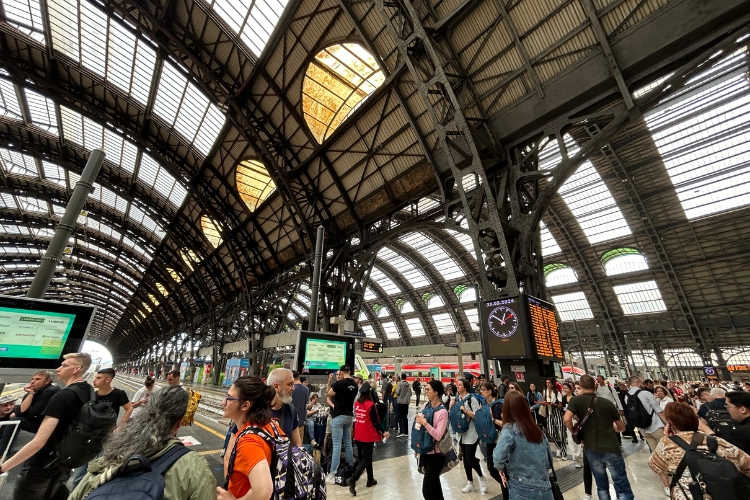
The rise in rail travel is reported by Rail Europe which points out that booking figures show that Milan is reinforcing its role as the main international gateway, while Venice and Verona are emerging as key rail-connected destinations on Olympic travel itineraries. Rail Europe is seeing strong booking activity on major high-speed lines including Milan-Venice and Milan-Verona. At the same time, cross-border rail traffic to Milan from major European hubs, including Paris and Zurich, remain consistently high.
“Rail plays a key role…across national borders”
“Major international events highlight the need for reliable and seamless mobility,- says Björn Bender, CEO and executive chairman Rail Europe. -Rail plays a key role in connecting cities, regions and Alpine destinations across national borders. With the Milan-Cortina Games approaching, rail is a flexible and efficient way of travelling in northern Italy, supported by strong international connections and a well-developed regional network. Milan occupies a central position in this changing tourism landscape. For many visitors to the Olympics, it represents the nearest major international air terminal. In parallel, the city serves as a primary railway hub connecting northern Italy with France, Switzerland, Germany and Austria.
Verona will host the closing ceremony
Rail connectivity is also crucial for access to the Alpine regions hosting winter sports events. Destinations such as the Valtellina can be reached via Tirano, with train connections from Milan and cross-border connections from Switzerland via the Chur-St. Moritz corridor. Recent infrastructure improvements on these routes have increased the comfort and frequency of services, strengthening the role of international railways in winter sports travel. Verona, which will host the closing ceremony of the Olympics, is equally well integrated into the railway network of northern Italy. Its connectivity allows travel planners to combine participation in the Olympics with wider itineraries in the Veneto and Alpine region, positioning rail as a practical alternative to road travel. Cortina d'Ampezzo, rail travel is typically combined with local transport from nearby railway stations such as Calalzo di Cadore or Dobbiaco. This model keeps the railway at the centre of the journey, while addressing access to the last mile, with total journey times from Milan generally varying between five and six and a half hours, depending on connections.


